

Agricultural Microbials Market Report 2025–2030: Soil Health & Crop Protection at the Forefront
According to a research report "Agricultural Microbials Market by Function (Soil Amendment and Crop Protection), Crop Type (Cereals & Grains, Oilseeds & Pulses, Fruits & Vegetables), Type (Bacteria, Fungi, Virus, Protozoa), Application, and Region - Global Forecast to 2030" published by MarketsandMarkets, the global agricultural microbials market size is estimated at USD 9.45 billion in 2025 and is projected to reach USD 18.75 billion by 2030, growing at a CAGR of 14.7%.
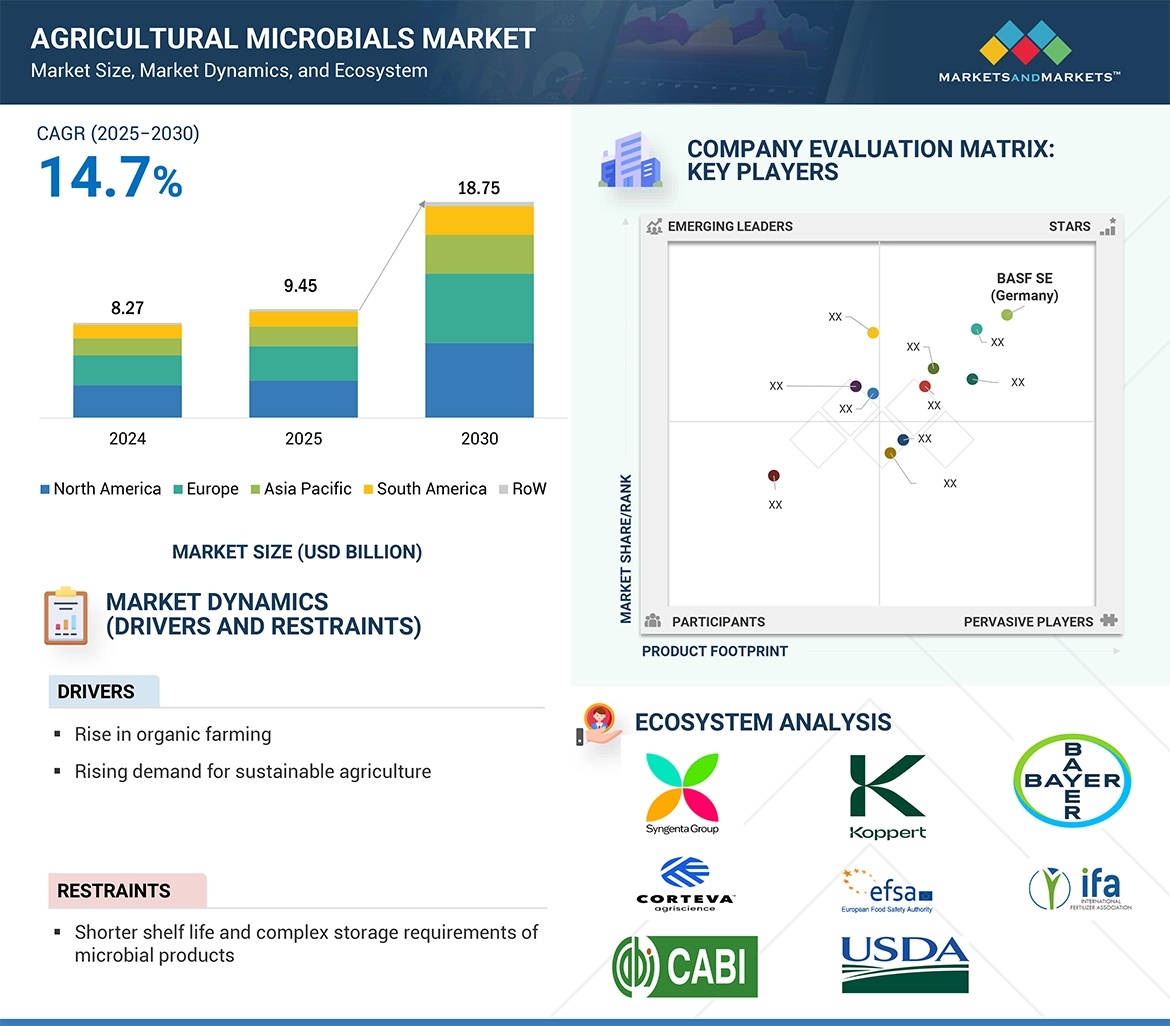
What’s Driving the Growth?
The agricultural microbials industry is witnessing strong momentum, fueled by:
- Rising demand for sustainable and eco-friendly farming solutions.
- Increasing consumer preference for organic and residue-free produce.
- Stringent regulations limiting synthetic pesticide usage, such as the EU’s Farm to Fork Strategy.
- Advances in microbial research, product formulations, and delivery technologies.
- Growing focus on soil health management and reducing chemical dependency.
Farmers worldwide are adopting microbial alternatives like biopesticides, biofertilizers, and biostimulants, which not only enhance productivity but also promote long-term soil health. These adoption patterns reflect broader agricultural microbials market trends that are shaping the future of sustainable farming.
Request Custom Data to Address your Specific Business Needs
North America Leads the Market
North America is the largest regional market for agricultural microbials, supported by advanced farming practices, regulatory backing for eco-friendly solutions, and strong R&D investments. The US and Canada are seeing increased adoption of microbial products to reduce chemical usage while meeting rising consumer demand for organic and residue-free food. This positions North America at the forefront of global adoption.
Bacteria Lead the Market by Type
Among microbial types, bacteria dominate the agricultural microbials market share due to their wide-ranging applications in improving crop productivity and soil fertility. Strains such as Bacillus, Pseudomonas, and Rhizobium are widely deployed to:
- Fix atmospheric nitrogen.
- Enhance nutrient uptake.
- Protect crops against pests and diseases.
- Support various climate and soil conditions.
This versatility has made bacterial products a preferred choice for farmers worldwide.
Soil Amendment: A Core Growth Segment
The soil amendment function holds a significant share in the agricultural microbials market. Microbial soil amendments improve nutrient availability, stimulate beneficial microbial activity, and restore soil structure. With concerns over soil degradation growing globally, biofertilizers and biostimulants are playing a vital role in supporting sustainable agriculture.
Key Players Shaping the Market
Leading companies highlighted in the agricultural microbials market report include:
- BASF SE (Germany)
- Bayer AG (Germany)
- Syngenta Group (Switzerland)
- UPL (India)
- Corteva (US)
- FMC Corporation (US)
- Nufarm (Australia)
- Sumitomo Chemical Co., Ltd. (Japan)
- BIONEMA (US)
- Koppert (Netherlands)
- Certis USA L.L.C. (US)
- Bioceres Crop Solutions (Argentina)
- Novonesis Group (Denmark)
- BioFirst Group (Belgium)
- Lallemand Inc (Canada)
These players are driving innovation through microbial-based product development, strategic collaborations, and geographical expansion to meet the surging demand for sustainable farming solutions.
Frequently Asked Questions
Q1. What is driving the growth of the agricultural microbials market?
The growth of the agricultural microbials industry is primarily driven by rising demand for sustainable and eco-friendly farming solutions, government restrictions on synthetic pesticides, and growing consumer preference for organic, residue-free produce.
Q2. What is the estimated agricultural microbials market size by 2030?
The global agricultural microbials market size is projected to reach USD 18.75 billion by 2030, expanding at a CAGR of 14.7% from 2025.
Q3. Which type segment holds the largest agricultural microbials market share?
Bacteria hold the largest agricultural microbials market share, owing to their effectiveness in nitrogen fixation, pest control, and enhancing nutrient uptake, making them widely adopted in biofertilizers, biopesticides, and biostimulants.
Q4. What are the key agricultural microbials market trends?
Major agricultural microbials market trends include advancements in microbial R&D, innovations in product formulations, increasing adoption of soil health management solutions, and growing demand for residue-free food.
Q5. Which regions dominate the agricultural microbials market?
North America currently leads the market due to advanced agricultural practices, strong regulatory support, and high adoption of microbial-based solutions. Europe and Asia-Pacific are also witnessing strong growth fueled by organic farming initiatives.
80% of the Forbes Global 2000 B2B companies rely on MarketsandMarkets to identify growth opportunities in emerging technologies and use cases that will have a positive revenue impact.
- Food Packaging Market Size Set for Strong Growth Through 2030 Amid Rising Demand for Convenience Foods
- Mulch Films Market: Driving Sustainable Agriculture Through Innovation
- Agricultural Adjuvants Market Analysis, Trends, and Growth Outlook (2026–2031)
- Crop Protection Chemical Market Size, Share & Growth Forecast (2025–2030)
- Japan Enterprise Asset Management Market Growth: AI and Smart Infrastructure Drive Demand

