
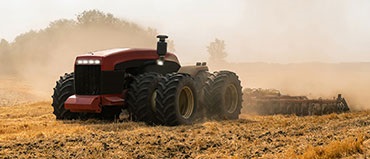
Autonomous Tractors Market Size to Grow at a 24% CAGR Through 2028
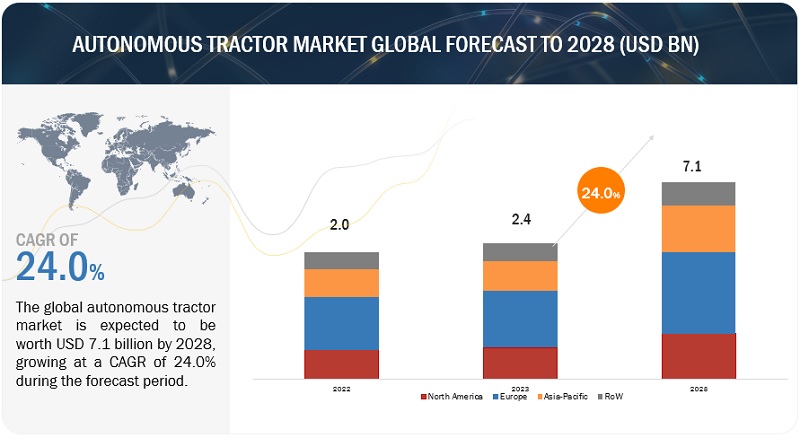
The global autonomous tractors market is accelerating at an impressive pace. Valued at $2.4 billion in 2023, it is projected to reach $7.1 billion by 2028, growing at a CAGR of 24%. This rapid growth is driven by the increasing need for sustainable, efficient, and precision-driven farming practices.
Why Autonomous Tractors Are Transforming Agriculture
Modern agriculture faces a dual challenge: feeding a growing global population while minimizing environmental impact. Autonomous tractors are emerging as a solution by enabling precision agriculture. Equipped with advanced sensors, GPS, and AI algorithms, these tractors perform tasks with exceptional accuracy, helping farmers optimize yields, reduce waste, and implement eco-friendly practices. As sustainable agriculture becomes a priority, the market is poised for substantial growth.
Request Custom Data to Address your Specific Business Needs
Market Dynamics
Key Drivers
1. Advancements in IoT and Navigation Technologies
The rise of low-cost IoT devices and connected farm management software allows farmers to monitor weather, soil moisture, and crop health in real time. Companies like CropX (US) offer soil sensors that alert farmers about suboptimal conditions, enabling smarter irrigation and yield optimization.
2. GPS and High-Precision Navigation
Autonomous tractors increasingly rely on GPS real-time kinematics (RTK) for auto-steering. Affordable systems like Wheelman Pro from AgJunction are making precision farming accessible. For more complex tasks, multimodal navigation systems combining GPS, LiDAR, and vision technologies—used by companies like EcoRobotix (Switzerland)—ensure unmatched accuracy. These innovations are influencing the overall autonomous tractors market trends.
Major Restraint
Lack of Technical Knowledge Among Farmers
Operating autonomous tractors requires understanding GPS, sensors, machine learning, and remote monitoring systems. Without proper training, farmers may underutilize these machines, reducing efficiency and increasing downtime. Bridging this knowledge gap is essential for maximizing market potential.
Emerging Opportunities
Integration with Smartphones
Smartphone applications can connect with sensors, GPS, and cameras for tasks like aerial imaging, record-keeping, and field monitoring. Affordable and user-friendly, these apps allow farmers to access vital information on weather, soil, seeds, and fertilizers—boosting adoption in the autonomous tractors market.
Challenges
High Cost and Complexity
The integration of AI, sensors, and GPS in autonomous tractors drives high upfront costs, making them less accessible to small-scale farmers. Connectivity issues in remote areas, complex integration with existing machinery, and the need for specialized maintenance further challenge widespread adoption. Data security and adaptability to various crops are additional considerations.
Market Segmentation
1. Crop Type:
The fruits and vegetables segment is expected to hold the largest share due to rising global demand and the need for sustainable farming practices. Autonomous tractors reduce crop damage and soil compaction, aligning with eco-friendly farming goals.
2. Farm Application:
Tillage will lead in market value as autonomous tractors reduce dependence on skilled labor, enhance operational flexibility, and provide valuable soil data to optimize future practices.
3. Power Output:
Tractors with 101 HP and above dominate, particularly in North America and Europe, where larger farm sizes and labor shortages drive the need for high-powered autonomous machines.
4. Component:
The camera/vision segment is projected to have the highest value, enabling real-time monitoring, obstacle detection, and precision in planting, spraying, and harvesting tasks.
Regional Insights
North America is expected to maintain the largest market share. A robust ecosystem of tech companies, research institutions, and government support, combined with large-scale farming operations, makes the region highly conducive to autonomous tractor adoption.
Key Players
Prominent autonomous tractors companies driving growth include:
- AGCO Corporation (US)
- CNH Industrial N.V. (UK)
- Mahindra & Mahindra Ltd. (India)
- Deere & Company (US)
- Kubota Corporation (Japan)
- Yanmar Holdings Co., Ltd. (Japan)
- Autonomous Tractors Corporation (US)
- SDF Group (Italy)
- Iseki & Co., Ltd. (Japan)
- TYM Corporation (South Korea)
- CLAAS KGaA mBH (Germany)
- Argo Tractors (Italy)
These companies are expanding production, launching new products, forming strategic partnerships, and targeting emerging economies to capture autonomous tractors market share.
Frequently Asked Questions
Q1: What is the projected growth of the autonomous tractors market?
The global autonomous tractors market is expected to grow from $2.4 billion in 2023 to $7.1 billion by 2028, at a CAGR of 24%.
Q2: Which crop type segment leads the autonomous tractors market?
The fruits and vegetables segment is projected to hold the largest market share due to increasing global demand and sustainable farming practices.
Q3: Who are the major autonomous tractors companies?
Key players include AGCO Corporation, CNH Industrial, Mahindra & Mahindra, Deere & Company, Kubota, Yanmar, Autonomous Tractors Corporation, SDF Group, Iseki, TYM, CLAAS, and Argo Tractors.
Q4: What are the main challenges in adopting autonomous tractors?
High upfront costs, technical complexity, connectivity issues, specialized maintenance requirements, and data security concerns are major challenges.
Q5: Which region dominates the autonomous tractors market?
North America is expected to hold the largest share due to large-scale farming, advanced technological infrastructure, and supportive government policies.
The autonomous tractors market size is set to grow substantially as precision agriculture, sustainability, and technology adoption drive the demand for smarter farming solutions. With efficiency, reduced labor costs, and improved yields, autonomous tractors are poised to transform modern agriculture, provided farmers receive adequate training and technology support.
80% of the Forbes Global 2000 B2B companies rely on MarketsandMarkets to identify growth opportunities in emerging technologies and use cases that will have a positive revenue impact.
- Food Packaging Market Size Set for Strong Growth Through 2030 Amid Rising Demand for Convenience Foods
- Crop Protection Chemical Market Size, Share & Growth Forecast (2025–2030)
- Mulch Films Market: Driving Sustainable Agriculture Through Innovation
- Agricultural Adjuvants Market Analysis, Trends, and Growth Outlook (2026–2031)
- Japan Enterprise Asset Management Market Growth: AI and Smart Infrastructure Drive Demand

