
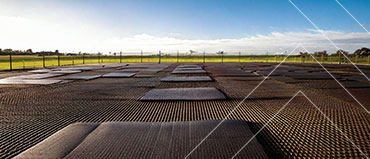
Livestock Flooring Market: Trends, Growth, and Innovations
MarketsandMarkets™, 01 Aug 2025
The livestock flooring market is estimated at USD 1.76 billion in 2025 and is projected to reach USD 2.16 billion by 2030, at a CAGR of 4.2% from 2025 to 2030. Growth is fueled by increasing livestock populations, modernization of farming practices, and growing awareness of biosecurity and animal comfort standards. The global livestock flooring market is experiencing steady growth, driven by advancements in animal husbandry, increasing demand for meat and dairy products, and rising focus on animal welfare. Livestock flooring plays a critical role in maintaining hygiene, preventing injuries, and improving the comfort of animals across poultry, cattle, and swine farms.
Livestock Flooring Market Growth Drivers
- Rising Demand for Animal-Based Products: The growing global appetite for meat, milk, and eggs has led to the intensification of livestock farming. This, in turn, demands better flooring systems that are durable, easy to clean, and safe for animals.
- Focus on Animal Welfare and Hygiene: Governments and industry bodies are promoting improved living conditions for livestock. Good flooring helps prevent hoof injuries, foot rot, and lameness—issues that directly affect productivity.
- Technological Advancements in Flooring Materials: Modern flooring solutions made from rubber, plastic slats, and treated concrete offer better durability, drainage, and insulation. These improvements have replaced traditional wood and untreated concrete floors in many regions.
Flooring Types and Applications:
- Rubber Flooring: Offers excellent shock absorption and is widely used in dairy farms and calf barns.
- Plastic Slatted Flooring: Common in pig and poultry farming due to its easy cleaning and superior drainage.
- Concrete Flooring: Often used in cattle farms due to its strength and cost-effectiveness, especially for heavy livestock.
- Steel and Composite Flooring: Emerging in premium markets for their longevity and structural integrity.
Each material type serves different livestock species based on their needs—poultry requires anti-slip and washable surfaces, while cattle need cushioned, abrasion-resistant flooring.
Download PDF Brochure: https://www.marketsandmarkets.com/pdfdownloadNew.asp?id=103349855
Emerging Trends
- Eco-friendly and Recyclable Materials: Companies are exploring biodegradable and recyclable options to reduce environmental impact.
- Modular Flooring Systems: Easy-to-install and customizable flooring solutions are gaining popularity, especially for mobile or temporary structures.
- Smart Flooring Technologies: Integration of sensors to monitor livestock movement, weight, and flooring wear is an area of ongoing innovation.
By Product Type: Slat Floors Segment to Dominate Market Share
The slat floors segment is projected to lead the livestock flooring market during the forecast period, owing to its widespread use for enhancing animal welfare, hygiene, and productivity. These floors have proven effective across diverse livestock systems.
A study by the Indian National Agricultural System (October 2021) found that lambs raised on elevated plastic slatted floors exhibited better growth rates, cleaner body conditions, and reduced mortality compared to traditional flooring. Despite a higher initial investment, slatted flooring offers key advantages such as improved hygiene, reduced stress, and lower parasite loads—making it ideal for zero-grazing setups.
Similarly, the Indian Journal of Animal Sciences (September 2021) reported that plastic-slatted floors improved cleanliness and physiological performance in Barbari goats under semi-arid conditions, with a notable increase in albumin levels (p<0.05).
Made from materials such as plastic, rubber, or concrete, slatted flooring is adaptable to various livestock systems and soil types. Its benefits continue to support its strong adoption in commercial farming.
Regional Insights: North America’s Prominent Market Share
North America holds a major share of the global livestock flooring market, supported by its advanced agricultural infrastructure, high livestock production, and strong emphasis on animal welfare.
The US and Canada are key contributors, with growing demand for durable and innovative flooring solutions that promote animal comfort and farm efficiency. Leading companies like Animat (Canada) and J&D Manufacturing (US) are offering cutting-edge products—such as rubber mats—that improve hygiene, reduce injuries, and optimize waste control.
The region’s commitment to sustainable farming practices and government support for agricultural innovation further strengthen its position in the global market. Well-established livestock operations across North America continue to drive the demand for premium flooring systems.
- The Tetra Laval Group (Switzerland)
- Anders Concrete (Belgium)
- Wolfenden Concrete Limited (UK)
- Agri & Industrial Rubber Ltd. (Ireland)
- Gummiwerk KRAIBURG Elastik GmbH & Co. KG (Germany)
- Bioret Group (France)
- Animat Inc. (Canada)
- Nooyen Group (Netherlands)
- Agri-Plastics (Canada)
- J&D Manufacturing (US)
About
80% of the Forbes Global 2000 B2B companies rely on MarketsandMarkets to identify growth opportunities in emerging technologies and use cases that will have a positive revenue impact.
RECENT POST
- Food Packaging Market Size Set for Strong Growth Through 2030 Amid Rising Demand for Convenience Foods
- Crop Protection Chemical Market Size, Share & Growth Forecast (2025–2030)
- Mulch Films Market: Driving Sustainable Agriculture Through Innovation
- Agricultural Adjuvants Market Analysis, Trends, and Growth Outlook (2026–2031)
- Japan Enterprise Asset Management Market Growth: AI and Smart Infrastructure Drive Demand

Emerging Trends and Growth Opportunities in the Livestock Flooring Market
For In-depth Analysis on Livestock Flooring Market
