
Microirrigation Systems Market Trends, Growth Drivers, and Future Outlook
The global microirrigation systems market is estimated to be USD 13.50 billion in 2025 and is projected to reach USD 21.56 billion by 2030, registering a CAGR of 9.8% from 2025 to 2030. Market growth is driven by the increasing adoption of precision irrigation technologies that deliver water directly to the plant root zone, reducing water stress and enhancing moisture management. This targeted water application improves crop yield, boosts produce quality and ensures efficient resource utilization.
Additionally, the rapid rise of urban agriculture and rooftop farming, where water availability and space are limited, is further accelerating demand. Microirrigation solutions offer controlled, localized irrigation ideal for compact urban environments, making them a preferred choice for sustainable food production in cities. Collectively, these factors are fueling the steady expansion of the global microirrigation systems market.
Why microirrigation matters?
Traditional surface and flood irrigation methods waste substantial water through evaporation, runoff and deep percolation. Microirrigation systems minimize these losses by applying water slowly and directly where plants need it. The result is:
- Higher water-use efficiency — more crop per drop.
- Improved crop yields and quality — uniform moisture supports healthier root systems and predictable growth.
- Lower input costs over time — reduced water, energy and fertilizer (when fertigation is used).
- Better suitability for marginal lands — enables profitable agriculture in arid and semi-arid regions.
- Compatibility with precision agriculture — easy to integrate with sensors, controllers and automation.
Microirrigation Systems Market Drivers
Several structural and behavioural forces are fueling adoption:
- Growing water scarcity & regulatory pressure: Governments and utilities are promoting efficient irrigation to manage limited freshwater resources.
- Rising demand for high-value crops: Fruits, vegetables, nuts and greenhouse crops benefit more from precision irrigation than commodity cereals, encouraging shifts toward microirrigation.
- Technological improvements: Longer-lasting drip lines, clog-resistant emitters, low-cost controllers, sensor integration and smart fertigation systems are lowering barriers to use.
- Economic incentives and financing: Subsidies, grants and financing programs for water-efficient technologies make systems more accessible for small- and medium-sized farms.
- Sustainability commitments: Food processors, retailers and farmers are prioritizing resource-efficient practices to reduce carbon and water footprints.
Recent trends shaping the microirrigation systems market
- Sensor-driven irrigation scheduling: Soil moisture probes, weather stations and evapotranspiration models enable event-based irrigation rather than calendar-based schedules.
- IoT and cloud platforms: Remote monitoring and analytics lower labor needs and allow centralized control of widely distributed systems.
- Service models and irrigation as a service (IaaS): Third-party installation, maintenance and data-driven management help overcome upfront cost and knowledge barriers for small farmers.
- Integration with fertigation and nutrient management: Controlled delivery of nutrients alongside water increases crop efficiency and reduces runoff.
- Durability and materials innovation: Improved polymer blends and manufacturing reduce emitter clogging and extend component life.
Download PDF Brochure: https://www.marketsandmarkets.com/pdfdownloadNew.asp?id=566
Technology & product trends
- Smart irrigation & IoT: Remote monitoring, soil moisture sensing, weather-based scheduling, and automated controllers reduce human error and optimize water use.
- Fertigation & chemigation: Combining fertilizer delivery with irrigation is increasingly common in horticulture and greenhouses to boost nutrient-use efficiency.
- Solar-powered pumping: Off-grid powering of pumps makes systems viable in remote and low-infrastructure areas.
- Subsurface drip irrigation (SDI): Growing interest in SDI for water efficiency and reduced evapotranspiration losses, particularly for high-value row crops.
- Modular, low-cost systems for smallholders: Simpler, affordable drip kits and pay-as-you-go or leasing models improve access for resource-poor farmers.
Opportunities for market players
- Financing & microcredit models: Partnering with microfinance institutions, governments, or agritech platforms to offer loans or lease-to-own schemes can unlock smallholder demand.
- After-sales service & training: Providing design support, installation, preventive maintenance and farmer training builds trust and long-term business.
- Local manufacturing & distribution hubs: Localized production reduces cost and improves spare-parts availability, important for remote regions.
- Data services & value-added software: Beyond hardware, subscription services that analyze irrigation data and recommend schedules create recurring revenue and strengthen customer retention.
- Retrofit solutions: Products designed to retrofit existing irrigation systems accelerate adoption in regions where full replacement is economically infeasible.
Request Sample Pages: https://www.marketsandmarkets.com/requestsampleNew.asp?id=566
Micro-sprinkler segment poised for the fastest growth during the forecast period.
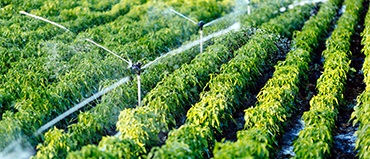
The micro-sprinkler segment is expected to witness the highest growth throughout the forecast period. Micro sprinklers deliver highly uniform water distribution across fields and gardens. Their strategic placement allows targeted irrigation for specific zones or individual plants, ensuring optimal water supply and healthier plant development. Compared to traditional sprinkler systems, micro-sprinklers operate at lower pressures and flow rates, significantly reducing energy consumption associated with water pumping.
Asia Pacific projected to be the fastest-growing regional market.
Asia Pacific is expected to record the highest growth during the forecast period, driven by increasing climatic challenges such as droughts, heatwaves, and erratic rainfall. Microirrigation systems offer precise and controlled water application, enhancing crop resilience under extreme weather conditions. Farmers can customize irrigation schedules according to crop requirements, helping crops adapt to shifting climatic patterns. In regions where irrigation water contains high levels of salts, heavy metals, or impurities, microirrigation systems equipped with filtration and purification units ensure cleaner water supply. This ultimately improves crop health, quality, and yield despite poor water conditions.
Leading Microirrigation Systems Companies:
Prominent companies operating in the global microirrigation systems market include:
- Jain Irrigation Systems Ltd. (India)
- The Toro Company (US)
- Netafim (Israel)
- Nelson Irrigation (US)
- Rain Bird Corporation (US)
- Finolex Plasson (India)
- Mahindra EPC Irrigation Limited (India)
- T-L Irrigation (US)
- Hunter Industries (US)
- Rivulis (Israel)
- Chinadrip Irrigation Equipment Co., Ltd. (China)
- Elgo Irrigation Ltd. (Israel)
- Antelco (Australia)
- Microjet (South Africa)
- Irritec S.p.A (Italy)
Frequently Asked Questions About Microirrigation Systems Market
Q1. What is the microirrigation systems market?
The microirrigation systems market includes technologies such as drip irrigation, micro-sprinklers, and soaker hoses designed to deliver water directly to plant roots with high efficiency. These systems aim to reduce water wastage, improve crop yields, and enhance resource management in agriculture and landscaping.
Q2. What are the key types of microirrigation systems?
The primary types include:
- Drip irrigation systems
- Micro-sprinkler systems
- Sprayers and sprayers irrigation
- Bubblers
Each system varies in pressure, water delivery pattern, and suitability for specific crops.
Q3. What factors are driving growth in the microirrigation systems market?
Major growth drivers include:
- Rising water scarcity concerns
- Government subsidies and supportive policies
- Expansion of high-value crops
- Increasing adoption of precision farming
Need for higher agricultural productivity with limited resources
Q4. Which crops commonly use microirrigation systems?
Microirrigation is widely used for fruits, vegetables, plantation crops, field crops, orchards, and nursery plants. High-value crops such as grapes, citrus, sugarcane, and tomatoes particularly benefit from the precise water and nutrient delivery.
Q5. Which region dominates the microirrigation systems market?
Asia Pacific holds a major share due to large agricultural land, strong government push (subsidies), and widespread adoption in India, China, and Australia. North America and Europe also show strong demand, especially in drought-prone areas.
Q6. Why is microirrigation considered more efficient than traditional irrigation?
Microirrigation minimizes water loss through evaporation, runoff, and deep percolation. It offers uniform water distribution, low-pressure operation, improved soil moisture management, and targeted delivery, making it significantly more efficient than flood or sprinkler irrigation.
Q7. What technological advancements are influencing the market?
Innovations include:
- IoT-enabled smart irrigation controllers
- Automated fertigation systems
- Soil moisture sensors
- Remote monitoring using mobile apps
- AI-based irrigation scheduling tools
These technologies enhance precision and reduce labor costs.
Q8. Who are the major players in the microirrigation systems market?
Key companies include:
- Jain Irrigation Systems Ltd. (India)
- The Toro Company (US)
- Netafim (Israel)
- Nelson Irrigation (US)
- Rain Bird Corporation (US)
- Finolex Plasson (India)
- Mahindra EPC Irrigation Limited (India)
Q9. What are the main challenges faced by the market?
Challenges include:
- High initial installation cost
- Lack of technical awareness among small farmers
- Maintenance requirements
- Limited access to financing in developing regions
Q10. What is the future outlook for the microirrigation systems market?
The market is expected to grow steadily driven by:
- Increasing global water stress
- Shift toward sustainable farming
- Expansion of smart agriculture
- Government-led microirrigation programs
- Adoption is projected to rise significantly across emerging economies.
80% of the Forbes Global 2000 B2B companies rely on MarketsandMarkets to identify growth opportunities in emerging technologies and use cases that will have a positive revenue impact.
- Food Packaging Market Size Set for Strong Growth Through 2030 Amid Rising Demand for Convenience Foods
- Crop Protection Chemical Market Size, Share & Growth Forecast (2025–2030)
- Mulch Films Market: Driving Sustainable Agriculture Through Innovation
- Agricultural Adjuvants Market Analysis, Trends, and Growth Outlook (2026–2031)
- Japan Enterprise Asset Management Market Growth: AI and Smart Infrastructure Drive Demand

Emerging Trends and Growth Opportunities in the Microirrigation Systems Market
