
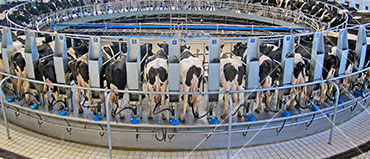
Milking Automation Market: Driving Efficiency, Sustainability, and Animal Welfare
MarketsandMarkets™, 17 Sep 2025
The milking automation market is on a strong growth trajectory, projected to rise from USD 2.61 billion in 2025 to USD 3.68 billion by 2030, reflecting a CAGR of 7.1% during the forecast period. This growth goes beyond traditional efficiency gains—it’s also driven by rising animal welfare expectations, the demand for traceability, and consumers’ growing willingness to pay a premium for ethically produced dairy.
Key Drivers of Market Growth:
Milking automation is no longer just about saving time—it’s about reshaping the dairy industry. Automated systems reduce dependency on scarce labor, improve milk yield consistency, and enhance udder health by ensuring accurate teat cleaning. Additionally, voluntary milking systems minimize animal stress, allowing cows to be milked naturally at their own pace.
Market Opportunities
The future of the milking automation market lies in:
- Integration with IoT and AI – Real-time data analytics for predictive maintenance and enhanced herd management.
- Scalability – Affordable solutions for small- and medium-scale farms to boost adoption.
- Hybrid Systems – Combining traditional milking parlors with automated components for flexible solutions.
Cooperative & Contracted Milking Facilities: Fastest-Growing Segment
Among applications, the cooperative and contracted milking facilities segment is set to grow the fastest. These facilities are especially vital in regions with many small and medium-scale farmers, such as India, New Zealand, and Europe, where dairy farming often follows a cooperative framework.
- Collaborative benefits: Farmers share advanced equipment, lowering costs while accessing cutting-edge technology.
- Streamlined operations: Automation ensures consistent milk quality and supply chain traceability.
- Focus on core farming: Contracted models free farmers from time-consuming milking, letting them concentrate on feeding and breeding.
This structure not only enhances productivity but also ensures the sustainability of small-scale dairy farming in an increasingly competitive global market.
Download PDF Brochure: https://www.marketsandmarkets.com/pdfdownloadNew.asp?id=265039621
Milk Extraction & Yield Monitoring: The Largest Market Share
The milk extraction and yield monitoring segment dominates the market, serving as the foundation of milking automation.
- Efficiency & hygiene: Automated parlors and robotic systems extract milk quickly, safely, and reliably with minimal labor input.
- Animal welfare: Voluntary milking reduces stress, aligning with welfare-focused farming practices.
- Data-driven insights: Real-time monitoring of milk volume, fat, and protein content helps identify underperforming cows, detect health issues early, and refine feeding strategies.
This combination of automation and precision data not only boosts productivity but also improves herd health and farm profitability.
Regional Outlook: North America Leads the Market
North America is projected to dominate the milking automation market between 2025 and 2030.
- United States: Large-scale dairies are adopting high-throughput rotary parlors, robotic detachers, inline sensors, and enterprise-level herd management tools. Labor shortages and regulatory pressures on traceability and antimicrobial use further accelerate adoption.
- Canada: While smaller in scale, Canada mirrors the U.S. in technology adoption, supported by strong OEM presence and frequent equipment replacement cycles.
The region is characterized by:
- Long procurement cycles and emphasis on total cost of ownership (TCO).
- Demand for robust after-sales service, spare parts availability, and remote diagnostics.
- Financing options such as captive lease programs and performance-linked contracts gaining traction.
Large farms prioritize redundancy and resilience (dual vacuum systems, mirrored PLCs, backup generators), while small- and mid-scale farms increasingly adopt robotic milking boxes to offset labor shortages and attract younger, tech-savvy operators.
- DeLaval (Sweden)
- Afimilk Ltd. (Israel)
- GEA Group (Germany)
- Nedap N.V. (Netherlands)
- Allflex Livestock Intelligence (US)
- Boumatic (US)
- Waikato Milking Systems (New Zealand)
- Dairymaster (Ireland)
- Beco Dairy Automation Inc. (US)
- Milkplan (Greece)
Future of Milking Automation
The future of milking automation lies in the integration of AI, IoT, and precision livestock farming. Predictive analytics, real-time monitoring, and fully automated dairy barns are expected to become mainstream, further revolutionizing dairy operations. As sustainability, efficiency, and animal welfare gain prominence, milking automation will continue to be at the heart of modern dairy farming.
Key Questions Addressed by the Milking Automation Market Report:
Q1. What is the milking automation market?
Answer: The milking automation market refers to the industry that develops and provides technologies such as automatic milking systems (AMS), robotic milking machines, and supporting equipment to streamline the dairy milking process, enhance productivity, improve animal welfare, and optimize farm management.
Q2. What is the market size and growth outlook for milking automation?
Answer: The milking automation market is projected to grow from USD 2.61 billion in 2025 to USD 3.68 billion by 2030, at a CAGR of 7.1% during the forecast period. Growth is driven by labor shortages, technological advancements, and rising demand for high-quality milk production.
Q3. What factors are driving the growth of the milking automation market?
Answer:
Key growth drivers include:
- Increasing focus on dairy efficiency and productivity
- Rising labor shortages in dairy farming
- Growing consumer demand for traceable and high-quality dairy products
- Animal welfare and comfort considerations
- Adoption of precision livestock farming technologies
Q4. What challenges does the milking automation market face?
Answer:
- High initial investment costs for farmers
- Lack of technical expertise in rural areas
- Maintenance and service availability in developing regions
- Resistance from traditional dairy farmers
Q5. Who are the key players in the milking automation market?
Answer: Leading companies include DeLaval (Sweden), Afimilk Ltd. (Israel), GEA Group (Germany), Nedap N.V. (Netherlands), Allflex Livestock Intelligence (US), BouMatic (US), Waikato Milking Systems (New Zealand), Dairymaster (Ireland), and BECO Dairy Automation Inc. (US).
Q6. How does milking automation benefit dairy farmers?
Answer:
- Reduces reliance on manual labor
- Improves milk yield and quality
- Enhances cow health monitoring
- Increases farm efficiency and profitability
- Ensures consistency and traceability
Q7. What is the future outlook for milking automation?
Answer: The future of the milking automation market will be shaped by:
- Integration of AI, IoT, and data analytics in farm management
- Expansion into emerging markets with government support
- Greater focus on sustainability and animal health monitoring
- Continuous innovation in robotic milking systems
About
80% of the Forbes Global 2000 B2B companies rely on MarketsandMarkets to identify growth opportunities in emerging technologies and use cases that will have a positive revenue impact.
RECENT POST
- Food Packaging Market Size Set for Strong Growth Through 2030 Amid Rising Demand for Convenience Foods
- Crop Protection Chemical Market Size, Share & Growth Forecast (2025–2030)
- Mulch Films Market: Driving Sustainable Agriculture Through Innovation
- Agricultural Adjuvants Market Analysis, Trends, and Growth Outlook (2026–2031)
- Japan Enterprise Asset Management Market Growth: AI and Smart Infrastructure Drive Demand

Emerging Trends and Growth Opportunities in the Milking Automation Market
For In-depth Analysis on Milking Automation Market
