

Global Plant Breeding Market to Reach $13.86 Billion by 2030 Amid Rising Climate Challenges
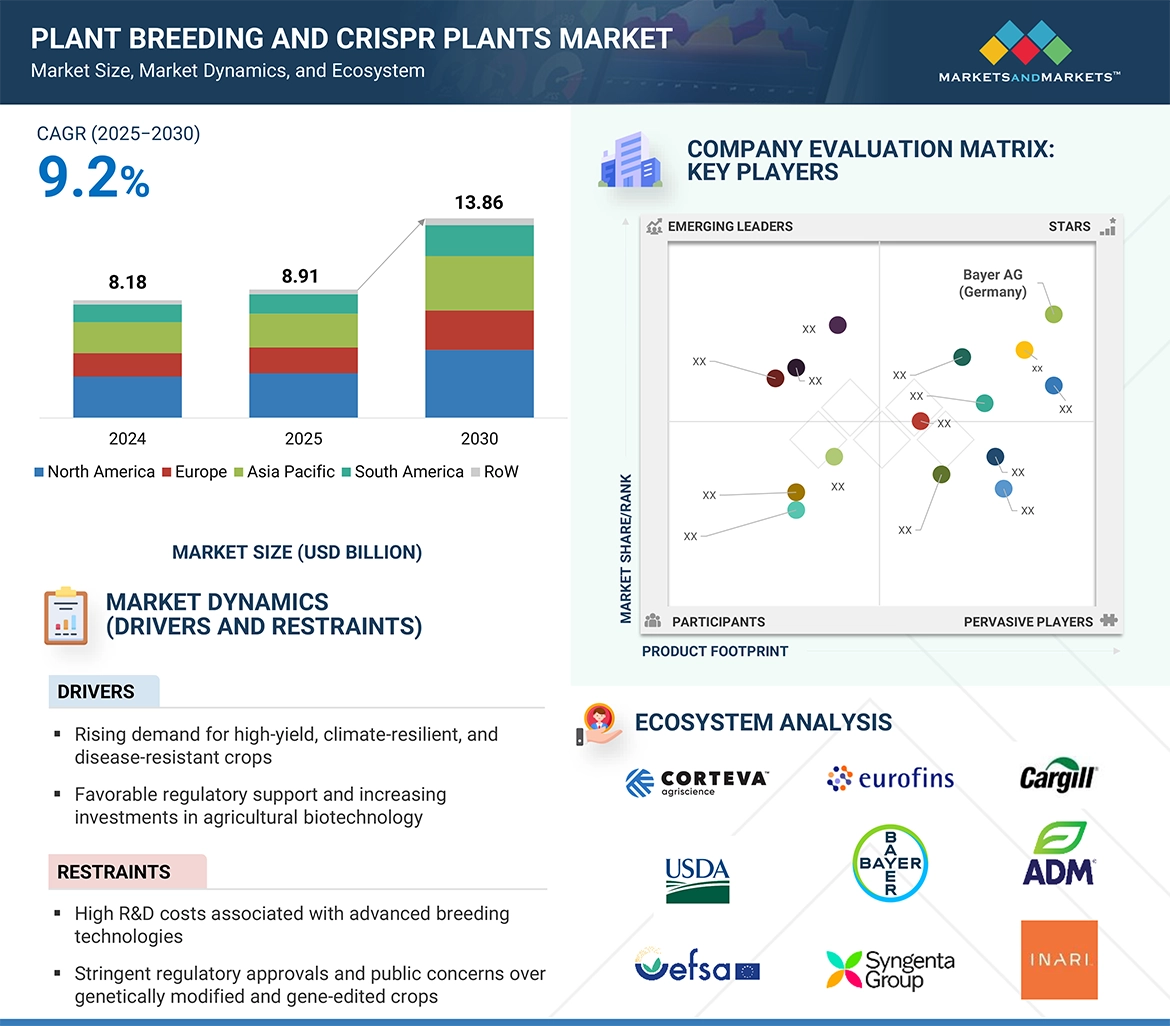
According to a recent MarketsandMarkets report, the global plant breeding market is projected to grow from USD 8.91 billion in 2025 to USD 13.86 billion by 2030, registering a robust CAGR of 9.2% during the forecast period. This growth is fueled by the increasing demand for resilient, high-yield crops amid rising climate challenges and global food security concerns.
Climate Change Driving Market Growth
Climate change is significantly reshaping the plant breeding market. Rising global temperatures, unpredictable rainfall patterns, and the spread of pests are already impacting crop yields. A NASA study published in Nature Food suggests that maize production could drop by 24% by 2030 under high greenhouse gas emissions. Similarly, an Oxfam America report from April 2024 highlights that worsening droughts and shifting climate patterns are causing more frequent crop failures, especially affecting small-scale farmers.
Request Specialized Data to Suit Your Business Requirements
These challenges are accelerating the adoption of advanced breeding techniques, including genome editing, to develop climate-resilient crops.
Cereals & Grains Segment Leads the Market
Within applications, the cereals & grains segment holds the largest share in the plant breeding industry. Staple crops like wheat, rice, and corn are critical for food security, particularly in densely populated regions such as Asia Pacific and Africa. Recent advancements in genome editing and molecular breeding have enabled the development of disease-resistant, nutrient-rich crop varieties. Government support in North America and Asia Pacific for high-yield cereals further strengthens this segment.
Temperature & Stress Tolerance Traits Driving Fastest Growth
The temperature & stress tolerance trait segment is expected to experience the fastest growth during the forecast period. As global warming and heatwaves increasingly affect crop productivity, scientists are leveraging both conventional breeding and genetic engineering to enhance plants’ ability to withstand high temperatures. Precision genome editing allows for improved heat tolerance without compromising yield.
Companies and research institutions are focusing on developing stress-tolerant crops to minimize climate-related losses. This focus is anticipated to drive significant investments in plant breeding market size, particularly in tropical and subtropical regions prone to extreme heat.
South America Emerges as a Key Market
South America, led by Argentina and Brazil, is projected to witness substantial growth in the plant breeding market. These countries benefit from supportive regulations and large-scale commercial farming of genetically modified crops. The region’s vulnerability to extreme weather events underscores the growing need for resilient crop varieties. Government initiatives promoting biotechnological advancements, along with the increasing adoption of genome editing in crops such as soybeans and corn, are key growth drivers in this market.
Key Players in the Market
The global plant breeding market share is highly competitive, with major plant breeding companies including:
- Bayer AG (Germany)
- KWS SAAT SE & Co. KGaA (Germany)
- Corteva (US)
- BASF (Germany)
- UPL (India)
- Rijk Zwaan Zaadteelt en Zaadhandel B.V. (Netherlands)
- Eurofins Scientific (Luxembourg)
- SGS Société Générale de Surveillance SA (Switzerland)
- Sanatech Seed Co., Ltd. (Japan)
- Pairwise (US)
These plant breeding companies are at the forefront of developing innovative breeding solutions and genome editing technologies, catering to the growing demand for resilient, high-yield crops worldwide.
Frequestly Asked Quetions
Q1: What is driving the growth of the plant breeding market?
The growth of the plant breeding market is primarily driven by climate change, rising demand for high-yield and resilient crops, technological advancements in genome editing, and government support for biotechnological crop development.
Q2: What is the estimated plant breeding market size by 2030?
The global plant breeding market size is projected to reach USD 13.86 billion by 2030, growing at a CAGR of 9.2% from 2025.
Q3: Which applications hold the largest share in the plant breeding market?
The cereals & grains segment holds the largest share, as staple crops like wheat, rice, and corn are in high demand for global food security.
Q4: Which traits are expected to witness the fastest growth in the plant breeding market?
The temperature and stress tolerance trait segment is expected to grow the fastest due to increasing heatwaves and extreme climate events impacting crop productivity.
Q5: Who are the key plant breeding companies in the market?
Major plant breeding companies include Bayer AG, KWS SAAT SE & Co. KGaA, Corteva, BASF, UPL, Rijk Zwaan, Eurofins Scientific, SGS, Sanatech Seed Co., Ltd., and Pairwise.
80% of the Forbes Global 2000 B2B companies rely on MarketsandMarkets to identify growth opportunities in emerging technologies and use cases that will have a positive revenue impact.
- Food Packaging Market Size Set for Strong Growth Through 2030 Amid Rising Demand for Convenience Foods
- Crop Protection Chemical Market Size, Share & Growth Forecast (2025–2030)
- Mulch Films Market: Driving Sustainable Agriculture Through Innovation
- Agricultural Adjuvants Market Analysis, Trends, and Growth Outlook (2026–2031)
- Japan Enterprise Asset Management Market Growth: AI and Smart Infrastructure Drive Demand

