

Global Plant Growth Regulators Market: Driving Sustainable Agriculture Forward
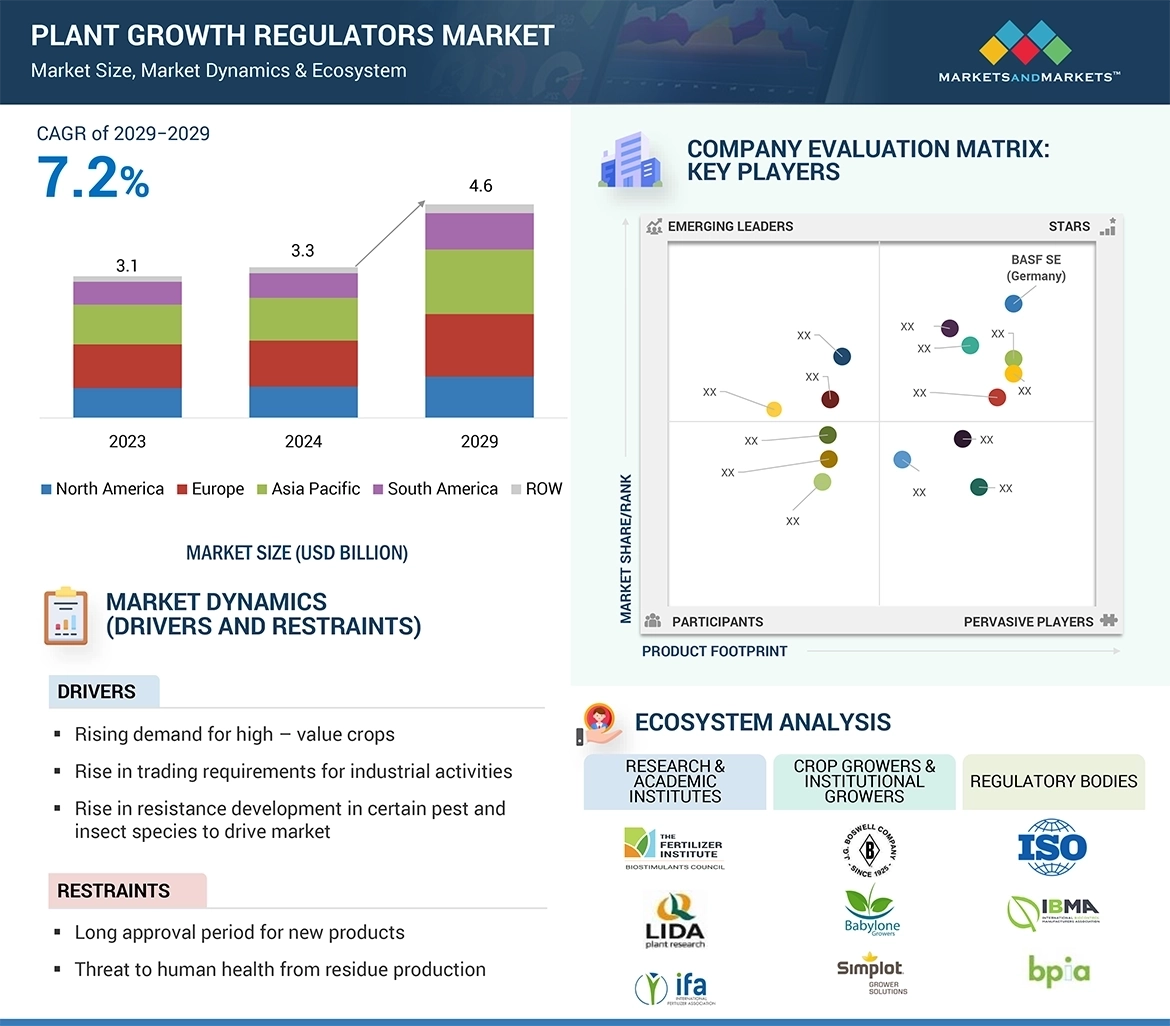
According to MarketsandMarkets, the plant growth regulators (PGRs) industry is projected to grow from USD 3.3 billion in 2024 to USD 4.6 billion by 2029, at a CAGR of 7.2%. This growth is fueled by the rising demand for high-value crops, a stronger push toward sustainable agriculture, and the growing adoption of organic farming practices worldwide.
Plant growth regulators are increasingly recognized as essential tools in modern farming, enabling higher yields, better quality crops, and resilience against environmental stresses.
Request Specialized Data to Suit Your Business Requirements
Why Plant Growth Regulators Matter
The global agriculture sector is under constant pressure to meet the rising demand for food, feed, and biofuels while battling limited arable land and changing climate conditions. PGRs play a vital role by:
- Enhancing crop yield and quality
- Reducing reliance on traditional pesticides and fertilizers
- Supporting organic and sustainable farming systems
Their growing adoption reflects a shift from short-term productivity solutions to long-term sustainability in farming.
Attractive Opportunities in the Market
Europe: A Hub for Sustainable Practices
Europe is emerging as a key region for plant growth regulators adoption, driven by:
- Rising demand for organic foods
- Government support for sustainable farming
- Efforts to combat soil desertification
- Modern agricultural practices focused on yield improvement
In this region, expansion, investment, and product innovation are expected to create significant opportunities for companies.
Asia-Pacific: Largest Market Share
Asia-Pacific dominates the market thanks to its massive agricultural output and government-led initiatives to modernize farming. With a growing population and changing dietary preferences, the demand for high-quality crops is accelerating. Increased adoption of PGRs in countries like India and China is expected to drive growth further.
Market Dynamics
-
Driver: Rising Pest Resistance
Resistance in pests and weeds has made pesticides less effective, pushing farmers toward plant growth regulators as a safer and more sustainable solution. For instance, herbicide-resistant black grass in the UK is estimated to cause crop losses worth USD 449.2 million annually. -
Restraint: Long Approval Timelines
Regulatory approvals for new PGR products can take over 10 years and require investments of more than USD 100 million. This complexity slows innovation and raises costs for growers. -
Opportunity: Boosting Crop Yield
With limited arable land and climate pressures, improving crop productivity is critical. PGRs enhance crop vigor without disrupting soil health, making them vital for crops like oilseeds and sugarcane. -
Challenge: Low Awareness Among Farmers
Many growers are still unaware of the benefits and correct usage of PGRs. This lack of knowledge hinders adoption, highlighting the need for educational initiatives by manufacturers and governments.
Market Segments
- By Type: Cytokinins hold the largest market share due to their role in boosting cell division, plant vigor, and crop yield.
- By Function: Plant growth inhibitors are expected to register the highest CAGR, particularly as farmers turn to them for stress tolerance and growth regulation in extreme weather conditions.
Competitive Landscape
The market is highly competitive, with major players focusing on acquisitions, partnerships, and product innovation. Key companies include BASF SE, Corteva Agriscience, Syngenta, FMC Corporation, Nufarm, Bayer AG, Tata Chemicals, UPL, Sumitomo Chemical, Nippon Soda, Sipcam Oxon, De Sangosse, Dhanuka Agritech, Sichuan Guoguang Agrochemical, and Zagro.
Recent Developments
- In March 2023, Corteva Agriscience acquired Symborg and Stoller, strengthening its portfolio in biologicals and plant growth regulators.
- In January 2020, BASF SE launched Attraxor, a PGR for managing grass growth, expanding its portfolio in the amenity sector.
- Corteva also collaborated with Bosch’s NEVONEX platform to leverage precision application of crop protection products.
The plant growth regulators industry is entering a dynamic growth phase. With rising consumer demand for sustainable food, regulatory backing, and increasing awareness of soil health, PGRs are poised to become a cornerstone of modern agriculture. Companies that focus on education, innovation, and sustainability-driven solutions will capture the biggest opportunities in this evolving market.
Frequently Asked Questions
Q1. What is the current size and future outlook of the plant growth regulators market?
The global plant growth regulators (PGRs) market is valued at USD 3.3 billion in 2024 and is projected to reach USD 4.6 billion by 2029, growing at a CAGR of 7.2%.
Q2. What are the main factors driving market growth?
Key drivers include rising demand for high-value crops, growing adoption of sustainable and organic farming practices, and increasing resistance of pests and weeds to pesticides.
Q3. Which region holds the largest share of the PGR market?
The Asia-Pacific region dominates the market due to its large agricultural base, population-driven food demand, and government-backed modernization initiatives.
Q4. Why is Europe considered a high-growth region for PGRs?
Europe’s growth is supported by the rising demand for organic food, emphasis on sustainable farming, and the need to prevent soil degradation. Government initiatives and advanced farming methods also boost adoption.
Q5. What are the key challenges in this market?
The two main challenges are long approval processes for new PGR products and lack of awareness among farmers regarding their benefits and correct application methods.
Q6. Which product type leads the market?
Cytokinins hold the largest market share as they stimulate cell division, enhance plant vigor, and improve yields in fruits, vegetables, and other crops.
80% of the Forbes Global 2000 B2B companies rely on MarketsandMarkets to identify growth opportunities in emerging technologies and use cases that will have a positive revenue impact.
- Food Packaging Market Size Set for Strong Growth Through 2030 Amid Rising Demand for Convenience Foods
- Crop Protection Chemical Market Size, Share & Growth Forecast (2025–2030)
- Mulch Films Market: Driving Sustainable Agriculture Through Innovation
- Agricultural Adjuvants Market Analysis, Trends, and Growth Outlook (2026–2031)
- Japan Enterprise Asset Management Market Growth: AI and Smart Infrastructure Drive Demand

