19 Leading Cell Isolation Companies Shaping Innovation and Market Growth to 2031
Discover the top 19 companies driving innovation in the cell isolation market. This in-depth analysis explores competitive advantages, technological advancements, and key players poised to influence cell therapy manufacturing, stem cell research, cancer research, regenerative medicine, immunology, and clinical diagnostics through 2031. Access the comprehensive Cell Isolation Market/ Cell Separation Market by Product [Consumables (Media, Beads), Instrument (Centrifuges, Filtration)], Cell Type (Stem Cell), Source, Technique, Application (IVD, Research, CGT), End User, Competition, Region - Global Forecast to 2031 report for further insights.
Spotlights on the Industry's Top Cell Isolation Companies
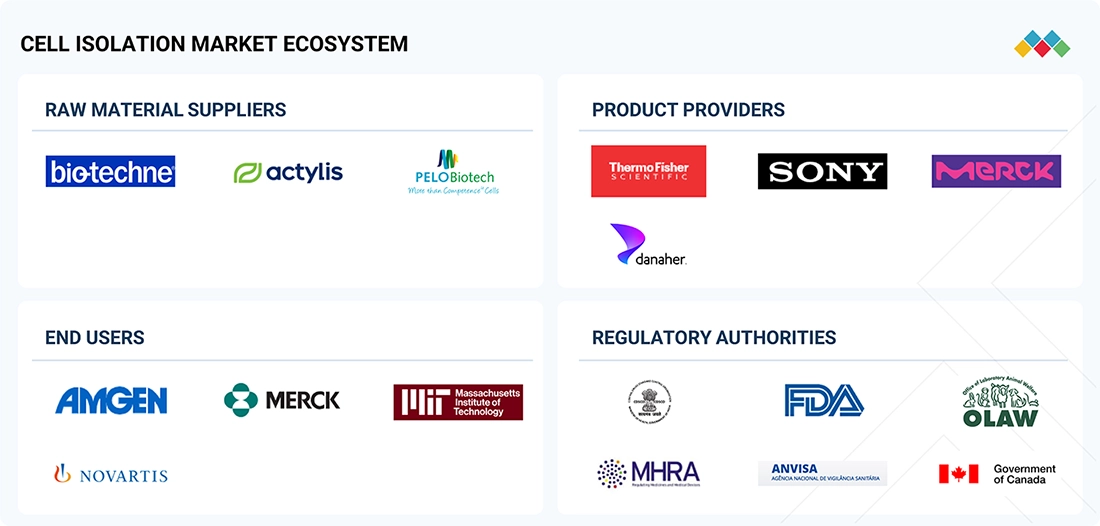
The cell isolation market is evolving as demand increases for high-purity, viable, and reproducible cell populations across biomedical research, clinical diagnostics, and advanced therapeutic development. Technologies such as magnetic-activated cell sorting (MACS), fluorescence-activated cell sorting (FACS), density gradient centrifugation, filtration, and microfluidic separation are enabling more precise cell selection. Growing investments in cell and gene therapies, stem cell research, immunotherapy, and regenerative medicine are accelerating the adoption of advanced isolation platforms. Manufacturers are increasingly focusing on automation, closed-system processing, scalable workflows, and specialized consumables to improve cell recovery, purity, and viability. Competition is shaped by technology differentiation, application-specific solutions, instrument performance, and the ability to support research laboratories as well as clinical and commercial cell therapy manufacturing.
1. Danaher Corporation
Danaher Corporation participates in the cell isolation market through its life sciences businesses, including Beckman Coulter Life Sciences and Cytiva. Beckman Coulter offers cell separation and sorting technologies, including flow cytometry and centrifugation systems, while Cytiva provides cell processing solutions, filtration technologies, and consumables. These capabilities support cell harvesting, purification, and preparation for research and biopharmaceutical manufacturing. Danaher's broad life sciences portfolio enables it to address multiple stages of cell processing, from laboratory-scale isolation to workflows used in advanced therapy development and manufacturing.
2. Merck KGaA
Merck KGaA, operating as MilliporeSigma in the United States and Canada, offers cell isolation and separation technologies through its Life Science business. Its portfolio includes cell separation reagents, magnetic bead-based products, filtration systems, and specialized consumables for cell processing. The company supports applications in immunology, stem cell research, cell culture, and cell and gene therapy manufacturing. Its technologies help researchers isolate target cell populations while maintaining cell viability and purity. Merck's expertise in bioprocessing materials and laboratory solutions strengthens its position in research and therapeutic cell processing workflows.
3. Thermo Fisher Scientific Inc.
Thermo Fisher Scientific Inc. provides a comprehensive portfolio of cell isolation products, reagents, and laboratory technologies through its Gibco and Invitrogen brands. Its offerings include Dynabeads magnetic separation products, cell isolation kits, density gradient media, and reagents for isolating specific immune and stem cell populations. These solutions support applications in immunology, cancer research, stem cell studies, and cell therapy development. By combining cell separation products with cell culture media, analytical instruments, and bioprocessing technologies, Thermo Fisher supports integrated workflows across academic, pharmaceutical, biotechnology, and clinical research laboratories.
4. Becton, Dickinson and Company
Becton, Dickinson and Company (BD) provides cell isolation and separation technologies through its BD Biosciences business. Its portfolio includes fluorescence-activated cell sorting instruments, flow cytometry systems, and cell preparation solutions used to identify and separate specific cell populations. BD's FACS platforms support applications in immunology, oncology, stem cell research, and cellular analysis. The company also offers reagents and consumables that complement cell sorting workflows. Its established flow cytometry expertise, global laboratory presence, and advanced cell analysis capabilities make it an important participant in the cell isolation market.
5. Agilent Technologies, Inc.
Agilent Technologies, Inc. supports cell isolation and separation workflows through its cell analysis, laboratory instrumentation, and life sciences product portfolio. Its Seahorse XF technologies enable functional analysis of cellular metabolism, while its flow cytometry and laboratory solutions support complementary cellular research applications. Agilent also provides analytical technologies used in cell characterization and quality assessment. These capabilities are relevant to researchers working in immunology, oncology, and cell therapy development, where isolated cell populations require detailed functional analysis. Its role is strongest in complementary cell analysis and laboratory technologies rather than broad standalone cell separation systems.
6. Sartorius AG
Sartorius AG offers cell separation and processing technologies for biopharmaceutical research and manufacturing. Its portfolio includes filtration systems, cell harvesting solutions, laboratory equipment, and bioprocessing consumables used to prepare and purify biological materials. The company supports workflows involving cell culture, clarification, concentration, and separation, which are essential in cell therapy and biopharmaceutical production. Sartorius also provides technologies for process monitoring and analytical characterization. Its integrated bioprocessing expertise and focus on scalable manufacturing solutions make it relevant to organizations developing advanced cell therapies and biologics.
7. Bio-Rad Laboratories, Inc.
Bio-Rad Laboratories, Inc. provides life sciences research instruments, reagents, and technologies that support cell isolation and downstream analysis. Its portfolio includes flow cytometry systems, cell analysis solutions, antibodies, and research reagents used to characterize cellular populations. These products support immunology, cancer research, stem cell studies, and other applications requiring accurate identification and analysis of isolated cells. Bio-Rad's expertise in flow cytometry and biological research tools enables laboratories to integrate cell characterization with broader experimental workflows. Its contribution is particularly relevant to research-focused cell analysis and separation applications.
8. QIAGEN
QIAGEN develops sample and assay technologies that support molecular biology, diagnostics, and life sciences research. Its portfolio includes nucleic acid extraction and purification systems, sample preparation kits, and automated platforms that complement cell isolation workflows. These solutions help researchers process biological samples and obtain high-quality cellular and molecular material for downstream analysis. QIAGEN's expertise in sample preparation is relevant to applications involving oncology, infectious disease research, genomics, and molecular diagnostics. Although its primary focus is not comprehensive cell sorting instrumentation, its sample preparation technologies contribute to workflows involving isolated cells and their subsequent characterization.
9. F. Hoffmann-La Roche Ltd.
F. Hoffmann-La Roche Ltd. participates in the cell isolation ecosystem through its flow cytometry and life sciences research technologies, including solutions offered through Roche's established research and diagnostics activities. Its broader portfolio supports cellular analysis, molecular testing, and biomarker research. These capabilities are relevant to laboratories investigating immune cell populations, disease mechanisms, and cellular characteristics. Roche's diagnostic expertise and research infrastructure provide complementary support for cell-based studies, although its direct commercial positioning in standalone cell isolation equipment and consumables is narrower than that of dedicated cell separation technology providers.
10. Revvity
Revvity provides life sciences technologies, reagents, and analytical solutions supporting cell biology, drug discovery, and translational research. Its portfolio includes cellular imaging, assay technologies, and laboratory products used to investigate biological processes and characterize cell populations. Through its research tools and workflow solutions, Revvity supports applications in oncology, immunology, stem cell research, and drug development. These capabilities complement cell isolation by enabling researchers to evaluate the function, viability, and characteristics of separated cells. Its relevance is strongest in cell analysis and research technologies that support downstream applications following isolation.
11. Corning Incorporated
Corning Incorporated supplies laboratory products and cell culture technologies that support cell isolation, preparation, and expansion. Its portfolio includes cell culture vessels, filtration products, bioprocess containers, and specialized consumables used in research and biopharmaceutical manufacturing. The company also offers cell culture systems that support the growth and maintenance of isolated cell populations. These solutions are relevant to stem cell research, regenerative medicine, cell therapy development, and biologics manufacturing. Corning's expertise in advanced materials and laboratory consumables enables it to support essential upstream and downstream stages of cell processing workflows.
12. Lonza
Lonza provides cell and gene therapy development, manufacturing, and research solutions, including technologies and services that support cell isolation and processing. Its capabilities encompass cell processing materials, specialized media, bioprocessing systems, and manufacturing services for advanced therapies. The company supports workflows involving immune cells, stem cells, and other therapeutic cell populations, where isolation quality and cell viability are critical. Lonza's experience in cell therapy manufacturing and process development positions it as a relevant participant in the market, particularly as developers seek scalable and controlled workflows for clinical and commercial production.
13. Bio-Techne
Bio-Techne supplies life sciences reagents, instruments, and technologies used in cell biology, immunology, and advanced therapy research. Through its R&D Systems, Novus Biologicals, and other brands, the company offers antibodies, proteins, assay reagents, and cell analysis technologies that support the identification and characterization of cell populations. Its cell and gene therapy-related solutions also contribute to research and manufacturing workflows. Bio-Techne's expertise in biologically relevant reagents and cellular analysis supports downstream applications of isolated cells, particularly in stem cell research, immunology, oncology, and regenerative medicine.
14. Terumo Corporation
Terumo Corporation participates in cell processing through its medical technology and regenerative medicine businesses, including Terumo Blood and Cell Technologies. Its portfolio includes technologies for blood component separation, cell collection, processing, and therapeutic apheresis. These systems support the collection and preparation of cellular components used in transfusion medicine, transplantation, and cell therapy applications. The company's expertise in automated cell processing and blood separation is particularly relevant to therapeutic workflows requiring consistent cell recovery and handling. Its global presence in healthcare technology supports its role in specialized cell collection and separation applications.
15. Miltenyi Biotec
Miltenyi Biotec is a specialized provider of cell separation, cell analysis, and cell processing technologies. Its portfolio includes MACS magnetic cell separation systems, antibodies, magnetic microbeads, flow cytometry instruments, and automated cell processing platforms. The company also offers the CliniMACS system for clinical-scale cell processing, supporting applications in cell and gene therapy development and manufacturing. Its technologies enable the isolation and enrichment of specific cell populations, including immune and stem cells. Miltenyi Biotec's dedicated expertise in magnetic separation and clinical cell processing makes it a key participant in the global cell isolation market.
16. Takara Bio Inc.
Takara Bio Inc. develops life sciences reagents, molecular biology technologies, and cell-based research solutions. Its offerings include cell culture products, stem cell research tools, gene expression technologies, and reagents that support the preparation and analysis of isolated cell populations. The company also provides technologies for cell and gene therapy research and development. These products are relevant to laboratories working in regenerative medicine, oncology, genomics, and cellular engineering. Takara Bio's expertise in molecular biology and cell research enables it to support complementary stages of cell isolation, expansion, and downstream characterization.
17. GenScript
GenScript provides life sciences research services, reagents, and technologies for biotechnology, pharmaceutical, and academic research organizations. Its portfolio includes antibody development, protein production, gene synthesis, cell line development, and cell-based research services. These capabilities support applications involving engineered cells, immune cell research, and advanced therapeutic development. GenScript's services can complement cell isolation workflows by supporting the development and characterization of specific cell populations and related biological products. Its relevance is primarily through cell-based research and biotechnology services rather than a broad portfolio of standalone cell separation instruments.
18. Sony Corporation
Sony Corporation participates in cell isolation and analysis through its Sony Biotechnology business, which develops flow cytometry and cell sorting technologies. Its SH800 and MA900 cell sorter platforms support the separation of specific cell populations for research applications. The systems are designed to facilitate sorting workflows across immunology, oncology, stem cell research, and other life sciences fields. Sony's cell sorting technologies combine optical detection, fluidics, and automated operation to support precise cellular analysis. Its specialized flow cytometry and sorting capabilities establish a direct presence in the cell isolation market.
19. Alfa Laval
Alfa Laval provides separation, filtration, and fluid-handling technologies used across biotechnology, pharmaceutical manufacturing, and other process industries. Its centrifugation and separation equipment supports the processing of biological materials, including applications involving cell harvesting and clarification. The company's technologies are relevant to larger-scale bioprocessing workflows where efficient separation, product recovery, and process consistency are important. Alfa Laval's expertise in industrial separation systems provides complementary capabilities for cell processing and biopharmaceutical production. Its strongest relevance is in process-scale separation and bioprocessing equipment rather than specialized laboratory cell sorting platforms.
80% of the Forbes Global 2000 B2B companies rely on MarketsandMarkets to identify growth opportunities in emerging technologies and use cases that will have a positive revenue impact.
- Food Packaging Market Size Set for Strong Growth Through 2030 Amid Rising Demand for Convenience Foods
- Crop Protection Chemical Market Size, Share & Growth Forecast (2025–2030)
- Mulch Films Market: Driving Sustainable Agriculture Through Innovation
- Agricultural Adjuvants Market Analysis, Trends, and Growth Outlook (2026–2031)
- Japan Enterprise Asset Management Market Growth: AI and Smart Infrastructure Drive Demand

Conclusion: Unlock the Full Cell Isolation Market Intelligence The cell isolation market is positioned for continued technological advancement as demand grows for high-quality cellular materials in cell and gene therapy, regenerative medicine, cancer research, immunology, and clinical diagnostics. Innovations in magnetic separation, flow cytometry, microfluidics, automated cell processing, and filtration are creating opportunities for technology providers to improve cell purity, recovery, viability, and processing efficiency. At the same time, manufacturers must address regulatory requirements, process standardization, contamination control, and scalability, particularly for clinical and commercial cell therapy applications. Companies combining specialized separation technologies with integrated consumables, automation, and bioprocessing solutions are well positioned to address evolving research and manufacturing requirements. To gain comprehensive insights into market dynamics, competitive developments, product innovations, and strategic opportunities through 2031, explore the full report: Cell Isolation Market/ Cell Separation Market by Product [Consumables (Media, Beads), Instrument (Centrifuges, Filtration)], Cell Type (Stem Cell), Source, Technique, Application (IVD, Research, CGT), End User, Competition, Region - Global Forecast to 2031.