23 Leading DNA Diagnostics Companies Shaping Innovation and Market Growth to 2029
Discover the top 23 companies driving innovation in the DNA diagnostics market. This in-depth analysis explores competitive capabilities, technological advancements, and key players shaping infectious disease testing, oncology diagnostics, genetic analysis, and personalized medicine through 2029. Access the comprehensive DNA Diagnostics Market by Product (Instruments, Reagents & Kits, Services & Software), Technology (PCR, Mass Spectroscopy, Microarrays), Application (Infectious Disease (Hepatitis, HIV, HPV), Oncology), Specimen (Blood, Urine) - Global Forecast to 2029 report for further insights.
Spotlights on the Industry's Top DNA Diagnostics Companies
The DNA diagnostics market is evolving as advances in molecular biology, polymerase chain reaction (PCR), DNA sequencing, microarrays, and automated sample preparation improve the detection and characterization of genetic material. These technologies support applications ranging from infectious disease identification and inherited disorder testing to cancer detection, treatment selection, and disease monitoring. Laboratories increasingly prioritize analytical sensitivity, reproducibility, faster turnaround times, and efficient workflows. Automation, multiplex testing, and advances in bioinformatics are also expanding the scope of molecular diagnostics. Competition includes diversified diagnostics manufacturers, genomics specialists, and companies developing targeted molecular assays. Regulatory compliance, clinical validation, assay accessibility, and integration with laboratory information systems remain important factors shaping adoption across clinical laboratories, hospitals, and research institutions.
1. Danaher
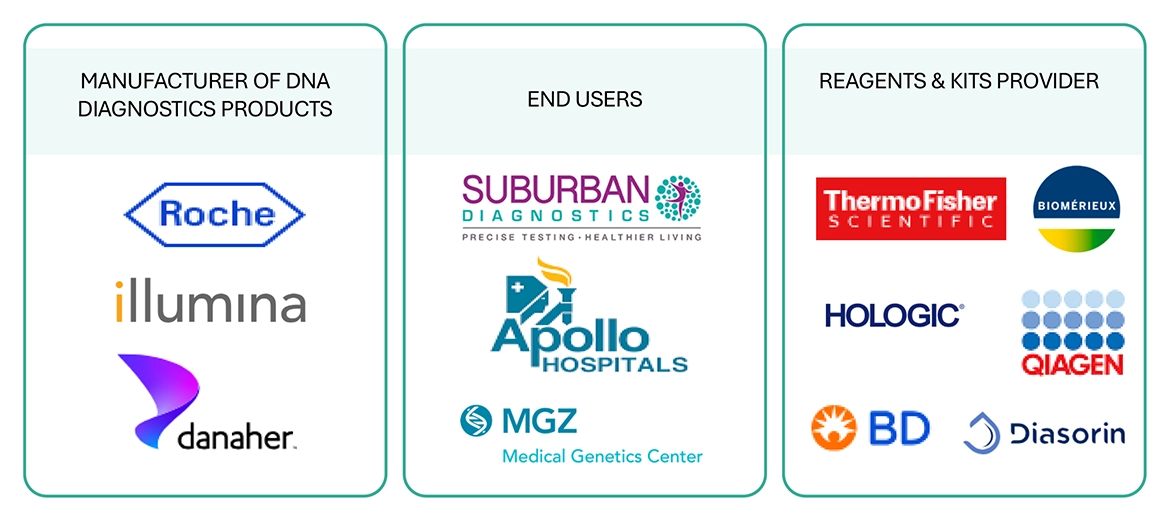
Danaher participates in DNA diagnostics through its operating companies, including Cepheid, Integrated DNA Technologies (IDT), and Beckman Coulter. Cepheid develops automated molecular diagnostic systems and PCR-based assays, particularly for infectious disease testing, while IDT supplies oligonucleotides, primers, probes, and nucleic acid synthesis products used in assay development. These businesses support clinical molecular testing, genomics research, and diagnostic assay manufacturing. Danaher's combination of diagnostics platforms and life sciences technologies provides exposure to multiple DNA testing workflows, although specific products and capabilities vary across its operating companies.
2. Illumina, Inc.
Illumina, Inc. is a major provider of DNA sequencing technologies used in genomic analysis, genetic testing, oncology research, and clinical applications. Its sequencing platforms and associated reagents enable laboratories to analyze genetic variants, characterize disease-associated mutations, and investigate inherited conditions. Illumina's technologies support applications such as hereditary disease assessment, cancer genomics, and infectious disease research. Its sequencing chemistry, library preparation workflows, and data analysis ecosystem contribute to its role in genomic diagnostics. Clinical use depends on the specific assay, regulatory status, and applicable laboratory requirements in each market.
3. F. Hoffmann-La Roche Ltd.
F. Hoffmann-La Roche Ltd. participates in DNA diagnostics through Roche Diagnostics, which develops molecular testing instruments, reagents, and assays. Its real-time PCR technologies support the detection of infectious agents and other clinically relevant genetic targets. Roche's molecular diagnostics portfolio includes automated platforms designed to support laboratory efficiency and standardized testing workflows. The company's capabilities in assay development, clinical diagnostics, and laboratory automation make it relevant to DNA-based testing across infectious disease and other diagnostic applications. Roche's integration of instruments and assays helps laboratories manage routine molecular testing requirements and diagnostic quality standards.
4. bioMérieux
bioMérieux develops in vitro diagnostic solutions with a strong focus on infectious disease detection and clinical microbiology. Its molecular diagnostics portfolio includes the BIOFIRE system, which uses multiplex PCR to identify multiple pathogens from a single patient sample, alongside other nucleic acid testing technologies. These solutions support timely clinical decisions in hospitals and diagnostic laboratories. bioMérieux combines diagnostic assay development, automated instruments, and laboratory workflow expertise to address pathogen detection needs. Its established position in infectious disease diagnostics makes it relevant to DNA testing, particularly where rapid, multiplex molecular analysis can help guide patient management.
5. Hologic, Inc.
Hologic, Inc. develops diagnostic technologies with a strong focus on women's health, molecular diagnostics, and infectious disease testing. Its molecular diagnostic portfolio includes the Panther system and nucleic acid amplification assays for applications such as human papillomavirus (HPV) detection and sexually transmitted infection testing. These platforms automate important steps in molecular testing and support high-throughput laboratory workflows. Hologic's experience in women's health diagnostics and molecular assay development positions it within the DNA diagnostics market, particularly for screening and infectious disease applications where reliable nucleic acid detection is central to clinical decision-making.
6. Abbott Laboratories
Abbott Laboratories provides diagnostic instruments, reagents, and molecular testing systems for hospitals, reference laboratories, and other healthcare providers. Its molecular diagnostics portfolio includes real-time PCR and other nucleic acid testing technologies used to detect infectious diseases and clinically significant genetic targets. Abbott's established diagnostic infrastructure and global distribution network support the use of molecular assays in diverse healthcare settings. Its expertise in assay development, laboratory systems, and diagnostic quality contributes to its relevance in DNA diagnostics. Specific capabilities depend on the platform and test, including whether the assay is intended for infectious disease detection or another clinical application.
7. Thermo Fisher Scientific Inc.
Thermo Fisher Scientific Inc. offers a broad range of molecular diagnostic and life sciences technologies, including PCR instruments, nucleic acid extraction products, reagents, and sequencing solutions. Its Applied Biosystems real-time PCR systems support genetic analysis, pathogen detection, and gene expression studies, while its broader portfolio enables laboratories to prepare and analyze DNA samples. The company also supplies molecular biology reagents and consumables used in assay development and validation. Its integrated product range and global service capabilities make it relevant to clinical laboratories, biotechnology companies, pharmaceutical researchers, and institutions conducting DNA-based diagnostic testing.
8. QIAGEN
QIAGEN develops sample preparation technologies, molecular diagnostic assays, PCR systems, and bioinformatics solutions. Its products support DNA extraction, nucleic acid amplification, pathogen detection, and genetic analysis across clinical and research environments. The company's portfolio includes real-time PCR technologies and specialized molecular testing solutions used in infectious disease testing and other diagnostic applications. By combining sample preparation with assay technologies and laboratory automation, QIAGEN helps streamline DNA testing workflows. Its established molecular diagnostics expertise and global customer base support its relevance to laboratories seeking reliable, standardized methods for nucleic acid analysis.
9. Revvity, Inc.
Revvity, Inc. provides life sciences and diagnostics technologies, including genetic screening, molecular testing, reagents, and laboratory solutions. Its diagnostic activities include products and services supporting newborn screening, genetic analysis, and the detection of clinically relevant biomarkers. The company's life sciences portfolio also supports nucleic acid research and assay development. These capabilities connect Revvity with DNA diagnostics across selected clinical and research applications. Its relevance is particularly associated with specialized diagnostics and genetic testing workflows, where reliable sample analysis and established laboratory processes are important to identifying inherited conditions and supporting patient care.
10. Myriad Genetics, Inc.
Myriad Genetics, Inc. specializes in molecular diagnostic testing and precision medicine, with a focus on genetic insights that can inform cancer risk assessment and treatment decisions. Its hereditary cancer testing evaluates genetic variants associated with inherited cancer susceptibility, while its molecular diagnostics expertise supports personalized healthcare applications. The company's services combine laboratory analysis, genetic interpretation, and clinical reporting. Myriad's focus on clinically actionable genetic information makes it relevant to DNA diagnostics, particularly in oncology and inherited disease assessment. Its contribution centers on diagnostic testing services and interpretation rather than the broad manufacture of PCR instruments or laboratory reagents.
11. Siemens Healthineers AG
Siemens Healthineers AG develops medical imaging, laboratory diagnostics, and healthcare technologies for hospitals and diagnostic laboratories. Its laboratory diagnostics portfolio includes molecular testing capabilities through selected platforms and assays, supporting the detection of infectious agents and other clinically relevant targets. The company also provides laboratory automation and systems integration technologies that can help improve testing workflows. Siemens Healthineers' relevance to DNA diagnostics is linked to its diagnostic laboratory solutions and molecular testing activities, although its overall business is broader than DNA-based analysis. Specific PCR and nucleic acid testing products should be evaluated against its current portfolio.
12. Becton, Dickinson and Company
Becton, Dickinson and Company (BD) supplies medical technologies and diagnostic systems, including molecular testing platforms for clinical laboratories. Its BD MAX System automates molecular workflows and supports PCR-based detection of selected infectious disease targets. By combining sample processing, amplification, and assay-specific analysis, the system helps laboratories standardize testing and manage routine diagnostic workloads. BD's experience in clinical diagnostics, sample collection, and laboratory systems supports its role in DNA diagnostics, particularly in infectious disease applications. Its product relevance depends on the assays available for each platform and their applicable clinical indications.
13. Grifols, S.A.
Grifols, S.A. operates across plasma-derived medicines, transfusion medicine, and diagnostic technologies. Its diagnostic activities include products for blood screening and transfusion medicine, where molecular methods can be used to detect nucleic acids from infectious agents. Nucleic acid testing is important in blood safety because it can identify selected infections during screening and help reduce the risk of transmission through donated blood products. Grifols' experience in transfusion medicine and diagnostic laboratory solutions gives it relevance to DNA-based testing in specialized settings, although its overall business extends well beyond the DNA diagnostics market.
14. QuidelOrtho Corporation
QuidelOrtho Corporation develops diagnostic products for clinical laboratories, hospitals, and point-of-care settings. Its portfolio includes molecular diagnostic solutions alongside immunoassays, clinical chemistry systems, and rapid diagnostic tests. Molecular testing supports the detection of nucleic acid targets associated with selected infectious diseases and other clinical conditions. QuidelOrtho's diagnostic development expertise and established healthcare distribution channels provide a foundation for participation in DNA diagnostics. Its contribution is most relevant to specific molecular testing products and applications, rather than every segment of genetic testing, sequencing, or specialized inherited disease analysis.
15. Agilent Technologies, Inc.
Agilent Technologies, Inc. provides analytical instruments, laboratory technologies, and molecular biology products used in genomics and clinical research. Its portfolio includes microarray technologies, real-time PCR systems, and associated reagents that support gene expression analysis, nucleic acid quantification, and molecular assay development. Agilent's SurePrint microarray technologies and Aria real-time PCR platforms are examples of products relevant to genetic analysis workflows. The company combines analytical expertise with laboratory instrumentation and consumables, making it relevant to research institutions, biotechnology companies, and selected diagnostic development activities requiring reliable DNA analysis and measurement.
16. DiaSorin S.p.A.
DiaSorin S.p.A. develops diagnostic solutions, including immunodiagnostic and molecular diagnostic systems. Its molecular diagnostics portfolio includes the LIAISON MDX platform and PCR-based tests designed for selected infectious disease applications. These technologies support nucleic acid detection in clinical laboratories and complement the company's wider diagnostic product range. DiaSorin's experience in assay development, automated laboratory testing, and international diagnostics markets supports its role in DNA diagnostics. Its molecular testing offerings are particularly relevant where PCR-based detection helps laboratories identify pathogens and support clinical decisions within established testing workflows.
17. Exact Sciences Corporation
Exact Sciences Corporation specializes in cancer screening and precision oncology diagnostics. Its portfolio includes Cologuard, a stool-based colorectal cancer screening test that analyzes DNA biomarkers alongside other indicators, and Oncotype DX genomic tests that help inform treatment decisions in selected cancer settings. These products demonstrate the use of DNA and molecular biomarkers in screening and oncology care. Exact Sciences combines laboratory testing, biomarker analysis, and clinical evidence to support cancer detection and treatment planning. Its role in DNA diagnostics is particularly focused on specialized cancer-related testing rather than general-purpose molecular diagnostic instruments.
18. Genetic Signatures
Genetic Signatures develops molecular diagnostic assays using its proprietary 3base technology, which modifies DNA to support the detection and differentiation of genetic targets. Its assays are designed for infectious disease testing, including applications involving respiratory pathogens and other clinically relevant microorganisms. The technology supports multiplex molecular testing, enabling laboratories to detect multiple targets within a testing workflow. Genetic Signatures' specialized assay development and focus on infectious disease diagnostics make it relevant to DNA diagnostics, particularly where sensitive nucleic acid detection and the differentiation of closely related organisms are important to clinical laboratory performance.
19. BioCartis
BioCartis, historically known for its Idylla molecular diagnostics platform, developed automated molecular testing technology designed to simplify sample-to-result workflows. The platform was used for selected oncology and infectious disease applications, including mutation analysis and other molecular tests. Its approach emphasized automated sample processing and molecular analysis with limited hands-on intervention. BioCartis has undergone significant corporate and operational changes, so its current business status, platform availability, and ownership of relevant assets should be verified before publication. Its historical technology remains relevant to understanding efforts to make molecular diagnostics more accessible and operationally efficient.
20. TBG Diagnostics Limited
TBG Diagnostics Limited has been associated with molecular diagnostic technologies and nucleic acid testing, including the development and commercialization of PCR-based diagnostic products. Its market relevance depends on the current availability, regulatory status, and commercial activity of its specific assays and platforms. Molecular diagnostics businesses in this segment typically address infectious disease detection and other applications requiring amplification of DNA or RNA targets. However, TBG Diagnostics' present operating status and active DNA diagnostics portfolio should be independently confirmed before describing it as a current leading competitor. This verification is important to distinguish historical technology development from active market participation.
21. Vela Diagnostics
Vela Diagnostics develops molecular diagnostic solutions, including automated sample-to-result workflows and PCR-based testing technologies. Its Sentosa product portfolio has included molecular diagnostic systems and assays for infectious disease testing and other nucleic acid analysis applications. These solutions are designed to support laboratory workflows that combine sample preparation, amplification, and result interpretation. Vela's historical focus on molecular diagnostics gives it relevance to DNA testing, particularly in infectious disease applications. Current commercial availability, geographic distribution, and regulatory status of individual products should be verified to establish its present competitive position in the market.
22. Amoy Diagnostics Co., Ltd.
Amoy Diagnostics Co., Ltd. specializes in molecular diagnostic products, particularly PCR-based companion diagnostics and genetic testing for oncology. Its assay portfolio includes tests designed to detect cancer-associated genetic mutations that can help inform targeted treatment selection. These technologies support precision medicine by identifying molecular alterations relevant to specific therapies and clinical decisions. Amoy Diagnostics combines assay development with expertise in cancer biomarkers and molecular testing. Its focus on oncology companion diagnostics makes it a relevant participant in DNA diagnostics, particularly as personalized cancer treatment increases demand for validated mutation detection and clinically actionable genomic information.
23. Molbio Diagnostics Pvt. Ltd.
Molbio Diagnostics Pvt. Ltd. develops portable molecular diagnostic technologies, including its Truenat platform, which uses chip-based real-time PCR for the detection of selected infectious diseases. The platform is designed to bring molecular testing closer to patients and support decentralized diagnostic workflows in settings with limited laboratory infrastructure. Its products have applications in infectious disease detection, including tuberculosis and other targeted conditions. Molbio's emphasis on portability, operational simplicity, and molecular testing accessibility makes it relevant to DNA diagnostics, particularly in emerging markets and healthcare settings where conventional laboratory infrastructure may be limited.
80% of the Forbes Global 2000 B2B companies rely on MarketsandMarkets to identify growth opportunities in emerging technologies and use cases that will have a positive revenue impact.
- Food Packaging Market Size Set for Strong Growth Through 2030 Amid Rising Demand for Convenience Foods
- Crop Protection Chemical Market Size, Share & Growth Forecast (2025–2030)
- Mulch Films Market: Driving Sustainable Agriculture Through Innovation
- Agricultural Adjuvants Market Analysis, Trends, and Growth Outlook (2026–2031)
- Japan Enterprise Asset Management Market Growth: AI and Smart Infrastructure Drive Demand

Conclusion: Unlock the Full DNA Diagnostics Market Intelligence The DNA diagnostics market is poised to benefit from continued advances in PCR, sequencing, microarray analysis, automation, and molecular biomarker testing. Applications in infectious disease detection, oncology, hereditary disease assessment, and precision medicine are increasing the importance of sensitive assays, reliable clinical validation, and efficient laboratory workflows. Competitive dynamics span global diagnostics manufacturers, genomics specialists, and focused molecular testing developers. Regulatory requirements, data quality, reimbursement considerations, and access to advanced testing infrastructure will remain important to market development. To explore market segmentation, technology trends, key suppliers, and strategic opportunities through 2029, access the full report: DNA Diagnostics Market by Product (Instruments, Reagents & Kits, Services & Software), Technology (PCR, Mass Spectroscopy, Microarrays), Application (Infectious Disease (Hepatitis, HIV, HPV), Oncology), Specimen (Blood, Urine) - Global Forecast to 2029.