The Future of Vaccines: Market Innovations, Growth, and Trends
Vaccines stand as one of the most transformative achievements in modern medicine, fundamentally altering the trajectory of global public health. By training the human immune system to recognize and fight off dangerous pathogens, immunization programs have eradicated deadly diseases, drastically lowered child mortality, and contained complex infectious outbreaks worldwide. As global healthcare priorities evolve beyond traditional pediatric care toward broader lifelong protection, preventive medicine continues to redefine therapeutic development. Today, groundbreaking research in immunology, molecular biology, and biotechnology is driving a dynamic wave of novel preventive and therapeutic immunization solutions designed to address complex global health challenges.
Current Industry Overview
The global vaccines market is undergoing a significant financial and structural expansion. Excluding COVID-19 immunizations, the market achieved a valuation of $49.58 billion in 2024 before settling at $47.65 billion in 2025. Moving forward, the industry is projected to expand at a steady compound annual growth rate (CAGR) of 7.3% from 2025 to 2030, eventually reaching $67.91 billion. This growth reflects a structural pivot in clinical utilization, market demographics, and platform preference.
Demographically, adult immunization has emerged as the dominant revenue generation pillar, representing 54.0% of total industry revenue in 2024. This change is catalyzed by aging demographic structures and expanding public health guidelines targeting adult populations. By disease profile, pneumococcal disease solutions held the single largest market share in 2024 and are anticipated to maintain the fastest expansion with a 10.6% CAGR through 2030.
In terms of formulation and delivery, multivalent products continue to capture the major share over monovalent options due to improved administrative efficiency and broader coverage against multiple strain variants. Conjugate platform technology leads the market by establishing strong, long-lasting T-cell-dependent immune memory. Furthermore, intramuscular and subcutaneous delivery routes retain the vast majority of administration preferences owing to their established clinical safety, rapid systemic absorption, and consistent biological responses.
Key Market Drivers
Several interconnected catalysts are fueling momentum across the global vaccines market. Primary among these is a proactive industry focus on late-stage clinical development, expanded age approvals, and routine product rollouts aimed at unaddressed biological threats. Recent regulatory milestones demonstrate this momentum, such as the approval of adult-specific pneumococcal conjugate options like Capvaxive and the commercial maturity of respiratory syncytial virus (RSV) formulations for older demographics.
In parallel, the rising incidence of infectious pathogens worldwide reinforces the necessity of continuous public health intervention. Governments and non-governmental health organizations are substantially expanding national immunization schedules and providing critical grant funding for novel candidate development. Public health policies increasingly prioritize preventive care to reduce long-term hospitalizations, creating a supportive economic framework for immunization initiatives globally.
Technological advancements have accelerated this development ecosystem. Advanced biotech tools allow researchers to target complex pathogens with high precision, shortening early-stage discovery timelines while enhancing biological efficacy and stability.
Emerging Technologies
The technological architecture of the global vaccines market is undergoing rapid modernization. While conjugate technology remains the dominant platform due to its proven capacity to link polysaccharide antigens with carrier proteins for durable immunity, subunit and inactivated platforms are currently projected to post the fastest operational growth rate through 2030.
At the same time, mRNA platforms represent a transformative leap forward in synthetic biology and commercial scalability. State-of-the-art facilities, such as Moderna's dedicated manufacturing science center at the Harwell site in the United Kingdom, showcase how localized mRNA infrastructure can support national health programs for seasonal respiratory threats like influenza and COVID-19.
Similarly, cell-based manufacturing approaches are gradually replacing legacy egg-based production systems for seasonal influenza formulations. CSL's $800 million capital investment into a cell-based flu vaccine production facility highlights the industry's commitment to scalable, high-yield, and rapidly adaptable manufacturing infrastructure. Recombinant platforms, viral vectors, and advanced encapsulation technologies further diversify the toolbox available to biopharmaceutical researchers.
Future Trends
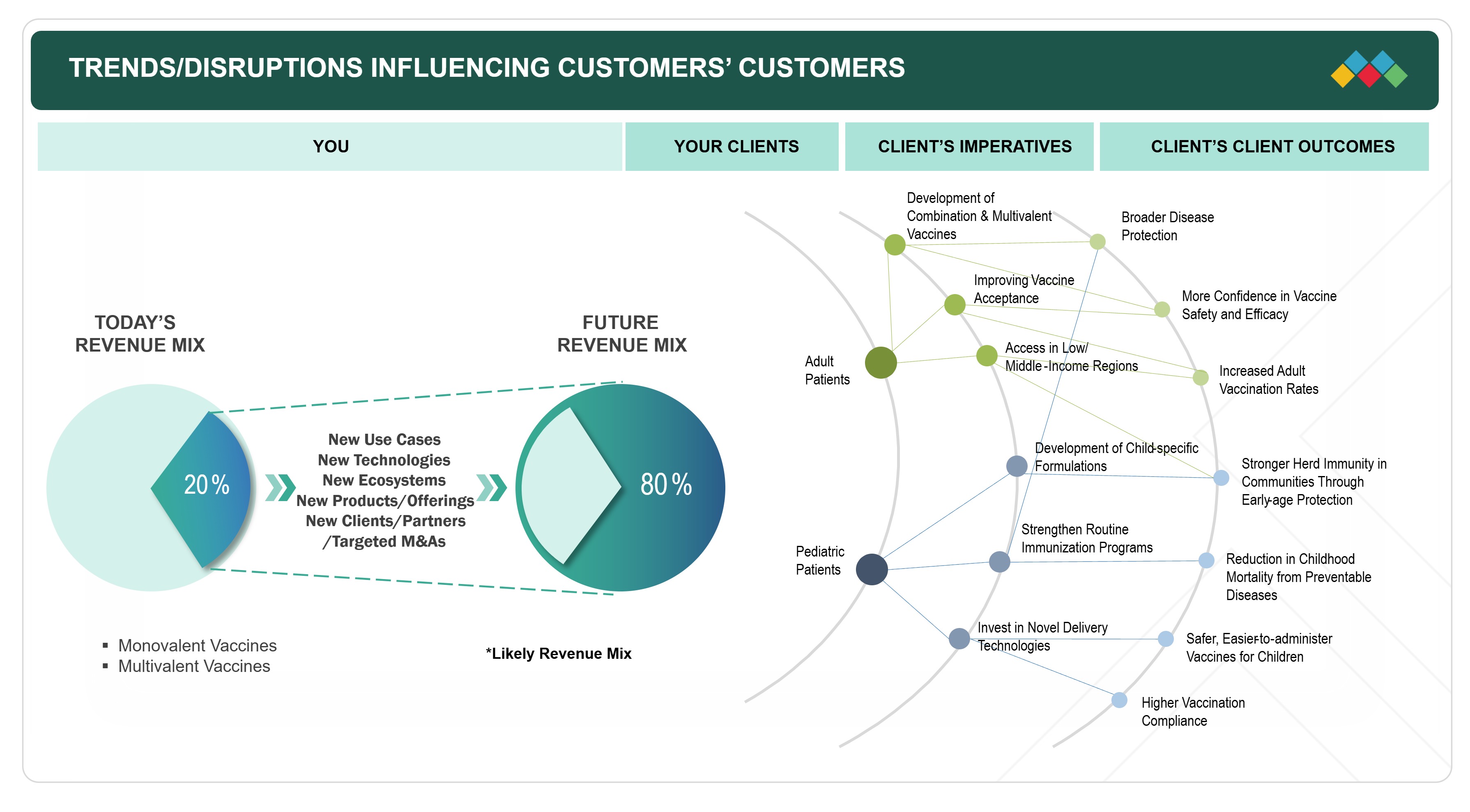
Future trajectory across the global vaccines market will be shaped by several strategic shifts in clinical delivery, geographic manufacturing, and target demographics. Adult and maternal immunization represents a pivotal focus area, transitioning public health focus from early childhood schedules toward lifelong protection against infectious illnesses like shingles, pneumococcal pneumonia, and RSV.
Another defining trend is the incorporation of artificial intelligence and digital analytics in antigen design and clinical trial structuring. Computational biology enables researchers to model pathogen mutations, optimize protein folding, and accelerate early-stage discovery.
Geographically, biopharmaceutical firms are increasingly prioritizing localized technology transfers and regional manufacturing networks. Sanofi's strategic partnership with the Vietnam Vaccine Company (VNVC) exemplifies this effort, establishing domestic manufacturing capabilities in Southeast Asia to decrease reliance on global supply chains. Furthermore, regulatory agencies continue to grant expanded indications for existing formulations, as seen with Merck’s Ebola vaccine, ERVEBO, broadening clinical protection to younger age groups.
Opportunities
Growth in Therapeutic Immunization
Therapeutic vaccines represent a major frontier within the global vaccines market, shifting the core medical paradigm from disease prevention to active treatment. Unlike traditional prophylactic formulations that prepare the immune system prior to exposure, therapeutic candidates stimulate targeted immune responses—specifically cytotoxic T-cell activity—to treat existing diseases such as cancers, chronic hepatitis B virus (HBV), herpes simplex virus (HSV), and tuberculosis (TB).
Market Expansion and Specialty Contracting
The commercial evolution of therapeutic platforms creates lucrative revenue potential. By partnering therapeutic candidates with existing immunotherapies or checkpoint inhibitors, biopharmaceutical organizations can address high-unmet-need patient groups. Transitioning from traditional public tender pediatric supply channels to specialty oncology and specialty pharmacy networks allows companies to command higher average selling prices, track patient outcomes directly, and offer comprehensive value-based treatment contracts.
Challenges
Capital-Intensive Development and Manufacturing
Developing a new vaccine requires immense capital expenditure, specialized facilities complying with Biosafety Level (BSL) standards, and specialized sterile bioprocessing infrastructure. Unlike small-molecule therapeutics, biological production exhibits significant yield variability, requiring strict quality assurance and control (QA/QC) to mitigate costly batch failures. Prophylactic clinical trials also demand large patient cohorts across multi-year study windows to establish statistical safety and efficacy in healthy populations, creating high break-even financial thresholds.
Stringent Regulatory Frameworks
Regulatory scrutiny for preventative biologics remains exceptionally high. Formulations must undergo rigorous Chemistry, Manufacturing, and Controls (CMC) validation, encompassing stability, potency, and sterility metrics. Country-specific labeling requirements, cold-chain logistics validation, and official lot release testing by regulatory agencies add complexity and extend commercialization timelines, while the risk of product recalls introduces operational vulnerability.
Regional Outlook
North American Dominance
North America led the global vaccines market in 2024, commanding a dominant 52.3% revenue share. High adoption rates of premium adult immunizations, robust private insurance coverage, clear public health mandates, and strong investment in biotechnology research sustain the region's top position.
Rapid Asia-Pacific Expansion
The Asia-Pacific region is projected to register the fastest growth rate throughout the 2025 to 2030 forecast period. Densely populated nations such as China and India are expanding national immunization coverage, upgrading healthcare infrastructure, and fostering public-private partnerships to improve vaccine equity. Rising public health awareness and expanding domestic production capacities solidify Asia Pacific as a primary growth engine for global suppliers.
Competitive Landscape
Competition in the global vaccines market is defined by a blend of established multinational pharmaceutical leaders and agile niche specialists. Strategic market leaders like Merck & Co., Inc., Pfizer Inc., GSK Plc, and Sanofi maintain dominant market shares through expansive product portfolios, international distribution networks, and strong R&D funding.
Recent strategic initiatives underscore the active nature of the market. For instance, GSK committed approximately $67 million in early 2025 toward a research collaboration with the University of Oxford to advance immunology, cancer biology, and vaccine science.
Concurrently, regional innovators and specialized biotechnology firms are securing significant footholds. Companies like Serum Institute of India, Bavarian Nordic, Sinovac, Valneva SE, Bharat Biotech, Biological E, and Incepta Pharmaceuticals are driving specialized production in niche disease indications, pediatric combo formulations, and emerging regional markets, contributing to a diversified competitive ecosystem.
What the Future Looks Like
The future of the global vaccines market will be characterized by technological convergence, demographic adaptation, and localized production networks. As the global population ages and chronic infectious conditions present ongoing health burdens, the industry will shift seamlessly between preventive pediatric care, adult health maintenance, and novel therapeutic treatments.
Technological advancements such as mRNA, cell-culture manufacturing, artificial intelligence, and multivalent conjugate platforms will streamline production timelines and enhance immunogenic potency. Furthermore, increased collaboration between global pharmaceutical leaders, academic institutions, and regional healthcare organizations will enhance pandemic preparedness and build resilient supply chains worldwide.
80% of the Forbes Global 2000 B2B companies rely on MarketsandMarkets to identify growth opportunities in emerging technologies and use cases that will have a positive revenue impact.
- Food Packaging Market Size Set for Strong Growth Through 2030 Amid Rising Demand for Convenience Foods
- Mulch Films Market: Driving Sustainable Agriculture Through Innovation
- Agricultural Adjuvants Market Analysis, Trends, and Growth Outlook (2026–2031)
- Crop Protection Chemical Market Size, Share & Growth Forecast (2025–2030)
- Japan Enterprise Asset Management Market Growth: AI and Smart Infrastructure Drive Demand

Conclusion
The global vaccines market is entering a pivotal era of growth and innovation, driven by shifting health demographics, technological breakthroughs, and expanded public health investment. Projected to reach $67.91 billion by 2030, the sector continues to evolve beyond traditional immunization paradigms toward advanced multivalent, adult-focused, and therapeutic solutions. While high development costs and strict regulatory standards require substantial resource commitments, ongoing investments in R&D and regional manufacturing infrastructure ensure a resilient, dynamic future for disease prevention and treatment globally.