25 Leading Air Quality Monitoring Systems Companies Shaping Innovation and Market Growth to 2031
Discover the top 25 companies driving innovation in the air quality monitoring systems market. This in-depth analysis explores competitive capabilities, emerging technologies, and key players shaping environmental protection, industrial emissions control, indoor air quality assessment, and smart city applications through 2031. Access the comprehensive market research report for further insights.
Spotlights on the Industry's Top Air Quality Monitoring Systems Companies
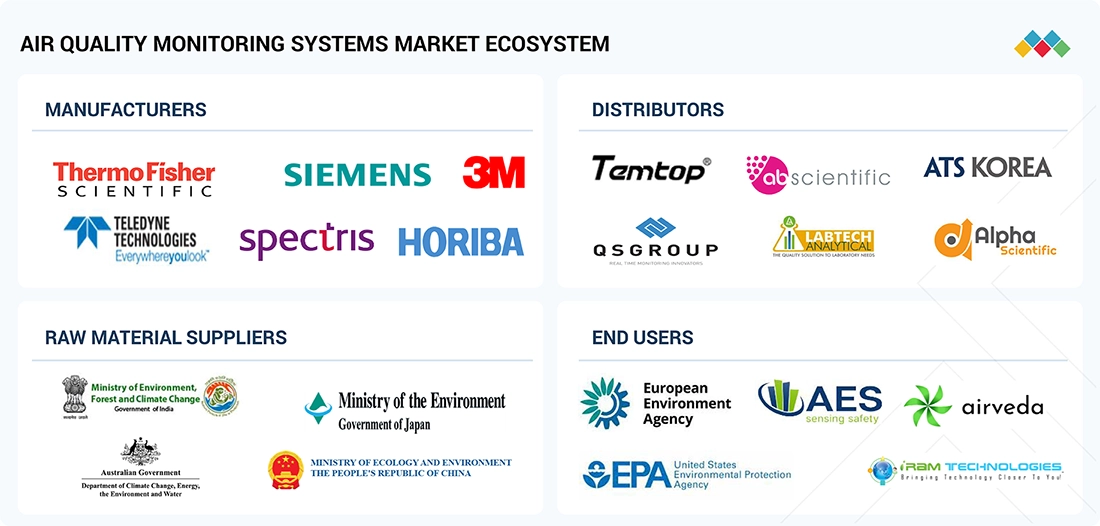
The air quality monitoring systems market is evolving as governments, industrial operators, and urban planners strengthen pollution surveillance and environmental management. Advances in gas analyzers, particulate matter sensors, optical measurement technologies, and connected monitoring platforms are improving the detection of pollutants such as sulfur oxides (SOx), nitrogen oxides (NOx), volatile organic compounds (VOCs), and particulate matter (PM2.5 and PM10). Fixed, portable, wearable, and indoor monitoring systems serve applications ranging from industrial emissions compliance to residential health and smart city planning. Competition includes established analytical instrument manufacturers and specialized sensor and environmental data providers. Measurement accuracy, calibration, regulatory compliance, connectivity, and affordability remain central considerations.
1. Thermo Fisher Scientific, Inc.
Thermo Fisher Scientific, Inc. provides analytical instruments and environmental monitoring technologies used to measure air pollutants and industrial emissions. Its portfolio includes gas analyzers and particulate monitoring instruments designed for ambient air monitoring, environmental compliance, and emissions measurement. These systems help environmental agencies, laboratories, and industrial operators collect data on pollutant concentrations and assess environmental conditions. Thermo Fisher's analytical expertise, instrument portfolio, and global service capabilities support applications requiring reliable measurements and established monitoring workflows.
2. Siemens AG
Siemens AG contributes to air quality monitoring through industrial automation, process instrumentation, building technologies, and environmental measurement solutions. Its process analytics portfolio includes gas analyzers used in industrial applications and emissions monitoring, while its building technologies support indoor environmental management. These capabilities help facilities measure gas concentrations, optimize processes, and support compliance with applicable environmental requirements. Siemens' integration expertise is relevant to industrial sites seeking to connect measurement equipment with automation and control systems. Its precise role depends on the monitoring application and selected product configuration.
3. Teledyne Technologies Incorporated
Teledyne Technologies Incorporated supplies environmental instrumentation, analytical equipment, and measurement systems used in air pollution monitoring. Through its environmental instrumentation businesses, the company offers analyzers for gases such as sulfur dioxide, nitrogen oxides, carbon monoxide, and ozone, alongside technologies for particulate and emissions monitoring. These systems serve regulatory agencies, environmental laboratories, and industrial facilities that require continuous or reference-grade measurements. Teledyne's specialized instrumentation expertise and broad environmental measurement portfolio support applications ranging from ambient air quality assessment to industrial emissions analysis.
4. Emerson Electric Co.
Emerson Electric Co. provides process automation and analytical measurement technologies relevant to industrial air quality and emissions monitoring. Its Rosemount and related analytical product portfolios include gas analysis solutions used in industrial processes and environmental applications. These technologies help operators measure gas composition, monitor process conditions, and support emissions management programs. Emerson's integration of instrumentation with automation and control systems is valuable in petrochemical, power generation, and manufacturing facilities. Product suitability depends on the pollutant being measured, the operating environment, and applicable monitoring requirements.
5. GE Vernova
GE Vernova operates in the energy sector, with technologies and services supporting power generation, grid systems, and decarbonization. Its relevance to air quality monitoring is primarily associated with emissions measurement, power plant performance, and environmental management around energy infrastructure. Monitoring systems used in these environments can help operators assess combustion-related emissions and meet applicable reporting requirements. GE Vernova should be distinguished from the former GE corporate structure, as its current business portfolio focuses on energy. Specific air monitoring products and services should be verified against its latest offerings.
6. 3M
3M has developed technologies and products for occupational health, workplace safety, and environmental measurement. Its historical involvement in air monitoring includes equipment and solutions used to assess workplace exposure and environmental conditions. Such applications can help organizations evaluate airborne contaminants and protect workers in industrial and commercial settings. However, 3M's product portfolio and ownership of specific monitoring businesses have changed over time, so current availability of individual air monitoring instruments should be confirmed. Its relevance is strongest in the broader workplace exposure and safety monitoring ecosystem.
7. HORIBA, Ltd.
HORIBA, Ltd. develops analytical and measurement instruments for environmental monitoring, industrial processes, and emissions testing. Its environmental portfolio includes ambient air quality analyzers and systems for measuring pollutants such as nitrogen oxides, sulfur dioxide, ozone, and particulate matter. HORIBA also has expertise in automotive emissions measurement and combustion analysis, supporting applications where pollutant concentrations must be quantified accurately. Its capabilities span laboratory and field instrumentation, making it relevant to regulatory monitoring programs and industrial environmental management. Instrument selection depends on the target pollutant and required measurement method.
8. Merck KGaA
Merck KGaA is a science and technology company operating across life science, healthcare, and electronics. Its relationship with air quality monitoring is more indirect than that of dedicated environmental instrument manufacturers. Laboratory materials, analytical products, and scientific technologies may support research and testing workflows related to environmental analysis, depending on the application. Merck should not be treated as a direct supplier of comprehensive ambient air monitoring systems without verification of a specific product. Its relevance is best assessed through the particular materials, analytical solutions, or technologies used in environmental testing.
9. Spectris
Spectris has been associated with precision measurement and instrumentation businesses serving industrial and scientific markets. Its relevance to air quality monitoring depends on the specific operating company and product portfolio involved, including technologies used for environmental measurement, process analysis, or particulate characterization. Such instruments can support research, industrial process control, and assessment of airborne particles or gases where applicable. Because Spectris' corporate portfolio and ownership of operating businesses can change, current product availability and business structure should be verified before publication. Its role should be tied to documented air monitoring capabilities.
10. TSI
TSI develops precision measurement instruments for aerosol science, indoor air quality, occupational health, and environmental monitoring. Its portfolio includes particle counters, aerosol monitors, dust measurement instruments, and indoor air quality testing equipment. These technologies help users assess airborne particulate matter, ventilation performance, and exposure conditions in workplaces, laboratories, buildings, and other environments. TSI's technical expertise in aerosol measurement makes it particularly relevant to monitoring PM concentrations and evaluating air filtration or ventilation systems. Its instruments support both field investigations and specialized measurement applications.
11. Testo SE & Co. KGaA
Testo SE & Co. KGaA develops portable measuring instruments and monitoring solutions for industrial, commercial, and environmental applications. Its product portfolio includes instruments for measuring indoor air quality parameters, combustion gases, temperature, humidity, and other environmental conditions. These tools are used by building service professionals, facility managers, and industrial operators to evaluate ventilation, combustion performance, and workplace environments. Testo's portable instrumentation is relevant where users need flexible field measurements rather than only permanent monitoring stations. Specific pollutant coverage varies by device and configuration.
12. Honeywell International Inc.
Honeywell International Inc. provides sensing, automation, and safety technologies for commercial buildings and industrial facilities. Its environmental and gas detection portfolio includes products used to detect hazardous gases and monitor indoor environmental conditions. These systems can support worker safety, facility management, and process monitoring, depending on the sensor and intended application. Honeywell's connected building and industrial automation capabilities help integrate measurements into broader control and safety systems. Its relevance to air quality monitoring spans indoor air sensing and industrial gas detection, although individual products differ in their target gases and measurement functions.
13. Agilent Technologies, Inc.
Agilent Technologies, Inc. supplies analytical instruments and laboratory solutions used in environmental testing and chemical analysis. Its gas chromatography, mass spectrometry, and related analytical technologies can help laboratories identify and quantify volatile organic compounds and other chemical pollutants in air samples. These systems are especially relevant to detailed laboratory analysis, method development, and environmental investigations rather than serving exclusively as continuous ambient air monitoring stations. Agilent's analytical capabilities support environmental agencies, contract laboratories, and research organizations that need sensitive chemical measurements and reliable pollutant identification.
14. PerkinElmer Inc.
PerkinElmer Inc. has a history of supplying analytical instruments and testing solutions for environmental and scientific applications. Its technologies have supported laboratory analysis of chemical compounds and contaminants, including substances relevant to air pollution investigations. The company underwent a corporate separation in 2023, with its life sciences and diagnostics business operating as Revvity, while the remaining analytical and applied measurement business retained the PerkinElmer name under new ownership. Its current role in air quality monitoring should therefore be evaluated against the present product portfolio, particularly laboratory-based environmental analysis capabilities.
15. Tisch Environmental, Inc.
Tisch Environmental, Inc. specializes in air sampling equipment used in environmental monitoring and regulatory measurement programs. Its portfolio includes high-volume air samplers, particulate sampling systems, and equipment designed to collect samples for subsequent laboratory analysis. These systems support monitoring of particulate matter and other airborne pollutants where standardized sampling procedures are required. Tisch Environmental's focus on sampling equipment makes it relevant to government agencies, environmental consultants, and research organizations. Its products complement real-time analyzers by enabling the collection of samples for gravimetric or laboratory-based pollutant assessment.
16. Aeroqual
Aeroqual develops air quality monitoring systems for indoor, outdoor, industrial, and urban applications. Its portfolio includes portable monitors, fixed monitoring stations, and sensor-based systems capable of measuring pollutants such as particulate matter, ozone, nitrogen dioxide, sulfur dioxide, and volatile organic compounds, depending on configuration. These systems help organizations establish monitoring networks, assess local pollution conditions, and support environmental management. Aeroqual's modular monitoring approach is relevant to users seeking flexible deployments across different locations. Calibration, sensor performance, and the intended regulatory use should be considered when selecting a system.
17. Forbes Marshall
Forbes Marshall is an engineering company focused on steam engineering, process efficiency, and industrial energy management. Its environmental monitoring relevance is associated with industrial emissions measurement and related process instrumentation, including solutions offered through specialized monitoring activities. Such systems can help manufacturing and process industries assess stack emissions and monitor compliance with applicable environmental standards. Forbes Marshall's industrial customer base and engineering experience support its presence in sectors where emissions management is integral to operations. Specific product capabilities should be checked against the company's current environmental monitoring portfolio.
18. Atmotech, Inc.
Atmotech, Inc. is listed among companies associated with the air quality monitoring systems market, but publicly verifiable details about its current product range and market position are limited. Before describing it as a direct manufacturer of air quality monitoring equipment, its current business activities, official product documentation, and technical specifications should be confirmed. If its portfolio includes environmental sensing or air pollution measurement technologies, relevant capabilities may include pollutant detection, data acquisition, or monitoring system integration. Until verified, its precise role in the market should be flagged for editorial review.
19. Hangzhou Zetian Technology
Hangzhou Zetian Technology is associated with analytical instrumentation and environmental monitoring solutions, including technologies relevant to gas analysis and industrial emissions measurement. Equipment in this category can help operators monitor pollutant concentrations in exhaust streams and support continuous emissions monitoring programs. Such systems are important in power generation, manufacturing, and other industrial settings subject to emissions requirements. The company's precise product portfolio, pollutant coverage, and certification status should be verified against current technical documentation. Its potential market role is associated with industrial environmental instrumentation and emissions analysis.
20. Servomex Group Limited
Servomex Group Limited specializes in gas analysis technologies used in industrial processes, energy, and environmental applications. Its analyzers measure gas concentrations and composition in applications such as combustion control, process optimization, and emissions-related monitoring. Accurate gas measurement can help industrial operators assess process performance and understand emissions characteristics. Servomex's expertise in analytical gas measurement makes it relevant to monitoring applications where precise readings and reliable operation are required. Its specific contribution to air quality monitoring depends on the instrument configuration and whether it is deployed for ambient, process, or stack measurements.
21. Vaisala
Vaisala develops environmental and industrial measurement instruments, including sensors for weather, humidity, temperature, carbon dioxide, and selected air quality parameters. Its technologies support environmental observation, building management, industrial processes, and applications requiring accurate atmospheric measurements. Vaisala's monitoring solutions can provide important contextual data for interpreting air quality, such as meteorological conditions that influence pollutant dispersion. Its relevance includes both direct sensing and environmental data collection that complements pollutant analyzers. The specific gases or particles measured depend on the product, so its portfolio should be assessed at the instrument level.
22. Ambee
Ambee provides environmental intelligence and data services, with information related to air quality, pollen, weather, and other environmental conditions. Its data platforms can help businesses and digital applications incorporate location-specific environmental information into risk assessment, planning, and user-facing services. Rather than focusing primarily on manufacturing conventional monitoring instruments, Ambee's role is associated with environmental data aggregation, analytics, and access to air quality insights. Such services can complement physical monitoring networks by making environmental information more accessible to organizations that need to evaluate local conditions and potential exposure.
23. Oizom Instruments Pvt. Ltd.
Oizom Instruments Pvt. Ltd. develops environmental monitoring systems for air quality, weather, noise, and industrial applications. Its portfolio includes outdoor air quality monitoring stations and sensor-based devices designed to measure pollutants such as particulate matter and selected gases. These systems can support smart city initiatives, industrial environmental management, and pollution monitoring programs. Oizom combines sensor hardware with data visualization and analytics to help users interpret measurements across monitoring locations. Its focus on connected environmental monitoring makes it relevant to organizations seeking scalable networks and near-real-time pollution information.
24. Ball Corporation
Ball Corporation is primarily known for manufacturing aluminum packaging and aerospace technologies, rather than dedicated air quality monitoring systems. Its relevance to this market is therefore indirect unless a specific environmental sensing product, technology, or business activity can be documented. Like other industrial manufacturers, Ball operates within regulatory frameworks that may involve environmental monitoring at production facilities, but this does not by itself make the company a supplier of monitoring equipment. Its inclusion as a direct market participant should be reviewed and supported by current evidence before publication.
25. Plume Labs
Plume Labs is associated with consumer-focused air quality information and personal pollution monitoring technologies. Its historical products have included portable devices designed to help users understand exposure to airborne pollutants, alongside digital services providing local air quality information. Such solutions illustrate growing interest in personal exposure awareness and location-specific pollution data. Its current operating status, product availability, and ownership should be verified before publication, as consumer technology businesses can change over time. Its market relevance is tied to personal monitoring and accessible air quality information rather than conventional regulatory monitoring infrastructure.
80% of the Forbes Global 2000 B2B companies rely on MarketsandMarkets to identify growth opportunities in emerging technologies and use cases that will have a positive revenue impact.
- Food Packaging Market Size Set for Strong Growth Through 2030 Amid Rising Demand for Convenience Foods
- Crop Protection Chemical Market Size, Share & Growth Forecast (2025–2030)
- Mulch Films Market: Driving Sustainable Agriculture Through Innovation
- Agricultural Adjuvants Market Analysis, Trends, and Growth Outlook (2026–2031)
- Japan Enterprise Asset Management Market Growth: AI and Smart Infrastructure Drive Demand

Conclusion: Unlock the Full Air Quality Monitoring Systems Market Intelligence
The air quality monitoring systems market is becoming increasingly important as governments, industries, and communities seek better visibility into pollution sources and exposure risks. Advances in analytical instruments, connected sensors, portable monitors, and environmental data platforms are expanding applications across industrial emissions, indoor environments, residential settings, and smart cities. At the same time, measurement accuracy, calibration, regulatory standards, data quality, and long-term operating costs remain essential considerations. The competitive landscape spans established instrument manufacturers, industrial automation providers, specialist sampling equipment companies, and digital environmental intelligence platforms. To explore detailed market segmentation, competitive developments, applications, and global forecasts, access the full report: Air Quality Monitoring Systems Market by Product (indoor, outdoor, fixed, portable, wearable), Pollutant (SOX, NOX, VOC, PM 2.5, PM 10, biological), Sampling (manual, stack), End User (govt, petrochemical, residential, smart city) - Global Forecast to 2031.