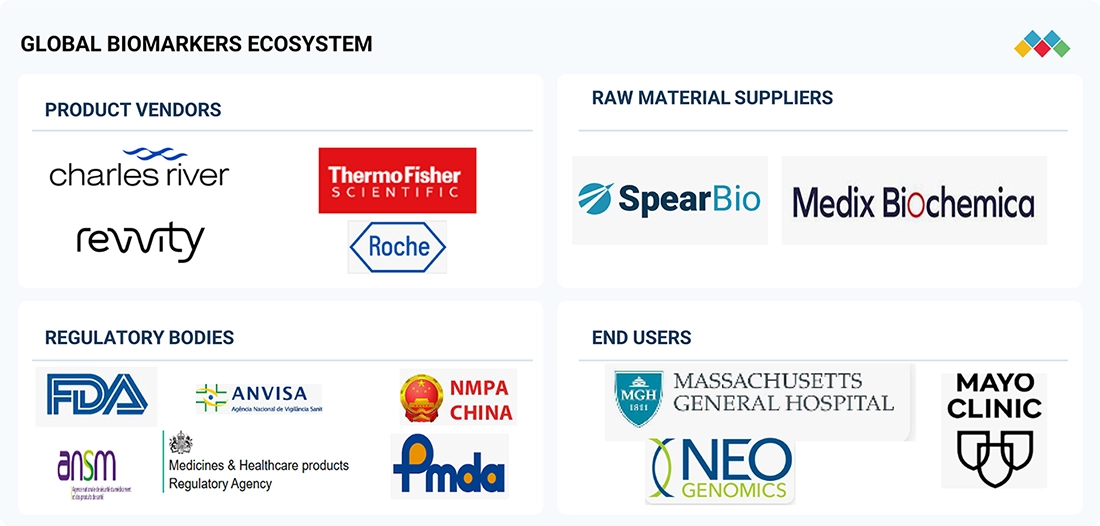
19 Leading Biomarkers Companies Shaping Innovation and Market Growth to 2031
Discover the top 19 companies driving innovation in the biomarkers market. This in-depth analysis explores competitive advantages, transformative trends, and key players poised to influence precision medicine, disease diagnosis, drug discovery, and clinical research through 2031. Access the comprehensive market research report for further insights into emerging technologies and competitive developments.
Spotlights on the Industry's Top Biomarkers Market Companies
The biomarkers industry is evolving as advances in genomics, proteomics, molecular diagnostics, and high-throughput analytical technologies expand the identification and clinical application of biological indicators. Biomarkers are increasingly important in disease detection, patient stratification, treatment-response monitoring, drug development, and safety assessment. The integration of next-generation sequencing (NGS), polymerase chain reaction (PCR), mass spectrometry (MS), and multiplex immunoassays is enabling more detailed biological analysis. Meanwhile, growing interest in precision medicine, companion diagnostics, and personalized therapies is intensifying competition among diagnostic manufacturers, life sciences technology providers, and specialized testing companies. Reliable biomarker validation, reproducibility, regulatory compliance, and clinical utility remain essential for translating research discoveries into practical healthcare applications.
1. F. Hoffmann-La Roche Ltd.
F. Hoffmann-La Roche Ltd. is a prominent participant in the biomarkers industry through its diagnostics portfolio, companion diagnostic assays, and personalized healthcare capabilities. Its diagnostic solutions support the identification of disease-related biomarkers and help clinicians select targeted treatments, particularly in oncology. Roche's immunohistochemistry and in situ hybridization technologies contribute to biomarker assessment in clinical pathology. Its integration of pharmaceutical research and diagnostics also supports the development of biomarker-guided therapies, strengthening its relevance to precision medicine, treatment selection, and the advancement of individualized patient care.
2. Danaher Corporation
Danaher Corporation participates in the biomarkers industry through its life sciences and diagnostics businesses, which support biomarker discovery, validation, and translational research. Its portfolio spans technologies for sample preparation, molecular analysis, imaging, automation, and analytical testing through its operating companies. These capabilities help researchers investigate complex biological systems and connect molecular findings with clinical outcomes. Danaher's integrated research workflows are relevant to multi-omics analysis, drug development, and precision medicine, where consistent sample processing, reproducible measurements, and effective data integration are important for advancing biomarkers toward clinical applications.
3. Illumina, Inc.
Illumina, Inc. supports the biomarkers industry through its next-generation sequencing platforms, genomic analysis technologies, and associated consumables. Its sequencing systems enable researchers to investigate genetic variation, gene expression, and molecular signatures associated with disease development and therapeutic response. These capabilities are particularly relevant to oncology, inherited disorders, and precision medicine, where genomic biomarkers can inform disease classification and treatment decisions. Illumina's sequencing technologies also support biomarker discovery in research and clinical development workflows, helping pharmaceutical companies and research institutions generate genomic evidence for evaluating disease mechanisms and identifying potential therapeutic targets.
4. Merck KGaA
Merck KGaA contributes to biomarker research through its life sciences portfolio, which includes laboratory reagents, analytical tools, cell biology products, and technologies used in molecular and protein analysis. These resources support investigations into biological pathways, disease mechanisms, and treatment responses. Researchers can use relevant Merck products in workflows involving sample preparation, immunodetection, and biomolecular characterization. The company's broad laboratory science capabilities make it relevant to biomarker discovery and validation across pharmaceutical research, biotechnology development, and academic laboratories, where analytical reliability and reproducible experimental methods are essential.
5. Thermo Fisher Scientific Inc.
Thermo Fisher Scientific Inc. supports biomarker discovery and validation through analytical instruments, reagents, sample preparation products, and laboratory software. Its mass spectrometry and proteomics technologies enable researchers to identify and quantify proteins and other biomolecules in complex biological samples. These capabilities support the investigation of disease-associated molecular signatures and potential indicators of treatment response. The company's portfolio also serves genomics, molecular diagnostics research, and clinical and translational studies. By supporting workflows from sample preparation through analytical measurement, Thermo Fisher helps research organizations evaluate candidate biomarkers and investigate their potential applications in drug development and precision medicine.
6. QIAGEN
QIAGEN participates in the biomarkers industry through sample preparation technologies, molecular testing solutions, assay systems, and bioinformatics tools. Its products support the extraction and analysis of DNA and RNA, enabling researchers and laboratories to investigate molecular biomarkers associated with diseases and therapeutic outcomes. QIAGEN's capabilities are particularly relevant to oncology, infectious disease testing, and precision medicine, where molecular information can contribute to disease characterization and treatment selection. Its combination of laboratory workflows and genomic data analysis supports biomarker research across clinical development and molecular diagnostics, helping organizations translate biological findings into more informative testing approaches.
7. Abbott
Abbott is an established diagnostics company with capabilities relevant to biomarker measurement through its immunoassay, clinical chemistry, and molecular diagnostics platforms. Its diagnostic systems and assays help laboratories detect and measure biological indicators associated with a range of health conditions. Immunoassay technologies are particularly important for assessing proteins, hormones, infectious disease markers, and other measurable substances in patient samples. Abbott's established laboratory presence and automated testing systems support routine diagnostic workflows and clinical decision-making. Its relevance to the biomarkers industry is closely connected to the use of validated assays and scalable testing platforms in healthcare settings.
8. Agilent Technologies, Inc.
Agilent Technologies, Inc. contributes to biomarker research and clinical applications through analytical instrumentation, laboratory technologies, and companion diagnostic solutions. Its portfolio includes mass spectrometry, chromatography, and pathology-based assays used to investigate molecular characteristics and support diagnostic testing. Agilent's companion diagnostic capabilities are particularly relevant to precision oncology, where biomarker results help identify patients who may benefit from specific targeted therapies. The company's analytical platforms also support protein characterization and other research applications. Its combination of measurement technologies and diagnostic assay development expertise makes it relevant to biomarker discovery, validation, and clinical translation.
9. Revvity, Inc.
Revvity, Inc. provides technologies and services for biomarker discovery, life sciences research, and biological analysis. Its capabilities include assay development, sample preparation, laboratory automation, and analytical solutions supporting DNA-, RNA-, and protein-based biomarker investigations. The company also supports multi-omics research, enabling scientists to examine different biological signals and identify molecular patterns associated with disease. These technologies are relevant to drug discovery, translational research, and precision medicine. By helping research teams process samples and analyze complex biological information, Revvity contributes to the identification and characterization of candidate biomarkers for further investigation and validation.
10. Charles River Laboratories
Charles River Laboratories supports the biomarkers industry through biomarker services designed for preclinical research and clinical development. Its capabilities include biomarker strategy, assay development, validation, bioanalysis, and the assessment of biological responses during drug development. These services help pharmaceutical and biotechnology companies investigate mechanisms of action, evaluate treatment effects, and identify measurable indicators relevant to therapeutic programs. The company also supports research across multiple therapeutic areas, including oncology, immunology, and inflammatory diseases. Its scientific expertise and development-focused services make it relevant to organizations seeking to establish reliable biomarker evidence throughout the drug development process.
11. Bio-Rad Laboratories, Inc.
Bio-Rad Laboratories, Inc. supports biomarker research through digital PCR, droplet-based analysis, immunoassays, and laboratory reagents. Its digital PCR technologies enable precise nucleic acid quantification, making them useful for investigating genetic variations, rare mutations, and low-abundance molecular targets. The company's protein analysis and immunodetection products also support studies of biological pathways and disease-associated proteins. These capabilities are relevant to oncology research, gene expression analysis, and molecular assay development. Bio-Rad's established laboratory technology portfolio helps researchers investigate candidate biomarkers and improve the sensitivity and reproducibility of molecular measurements across research and selected diagnostic applications.
12. Eurofins Scientific
Eurofins Scientific contributes to the biomarkers industry through laboratory testing, bioanalytical services, clinical research support, and biomarker assay development. Its bioanalytical capabilities include assay development, validation, and sample analysis for preclinical and clinical studies. The company also provides central laboratory services that can support biomarker assessment and pathology investigations in clinical trials. These capabilities help pharmaceutical and biotechnology sponsors evaluate biological responses, characterize therapeutic effects, and generate data for development decisions. Eurofins' international laboratory network and range of scientific services make it relevant to biomarker programs requiring specialized testing, standardized procedures, and support across multiple stages of drug development.
13. bioMérieux
bioMérieux is a diagnostics company whose technologies are relevant to biomarkers used in infectious disease detection and clinical decision-making. Its diagnostic portfolio includes automated systems and assays designed to identify biological signals associated with infections and other medical conditions. Biomarker-related testing can help clinicians assess disease status, support diagnostic differentiation, and inform patient management when used within validated clinical workflows. The company's expertise in clinical microbiology and in vitro diagnostics positions it within the broader biomarker ecosystem, particularly where laboratory results contribute to timely treatment decisions and the monitoring of infectious diseases.
14. JSR Corporation
JSR Corporation is relevant to the biomarkers industry through its life sciences activities, including technologies and materials that support biopharmaceutical research and diagnostic development. Its broader life sciences capabilities include specialized products used in laboratory and biotechnology workflows, while its group-related activities have contributed to areas such as diagnostic reagents and assay technologies. The company's relevance should be assessed against the specific biomarker product or service being considered, as its portfolio spans several life sciences applications rather than being limited to biomarker testing. Its role is most appropriately understood within the supporting technologies and materials ecosystem.
15. Guardant Health
Guardant Health specializes in precision oncology testing, with liquid biopsy technologies that analyze circulating tumor DNA and other molecular signals associated with cancer. Its tests support genomic profiling and the identification of clinically relevant biomarkers that may inform treatment selection and disease monitoring. The company's portfolio includes tissue and blood-based testing approaches for different stages of cancer care. By enabling molecular analysis from blood samples, Guardant Health contributes to the development of less invasive cancer testing strategies. Its focus on genomic and epigenomic information positions it within the biomarker industry, particularly in oncology diagnostics and personalized treatment decisions.
16. Labcorp
Labcorp participates in the biomarkers industry through clinical laboratory testing, central laboratory services, and support for pharmaceutical research and clinical trials. Its laboratory capabilities can help sponsors evaluate biomarkers associated with disease status, treatment response, safety, and therapeutic efficacy. These services are important in clinical development, where standardized sample handling, reliable analytical methods, and consistent data reporting support the interpretation of study outcomes. Labcorp's broad testing infrastructure and clinical research capabilities make it relevant to biomarker programs spanning early development and later-stage trials, including studies designed to investigate patient populations and treatment responses.
17. Quanterix
Quanterix specializes in ultrasensitive biomarker detection technologies, particularly digital immunoassay platforms designed to measure low concentrations of proteins and other biological targets. Its technology is relevant to research involving neurological disorders, oncology, inflammation, and other conditions where biomarkers may be present at very low levels. By enabling sensitive protein measurement in biological samples, Quanterix supports investigations into disease mechanisms, progression, and treatment response. Its platforms are used in life sciences research and biomarker development, where analytical sensitivity and reproducibility are important. These capabilities position the company within the specialized segment of high-sensitivity biomarker analysis.
18. Meso Scale Diagnostics, LLC
Meso Scale Diagnostics, LLC develops multiplex immunoassay technologies used to measure biomarkers in biological samples. Its electrochemiluminescence-based assay platforms enable researchers to quantify multiple analytes within a single sample, supporting investigations into proteins, cytokines, inflammatory signals, and other biological indicators. Multiplexing can help research teams evaluate complex biological responses while conserving sample volume. These capabilities are relevant to biomarker discovery, translational research, and pharmaceutical development, particularly when studies require simultaneous assessment of multiple targets. The company's specialized assay technology supports the generation of quantitative data for research into disease mechanisms and potential therapeutic effects.
19. Siemens Healthineers AG
Siemens Healthineers AG contributes to the biomarkers ecosystem through laboratory diagnostics, immunoassay systems, and clinical testing technologies. Its diagnostic platforms enable laboratories to measure a range of biological indicators used in disease detection, assessment, and patient monitoring. Automated immunoassay and clinical chemistry workflows are important for translating biomarker measurements into routine clinical practice, where consistency, throughput, and analytical performance matter. The company's diagnostic infrastructure and global healthcare presence support the use of biomarker-based tests across hospital and laboratory settings. Its role is particularly relevant to established clinical biomarkers and the integration of laboratory results into diagnostic decision-making.
80% of the Forbes Global 2000 B2B companies rely on MarketsandMarkets to identify growth opportunities in emerging technologies and use cases that will have a positive revenue impact.
- Food Packaging Market Size Set for Strong Growth Through 2030 Amid Rising Demand for Convenience Foods
- Crop Protection Chemical Market Size, Share & Growth Forecast (2025–2030)
- Mulch Films Market: Driving Sustainable Agriculture Through Innovation
- Agricultural Adjuvants Market Analysis, Trends, and Growth Outlook (2026–2031)
- Japan Enterprise Asset Management Market Growth: AI and Smart Infrastructure Drive Demand

Conclusion: Unlock the Full Biomarkers Market Intelligence
The biomarkers industry is positioned to advance as genomics, proteomics, sensitive immunoassays, molecular diagnostics, and multi-omics technologies expand opportunities for disease detection, drug discovery, and precision medicine. Competition among diagnostic manufacturers, life sciences technology providers, testing laboratories, and specialized biomarker companies will continue to be shaped by analytical performance, clinical validation, workflow integration, and the ability to generate reproducible results. Regulatory requirements, data quality, and evidence of clinical utility will remain important considerations as research applications move toward routine healthcare use. For business leaders, investors, pharmaceutical companies, and diagnostic developers, understanding these competitive dynamics is essential to identifying strategic opportunities and evaluating technology developments. Explore the Biomarkers Market by Offering (Consumables, Software, Service), Type (Safety, Efficacy, Validation), Research Area (Genomics, Proteomics), Technology (PCR, NGS, MS), Disease (Cancer, CVD), Application (Diagnostic, Drug Discovery) - Global Forecast to 2031 report from MarketsandMarkets for detailed market insights, competitive analysis, and strategic information to support informed business decisions.