26 Leading Clinical Decision Support System (CDSS) Companies Shaping Innovation and Market Growth to 2031
Discover the top 26 companies driving innovation in the clinical decision support system (CDSS) market. This in-depth analysis explores competitive advantages, transformative trends, and key players poised to influence healthcare decision-making, patient safety, and clinical workflow optimization through 2031.
Spotlights on the Industry's Top Clinical Decision Support System (CDSS) Market Companies
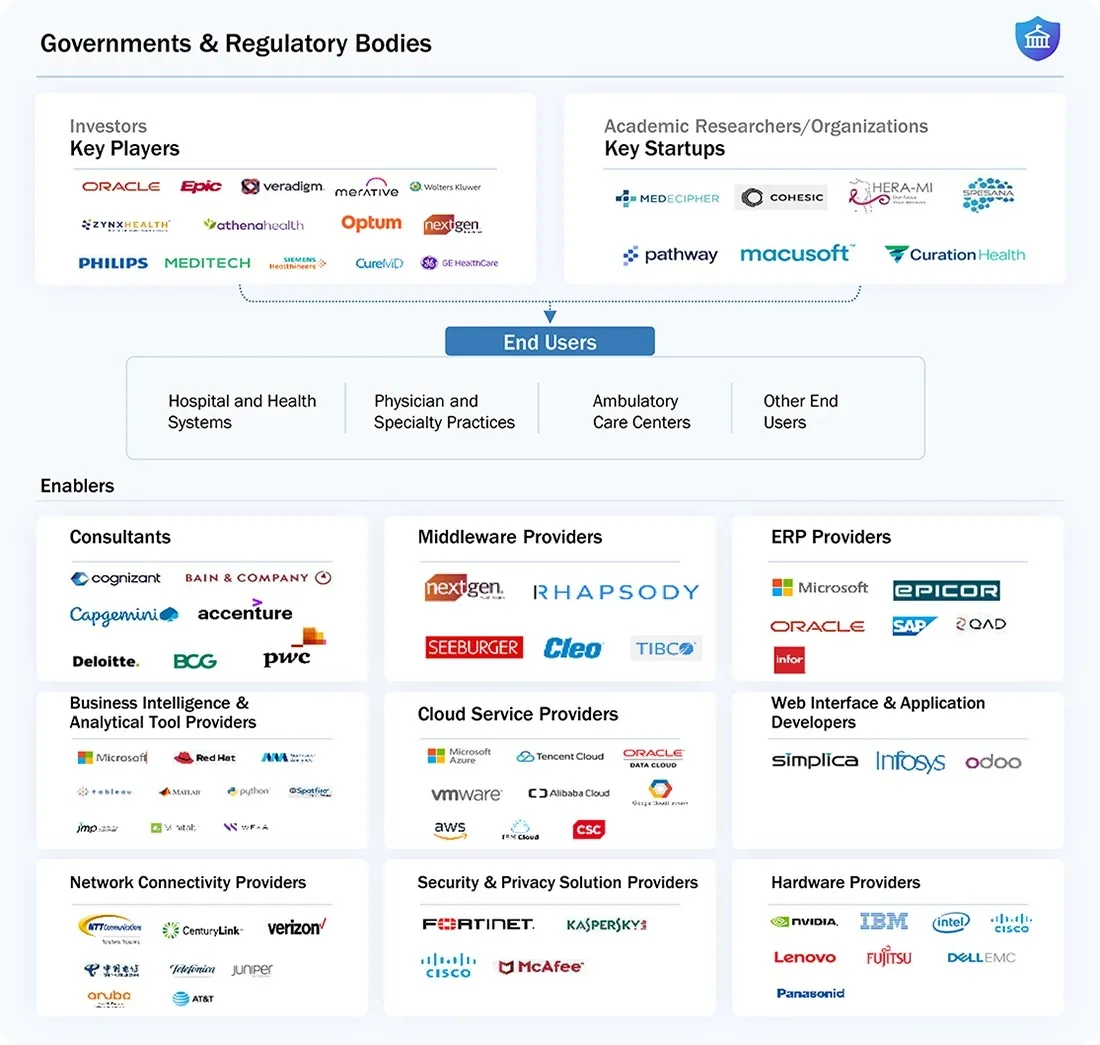
The clinical decision support system (CDSS) market is evolving as healthcare organizations increasingly integrate artificial intelligence (AI), predictive analytics, and evidence-based clinical intelligence into their electronic health record (EHR) ecosystems. Growing demand for improved patient safety, reduced medication errors, diagnostic accuracy, and efficient clinical workflows is accelerating the adoption of advanced CDSS solutions. Emerging technologies, including machine learning, natural language processing, and generative AI, are transforming traditional rule-based systems into intelligent platforms that support personalized and data-driven clinical decisions. Healthcare technology vendors, specialized clinical knowledge providers, and analytics companies are competing to strengthen their market presence through interoperability, cloud deployment, workflow integration, and AI-enabled capabilities. These developments are creating opportunities across hospitals, ambulatory care centers, specialty practices, and other healthcare settings.
1. Epic Systems Corporation
Epic Systems Corporation is a major healthcare technology provider with clinical decision support capabilities embedded within its electronic health record ecosystem. Its software supports medication safety checks, clinical alerts, care pathways, order management, and evidence-based decision-making across healthcare organizations. Epic's integrated platform enables clinicians to access patient information and decision support within established workflows. Its extensive healthcare provider network and focus on interoperability, clinical data integration, and AI-assisted capabilities strengthen its relevance in the CDSS market.
2. Oracle
Oracle participates in the CDSS market through Oracle Health, which provides healthcare information technology solutions supporting clinical workflows and decision-making. Its clinical systems integrate patient records, clinical documentation, medication information, and healthcare data to assist providers in delivering coordinated care. Oracle Health's clinical information systems support decision support capabilities across hospitals and health systems. Its cloud infrastructure, database technologies, and investments in healthcare AI position the company to advance data-driven clinical intelligence and enterprise-level healthcare integration.
3. Merative
Merative provides healthcare data, analytics, and technology solutions that support clinical and operational decision-making. Its portfolio includes healthcare intelligence capabilities that help organizations evaluate clinical performance, manage population health, and improve care delivery. Through its clinical and health analytics offerings, Merative contributes to evidence-based decision support and healthcare quality improvement. Its expertise in healthcare data management, analytics, and clinical information supports its relevance in a market increasingly focused on predictive insights and integrated clinical intelligence.
4. Veradigm LLC
Veradigm LLC is a healthcare technology company providing data-driven solutions for healthcare providers, pharmaceutical organizations, and other industry stakeholders. Its portfolio includes electronic health records, practice management, healthcare analytics, and clinical data capabilities. These solutions support clinical workflows, patient management, and evidence generation. Veradigm's healthcare data assets and analytics capabilities contribute to clinical decision support applications, particularly in areas involving patient population insights, care quality, and clinical research. Its integration with healthcare provider workflows supports its relevance in the CDSS ecosystem.
5. Optum, Inc. (UnitedHealth Group)
Optum, Inc., part of UnitedHealth Group, combines healthcare technology, analytics, and clinical services to support data-driven healthcare delivery. Its capabilities include clinical analytics, population health management, care coordination, and risk assessment. These functions complement clinical decision support by enabling healthcare organizations to identify patient risks, evaluate treatment patterns, and support care planning. Optum's extensive healthcare data resources and integration across payer and provider ecosystems strengthen its position in clinical intelligence and decision support applications.
6. athenahealth
athenahealth provides cloud-based healthcare software and services designed to support medical practices and healthcare organizations. Its athenaOne platform combines electronic health records, practice management, and patient engagement capabilities, supporting clinical workflows and information access. Integrated clinical decision support features help clinicians access relevant patient information, medication alerts, and care recommendations during encounters. athenahealth's cloud-native architecture and focus on ambulatory care make it relevant to CDSS adoption among physician practices and outpatient healthcare providers seeking streamlined workflows.
7. Elsevier (Division of RELX Group)
Elsevier is a global provider of scientific and medical information, clinical reference content, and evidence-based healthcare solutions. Its clinical decision support offerings include clinical knowledge resources that help healthcare professionals access trusted medical evidence at the point of care. Products such as ClinicalKey and other clinical information solutions support diagnosis, treatment planning, and clinical research. Elsevier's extensive medical literature and evidence-based content provide a foundation for clinical knowledge systems, supporting informed decision-making and helping clinicians incorporate current clinical evidence into practice.
8. Zynx Health, Inc.
Zynx Health specializes in evidence-based clinical decision support and care management solutions for healthcare organizations. Its offerings include clinical content, care plans, order sets, and evidence-based recommendations designed to support clinical workflows and improve care consistency. The company's solutions help providers align clinical practices with established guidelines and healthcare quality objectives. Zynx Health's focus on actionable clinical knowledge, care pathway development, and workflow integration makes it a specialized participant in the CDSS market, particularly among hospitals and health systems.
9. Koninklijke Philips N.V.
Koninklijke Philips N.V. is a healthcare technology company with capabilities spanning connected care, medical imaging, patient monitoring, and healthcare informatics. Its clinical information and enterprise informatics solutions support the integration of clinical data across healthcare environments. Philips' technology can assist clinical decision-making by enabling healthcare professionals to access patient information, monitor clinical parameters, and interpret diagnostic data. Its expertise in medical technology, digital health, and connected clinical systems supports its relevance in decision support applications across hospitals and specialized care settings.
10. Medical Information Technology, Inc. (MEDITECH)
Medical Information Technology, Inc. (MEDITECH) develops electronic health record and healthcare information systems for hospitals and healthcare organizations. Its Expanse platform integrates clinical documentation, medication management, patient information, and clinical workflows. These capabilities support decision support through access to relevant patient data, clinical alerts, and information required for care planning. MEDITECH's focus on integrated hospital information systems and clinical workflow management strengthens its role in the CDSS market, particularly among healthcare providers seeking comprehensive EHR-based decision support.
11. NextGen Healthcare, Inc.
NextGen Healthcare provides healthcare information technology solutions for ambulatory practices, specialty providers, and healthcare organizations. Its portfolio includes electronic health records, practice management, and patient engagement software that supports clinical workflows. Through integrated EHR functionality, clinicians can access patient histories, medication information, and clinical documentation during care delivery. NextGen Healthcare's focus on ambulatory and specialty care, along with its capabilities in clinical workflow integration and healthcare data management, contributes to its relevance in the clinical decision support ecosystem.
12. CureMD Healthcare
CureMD Healthcare develops cloud-based healthcare technology solutions for medical practices and healthcare organizations. Its offerings include electronic health records, practice management, revenue cycle management, and clinical workflow tools. The company's EHR capabilities support clinical decision-making through patient data access, documentation, and workflow-based clinical information. CureMD's focus on integrated healthcare software and automation enables providers to streamline administrative and clinical processes. Its solutions are relevant to CDSS adoption among ambulatory care providers and practices seeking integrated digital healthcare systems.
13. Siemens Healthineers AG
Siemens Healthineers AG is a global medical technology company specializing in diagnostic imaging, laboratory diagnostics, and advanced healthcare solutions. Its digital health and imaging technologies support clinical interpretation and diagnostic decision-making. The company provides software and AI-enabled applications that assist healthcare professionals in analyzing medical images and diagnostic information. Siemens Healthineers' expertise in imaging, diagnostics, and healthcare data integration contributes to clinical decision support applications, particularly in radiology and diagnostic workflows, where timely and accurate interpretation is critical to patient care.
14. EBSCO Information Services
EBSCO Information Services provides research databases, medical literature, and information management solutions for healthcare professionals and institutions. Its clinical resources support evidence-based medicine by enabling access to medical research, clinical guidelines, and healthcare knowledge. These resources help clinicians evaluate evidence and inform treatment decisions. EBSCO's clinical information solutions, including DynaMed, provide point-of-care reference support for healthcare professionals. Its focus on trusted medical content and knowledge access strengthens its relevance in clinical decision support and evidence-based clinical practice.
15. GE HealthCare
GE HealthCare is a medical technology company providing diagnostic imaging, patient monitoring, ultrasound, and digital healthcare solutions. Its AI-enabled technologies and clinical applications support diagnostic interpretation, patient monitoring, and clinical workflow optimization. The company's imaging and monitoring systems generate clinical information that can support healthcare professionals in assessing patient conditions and making informed decisions. GE HealthCare's expertise in medical imaging, digital platforms, and healthcare analytics contributes to its role in the CDSS market, particularly across diagnostic and hospital-based clinical applications.
16. eClinicalWorks, LLC
eClinicalWorks, LLC provides healthcare software solutions designed for ambulatory practices, medical groups, and healthcare organizations. Its portfolio includes electronic health records, practice management, patient engagement, and population health management capabilities. The company's EHR platform supports clinical decision-making through patient data access, clinical documentation, medication information, and workflow-integrated decision support. eClinicalWorks' focus on cloud-based healthcare technology and integrated clinical systems strengthens its relevance in the CDSS market, particularly among outpatient providers seeking efficient and data-driven care delivery.
17. The Medical Algorithms Company Limited
The Medical Algorithms Company Limited specializes in medical algorithms and clinical decision support tools designed to assist healthcare professionals with clinical assessments and calculations. Medical algorithms can support diagnosis, risk evaluation, treatment planning, and patient management by applying established clinical criteria to patient-specific information. The company's specialized focus on structured medical knowledge and computational clinical tools makes it relevant to the CDSS market. Its capabilities align with the growing demand for precise, evidence-based decision support that can complement clinician judgment across healthcare settings.
18. CareCloud, Inc.
CareCloud, Inc. provides healthcare technology and services supporting medical practices, healthcare providers, and clinical organizations. Its portfolio includes healthcare IT solutions, electronic health records, practice management, and revenue cycle services. These capabilities support clinical workflows and the availability of patient information for decision-making. CareCloud's healthcare technology and data integration capabilities contribute to its relevance in the CDSS ecosystem, particularly for ambulatory providers seeking connected clinical and administrative systems that can improve workflow efficiency and support informed care delivery.
19. VisualDx
VisualDx provides clinical decision support tools focused on diagnostic accuracy, particularly in dermatology and visual medicine. Its platform combines clinical knowledge, medical images, and diagnostic information to help healthcare professionals evaluate symptoms and identify potential conditions. VisualDx supports differential diagnosis and clinical assessment by enabling clinicians to compare patient presentations with reference images and evidence-based information. Its specialized diagnostic capabilities and visual clinical knowledge resources make it relevant to CDSS applications focused on improving diagnostic confidence and supporting clinical decision-making across care settings.
20. Hera-MI
Hera-MI is a specialized healthcare technology company associated with clinical decision support and AI-enabled diagnostic applications. Its relevance to the CDSS market centers on the use of computational approaches to support clinical assessment and decision-making. As healthcare organizations increasingly explore AI-assisted diagnosis and personalized clinical insights, specialized technology providers such as Hera-MI contribute to the evolving competitive landscape. Its specific product capabilities and market applications should be reviewed against current company information to ensure accurate characterization of its clinical decision support portfolio.
21. Cohesic Inc.
Cohesic Inc. develops healthcare technology focused on clinical decision support and diagnostic workflow applications. Its solutions are associated with helping clinicians integrate clinical information and support decision-making in specialized healthcare settings. The company is relevant to the CDSS market as providers seek tools that improve diagnostic processes, streamline clinical workflows, and enable more consistent use of clinical information. Cohesic's specific product scope and clinical applications should be validated against current company materials when preparing detailed competitive assessments or product-level comparisons.
22. Medea Mind
Medea Mind is a healthcare technology company associated with AI-enabled clinical decision support and digital healthcare applications. Its relevance to the CDSS market reflects growing interest in intelligent systems that can help healthcare professionals interpret clinical information and support decision-making. As AI technologies become more widely incorporated into healthcare workflows, companies developing specialized clinical intelligence applications may contribute to market innovation. Medea Mind's current product offerings, clinical focus areas, and deployment capabilities should be verified through company documentation before making specific product or performance claims.
23. Glass Health
Glass Health provides AI-enabled clinical decision support tools designed to assist healthcare professionals with clinical reasoning and knowledge access. Its platform includes capabilities focused on supporting clinicians as they evaluate patient information and consider diagnostic or treatment options. Glass Health's approach reflects the growing integration of generative AI into clinical decision support, where AI tools can help synthesize clinical knowledge and support physician workflows. Its focus on clinician-oriented decision assistance positions the company within the emerging segment of AI-powered CDSS applications.
24. Medecipher
Medecipher is included among the companies identified for the clinical decision support system market. Its relevance is associated with the broader healthcare technology landscape, where clinical data, medical knowledge, and digital applications support decision-making. However, detailed information regarding its specific CDSS products, clinical capabilities, and market presence requires additional verification from authoritative company sources. Before publication, its exact role in the CDSS market should be reviewed to distinguish direct clinical decision support activities from adjacent healthcare technology services.
25. Wolters Kluwer N.V.
Wolters Kluwer N.V. is a leading provider of professional information, clinical knowledge, and healthcare technology solutions. Its Health division delivers clinical decision support resources through evidence-based products such as UpToDate and other clinical information platforms. These solutions help healthcare professionals access medical evidence, evaluate treatment options, and support diagnostic and therapeutic decisions. Wolters Kluwer's extensive clinical knowledge content, point-of-care information delivery, and integration capabilities strengthen its competitive position in the CDSS market as healthcare organizations prioritize evidence-based and AI-enabled clinical intelligence.
26. MacuSoft
MacuSoft is identified among the companies associated with the clinical decision support system market, particularly within the segment of specialized technology providers. Its inclusion reflects the diversity of companies participating in clinical decision support, from established enterprise healthcare platforms to smaller and niche-focused developers. Detailed information about MacuSoft's specific CDSS solutions, clinical applications, and market capabilities should be verified through current company sources before publication. This validation is important to accurately distinguish its direct CDSS activities from other healthcare software or technology offerings.
80% of the Forbes Global 2000 B2B companies rely on MarketsandMarkets to identify growth opportunities in emerging technologies and use cases that will have a positive revenue impact.
- Food Packaging Market Size Set for Strong Growth Through 2030 Amid Rising Demand for Convenience Foods
- Crop Protection Chemical Market Size, Share & Growth Forecast (2025–2030)
- Mulch Films Market: Driving Sustainable Agriculture Through Innovation
- Agricultural Adjuvants Market Analysis, Trends, and Growth Outlook (2026–2031)
- Japan Enterprise Asset Management Market Growth: AI and Smart Infrastructure Drive Demand

The clinical decision support system market is poised for continued transformation as healthcare organizations adopt AI-enabled clinical intelligence, interoperable healthcare platforms, and data-driven decision-making tools. Growing emphasis on patient safety, diagnostic accuracy, medication management, and operational efficiency is creating opportunities for established healthcare technology providers and specialized CDSS developers. However, market participants must address regulatory requirements, clinical validation, data privacy, cybersecurity, interoperability, and the responsible implementation of AI in healthcare. Companies that combine trusted clinical knowledge, integrated workflows, and advanced analytics will be well positioned to support the evolving needs of healthcare providers.