25 Leading Digital Pathology Companies Shaping Innovation and Market Growth to 2031
Discover the top 25 companies driving innovation in the digital pathology market. This in-depth analysis explores competitive advantages, transformative trends, and key players poised to influence clinical diagnostics, pharmaceutical research, disease detection, and precision medicine through 2031.
Spotlights on the Industry's Top Digital Pathology Companies
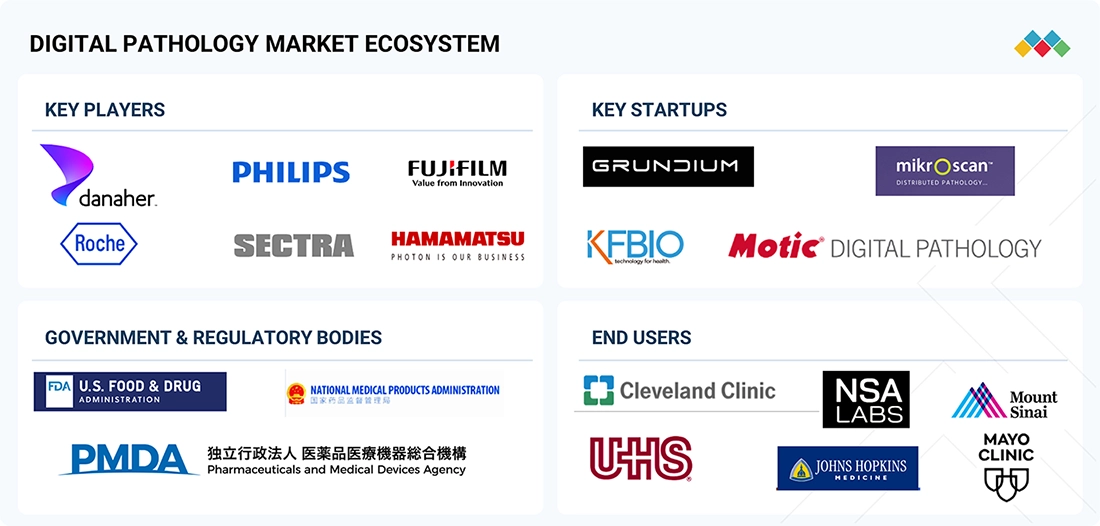
The digital pathology market is undergoing significant transformation as healthcare providers, pharmaceutical companies, and research institutions increasingly adopt digital imaging and computational analysis for pathology workflows. The integration of whole-slide imaging, artificial intelligence (AI), cloud-based platforms, and image management software is creating opportunities to improve diagnostic workflows, facilitate collaboration, and support research applications. Growing demand for faster disease diagnosis, increasing cancer incidence, and the expanding use of digital pathology in drug discovery and clinical trials are contributing to market development. Companies are focusing on advanced scanning technologies, interoperable software, AI-powered image analysis, and scalable data management solutions to strengthen their competitive positions. Regulatory considerations, image quality, data security, and integration with laboratory information systems remain important factors influencing adoption.
1. HOFFMANN-LA ROCHE LTD.
F. Hoffmann-La Roche Ltd. participates in the digital pathology market through its diagnostics business and Ventana Medical Systems portfolio. The company develops pathology solutions that integrate tissue diagnostics, laboratory workflows, and digital technologies. Its pathology expertise supports the development of imaging and analytical capabilities for disease diagnosis and research. Roche's established presence in oncology diagnostics and laboratory medicine provides strategic relevance as healthcare providers increasingly adopt digital pathology to support diagnostic workflows and precision medicine initiatives.
2. KONINKLIJKE PHILIPS N.V.
Koninklijke Philips N.V. is a healthcare technology company with established capabilities in medical imaging and digital pathology. Its IntelliSite digital pathology solution includes whole-slide imaging technology designed to digitize pathology slides for clinical workflows. Philips supports digital image review, remote consultation, and collaboration among pathologists. Its experience in healthcare informatics and imaging systems positions the company to participate in the transition toward digitally enabled pathology services, particularly in hospital and laboratory environments seeking integrated imaging and diagnostic workflows.
3. SECTRA AB
Sectra AB provides digital pathology solutions through its medical imaging and enterprise imaging business. Its Sectra Digital Pathology solution enables pathology departments to manage, view, and share digital slides within integrated imaging workflows. The company's platform capabilities support image management, secure access, and collaboration across healthcare organizations. Sectra's experience in enterprise imaging and medical IT gives it a relevant position in the digital pathology market, particularly as hospitals seek scalable systems that facilitate remote consultations and cross-institutional collaboration.
4. HAMAMATSU PHOTONICS K.K.
Hamamatsu Photonics K.K. is a technology provider specializing in optical sensors, photonics, and scientific imaging systems. The company offers NanoZoomer whole-slide scanners used to digitize pathology specimens for clinical and research applications. Its imaging technologies support high-resolution slide digitization and digital image review. Hamamatsu's expertise in optical engineering and imaging hardware makes it a significant participant in the digital pathology market, where image quality, scanning performance, and compatibility with analytical software are important purchasing considerations.
5. QUANTERIX CORPORATION
Quanterix Corporation specializes in ultrasensitive biomarker detection technologies, including its Simoa platform, which measures low-abundance proteins in biological samples. While its core business is biomarker analysis rather than whole-slide pathology imaging, the company has relevance to pathology-related research and disease characterization. Its technologies can support investigations involving neurological disorders, oncology, and other diseases. Quanterix represents an adjacent participant in the broader digital pathology ecosystem, particularly where tissue imaging and molecular biomarker data are used together in research and diagnostic development.
6. FUJIFILM HOLDINGS CORPORATION
FUJIFILM Holdings Corporation participates in digital pathology through its medical imaging and healthcare businesses. The company provides digital pathology-related imaging technologies and solutions through its broader diagnostic imaging portfolio. Its expertise in image processing, medical imaging systems, and healthcare informatics supports the digitization of pathology workflows. FUJIFILM's established global presence in medical imaging and its capabilities in developing imaging technologies position it to contribute to digital pathology adoption across hospitals, laboratories, and research institutions.
7. HOLOGIC, INC.
Hologic, Inc. is a medical technology company focused on women's health, diagnostics, and medical imaging. Its diagnostic portfolio includes molecular and cytology-related technologies relevant to pathology workflows. Hologic's ThinPrep imaging and cytology systems support automated review and analysis of cytological specimens. These capabilities connect the company to digital pathology applications involving cervical cancer screening and cellular analysis. Its established presence in women's health diagnostics provides strategic relevance as laboratories increasingly incorporate digital technologies into diagnostic testing and disease detection workflows.
8. 3DHISTECH LTD.
3DHISTECH Ltd. develops digital pathology systems, including whole-slide scanners and associated software for pathology laboratories and research institutions. Its product portfolio includes PANNORAMIC scanners and CaseViewer software, which enable slide digitization, image visualization, and digital slide review. The company's solutions support applications in clinical pathology, education, and pharmaceutical research. Its specialized focus on digital pathology imaging and software makes it a relevant participant in the market, particularly for organizations seeking dedicated slide-scanning and image-management capabilities.
9. APOLLO ENTERPRISE IMAGING CORP.
Apollo Enterprise Imaging Corp. provides enterprise imaging software and services designed to manage medical images across healthcare organizations. Its digital pathology capabilities support the integration of pathology images into broader enterprise imaging environments. The company's technology focuses on image access, storage, workflow management, and interoperability. By connecting pathology imaging with enterprise-level systems, Apollo supports healthcare providers seeking centralized image management and improved collaboration among clinical teams. Its enterprise imaging expertise is relevant as hospitals expand digital pathology adoption.
10. HURON TECHNOLOGIES INTERNATIONAL INC.
Huron Technologies International Inc., operating in digital pathology through Huron Digital Pathology, develops whole-slide scanning and image management solutions. Its portfolio includes high-throughput scanners designed to digitize pathology slides for clinical and research workflows. Huron's technologies support image capture, digital archiving, and access to scanned specimens. The company's specialized focus on slide digitization and workflow integration makes it relevant to laboratories seeking to transition from glass slides to digital images for diagnostic review, research, and collaboration.
11. INDICA LABS, LLC.
Indica Labs, LLC. develops software for digital pathology image analysis and tissue-based research. Its HALO platform supports quantitative analysis of digital tissue images, enabling researchers to assess biomarkers, cellular characteristics, and tissue structures. The company also provides solutions for image management and analysis workflows. Indica Labs serves pharmaceutical companies, biotechnology organizations, academic institutions, and pathology laboratories. Its software capabilities support applications in drug discovery, translational research, and clinical studies, making it an important participant in the digital pathology software segment.
12. OPTRASCAN
OptraSCAN develops digital pathology systems, including whole-slide scanners, image management software, and cloud-based pathology solutions. Its portfolio supports the digitization of pathology slides for diagnostic workflows, research, and remote consultation. The company offers scanning technologies designed to accommodate different laboratory requirements, including organizations seeking integrated digital pathology platforms. OptraSCAN's focus on scanner and software solutions positions it within the market's hardware and workflow management segments, where laboratories require reliable image acquisition and scalable digital infrastructure.
13. GLENCOE SOFTWARE, INC.
Glencoe Software, Inc. develops software solutions for managing and integrating scientific and pathology imaging data. Its technology supports digital pathology workflows, including image viewing, data access, and interoperability between imaging systems and analytical applications. The company's software is relevant to organizations working with high-resolution pathology images and complex research datasets. Glencoe's expertise in image informatics and software integration supports digital pathology adoption across pharmaceutical research, academic institutions, and laboratories seeking to connect imaging technologies with broader data management environments.
14. AIFORIA
Aiforia develops AI-powered image analysis software for medical and scientific imaging, with a strong focus on digital pathology. Its platform enables users to develop, train, and deploy AI models for tissue image analysis. Applications include identifying tissue structures, detecting relevant cellular features, and supporting quantitative pathology research. Aiforia's technology is relevant to clinical diagnostics, pharmaceutical research, and translational medicine. Its AI capabilities position the company within the growing digital pathology software segment, where automated analysis supports more standardized and efficient image interpretation.
15. PAIGE AI, INC.
Paige AI, Inc. develops artificial intelligence technologies for pathology, with solutions designed to analyze digitized tissue images and support disease detection. Its AI models focus on extracting clinically relevant information from pathology slides, particularly in oncology. The company works across clinical and pharmaceutical research applications, where computational analysis can help identify patterns in tissue specimens. Paige's specialized focus on pathology AI positions it within the emerging market for algorithm-assisted diagnosis, quantitative image analysis, and digital pathology decision-support technologies.
16. PROSCIA INC.
Proscia Inc. develops digital pathology software designed to support pathology laboratories, healthcare organizations, and pharmaceutical companies. Its Concentriq platform provides digital pathology image management and workflow capabilities, enabling users to access, review, and analyze digital slides. Proscia also supports AI integration within pathology workflows. The company's software is relevant to diagnostic laboratories seeking digital transformation and pharmaceutical organizations conducting tissue-based research. Its focus on enterprise-scale digital pathology platforms positions it within the market's growing software and informatics segment.
17. EVIDENT
Evident is a provider of imaging and microscopy technologies, including solutions used in pathology and life sciences research. Its imaging portfolio supports the acquisition and analysis of high-quality images of biological specimens. The company's microscopy expertise is relevant to digital pathology applications involving tissue visualization, research imaging, and image analysis. Evident contributes to the digital pathology ecosystem through imaging hardware and technologies that support the transition from conventional microscopy to digital workflows across laboratories, academic institutions, and pharmaceutical research organizations.
18. PATHAI, INC.
PathAI, Inc. develops AI-powered pathology solutions designed to improve tissue analysis and support precision medicine. Its technology includes digital pathology image analysis and platforms for pharmaceutical research and clinical development. PathAI works with biopharmaceutical companies and pathology laboratories to apply computational methods to tissue-based data. Its solutions support applications such as biomarker discovery, clinical trial development, and disease characterization. The company's focus on AI-enabled pathology positions it within a rapidly evolving market segment where digital images are increasingly used to generate quantitative insights.
19. KONFOONG BIOTECH INTERNATIONAL CO., LTD.
Konfoong Biotech International Co., Ltd. operates in the life sciences and biotechnology sector, with relevance to pathology-related laboratory technologies and research applications. Its participation in the digital pathology market should be considered in the context of its specific imaging, analytical, and diagnostic capabilities. As digital pathology increasingly intersects with laboratory diagnostics and research, companies operating in adjacent life sciences technologies may contribute to the broader ecosystem. Its precise role in digital pathology hardware or software should be reviewed against current product documentation before publication.
20. MIKROSCAN TECHNOLOGIES, INC.
Mikroscan Technologies, Inc. develops digital pathology imaging solutions, including whole-slide scanning technologies. Its systems support the digitization of tissue slides for pathology review, research, and image analysis. The company's technologies are relevant to laboratories seeking to replace conventional slide handling with digital image workflows. Whole-slide scanners are an essential component of digital pathology infrastructure, enabling image storage, remote access, and integration with analytical software. Mikroscan's specialized focus on slide imaging connects it directly to the market's hardware segment.
21. MOTIC DIGITAL PATHOLOGY
Motic Digital Pathology provides imaging and digital microscopy solutions for pathology, education, and life sciences research. Its portfolio includes digital slide scanners, microscopy systems, and image management technologies that support the digitization of biological specimens. Motic's imaging solutions enable users to capture, view, and share pathology images for laboratory and educational applications. Its experience in microscopy and digital imaging positions the company within the digital pathology hardware and workflow ecosystem, particularly for institutions seeking imaging solutions for research, training, and diagnostic support.
22. MORPHLE LABS INC.
Morphle Labs Inc. develops medical imaging technologies, including digital microscopy and pathology-related imaging solutions. Its portfolio includes automated microscopy systems designed to support laboratory imaging workflows. The company's technologies are relevant to the digitization of tissue specimens and the broader adoption of automated imaging in healthcare and research environments. Morphle's focus on imaging hardware and automation connects it to digital pathology applications where efficient image acquisition, scalable workflows, and integration with software-based analysis are increasingly important.
23. GRUNDIUM OY
Grundium Oy develops compact whole-slide scanners and digital pathology imaging solutions. Its scanner portfolio includes systems designed for pathology laboratories, research organizations, and remote consultation applications. The company's imaging technologies support slide digitization and digital image sharing, enabling pathologists and researchers to access tissue images without relying exclusively on physical glass slides. Grundium's focus on compact scanning solutions is relevant to organizations seeking flexible digital pathology infrastructure for distributed laboratories, telepathology, and research workflows.
24. CURIOSIS INC.
Curiosis Inc. develops laboratory imaging and microscopy technologies, including automated imaging systems used in life sciences research. Its products support the acquisition and analysis of biological images, creating relevance to pathology-related research and digital imaging workflows. The company's imaging capabilities can support applications involving cellular analysis, tissue research, and laboratory automation. Its direct position in clinical whole-slide scanning and digital pathology software should be verified against current product offerings, while its broader imaging expertise connects it to the expanding digital pathology ecosystem.
25. DANAHER CORPORATION
Danaher Corporation participates in the digital pathology market through its diagnostics and life sciences businesses, particularly Leica Biosystems. Leica Biosystems offers pathology solutions spanning tissue processing, staining, slide scanning, and digital pathology workflows. Its Aperio portfolio includes whole-slide scanners and associated digital pathology technologies. Danaher's established presence in pathology laboratories and diagnostic workflows provides strategic relevance as laboratories adopt digital imaging and AI-enabled analysis. Its integrated pathology capabilities support clinical diagnostics, research, and pharmaceutical applications across global markets.
80% of the Forbes Global 2000 B2B companies rely on MarketsandMarkets to identify growth opportunities in emerging technologies and use cases that will have a positive revenue impact.
- Food Packaging Market Size Set for Strong Growth Through 2030 Amid Rising Demand for Convenience Foods
- Crop Protection Chemical Market Size, Share & Growth Forecast (2025–2030)
- Mulch Films Market: Driving Sustainable Agriculture Through Innovation
- Agricultural Adjuvants Market Analysis, Trends, and Growth Outlook (2026–2031)
- Japan Enterprise Asset Management Market Growth: AI and Smart Infrastructure Drive Demand

The digital pathology market is positioned for continued development as healthcare organizations and research institutions increasingly adopt whole-slide imaging, AI-powered image analysis, and integrated digital workflows. Technological advancements in scanning, image processing, data storage, and computational pathology are creating opportunities to improve diagnostic efficiency and expand applications in oncology, disease diagnosis, drug discovery, and clinical research. At the same time, regulatory requirements, data privacy, interoperability, and clinical validation remain important considerations for market participants. Companies that combine reliable imaging technologies with scalable software, analytical capabilities, and workflow integration are positioned to address evolving customer requirements.