25 Leading In Vitro Toxicology Testing Companies Shaping Innovation and Market Growth to 2031
Discover the top 25 companies driving innovation in the in vitro toxicology testing market. This in-depth analysis explores competitive strengths, transformative technologies, and key players influencing chemical safety assessment, pharmaceutical development, and alternatives to animal testing through 2031. Access the comprehensive market research report for further insights.
Spotlights on the Industry's Top In Vitro Toxicology Testing Companies
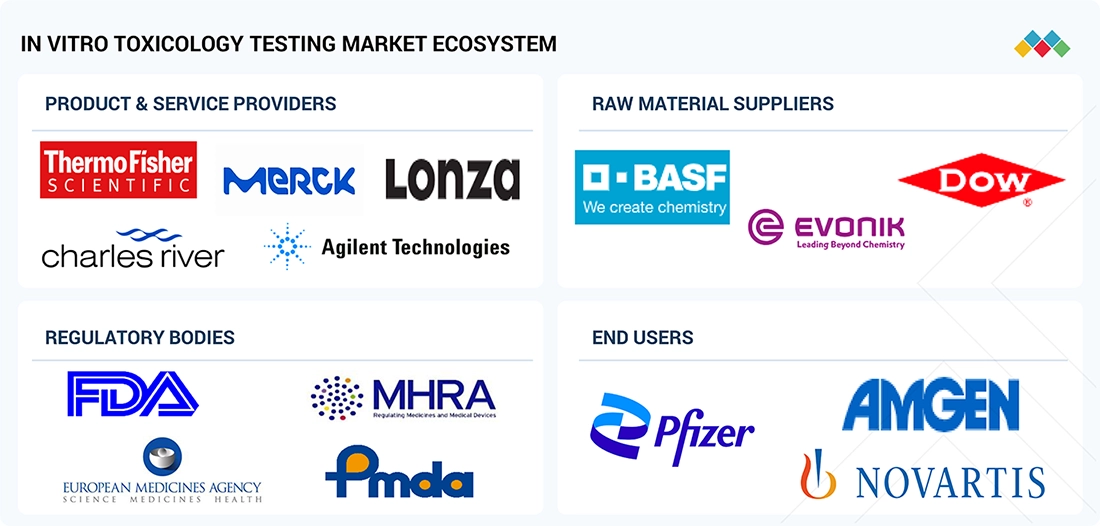
The in vitro toxicology testing industry is evolving as pharmaceutical developers, biotechnology companies, chemical manufacturers, and consumer product businesses seek more predictive and efficient methods to evaluate safety. Regulatory interest in reducing animal testing is encouraging the development and adoption of human-relevant approaches, including cell-based assays, three-dimensional cell cultures, organoids, and microphysiological systems. Advances in high-throughput screening, automation, and computational analysis are also helping researchers assess toxicity mechanisms and prioritize compounds. Competition spans laboratory instrument suppliers, specialist testing providers, contract research organizations, and biotechnology companies offering cellular models, assay technologies, and integrated preclinical services.
1. Thermo Fisher Scientific Inc.
Thermo Fisher Scientific supports in vitro toxicology testing through laboratory reagents, cell-based assay technologies, and ADME/Tox solutions used in pharmaceutical research. Its portfolio includes assays for cytochrome P450 activity, transporter interactions, hERG channel activity, and biochemical or cellular toxicity. These tools help researchers evaluate compound safety and metabolism during early drug discovery. Its broad laboratory product ecosystem and global customer reach position the company as a significant technology provider for toxicology research and preclinical development.
2. Agilent Technologies, Inc.
Agilent Technologies contributes to toxicology research through analytical instrumentation, cell analysis technologies, and laboratory solutions used to characterize compounds and biological responses. Its chromatography, mass spectrometry, and related analytical platforms support the detection and measurement of chemical substances, metabolites, and potential contaminants. These capabilities can complement in vitro toxicity studies by helping researchers investigate compound composition and biological effects. Agilent's analytical expertise makes it relevant to laboratories seeking reliable, data-rich workflows for pharmaceutical development and chemical safety assessment.
3. Merck KGaA
Merck KGaA supports in vitro toxicology research through life science reagents, cell culture products, analytical tools, and technologies used in biological testing. Its offerings help laboratories maintain cell-based experimental systems, investigate cellular responses, and develop reproducible research workflows. These resources are relevant to cytotoxicity studies and the evaluation of compounds during drug development. By combining life science materials with laboratory technologies, Merck serves research organizations working to improve experimental consistency and generate evidence for early-stage safety assessment.
4. Eurofins Scientific
Eurofins Scientific is a laboratory testing group with capabilities across pharmaceutical, chemical, environmental, and consumer product testing. Its testing network supports safety evaluation and analytical characterization, including services relevant to toxicology and product development. Depending on the study requirements, its laboratories can help clients assess chemical hazards, investigate product composition, and generate data for regulatory or quality purposes. Eurofins' broad scientific service portfolio and international laboratory presence make it relevant to organizations seeking outsourced testing support across multiple stages of product development.
5. Charles River Laboratories
Charles River Laboratories provides drug discovery and development services, including safety assessment capabilities that support pharmaceutical and biotechnology research. Its preclinical services help organizations evaluate drug candidates before clinical development, with toxicology programs contributing to the understanding of potential safety risks. In vitro approaches can complement broader preclinical evaluations by supporting early screening and mechanistic investigations. The company's established research infrastructure, scientific expertise, and integrated development services make it an important participant in the wider toxicology testing ecosystem.
6. Laboratory Corporation of America Holdings
Laboratory Corporation of America Holdings, widely known as Labcorp, provides laboratory services supporting pharmaceutical development and clinical research. Its drug development business offers preclinical research and safety assessment capabilities that help sponsors investigate candidate compounds and prepare development programs. Toxicology-related services can contribute to the evaluation of potential risks and the generation of evidence needed for regulatory submissions. Labcorp's laboratory infrastructure, scientific teams, and experience supporting drug developers position it within the broader contract research and toxicology services landscape.
7. SGS SA
SGS provides in vitro safety and efficacy testing for cosmetics, personal care products, and other consumer-facing applications. Its services include assessments of skin irritation, cytotoxicity, skin and eye corrosion or irritation, phototoxicity, and mutagenicity, depending on the applicable testing requirements. These methods help companies evaluate product safety while supporting approaches that reduce reliance on animal testing. SGS combines laboratory testing with regulatory and quality expertise, making it relevant to manufacturers seeking evidence to support product development, safety evaluation, and compliance with recognized testing standards.
8. Lonza
Lonza contributes to in vitro toxicology research through cell culture media, primary cells, cell biology reagents, and laboratory technologies used in biological experimentation. These resources support the development and maintenance of cellular models for studying biological responses to test compounds. Cell-based experiments are important for investigating toxicity mechanisms and evaluating candidate substances under controlled conditions. Lonza's expertise in cell culture and life science technologies makes it a relevant supplier for laboratories developing human-relevant testing approaches, although its role may differ from that of specialist toxicology testing service providers.
9. Revvity
Revvity supplies technologies and assays for life science research, including high-content screening and cell-based cytotoxicity assessment. Its research solutions help scientists measure cellular responses such as changes in cell viability, mitochondrial function, and indicators of cell stress. These measurements can support the identification of potentially toxic compounds during drug discovery and early safety evaluation. By combining screening technologies with assay reagents and analytical workflows, Revvity helps research laboratories generate quantitative biological data and investigate compound effects across experimental systems.
10. Bio-Rad Laboratories, Inc.
Bio-Rad Laboratories provides life science research instruments, reagents, and analytical technologies used in molecular biology, protein analysis, and cell-related investigations. These tools can support toxicology research by helping scientists examine biological pathways, gene expression, and molecular changes associated with compound exposure. Its broader research portfolio is relevant to laboratories building analytical workflows around cellular and biochemical responses. Bio-Rad's role in this market is primarily technology and reagent provision rather than a dedicated end-to-end in vitro toxicology testing service.
11. Evotec SE
Evotec offers drug discovery and preclinical development services, including in vitro toxicology and regulatory safety assessment through its toxicology capabilities and Cyprotex business. Its approaches include high-content imaging, microelectrode array analysis, three-dimensional cell models, induced pluripotent stem cell-derived systems, and transcriptomics. These technologies help researchers investigate toxicity mechanisms and identify safety concerns earlier in drug development. By integrating toxicology with broader discovery and development programs, Evotec supports pharmaceutical and biotechnology clients seeking evidence-based decisions about candidate progression.
12. Novo Holdings
Novo Holdings is a life sciences investment and holding company rather than a direct provider of in vitro toxicology testing services. Its relevance to this sector is indirect, through investment in and support for life science businesses working across biotechnology, pharmaceuticals, and related technologies. Capital investment can help innovative companies develop research platforms and advance new scientific approaches, including technologies that may support drug discovery and safety assessment. Its inclusion as a market participant should therefore be interpreted from an investment and ecosystem perspective, not as evidence of a dedicated toxicology testing portfolio.
13. Intertek Group plc
Intertek provides testing, inspection, and assurance services for products and materials across industries. Its toxicity assessment capabilities help manufacturers investigate chemical safety and evaluate products against applicable requirements. In vitro testing can contribute to the assessment of consumer goods and cosmetic ingredients, supporting decisions about product formulation, safety, and market access. Intertek combines laboratory expertise with regulatory and quality assurance services, making it relevant to businesses that need independent testing evidence and support in navigating product safety expectations across different markets.
14. Inotiv
Inotiv provides research services for pharmaceutical, biotechnology, medical device, chemical, and other industries, with toxicology studies forming part of its preclinical safety assessment portfolio. Its capabilities support the evaluation of candidate compounds and products under established regulatory guidelines. Although its toxicology offering includes broader preclinical studies beyond in vitro methods, these services can form part of integrated safety strategies in which in vitro findings inform subsequent testing decisions. Inotiv's scientific teams and regulatory reporting experience support clients preparing development programs and regulatory submissions.
15. Promega Corporation
Promega develops reagents, assay systems, and analytical technologies used in life science research, including ADME-Tox testing. Its bioluminescent enzyme substrates support the measurement of metabolic enzymes such as cytochrome P450, which play an important role in drug metabolism and safety evaluation. Its assays also help researchers investigate cellular health and toxicity-related pathways. These tools enable laboratories to screen compounds, measure biological activity, and generate data during early drug development, positioning Promega as an assay technology supplier within the in vitro toxicology ecosystem.
16. BioIVT
BioIVT supplies human biological specimens and related research services used in drug discovery, translational research, and preclinical development. Its portfolio includes human liver cells, hepatocytes, tissue, and other biological materials that can support in vitro investigations of metabolism, toxicity, and biological response. Access to relevant human-derived materials helps researchers design models that better reflect aspects of human biology. BioIVT's specialized specimen sourcing and biological research support make it relevant to laboratories seeking human-relevant systems for evaluating candidate compounds and understanding potential safety concerns.
17. Creative Biolabs
Creative Biolabs offers research services and scientific solutions across several biotechnology areas, including preclinical research and assay development. Its relevance to in vitro toxicology depends on the specific services and experimental models required for a project. Such research support can help biotechnology and pharmaceutical teams investigate biological activity and assess candidate molecules during early development. Organizations considering Creative Biolabs for toxicology projects should verify the availability and validation of the particular assay, cell model, or safety assessment service required for their study.
18. Medicilon
Medicilon is a contract research organization supporting pharmaceutical research and development, including preclinical studies and safety evaluation. Its service portfolio helps drug developers investigate candidate compounds and build the evidence needed to advance development programs. Toxicology capabilities are relevant to identifying potential safety risks before clinical testing, although the precise scope of in vitro services should be confirmed for each project. Medicilon's integrated research model can be useful to organizations seeking outsourced scientific support across drug discovery and preclinical development.
19. Creative Bioarray
Creative Bioarray supplies biological research products and services, including cell-based models and laboratory resources used in biomedical research. Such materials can support in vitro studies investigating cellular function, disease mechanisms, and responses to experimental compounds. For toxicology researchers, the suitability of its offerings depends on the model, assay, and endpoint needed to evaluate a substance. Its role is primarily associated with research products and model availability; customers should confirm specific toxicology validation, performance characteristics, and intended applications before selecting a solution for formal safety assessment.
20. Aragen Life Sciences Ltd.
Aragen Life Sciences provides contract research and development services to pharmaceutical, biotechnology, and life science companies. Its offerings span drug discovery and development, with research capabilities that can support the characterization and evaluation of candidate compounds. Toxicology-related work is part of the broader preclinical research landscape, where safety data help inform compound selection and development decisions. Aragen's outsourced research model can help clients access specialized scientific resources without building every capability internally. Specific in vitro toxicology requirements should be matched to its available services.
21. Enzo Biochem Inc.
Enzo Biochem has supplied life science research products, including reagents and assay technologies used in cellular and molecular biology. These resources can be relevant to toxicology research when they support the measurement of biological activity, cellular responses, or molecular endpoints. However, its precise role in the in vitro toxicology testing market should be assessed against the products and services currently available, rather than assumed to represent a comprehensive toxicology testing operation. Researchers should confirm product availability, intended use, and assay suitability for their specific safety evaluation workflow.
22. Microbac Laboratories, Inc.
Microbac Laboratories provides laboratory testing and analytical services across areas such as environmental, food, pharmaceutical, and consumer product testing. Its capabilities can support chemical characterization and product safety investigations, depending on the laboratory and service selected. While laboratory testing is relevant to the wider toxicology ecosystem, individual in vitro toxicology methods should be confirmed directly with the provider. Microbac's testing infrastructure and analytical expertise may be useful to companies seeking outsourced laboratory support, particularly when toxicology studies form part of a broader product evaluation program.
23. Vimta Labs Ltd.
Vimta Labs provides contract research and testing services for pharmaceutical, biotechnology, food, environmental, and other industries. Its research and analytical capabilities support product development, laboratory testing, and regulatory-related studies. Toxicology and safety assessment requirements may involve multiple methods, including analytical and biological testing, depending on the product and intended use. Vimta's outsourced testing model is relevant to organizations seeking external scientific support, but specific in vitro toxicology assays and validated model capabilities should be confirmed before commissioning a study.
24. Pacific BioLabs, Inc.
Pacific BioLabs is a contract laboratory supporting pharmaceutical, biotechnology, medical device, and related industries with testing services used in product development and regulatory preparation. Its broader laboratory capabilities are relevant to safety evaluation, quality testing, and preclinical development. The precise contribution to in vitro toxicology depends on the methods offered for a particular project and should be verified with the company. Its value to developers lies in access to specialized laboratory services that can help generate evidence required to evaluate products and support development decisions.
25. MB Research Laboratories
MB Research Laboratories provides contract testing services associated with product safety and efficacy, including testing relevant to topical products, cosmetics, and related applications. Such work can support manufacturers assessing product performance and safety before commercialization. In vitro methods, where available and appropriate to the study, can help evaluate biological responses and support alternatives to certain animal-based approaches. Companies considering MB Research Laboratories for in vitro toxicology should confirm the specific endpoints, validated test methods, and applicable regulatory requirements for their intended product category.
80% of the Forbes Global 2000 B2B companies rely on MarketsandMarkets to identify growth opportunities in emerging technologies and use cases that will have a positive revenue impact.
- Food Packaging Market Size Set for Strong Growth Through 2030 Amid Rising Demand for Convenience Foods
- Crop Protection Chemical Market Size, Share & Growth Forecast (2025–2030)
- Mulch Films Market: Driving Sustainable Agriculture Through Innovation
- Agricultural Adjuvants Market Analysis, Trends, and Growth Outlook (2026–2031)
- Japan Enterprise Asset Management Market Growth: AI and Smart Infrastructure Drive Demand

The in vitro toxicology testing market is evolving as researchers and manufacturers seek more human-relevant safety data, efficient screening workflows, and alternatives that reduce reliance on animal testing. Cell-based assays, advanced three-dimensional models, organoids, and microphysiological systems are expanding the options available for investigating biological responses, while analytical technologies and outsourced laboratory services help address specialized research needs. Market participants range from assay and instrument suppliers to contract research organizations and independent testing laboratories. Adoption will depend on scientific validation, reproducibility, regulatory acceptance, and the suitability of each method for its intended application. For a detailed assessment of market opportunities, competitive dynamics, and industry developments, explore the In Vitro Toxicology Testing Market report from MarketsandMarkets.