25 Leading Medical Equipment Cooling Companies Shaping Innovation and Market Growth to 2031
Discover the top 25 companies driving innovation in the medical equipment cooling market. This in-depth analysis explores competitive advantages, transformative thermal management technologies, and key players poised to influence diagnostic imaging, radiation therapy, laboratory diagnostics, and advanced medical equipment performance through 2031.
Spotlights on the Industry's Top Medical Equipment Cooling Companies
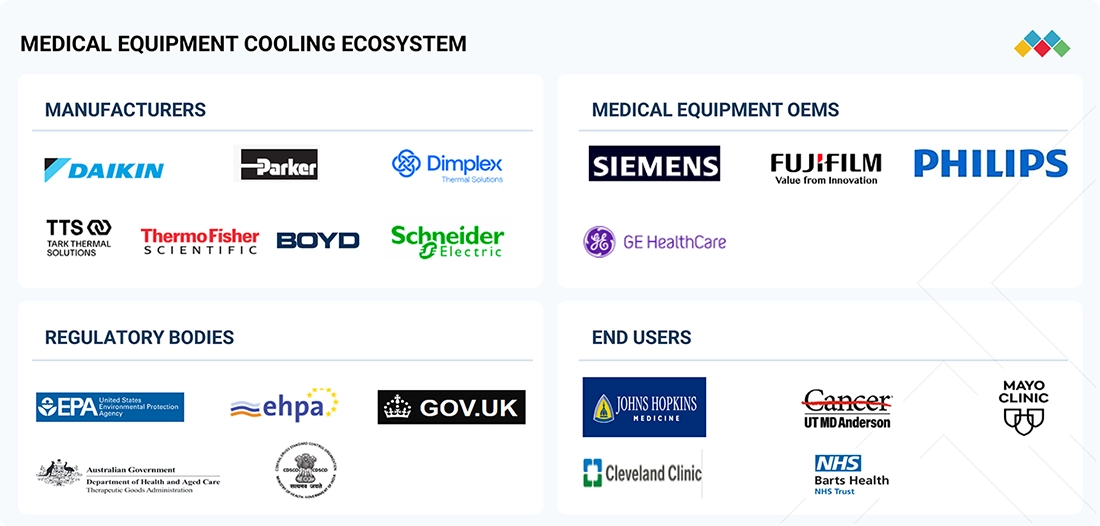
The medical equipment cooling market is evolving as healthcare facilities and medical equipment manufacturers increasingly require reliable thermal management for advanced diagnostic and therapeutic systems. MRI scanners, CT systems, PET scanners, linear accelerators (LINAC), medical lasers, and laboratory instruments generate heat that must be controlled to maintain equipment performance, temperature stability, and operational reliability. Liquid cooling systems, precision chillers, advanced compressor technologies, and compact thermal management designs are becoming increasingly important across these applications.
The market is also benefiting from demand for energy-efficient cooling, intelligent temperature monitoring, reduced maintenance requirements, and refrigerants with lower environmental impact. Manufacturers are differentiating themselves through engineering capabilities, customized cooling configurations, global service networks, and solutions designed for continuous operation. According to MarketsandMarkets, the global medical equipment cooling market is projected to grow from USD 0.63 billion in 2026 to USD 0.82 billion by 2031, at a CAGR of 5.4% during the forecast period.
1. Parker Hannifin Corp.
Parker Hannifin Corp. is a diversified motion and control technology company with capabilities in industrial refrigeration, fluid management, and precision thermal control. Its Hyperchill medical imaging chillers are designed to support the cooling requirements of medical equipment, including imaging systems. The company's portfolio includes process chillers, pumps, valves, and heat exchangers that can be configured for demanding thermal management applications. Its engineering expertise, international service infrastructure, and focus on energy-efficient cooling strengthen its relevance to medical equipment manufacturers requiring dependable temperature control.
2. Thermo Fisher Scientific
Thermo Fisher Scientific provides scientific instruments, laboratory equipment, analytical technologies, and diagnostic solutions used in clinical laboratories, pharmaceutical research, and life sciences. Its equipment portfolio includes temperature-controlled instruments and laboratory systems that require reliable thermal management. The company's relevance to medical equipment cooling is primarily connected to laboratory and analytical applications rather than the supply of standalone medical imaging chillers. Its broad laboratory technology offering, global customer base, and technical support capabilities make it an important participant in the wider ecosystem of temperature-sensitive medical and life science equipment.
3. Daikin Industries Ltd.
Daikin Industries Ltd. is a global air conditioning and refrigeration technology company with expertise in compressors, heat exchangers, and precision temperature control. Its cooling technologies and chiller capabilities are relevant to healthcare equipment and facilities that require stable operating temperatures. Daikin's inverter-driven compressors, system controls, and ongoing work on lower-global-warming-potential refrigerants support efforts to improve cooling efficiency and reduce environmental impact. Its international manufacturing and service presence strengthens its ability to serve equipment manufacturers and healthcare facilities seeking reliable thermal management solutions for demanding operating environments.
4. SMC Corporation
SMC Corporation specializes in industrial automation equipment, pneumatic components, temperature control equipment, and fluid handling technologies. Its thermochillers and temperature control systems are designed to regulate circulating fluids for applications requiring consistent thermal conditions. These capabilities are relevant to selected medical and laboratory instruments, analytical equipment, and manufacturing processes associated with healthcare technologies. SMC's strengths include compact equipment designs, temperature regulation capabilities, and a broad international distribution network. Its role in the medical equipment cooling market is primarily associated with temperature control components and systems rather than a comprehensive portfolio of imaging-specific chillers.
5. Schneider Electric
Schneider Electric provides energy management, electrical distribution, automation, and digital control technologies for buildings and industrial facilities. Its cooling and facility infrastructure capabilities can support healthcare environments that depend on stable operating conditions for medical equipment and associated electrical systems. The company's monitoring, automation, and energy management platforms are relevant to improving facility efficiency and operational visibility. However, its position in medical equipment cooling is broader and more infrastructure-oriented than that of manufacturers specializing in dedicated MRI, CT, or LINAC chillers. Its relevance should therefore be considered within the wider healthcare thermal management ecosystem.
6. Filtrine
Filtrine specializes in industrial and medical chillers, including customized cooling systems designed for demanding healthcare applications. Its medical chiller solutions support equipment such as linear accelerators used in radiation therapy, as well as other temperature-sensitive medical technologies. The company offers packaged and application-specific configurations tailored to equipment requirements, installation conditions, and operating environments. Its capabilities include closed-loop cooling and options designed to improve reliability and serviceability. Filtrine's experience working with medical equipment manufacturers and facility engineers supports its competitive position in specialized cooling applications where consistent temperature control and dependable operation are essential.
7. Boyd Thermal
Boyd Thermal, associated with Boyd's thermal management business, provides engineered cooling technologies, including liquid cooling systems, cold plates, heat exchangers, and customized thermal solutions. These capabilities are relevant to medical devices and diagnostic equipment that require effective heat removal within constrained spaces. Its engineering expertise supports the integration of thermal management into complex equipment designs, where component temperatures can affect performance and reliability. Boyd's broader thermal technology portfolio and custom engineering capabilities provide a route to serving medical OEMs, although individual solutions must be evaluated for their suitability to specific imaging or therapeutic systems.
8. General Air Products
General Air Products provides industrial air and gas systems, including specialized equipment used in healthcare and other commercial environments. Its offerings encompass fire protection air compressors, desiccant air dryers, and related systems for applications requiring controlled air supply. These products can support hospital infrastructure and certain equipment-related operating requirements, but they should not automatically be treated as dedicated medical imaging cooling systems. The company's relevance to the medical equipment cooling ecosystem is therefore indirect unless a specific cooling product or medical OEM application is confirmed. Its established engineering and service capabilities remain relevant to healthcare facility infrastructure.
9. EcoChillers
EcoChillers specializes in industrial process chillers and temperature control solutions for applications that require reliable removal of process heat. Its chiller systems can be evaluated for medical and laboratory equipment applications where cooling capacity, temperature stability, and system configuration meet the equipment manufacturer's specifications. The company's relevance depends on the requirements of individual installations, including cooling load, fluid compatibility, environmental conditions, and continuous operating needs. Its focus on process cooling provides a foundation for potential medical applications, although specific MRI, CT, PET, or LINAC deployments should be verified before attributing specialized medical capabilities.
10. KKT Chillers
KKT Chillers develops precision cooling systems for industrial and technically demanding applications. Its portfolio includes chiller technologies intended to provide controlled cooling for equipment and processes that require stable operating temperatures. Such capabilities are relevant to selected medical technology applications, where heat removal and reliable temperature regulation are essential to equipment operation. The company's engineering focus and specialized cooling expertise support its relevance to the broader thermal management market. Medical equipment manufacturers must assess individual KKT solutions against their specific cooling loads, integration requirements, operating conditions, and service expectations.
11. Legacy Chillers, Inc.
Legacy Chillers, Inc. supplies chiller systems for industrial and specialized cooling applications. Its relevance to medical equipment cooling is associated with the potential use of process chillers in installations requiring controlled heat removal and reliable fluid circulation. Medical applications can impose demanding requirements for temperature stability, continuous operation, maintenance access, and compatibility with equipment supplied by medical OEMs. Legacy Chillers' inclusion in this market reflects its presence in the specialized chiller supplier landscape; however, particular medical imaging or radiation therapy applications should be confirmed against its current product specifications and documented installations.
12. Tark Thermal Solutions
Tark Thermal Solutions specializes in thermoelectric cooling, temperature control, and engineered thermal management technologies. Its portfolio includes thermoelectric modules and assemblies used in applications that require precise temperature regulation, compact construction, or solid-state cooling. These capabilities are relevant to medical diagnostic instruments, laboratory analyzers, and other temperature-sensitive healthcare technologies. Thermoelectric systems can offer design flexibility where conventional compressor-based cooling is unsuitable. Tark's engineering expertise and application-specific solutions support its relevance to medical OEMs developing compact and reliable instruments, although its thermoelectric products serve a different technical role from large-capacity MRI or CT chillers.
13. Drake Refrigeration
Drake Refrigeration provides industrial refrigeration and process cooling solutions for applications requiring dependable heat removal. Its expertise in refrigeration system engineering is relevant to specialized installations where cooling capacity, operating conditions, and equipment integration must be carefully managed. Medical equipment applications may require additional design considerations, including stable coolant temperatures, continuous operation, and compatibility with OEM specifications. Drake's position in this market is best assessed through its specific chiller configurations and documented medical applications rather than through its general refrigeration capabilities alone. Its specialized engineering background provides a basis for evaluating potential use in demanding cooling environments.
14. PolyScience
PolyScience develops temperature control equipment, including recirculating chillers, circulating baths, and laboratory temperature management systems. Its products serve scientific research, analytical testing, and industrial applications where precise temperature control is essential. Within the medical equipment cooling ecosystem, PolyScience is particularly relevant to laboratory instruments, research equipment, and selected diagnostic or analytical systems that require controlled coolant circulation. Its temperature regulation capabilities, range of equipment configurations, and laboratory-focused product portfolio support applications with defined thermal requirements. Suitability for large medical imaging systems depends on the required cooling capacity and the equipment manufacturer's specifications.
15. Haskris
Haskris specializes in process cooling systems and chillers for applications requiring consistent temperature control and reliable operation. Its cooling solutions have relevance in medical and scientific equipment environments, including installations where sensitive instruments need stable coolant conditions. The company's focus on application-specific cooling enables system selection around thermal load, fluid circulation, temperature requirements, and installation constraints. In medical settings, these factors are important for protecting equipment performance and reducing unplanned downtime. Haskris' specialized chiller capabilities make it a relevant supplier to evaluate for medical OEM and laboratory applications that require engineered process cooling.
16. American Chillers
American Chillers manufactures industrial and specialized chiller systems designed for process cooling applications. Its solutions can be evaluated for medical equipment installations requiring dependable temperature regulation, including selected laser, laboratory, and other heat-generating systems. Cooling requirements differ substantially across applications, making capacity, temperature stability, coolant compatibility, and continuous-duty performance important selection criteria. American Chillers' specialized equipment offering positions it within the broader chiller supplier landscape serving technically demanding users. Its suitability for a particular imaging or therapeutic platform should be established through the relevant model specifications and confirmation from the equipment integrator.
17. Thermal Care
Thermal Care provides process cooling equipment, including chillers, temperature control systems, and related thermal management solutions. Its products are designed for industrial applications that require controlled heat removal, and selected configurations may be assessed for medical and laboratory equipment requirements. The company's engineering capabilities and breadth of process cooling technologies are relevant where OEMs need reliable temperature regulation and integration with existing systems. Medical applications require careful assessment of operating ranges, cooling capacity, maintenance requirements, and continuous-duty performance. Thermal Care's role is strongest where its specified products match the technical demands of the intended medical equipment application.
18. Aspen Systems
Aspen Systems develops thermal management technologies, including liquid cooling solutions and customized systems for specialized equipment. Its engineering capabilities are relevant to applications where compact packaging, heat transfer performance, and precise temperature control are important. In the healthcare technology ecosystem, these capabilities may support selected medical instruments and equipment that require engineered thermal solutions. The company's relevance should be assessed at the product level, particularly when distinguishing specialized thermal management assemblies from complete medical imaging chillers. Its custom engineering approach provides potential value for OEMs whose equipment designs impose specific space, performance, or integration constraints.
19. Whaley Products, Inc.
Whaley Products, Inc. provides specialized chiller and cooling equipment for industrial and commercial applications. Its process cooling capabilities may be relevant to healthcare equipment installations where the cooling load and operating conditions align with available system specifications. Medical applications require dependable operation, appropriate temperature control, serviceability, and compatibility with the equipment being cooled. Whaley Products' role in the market should therefore be evaluated based on the specific models and configurations suitable for medical or laboratory environments. Its presence among specialized cooling suppliers makes it a company to assess when comparing chiller options for defined thermal management requirements.
20. JULABO GmbH
JULABO GmbH specializes in temperature control technology, including circulators, heating and cooling systems, and recirculating chillers for laboratories and industrial processes. Its equipment supports applications requiring precise temperature regulation, making it relevant to research laboratories, analytical instruments, and selected medical technology applications. JULABO's strengths include temperature control expertise, a range of system configurations, and equipment designed for demanding scientific workflows. Its role in medical equipment cooling is particularly relevant where laboratory-scale or instrument-level temperature control is required, rather than automatically extending to high-capacity cooling for large diagnostic imaging systems.
21. LAUDA Scientific GmbH
LAUDA Scientific GmbH provides temperature control equipment for laboratory, research, and industrial applications. Its product range includes thermostats, circulators, and heating and cooling systems used to maintain controlled thermal conditions during testing and scientific workflows. These capabilities can support medical research laboratories, analytical instrumentation, and selected temperature-sensitive equipment. Precise control and application-specific configuration are important strengths in settings where experimental reproducibility and instrument performance depend on stable temperatures. LAUDA's relevance to the medical equipment cooling market is primarily associated with scientific and laboratory thermal management, with suitability determined by individual equipment requirements.
22. Peter Huber Kältemaschinenbau SE
Peter Huber Kältemaschinenbau SE, known for its Huber temperature control technology, develops heating and cooling circulators, dynamic temperature control systems, and process thermostats. Its equipment serves research laboratories, industrial processes, and applications requiring accurate temperature regulation. These capabilities are relevant to laboratory diagnostics, analytical instruments, and medical research equipment that depend on controlled thermal conditions. The company's technical focus on temperature stability and dynamic control supports specialized applications where conventional facility cooling may be insufficient. Its role in medical equipment cooling is most directly applicable to instrument-level and process-level thermal management.
23. Pfannenberg Group Holding
Pfannenberg Group Holding provides thermal management, climate control, and signaling technologies for industrial equipment and electrical enclosures. Its cooling portfolio includes solutions designed to manage heat in equipment cabinets and industrial environments. These capabilities can be relevant to medical equipment infrastructure, control cabinets, and supporting electronic systems that require dependable temperature management. The company's strengths include engineered cooling products, industrial application expertise, and an international presence. Its relevance to medical equipment cooling is primarily associated with equipment and enclosure thermal management rather than dedicated cooling systems for MRI, CT, or PET scanners.
24. Cold Shot Chillers
Cold Shot Chillers manufactures process chillers for industrial applications requiring reliable temperature control and heat removal. Its equipment can be evaluated for medical, laboratory, and specialized equipment applications when the cooling capacity, operating temperature, and system configuration meet the required specifications. Thermal stability and continuous operation are especially important in healthcare environments where equipment performance must be maintained throughout clinical workflows. Cold Shot Chillers' process cooling expertise provides a basis for assessing its products for suitable medical OEM installations. Specific claims about imaging or radiation therapy applications should be supported by current product documentation or confirmed customer deployments.
25. Glen Dimplex Group
Glen Dimplex Group has experience in heating, cooling, and thermal management technologies through its wider portfolio of climate and industrial solutions. Its thermal management business has been associated with cooling technologies used in specialized equipment and demanding industrial environments. These capabilities are relevant to applications where controlled temperatures and reliable heat dissipation are necessary for equipment performance. Its position in medical equipment cooling is connected to the availability of appropriate thermal management products and the group's relevant business operations. Buyers should confirm current product ownership, branding, and medical application specifications when assessing individual offerings.
80% of the Forbes Global 2000 B2B companies rely on MarketsandMarkets to identify growth opportunities in emerging technologies and use cases that will have a positive revenue impact.
- Food Packaging Market Size Set for Strong Growth Through 2030 Amid Rising Demand for Convenience Foods
- Crop Protection Chemical Market Size, Share & Growth Forecast (2025–2030)
- Mulch Films Market: Driving Sustainable Agriculture Through Innovation
- Agricultural Adjuvants Market Analysis, Trends, and Growth Outlook (2026–2031)
- Japan Enterprise Asset Management Market Growth: AI and Smart Infrastructure Drive Demand

The medical equipment cooling market is expected to remain important as healthcare providers expand their use of advanced imaging, radiation therapy, laboratory diagnostics, and other heat-generating medical technologies. Competitive opportunities will depend on reliable temperature control, energy efficiency, compact system design, integration with medical OEM platforms, and responsive technical support. Manufacturers must also account for environmental requirements affecting refrigerants, equipment reliability expectations, and the operating demands of healthcare facilities. Understanding differences between specialized medical chillers, laboratory temperature control systems, and broader industrial cooling technologies is essential when evaluating suppliers and market opportunities.