25 Leading Population Health Management Companies Shaping Innovation and Market Growth to 2031
Discover the top 25 companies driving innovation in the population health management (PHM) market. This in-depth analysis explores competitive advantages, transformative healthcare technologies, and key players poised to influence patient outcomes, care coordination, predictive analytics, and value-based healthcare delivery through 2031.
Spotlights on the Industry's Top Population Health Management Companies
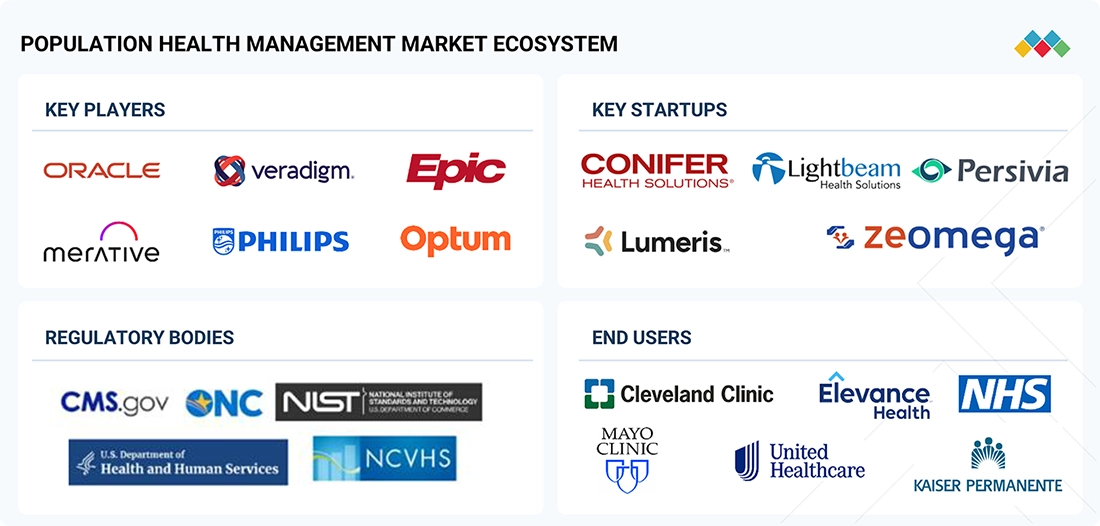
The population health management market is evolving as healthcare providers, insurers, and public health organizations increasingly adopt data-driven strategies to improve patient outcomes and manage healthcare expenditure. Integrated healthcare software, artificial intelligence (AI), predictive analytics, electronic health records (EHRs), and cloud-based data platforms are transforming how organizations identify high-risk populations, coordinate care, and monitor clinical performance. The growing adoption of value-based care models is also increasing demand for solutions that connect clinical, financial, and operational information. Market participants are competing through interoperability, advanced analytics, patient engagement, risk stratification, and scalable software platforms.The global population health management market is projected to grow from USD 46.93 billion in 2026 to USD 98.41 billion by 2031, registering a CAGR of 16.0% during the forecast period.
1. Oracle (US)
Oracle is a major enterprise technology provider serving healthcare organizations through its Oracle Health portfolio. Its population health capabilities support clinical data integration, care management, healthcare analytics, and value-based care initiatives. Oracle Health Data Intelligence helps organizations consolidate information from multiple sources, identify care gaps, and generate actionable insights for clinical and operational decision-making. Its cloud infrastructure and enterprise data management capabilities support organizations seeking to improve interoperability, coordinate patient care, and evaluate population-level outcomes. These capabilities position Oracle as an important technology provider in the population health management market.
2. Optum, Inc. (US)
Optum, Inc., part of UnitedHealth Group, combines healthcare services, technology, and data analytics to support population health management. Its capabilities include care coordination, clinical case management, risk assessment, member engagement, and value-based care enablement. Optum works with healthcare providers, employers, and health plans to identify individuals requiring targeted interventions and support coordinated approaches to chronic disease management. Its integration of healthcare delivery expertise with analytical capabilities helps organizations evaluate care quality, utilization, and costs. This combination positions Optum as a significant participant in population health and healthcare performance management.
3. Koninklijke Philips N.V. (Netherlands)
Koninklijke Philips N.V. provides health technology solutions spanning connected care, patient monitoring, diagnostic imaging, and clinical informatics. These capabilities can support population health initiatives by improving access to patient information and enabling coordinated care across healthcare settings. Its connected healthcare technologies help providers monitor patient conditions, manage clinical workflows, and use health information to support decision-making. Philips is particularly relevant to population health strategies that integrate hospital-based care with remote monitoring and longitudinal patient management. Its role in this market should be understood within the broader healthcare technology ecosystem rather than as exclusively population health management software.
4. Epic Systems Corporation (US)
Epic Systems Corporation develops electronic health record software and integrated healthcare information systems used by hospitals, health systems, and other care providers. Its population health capabilities support patient registries, care gap identification, clinical quality monitoring, and coordinated care through its broader EHR ecosystem. These tools help healthcare organizations identify patients who may require preventive services, monitor chronic conditions, and evaluate performance against clinical measures. By connecting population-level insights with clinical workflows, Epic supports the implementation of data-driven care strategies and value-based care programs. Its established presence in healthcare information technology strengthens its relevance to the PHM market.
5. Merative (US)
Merative develops data, analytics, and technology solutions for healthcare organizations, government agencies, and life sciences companies. Its healthcare portfolio includes capabilities related to clinical decision support, health data analysis, and population-level insights. These technologies can help organizations evaluate treatment patterns, identify clinical risks, and support evidence-based healthcare decisions. Merative's experience in healthcare informatics and analytical software is relevant to population health management initiatives that require reliable data interpretation and measurable outcomes. Its contribution to the market is associated with healthcare analytics and decision-support capabilities that complement broader population health platforms.
6. Veradigm LLC (US)
Veradigm LLC provides healthcare data, technology, and analytics solutions serving physician practices, pharmaceutical companies, and other healthcare stakeholders. Its offerings include clinical and financial technology, data services, and analytics that can support population health and performance improvement initiatives. By working with healthcare information generated through clinical workflows, Veradigm helps organizations examine patient populations, evaluate care delivery, and support more informed decisions. Its relevance to population health management includes the use of healthcare data to identify opportunities for better coordination, quality measurement, and value-based care. Interoperability and actionable analytics remain important considerations for these applications.
7. i2i Population Health (US)
i2i Population Health specializes in population health analytics and reporting solutions for healthcare providers, particularly organizations serving diverse and underserved communities. Its technology supports clinical data aggregation, patient registries, quality measurement, and identification of care gaps. These capabilities help healthcare teams monitor chronic conditions, evaluate performance indicators, and prioritize interventions for patients who may need additional support. By connecting clinical information with reporting and care improvement workflows, i2i Population Health addresses practical requirements for community health centers and other provider organizations. Its specialized focus on population-level data and measurable care outcomes distinguishes its market positioning.
8. Health Catalyst (US)
Health Catalyst provides healthcare data analytics, technology, and improvement services designed to help healthcare organizations enhance clinical, financial, and operational performance. Its population health and value-based care solutions support data integration, risk identification, care gap analysis, and performance measurement. By combining analytical capabilities with healthcare improvement expertise, the company helps providers examine population-level outcomes and develop targeted interventions. Its solutions can support organizations managing complex patient populations and risk-based contracts. Health Catalyst's emphasis on translating healthcare data into operational improvements makes it relevant to organizations pursuing quality improvement, cost management, and more effective population health strategies.
9. Cedar Gate Technologies (US)
Cedar Gate Technologies develops healthcare technology and analytics solutions focused on value-based care, payment models, and population health management. Its capabilities support risk adjustment, financial modeling, performance measurement, and evaluation of healthcare utilization. These tools help payers and providers assess patient populations, understand the financial implications of care delivery, and manage arrangements that link reimbursement to quality and outcomes. Cedar Gate's combination of analytics and value-based care technology addresses the need for better alignment between clinical performance and financial results. Its market relevance is particularly strong among organizations transitioning toward accountable, outcomes-oriented healthcare models.
10. eClinicalWorks (US)
eClinicalWorks develops cloud-based healthcare information technology, including electronic health records, practice management, patient engagement, and population health solutions. Its integrated software helps medical practices and healthcare organizations maintain clinical information, monitor patient populations, and coordinate preventive and chronic care activities. Population health capabilities can support patient registries, identification of care gaps, and reporting against quality measures. Integration with everyday clinical workflows is important for helping providers act on analytical findings rather than treating population health as a separate administrative process. eClinicalWorks is therefore relevant to healthcare organizations seeking connected clinical and population management technology.
11. Elligint Health (US)
Elligint Health is included among the companies identified for this market analysis. However, its specific current product portfolio and direct involvement in population health management software require further verification before its competitive position can be established confidently. A market assessment should examine whether its offerings support population-level analytics, patient risk stratification, care coordination, healthcare data integration, or value-based care workflows. Confirming the company's legal identity, official website, and current product documentation is important to distinguish a direct market participant from a related healthcare technology or services provider. Its inclusion should therefore be reviewed against primary company sources before publication.
12. Medecision (US)
Medecision provides healthcare technology and services focused on care management, population health, and health plan operations. Its capabilities support the identification of members requiring interventions, coordination of complex care, and management of clinical and administrative workflows. These functions are important for health plans and healthcare organizations working to improve outcomes while managing utilization and costs. By supporting coordinated interventions and data-informed decision-making, Medecision addresses requirements associated with chronic disease management, member engagement, and risk-based healthcare programs. Its focus on connecting care management activities with population-level information makes it relevant to the broader PHM technology landscape.
13. Arcadia (US)
Arcadia provides healthcare data platform and analytics solutions that help healthcare organizations understand patient populations and improve clinical and financial performance. Its technology brings together healthcare information from multiple sources to support risk stratification, quality measurement, care gap identification, and value-based care management. These capabilities help providers and payers develop a more comprehensive view of patient needs and evaluate performance across populations. Arcadia's emphasis on healthcare data integration and actionable analytics addresses a central challenge in population health management: transforming fragmented records into insights that support targeted interventions and measurable improvements in care delivery.
14. athenahealth (US)
athenahealth develops cloud-based healthcare technology supporting electronic health records, medical practice management, revenue cycle operations, and patient engagement. Its connected platform helps ambulatory care providers manage clinical information and coordinate administrative and patient-facing workflows. These capabilities can contribute to population health initiatives through improved access to patient data, clinical reporting, and support for preventive care activities. Its relevance is particularly associated with physician practices and outpatient organizations seeking to connect population health objectives with routine clinical operations. Integration, workflow efficiency, and reliable patient information are important factors in evaluating its role in the PHM market.
15. Cotiviti, Inc. (US)
Cotiviti, Inc. provides healthcare analytics, payment accuracy, quality measurement, and risk adjustment solutions for health plans and healthcare organizations. Its technologies help customers analyze claims and clinical information, evaluate performance, and identify opportunities to improve healthcare quality and financial outcomes. These capabilities are relevant to population health management because effective programs require accurate risk assessment, reliable quality reporting, and a clear understanding of healthcare utilization. Cotiviti's contribution is particularly connected to payer analytics and measurement of performance across covered populations. Its expertise in healthcare data analysis supports organizations managing quality programs and value-based reimbursement arrangements.
16. NXGN Management, LLC (US)
NXGN Management, LLC is included in the supplied list of population health management companies, but its precise relationship to the NextGen Healthcare business and its current legal and commercial identity should be verified before publication. NextGen Healthcare has provided healthcare information technology, including electronic health records, practice management, and solutions supporting population health and value-based care. If the supplied entity refers to that business, relevant capabilities may include clinical data analysis, patient registries, care gap identification, and quality reporting. Confirming the entity name and product ownership is essential to avoid attributing another company's capabilities to NXGN Management, LLC without sufficient evidence.
17. MedeAnalytics, Inc. (US)
MedeAnalytics, Inc. provides healthcare analytics solutions designed to help payers and providers understand costs, utilization, quality, and operational performance. Its analytical capabilities support the evaluation of claims and clinical information, identification of performance variations, and assessment of opportunities for improvement. These functions are relevant to population health management because organizations need reliable information to understand patient needs and evaluate the impact of care interventions. By supporting data-driven planning and performance monitoring, MedeAnalytics can help healthcare organizations align clinical objectives with financial priorities. Its role is particularly relevant to analytics-led healthcare management and value-based care programs.
18. Conifer Health Solutions (US)
Conifer Health Solutions provides healthcare business process and revenue cycle services to hospitals, health systems, and other healthcare organizations. Its services focus on areas such as patient access, revenue cycle management, and operational performance. Although these activities are not equivalent to a dedicated population health management software platform, they can support the financial and administrative infrastructure required for coordinated healthcare delivery. Its relevance to the wider PHM ecosystem depends on how its operational services complement providers' population health strategies. Organizations evaluating Conifer should distinguish its healthcare management services from clinical analytics and population-level care management software.
19. Lightbeam Health Solutions (US)
Lightbeam Health Solutions focuses on population health management technology, analytics, and services designed to support healthcare providers and organizations operating under value-based care arrangements. Its capabilities include patient risk stratification, care management, identification of care gaps, and performance monitoring. These functions help healthcare teams prioritize patients who may benefit from targeted interventions and track progress against quality and financial objectives. By connecting data-driven insights with care coordination workflows, Lightbeam addresses the operational challenges of managing complex populations. Its specialized focus on population health and accountable care makes it a relevant participant in the PHM market.
20. Innovaccer (US)
Innovaccer develops healthcare data and technology solutions that help organizations unify patient information and improve care delivery. Its platform capabilities support data interoperability, population health analytics, patient engagement, and value-based care operations. By consolidating information from disparate healthcare systems, Innovaccer helps providers and payers develop a more comprehensive view of patient populations, identify care gaps, and support targeted interventions. Its use of data integration and AI-enabled capabilities addresses the growing demand for actionable healthcare intelligence. The company is particularly relevant to organizations seeking to connect clinical, operational, and financial information within population health programs.
21. Lumeris (US)
Lumeris specializes in healthcare transformation, value-based care enablement, and population health strategies. Its offerings combine technology, analytics, and operational expertise to help healthcare organizations manage patient populations and transition toward reimbursement models linked to quality and outcomes. Relevant capabilities include care coordination, performance improvement, physician enablement, and management of financial risk. These functions help providers understand population needs, improve the delivery of coordinated services, and evaluate progress against contractual objectives. Lumeris's emphasis on aligning clinical care with financial performance makes it relevant to healthcare organizations implementing accountable care and population-based reimbursement models.
22. ZeOmega (US)
ZeOmega develops healthcare technology focused on population health management, care management, and payer operations. Its Jiva platform supports coordinated care activities, case management, utilization management, and member engagement. These capabilities help health plans and healthcare organizations manage complex patient needs, coordinate interventions, and support more consistent care delivery. Integration of clinical and administrative information is important for identifying risks and monitoring the progress of care programs. ZeOmega's focus on connected care management workflows and population-level coordination positions it within the segment of the PHM market serving health plans, providers, and other organizations managing complex healthcare populations.
23. Milliman MedInsight (US)
Milliman MedInsight is associated with Milliman's healthcare data analytics and performance measurement capabilities. These solutions help healthcare organizations analyze claims, examine utilization patterns, benchmark performance, and evaluate healthcare costs and quality. Such analytical functions support population health initiatives by enabling organizations to understand variations in care delivery, assess the needs of covered populations, and identify opportunities for targeted improvement. Its relevance is particularly strong in healthcare cost analysis, risk assessment, and performance benchmarking. Organizations can use these insights to inform value-based care strategies, although specific product capabilities should be matched to the requirements of each population health program.
24. Persivia (US)
Persivia provides healthcare technology and analytics solutions focused on population health management, care coordination, and quality improvement. Its capabilities support patient risk identification, chronic disease management, care gap analysis, and performance monitoring. By helping healthcare organizations consolidate information and identify individuals requiring additional attention, Persivia supports more targeted and proactive care delivery. Its solutions are relevant to organizations seeking to improve clinical outcomes while addressing utilization and cost management objectives. The company's emphasis on combining analytics with care management workflows aligns with demand for technology that helps providers and payers operationalize population health strategies and support value-based care initiatives.
25. Color Health, Inc. (US)
Color Health, Inc. provides healthcare technology and services focused on accessible, data-driven care, including preventive health programs, genetic testing, and cancer screening and care initiatives. Its services can contribute to population health strategies by helping organizations identify health risks, coordinate preventive interventions, and improve access to screening and follow-up care. Color's relevance is strongest in targeted population health applications, particularly preventive care and cancer-related programs, rather than as a universal population health management platform. Its technology-enabled care model illustrates how specialized clinical programs can complement broader population health initiatives by connecting risk identification with appropriate services.
80% of the Forbes Global 2000 B2B companies rely on MarketsandMarkets to identify growth opportunities in emerging technologies and use cases that will have a positive revenue impact.
- Food Packaging Market Size Set for Strong Growth Through 2030 Amid Rising Demand for Convenience Foods
- Crop Protection Chemical Market Size, Share & Growth Forecast (2025–2030)
- Mulch Films Market: Driving Sustainable Agriculture Through Innovation
- Agricultural Adjuvants Market Analysis, Trends, and Growth Outlook (2026–2031)
- Japan Enterprise Asset Management Market Growth: AI and Smart Infrastructure Drive Demand

The population health management market is positioned for continued expansion as healthcare providers, payers, employers, and public health organizations prioritize preventive care, coordinated treatment, measurable outcomes, and cost efficiency. Advances in AI, predictive analytics, interoperable data platforms, and cloud-based healthcare software are creating opportunities for companies to strengthen patient risk identification and care management. At the same time, organizations must address data privacy, cybersecurity, regulatory compliance, information exchange, and the integration of new technologies with existing clinical systems. Competitive success will depend on delivering actionable insights, supporting value-based care models, and demonstrating measurable improvements in healthcare quality and operational performance.