25 Leading Rapid Microbiology Testing Companies Shaping Innovation and Market Growth to 2031
Discover the top 25 companies driving innovation in the rapid microbiology testing market. This in-depth analysis explores competitive capabilities, technological advancements, and key players influencing infectious disease diagnosis, pharmaceutical quality control, food safety, and industrial contamination monitoring through 2031.
Spotlights on the Industry's Top Rapid Microbiology Testing Market Companies
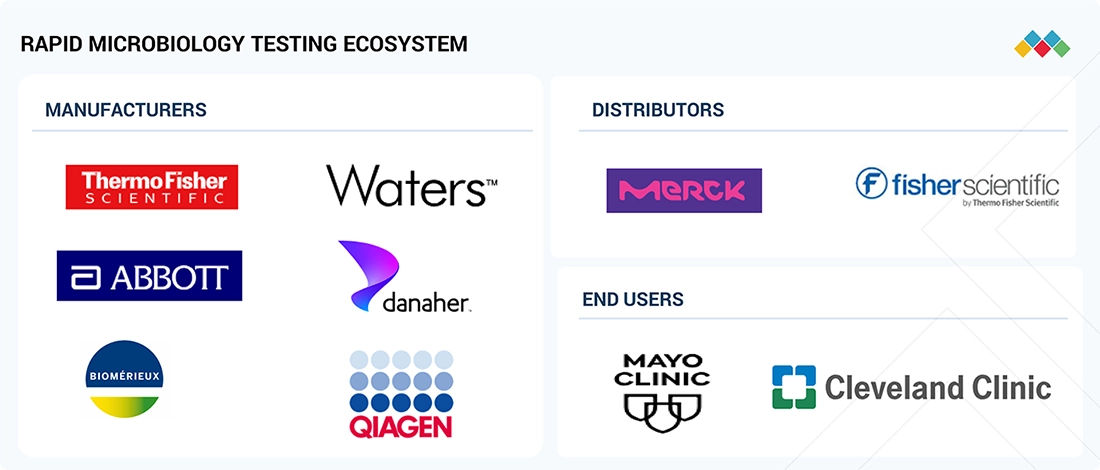
The rapid microbiology testing industry is evolving as healthcare providers, pharmaceutical manufacturers, food producers, and industrial laboratories seek faster and more reliable ways to detect microorganisms. Molecular diagnostics, mass spectrometry, automated microbial identification, rapid sterility testing, and advanced imaging are helping laboratories shorten testing timelines and improve workflow efficiency. Growing concerns about infectious diseases, product contamination, and manufacturing quality are strengthening demand for rapid methods. Competition includes diagnostic manufacturers, laboratory instrument suppliers, specialist testing providers, and companies developing automated systems for pharmaceutical environmental monitoring, food safety, and clinical microbiology. Method validation, sensitivity, specificity, regulatory compliance, and integration into existing laboratory processes remain important adoption considerations.
1. bioMérieux
bioMérieux specializes in in vitro diagnostics, with technologies for microbial identification, infectious disease detection, and industrial microbiology testing. Its portfolio includes the VITEK automated microbial identification and antimicrobial susceptibility testing systems, BACT/ALERT blood culture systems, and BIOFIRE syndromic testing platforms. These solutions support clinical laboratories and healthcare providers seeking faster identification of pathogens, while its industrial microbiology products help pharmaceutical manufacturers monitor contamination and product quality. Its broad clinical and industrial testing capabilities make bioMérieux a major participant in rapid microbiology testing.
2. Waters Corporation
Waters Corporation provides analytical instruments and technologies that support rapid microbial identification and pharmaceutical quality control. Its mass spectrometry platforms, including systems used for matrix-assisted laser desorption/ionization time-of-flight (MALDI-TOF) analysis, can help laboratories identify microorganisms based on their molecular signatures. These technologies can reduce reliance on slower conventional identification workflows when used with appropriate validated methods. Waters' analytical expertise and laboratory customer base make it relevant to microbiology testing, particularly where rapid identification and characterization of microbial isolates are important.
3. Danaher Corporation
Danaher participates in rapid microbiology testing through its life sciences and diagnostics businesses, including Beckman Coulter, Cepheid, and other specialized operating companies. These businesses provide automated laboratory instruments, molecular diagnostic assays, and systems used for pathogen detection and microbial analysis. Cepheid's GeneXpert platform, for example, supports rapid molecular testing for a range of infectious diseases. Danaher's diversified portfolio helps laboratories access complementary diagnostic technologies, although the specific rapid microbiology applications vary by business unit, assay, and testing environment.
4. Abbott Laboratories
Abbott Laboratories develops diagnostic systems and assays used in hospitals, clinical laboratories, and point-of-care settings. Its molecular diagnostic technologies support the detection of infectious agents, helping healthcare professionals obtain results more quickly than with some conventional testing workflows. The ID NOW platform provides rapid molecular testing for selected infectious diseases, while other Abbott systems address broader clinical diagnostic needs. These capabilities support the clinical disease diagnosis segment of rapid microbiology testing, particularly when timely pathogen detection informs patient management and infection control decisions.
5. Thermo Fisher Scientific Inc.
Thermo Fisher Scientific supplies microbiology instruments, culture media, reagents, molecular testing technologies, and laboratory consumables used in clinical and industrial testing. Its products support microbial identification, pathogen detection, environmental monitoring, and pharmaceutical quality control. The company's extensive laboratory portfolio enables customers to build workflows spanning sample preparation, testing, and analytical evaluation. These capabilities are relevant to hospitals, pharmaceutical manufacturers, and food testing laboratories seeking reliable microbiological results. Its global distribution network and broad laboratory technology offering strengthen its position across multiple rapid microbiology applications.
6. Bruker Corporation
Bruker Corporation provides analytical instruments for microbial identification and characterization, including MALDI Biotyper systems based on mass spectrometry. These systems identify microorganisms by analyzing characteristic protein patterns, helping clinical and industrial laboratories accelerate identification after obtaining a suitable microbial sample. Bruker's technologies support applications in clinical microbiology, pharmaceutical testing, food analysis, and research. Its established mass spectrometry expertise and specialized microbial identification solutions make it a relevant competitor in rapid microbiology testing, particularly where laboratories aim to improve identification speed and workflow efficiency.
7. QuidelOrtho Corporation
QuidelOrtho develops diagnostic assays and instruments for clinical laboratories and point-of-care testing. Its portfolio includes rapid diagnostic and molecular testing solutions for selected infectious diseases, supporting clinical decisions when timely results are important. The company also offers automated clinical chemistry and immunoassay systems that serve broader diagnostic workflows. Its relevance to rapid microbiology testing is strongest in clinical disease diagnosis rather than industrial microbial quality control. Laboratories evaluating its solutions should consider the specific pathogens covered, assay performance, sample requirements, and applicable regulatory clearances.
8. Sartorius AG
Sartorius supports rapid microbiology testing through laboratory technologies and biopharmaceutical quality-control solutions. Its portfolio includes filtration products, laboratory instruments, and systems used in microbial analysis and contamination monitoring. These capabilities are relevant to pharmaceutical and biotechnology manufacturers seeking to improve sterility assurance, bioburden testing, and process control. Rapid methods can help quality teams obtain actionable results sooner than conventional culture workflows when validated for the intended application. Sartorius' experience in bioprocessing and laboratory equipment makes it an important supplier for microbiological quality testing in regulated manufacturing environments.
9. Merck KGaA
Merck KGaA provides microbiology products and technologies through its Life Science business, supporting pharmaceutical quality control, contamination monitoring, and laboratory testing. Its portfolio includes culture media, membrane filtration products, microbial detection tools, and rapid microbiological testing solutions. These products help manufacturers assess bioburden, monitor manufacturing environments, and investigate potential contamination in pharmaceutical and biotechnology processes. Merck's broad life science infrastructure and focus on quality-control workflows make it relevant to organizations seeking to modernize microbiological testing while maintaining appropriate validation, documentation, and regulatory compliance.
10. F. Hoffmann-La Roche Ltd.
F. Hoffmann-La Roche Ltd. contributes to rapid microbiology testing primarily through its molecular diagnostics technologies and infectious disease assays. Its diagnostic platforms help laboratories detect specific pathogens using nucleic acid-based methods, which can provide results more quickly than conventional culture for selected indications. These capabilities support clinical diagnosis and patient management, particularly when rapid identification of an infectious agent is important. Roche's global diagnostic infrastructure and assay development expertise make it relevant to the clinical segment, although its portfolio should be distinguished from industrial sterility and environmental monitoring systems.
11. Charles River Laboratories, Inc.
Charles River Laboratories provides microbiological testing and quality-control services for pharmaceutical, biotechnology, and medical product manufacturers. Its Celsis rapid microbial detection platform uses rapid detection methods to support applications such as microbial limits and sterility testing. These solutions help quality-control laboratories investigate contamination and make product release decisions more efficiently when the method is suitable and validated for the intended use. Charles River combines testing services with rapid microbiology technologies, making it relevant to manufacturers seeking faster results, improved documentation, and dependable microbiological quality assurance.
12. Neogen Corporation
Neogen Corporation develops testing solutions for food safety, animal health, and related industries. Its food safety portfolio includes microbiology products used to detect pathogens and indicators of contamination in food production environments and finished products. These solutions help food manufacturers monitor hygiene, investigate contamination risks, and support quality assurance programs. Rapid and simplified testing workflows can be particularly valuable where timely results affect production decisions. Neogen's focus on food safety and microbiological testing makes it relevant to industrial applications within the rapid microbiology testing market.
13. Bio-Rad Laboratories, Inc.
Bio-Rad Laboratories provides molecular diagnostics technologies, reagents, and laboratory instruments used in infectious disease testing and microbiological research. Its PCR and digital PCR platforms support nucleic acid detection and quantification, while its broader product portfolio serves clinical laboratories and research organizations. Molecular methods can help detect microbial targets without waiting for conventional culture growth, depending on the assay and application. Bio-Rad's expertise in amplification technologies and laboratory workflows makes it relevant to rapid testing development, particularly where accurate molecular detection supports clinical or research decisions.
14. Shimadzu Corporation
Shimadzu Corporation supplies analytical instruments, including mass spectrometry and chromatography systems, used in pharmaceutical analysis, chemical characterization, and microbiological research. Mass spectrometry can support microbial identification and characterization when paired with suitable sample preparation and validated analytical methods. Its instrumentation also helps manufacturers investigate product quality and potential contamination. Shimadzu's analytical technology expertise makes it relevant to laboratories seeking faster, information-rich testing workflows. Its role is primarily instrument-based, and the suitability of individual platforms for routine rapid microbial identification depends on the method and intended application.
15. Rapid Micro Biosystems, Inc.
Rapid Micro Biosystems specializes in automated microbial quality-control testing for pharmaceutical, biotechnology, and personal care manufacturing. Its Growth Direct platform uses automated, growth-based detection to support environmental monitoring, water testing, bioburden testing, and sterility testing. By automating sample analysis and data capture, the system is designed to help quality-control laboratories improve consistency, traceability, and operational efficiency. The company's focused portfolio addresses the need for faster microbiological quality decisions in regulated manufacturing, making it a prominent specialist in rapid industrial microbiology testing.
16. Don Whitley Scientific Limited
Don Whitley Scientific develops and supplies specialist microbiology equipment, including systems for controlled-atmosphere cultivation, antimicrobial susceptibility testing, and research into microorganisms. Its products support laboratories investigating bacterial growth, antimicrobial response, and microbial behavior under defined conditions. Although much of its portfolio serves broader microbiology research and testing rather than rapid detection alone, its equipment can contribute to workflows where reliable microbial growth and analysis are essential. The company's specialized instrumentation and established laboratory customer base give it a role in the wider microbiology testing ecosystem.
17. Gradientech
Gradientech develops rapid antimicrobial susceptibility testing technology for clinical microbiology laboratories. Its QuickMIC system is designed to generate antimicrobial susceptibility results for selected bacterial infections significantly faster than conventional methods, helping clinicians obtain information that can support treatment decisions. Rapid susceptibility testing is particularly relevant to severe infections, where timely selection of effective antibiotics is important. Gradientech's focus on fast, microscopy-based analysis and clinical workflow integration positions it as a specialist innovator in rapid microbiology testing, especially in the area of antimicrobial resistance and precision infection management.
18. RQmicro AG
RQmicro develops rapid microbial detection and quantification solutions, with applications in water quality and environmental monitoring. Its rqmicro.COUNT platform uses automated analysis to quantify microorganisms, including specific bacteria such as Legionella and Escherichia coli, in relevant water samples. Rapid measurement can help operators investigate microbial contamination and make timely decisions about water-system management. The company's specialized technology and focus on viable microbial detection distinguish it within the market. Its strongest relevance is in water and environmental testing rather than broad clinical diagnostics or pharmaceutical sterility testing.
19. Colifast AS
Colifast AS specializes in rapid microbiological monitoring solutions for water quality, with technologies designed to detect indicator organisms such as coliform bacteria. Its systems support applications in drinking water, wastewater, and industrial water monitoring, where timely detection of microbial contamination can improve operational response. Automated and near-real-time testing approaches can reduce dependence on slower conventional laboratory workflows for selected applications. Colifast's focus on water microbiology and monitoring systems gives it a distinct position in rapid testing, particularly for utilities and organizations responsible for water safety and process control.
20. Hygiena LLC
Hygiena provides rapid testing products for food safety, environmental monitoring, and hygiene verification. Its portfolio includes ATP monitoring systems, microbial detection assays, and pathogen testing solutions used by food manufacturers and other industrial customers. These tools help organizations assess surface cleanliness, investigate contamination risks, and monitor production environments. Rapid results can support timely corrective action as part of broader quality assurance programs. Hygiena's focus on practical testing workflows and contamination control makes it relevant to food and beverage processing, environmental monitoring, and industrial microbiology applications.
21. Copan Diagnostics Inc.
Copan Diagnostics specializes in specimen collection, transport, and microbiology laboratory automation. Its WASP automated specimen processing system and WASPLab laboratory automation platform help laboratories standardize sample handling, inoculation, imaging, and culture workflow management. Automation can reduce manual steps and help microbiology laboratories process specimens more efficiently. Copan also provides collection and transport systems that support specimen integrity before testing. Its technologies are relevant to rapid microbiology workflows by improving laboratory throughput and supporting faster interpretation, although culture-based testing may still require organism growth time.
22. PerkinElmer Inc.
PerkinElmer has a history of supplying analytical instruments, reagents, and laboratory technologies used in life sciences, environmental testing, and microbiological analysis. Its former analytical and applied laboratory businesses have supported workflows such as microbial detection, food safety testing, and laboratory quality control. Because the company's business structure has changed, its current product ownership and availability should be confirmed before attributing specific rapid microbiology systems to PerkinElmer Inc. Its historical analytical capabilities illustrate the role of instrumentation and detection technologies in supporting faster, more standardized microbiological testing.
23. Hardy Diagnostics
Hardy Diagnostics manufactures and distributes microbiology products used by clinical laboratories, pharmaceutical manufacturers, food testing facilities, and industrial microbiology teams. Its portfolio includes culture media, prepared plates, identification products, collection systems, and quality-control materials. These products support the detection, isolation, and identification of microorganisms across a range of testing workflows. While many of its solutions use established culture-based methods, dependable media and laboratory supplies remain important to rapid testing programs. Hardy Diagnostics' microbiology specialization makes it a relevant supplier to laboratories seeking consistent testing materials.
24. Charm Sciences
Charm Sciences develops rapid testing technologies for food safety, agricultural products, and related industries. Its product portfolio includes tests for antibiotic residues, mycotoxins, allergens, and other food quality hazards, alongside microbiological testing solutions. These methods help food producers and processors screen products and support contamination control programs. Although not all of its tests detect microorganisms directly, its rapid testing expertise is relevant to industrial quality assurance and food safety workflows. The company's specialized assays and focus on timely results support decisions throughout food production and processing.
25. R-Biopharm
R-Biopharm develops diagnostic and analytical test systems for food and feed analysis, clinical diagnostics, and pharmaceutical applications. Its portfolio includes assays for detecting food contaminants, allergens, mycotoxins, and selected pathogens, as well as technologies for laboratory analysis. These products support food safety monitoring and quality-control workflows where reliable results are important for product release and risk management. R-Biopharm's established expertise in analytical testing makes it relevant to the wider rapid microbiology and food safety testing landscape, with specific applications depending on the assay and intended use.
80% of the Forbes Global 2000 B2B companies rely on MarketsandMarkets to identify growth opportunities in emerging technologies and use cases that will have a positive revenue impact.
- Food Packaging Market Size Set for Strong Growth Through 2030 Amid Rising Demand for Convenience Foods
- Crop Protection Chemical Market Size, Share & Growth Forecast (2025–2030)
- Mulch Films Market: Driving Sustainable Agriculture Through Innovation
- Agricultural Adjuvants Market Analysis, Trends, and Growth Outlook (2026–2031)
- Japan Enterprise Asset Management Market Growth: AI and Smart Infrastructure Drive Demand

The rapid microbiology testing market is evolving as healthcare providers and industrial manufacturers prioritize faster microbial detection, stronger contamination control, and more efficient laboratory workflows. Molecular diagnostics, mass spectrometry, automated culture analysis, and rapid sterility testing technologies are expanding the available testing options across clinical diagnosis, pharmaceutical manufacturing, food safety, and water monitoring. Market participants range from diversified diagnostics companies to specialist developers of microbial detection platforms. Future adoption will depend on method validation, sensitivity, specificity, regulatory acceptance, workflow compatibility, and the ability to generate reliable results without compromising safety or quality. To explore the competitive landscape, technology trends, growth drivers, and strategic opportunities through 2031, access the full report: Rapid Microbiology Testing Market by Product (Instruments (Mass Spectrometers), Consumables), Method (Nucleic Acid-based), Application (Industrial Testing (Food & Beverage), Clinical Diagnosis), End User (Hospitals), & Region - Global Forecast to 2031.