26 Leading Stem Cell Therapy Companies Shaping Innovation and Market Growth to 2035
Discover the top 26 companies driving innovation in the stem cell therapy market. This in-depth analysis explores competitive capabilities, emerging technologies, and key players shaping regenerative medicine, tissue repair, and cell-based treatments for chronic and degenerative conditions through 2035. Access the comprehensive market research report for further insights.
Spotlights on the Industry's Top Stem Cell Therapy Companies
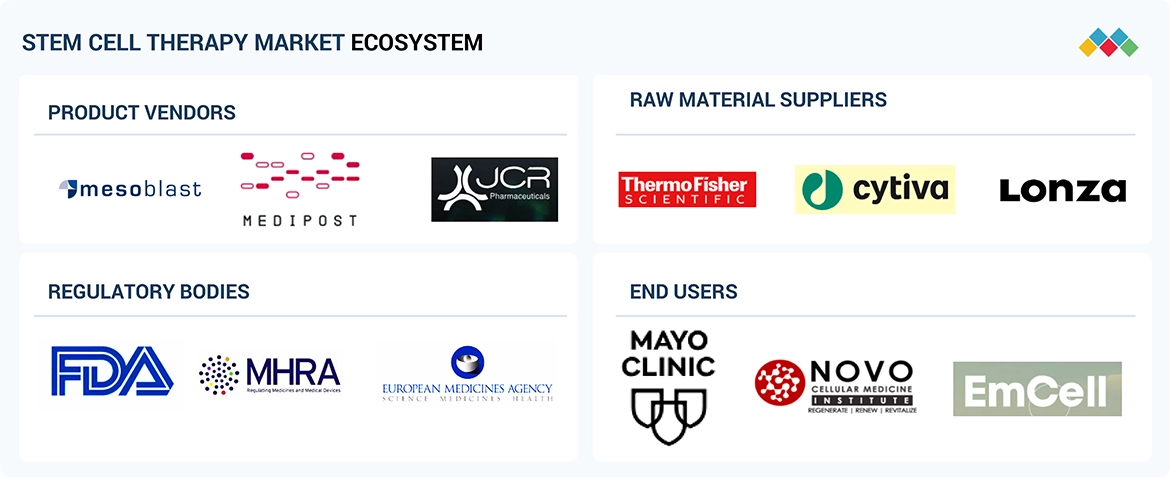
The stem cell therapy market is evolving as advances in cell processing, tissue engineering, and regenerative medicine expand the possibilities for treating complex diseases and injuries. Companies are developing autologous therapies using a patient's own cells and allogeneic products manufactured from donor cells. Research spans mesenchymal stem cells, induced pluripotent stem cells, and other cell-based approaches for musculoskeletal, cardiovascular, neurological, and wound-healing applications. Progress depends on clinical evidence, manufacturing consistency, long-term safety, and regulatory oversight. Competitive strategies increasingly emphasize scalable production, specialized therapeutic platforms, clinical development, and partnerships that can help translate promising research into approved treatments.
1. Vericel Corporation
Vericel Corporation is a commercial-stage biopharmaceutical company focused on cell-based therapies and specialty biologics. Its portfolio includes MACI, an autologous cultured chondrocyte product used to repair symptomatic cartilage defects in the knee, and Epicel, a cultured epidermal autograft for patients with severe burns. These products demonstrate the clinical use of patient-derived cells in tissue repair and regenerative medicine. Vericel's experience in cell processing, specialized manufacturing, and commercial delivery makes it an established participant in the broader cell therapy market.
2. Mesoblast
Mesoblast develops allogeneic mesenchymal stromal cell therapies for inflammatory and immune-mediated conditions. Its remestemcel-L product, marketed as Ryoncil in the United States, received FDA approval for pediatric patients with steroid-refractory acute graft-versus-host disease. The company is also developing cell therapy candidates for additional inflammatory and cardiovascular indications. Mesoblast's approach focuses on using standardized donor-derived cells to address serious diseases, with manufacturing consistency and clinical evidence central to its strategy. Its regulatory and commercialization experience positions it among the prominent developers of mesenchymal cell therapies.
3. JCR Pharmaceuticals Co., Ltd.
JCR Pharmaceuticals Co., Ltd. is a Japanese biopharmaceutical company with expertise in rare diseases and regenerative medicine. Its cell therapy product TEMCELL HS Inj. is an allogeneic bone marrow-derived mesenchymal stem cell product approved in Japan for acute graft-versus-host disease. The therapy illustrates the application of donor-derived cells in managing serious complications following hematopoietic stem cell transplantation. JCR's experience in biologics development, manufacturing, and regulated product commercialization supports its role in the stem cell therapy market, particularly in immune-related and transplant-associated indications.
4. Medipost
Medipost is a South Korean biotechnology company active in stem cell therapeutics and cord blood services. Its CARTISTEM product uses allogeneic umbilical cord blood-derived mesenchymal stem cells for the treatment of knee cartilage defects associated with osteoarthritis and has been approved in South Korea. The company also pursues research and development in regenerative medicine. Medipost's work illustrates the potential of donor-derived stem cells in musculoskeletal treatment, while its clinical and manufacturing experience supports continued development of cell-based approaches for degenerative conditions.
5. CO.DON GmbH
CO.DON GmbH has been associated with autologous cell-based cartilage repair, including Spherox, a product made from a patient's own cultured cartilage cells for treating certain cartilage defects in the knee. Its approach uses expanded cells to support tissue regeneration rather than relying solely on conventional surgical repair. The company is relevant to the development of cell-based orthopedic treatments in Europe. However, its current operating, ownership, and product commercialization status should be verified before publication, as corporate and commercial circumstances can affect the availability of its therapies.
6. Smith+Nephew
Smith+Nephew is a global medical technology company focused on orthopedics, sports medicine, and advanced wound management. Its relevance to the stem cell therapy landscape is primarily adjacent, through technologies and clinical applications involving cartilage repair, tissue healing, and regenerative approaches. The company is not primarily known as a developer of proprietary stem cell medicines, so its role should be distinguished from dedicated cell therapy manufacturers. Its surgical products and wound care technologies participate in the broader treatment environment in which cell-based therapies may be evaluated or used alongside other clinical interventions.
7. Anterogen Co., Ltd.
Anterogen Co., Ltd. is a South Korean biotechnology company developing cell-based therapies, including adipose-derived mesenchymal stem cell products. Its product Cupistem has been approved in South Korea for treating fistulas associated with Crohn's disease. The company has also developed cell therapy approaches for tissue repair and other conditions. Anterogen's use of adipose-derived cells is relevant to the market's focus on alternative cell sources and regenerative applications. Its experience in clinical development and commercialization makes it a notable participant in the regional stem cell therapy industry.
8. CorestemChemon Inc.
CorestemChemon Inc. is a South Korean cell therapy company associated with NEURONATA-R, an autologous bone marrow-derived mesenchymal stem cell therapy developed for amyotrophic lateral sclerosis (ALS). The company has pursued cell-based approaches for neurological disease, an area characterized by substantial unmet medical need and complex clinical development requirements. Its work contributes to research into whether cell therapies can influence disease progression or provide therapeutic benefits in neurodegenerative conditions. Current product status, clinical evidence, and regulatory availability should be checked against the latest company and regulator disclosures.
9. Vertex Pharmaceuticals Incorporated
Vertex Pharmaceuticals Incorporated is a biotechnology company known for developing medicines for serious diseases and advancing cell-based treatment approaches for type 1 diabetes. Its research includes stem-cell-derived, insulin-producing islet cell therapies designed to address the loss of pancreatic beta-cell function. These programs represent a distinct application of stem cell differentiation and cell replacement, with clinical development focused on safety, function, and durability. Vertex's established drug development infrastructure and investment in specialized manufacturing are relevant to translating complex cell therapies into potential treatment options.
10. Pharmicell Co., Ltd.
Pharmicell Co., Ltd. is a South Korean biotechnology company active in stem cell therapeutics and biopharmaceutical materials. Its Cellgram product has been associated with autologous bone marrow-derived mesenchymal stem cell treatment for acute myocardial infarction in South Korea. The company has contributed to the development of cell-based approaches for cardiovascular injury and regenerative medicine. Pharmicell's experience highlights the challenges of developing therapies intended to repair damaged tissue, including clinical validation, manufacturing controls, and regulatory compliance. Its current product indications and commercial status should be verified before making specific treatment claims.
11. Holostem Terapie Avanzate S.r.l.
Holostem Terapie Avanzate S.r.l. is an Italian biotechnology company specializing in advanced therapies based on epithelial stem cells. It has been associated with Holoclar, an ex vivo expanded autologous human corneal epithelial cell therapy used to treat moderate to severe limbal stem cell deficiency caused by ocular burns. This treatment demonstrates how stem cell technology can restore damaged tissue by replenishing specialized cells. Holostem's expertise in cell expansion, tissue engineering, and advanced therapy manufacturing makes it relevant to regenerative medicine, particularly for ophthalmology and epithelial tissue repair.
12. Stempeutics Research Pvt. Ltd.
Stempeutics Research Pvt. Ltd. is an Indian biotechnology company developing mesenchymal stem cell therapies for unmet medical needs. Its Stempeucel product has been approved in India for critical limb ischemia associated with Buerger's disease, using allogeneic bone marrow-derived mesenchymal stromal cells. The company has also investigated cell-based approaches for inflammatory and ischemic conditions. Stempeutics' work reflects efforts to develop standardized cell products that can be manufactured and administered across healthcare settings. Its clinical development and regional commercialization experience support its role in India's regenerative medicine sector.
13. Cipla Limited
Cipla Limited is a global pharmaceutical company with a broad portfolio spanning respiratory care, complex generics, and other therapeutic areas. Its relevance to stem cell therapy is not equivalent to that of companies with established proprietary stem cell products. The company may participate in the wider healthcare and pharmaceutical ecosystem through its commercial infrastructure, manufacturing expertise, or activities related to emerging therapies, but any direct stem cell development role should be verified using current company disclosures. For market analysis, Cipla's position should be described cautiously unless a specific cell therapy asset or program is confirmed.
14. Bayer AG
Bayer AG is a life sciences company operating across pharmaceuticals, consumer health, and crop science. In regenerative medicine, its relevance is associated with research and innovation in advanced therapies and the wider biotechnology ecosystem rather than a broad commercial portfolio of stem cell medicines. Stem cell therapy applications require specialized clinical evidence, manufacturing capabilities, and regulatory pathways, which should be assessed for each program. Bayer's inclusion in this market should therefore be supported by a specific current cell therapy program, investment, or business activity before describing it as a direct stem cell therapy developer.
15. Aspen Neuroscience
Aspen Neuroscience is a clinical-stage biotechnology company developing autologous induced pluripotent stem cell-derived therapies for neurodegenerative diseases. Its lead investigational program, ANPD001, is designed to generate dopaminergic neuron precursor cells from a patient's own cells for potential treatment of Parkinson's disease. The approach aims to replace cells lost through disease and uses specialized manufacturing and cell characterization methods. Aspen's work is relevant to the emerging field of personalized regenerative medicine, where iPSC technology may enable patient-specific cell replacement. The therapy remains investigational and should not be described as an approved treatment.
16. Longeveron
Longeveron is a clinical-stage biotechnology company developing cellular therapies for aging-related and other serious conditions. Its investigational laromestrocel, also known as Lomecel-B, is an allogeneic mesenchymal stem cell product derived from bone marrow. The company has studied this candidate across several indications, including conditions involving aging, immune function, and tissue repair. Longeveron's strategy focuses on the potential biological effects of mesenchymal stem cells, with clinical research required to establish safety and efficacy for each intended use. Its pipeline makes it relevant to the development of donor-derived cell therapies.
17. Athersys, Inc.
Athersys, Inc. developed MultiStem, an investigational allogeneic adult stem cell therapy platform studied for conditions including ischemic stroke and other serious illnesses. The program attracted attention for its potential to provide an off-the-shelf cell therapy without requiring cells to be sourced individually from each patient. However, Athersys has undergone significant financial and corporate challenges, so its current operating status, asset ownership, and development responsibilities require verification. Its historical work remains relevant to understanding clinical development of allogeneic stem cell therapies, but current commercial activity should not be assumed without confirmation.
18. BioRestorative Therapies, Inc.
BioRestorative Therapies, Inc. is a biotechnology company developing cell-based products and related regenerative medicine technologies. Its BRTX-100 program has been investigated as a cell therapy candidate for chronic lumbar disc disease, while its broader research has included brown adipose-derived cell approaches. These programs target conditions for which existing treatment options may be limited and require further clinical evaluation to establish effectiveness. BioRestorative's focus on cell therapy development and specialized manufacturing makes it relevant to regenerative medicine, although investigational products should be distinguished from approved and commercially available therapies.
19. Kangstem Biotech Co., Ltd.
Kangstem Biotech Co., Ltd. is a South Korean biotechnology company developing stem cell-based therapeutics, particularly using umbilical cord blood-derived mesenchymal stem cells. Its research has covered inflammatory, dermatological, and other conditions where regenerative or immunomodulatory effects may offer therapeutic potential. The company's work contributes to efforts to standardize cell sources and develop reproducible products for clinical use. As with other cell therapy developers, its commercial prospects depend on clinical outcomes, manufacturing consistency, and regulatory decisions. Specific programs and approval status should be confirmed from current company disclosures.
20. Hope Biosciences
Hope Biosciences is a biotechnology company focused on stem cell banking, research, and clinical development involving mesenchymal stem cells. Its activities have included investigating autologous and allogeneic cell-based approaches for a range of conditions. Cell banking and processing can be important parts of the stem cell therapy ecosystem, but the availability of a stored cell product does not itself establish that a therapy is proven or approved for a particular disease. Hope Biosciences' relevance lies in its cell processing and clinical research activities, with individual programs requiring assessment based on trial evidence and regulatory status.
21. Cellular Biomedicine Group
Cellular Biomedicine Group has been associated with the development of cell-based therapies, including approaches for degenerative joint disease and other conditions. Its research portfolio has included cell products designed to address musculoskeletal disorders, an important application area for regenerative medicine. The company's current ownership, corporate status, and active development programs should be verified before publication, as biotechnology businesses and their assets can change over time. Its historical work illustrates interest in cell therapies for cartilage and joint repair, but current commercial positioning should be based on up-to-date corporate information.
22. Personalized Stem Cells
Personalized Stem Cells is associated with research and development involving patient-specific stem cell approaches. Personalized cell therapy strategies generally seek to use cells sourced from an individual patient or tailored to a particular clinical context, with potential applications in regenerative medicine. However, specific products, clinical programs, and current operating status for this company should be confirmed through authoritative sources before assigning a defined commercial role. The distinction between research services, investigational treatments, and approved therapies is particularly important in stem cell medicine, where clinical evidence and regulatory authorization vary widely by product and indication.
23. Chiesi Farmaceutici S.p.A.
Chiesi Farmaceutici S.p.A. is an international biopharmaceutical company with expertise in respiratory, rare, and specialty diseases. Its regenerative medicine relevance is associated with advanced therapies and the broader development of treatments for conditions with significant unmet medical need. Chiesi has been connected with cell-based medicine through its advanced therapy activities, although specific stem cell assets and their current status should be checked against company disclosures. Its pharmaceutical development, manufacturing, and regulatory experience can be relevant to the commercialization of complex therapies, but it should not be characterized as a dedicated stem cell company without further evidence.
24. Cell Tech Pharmed
Cell Tech Pharmed is associated with cell therapy development, including MesestroCell, an autologous bone marrow-derived mesenchymal stem cell product reported for osteoarthritis treatment in Iran. Its work reflects efforts to apply cell-based approaches to musculoskeletal disease, where cartilage degeneration and joint damage can be difficult to address with conventional treatments. The product's current regulatory status, indications, and commercial availability should be confirmed through local regulatory and company sources. Cell Tech Pharmed's relevance to the market is tied to its reported cell therapy activities and the development of regenerative approaches for joint disorders.
25. Sumitomo Pharma
Sumitomo Pharma is a Japanese pharmaceutical company with research activities in regenerative medicine and cell-based treatments, including programs using induced pluripotent stem cell technology. Its work has included efforts to develop cell therapies for neurological conditions and other diseases where replacing or restoring damaged cells may offer therapeutic potential. The company's pharmaceutical development and manufacturing experience supports its participation in advanced therapy research. As programs progress, clinical evidence, production consistency, and regulatory requirements remain key determinants of success. Specific stem cell candidates should be described according to their latest development status.
26. Cynata Therapeutics
Cynata Therapeutics is an Australian biotechnology company developing mesenchymal stem cell therapies using its Cymerus platform. The platform uses induced pluripotent stem cells as a starting point to generate mesenchymal stem cells, with the aim of enabling scalable and consistent manufacturing. Cynata has investigated its technology in clinical programs for conditions including graft-versus-host disease and other inflammatory or tissue-related indications. Its manufacturing approach is relevant to a major industry challenge: producing consistent cell therapies at commercial scale. Its candidates remain subject to the clinical and regulatory evidence required for each intended use.
80% of the Forbes Global 2000 B2B companies rely on MarketsandMarkets to identify growth opportunities in emerging technologies and use cases that will have a positive revenue impact.
- Food Packaging Market Size Set for Strong Growth Through 2030 Amid Rising Demand for Convenience Foods
- Crop Protection Chemical Market Size, Share & Growth Forecast (2025–2030)
- Mulch Films Market: Driving Sustainable Agriculture Through Innovation
- Agricultural Adjuvants Market Analysis, Trends, and Growth Outlook (2026–2031)
- Japan Enterprise Asset Management Market Growth: AI and Smart Infrastructure Drive Demand

Conclusion: Unlock the Full Stem Cell Therapy Market Intelligence
The stem cell therapy market is advancing as biotechnology companies, pharmaceutical developers, and research organizations explore cell-based approaches to tissue repair and the treatment of complex diseases. Progress in mesenchymal stem cells, induced pluripotent stem cells, and autologous and allogeneic manufacturing platforms is creating new opportunities across musculoskeletal, neurological, cardiovascular, and inflammatory conditions. However, commercial success depends on robust clinical evidence, long-term safety monitoring, scalable manufacturing, reimbursement, and regulatory compliance. The competitive landscape includes companies with approved products as well as organizations developing investigational therapies, making it important to distinguish established treatments from pipeline candidates. To explore market segmentation, company developments, cell sources, therapeutic applications, and global forecasts, access the full report: Stem Cell Therapy Market by Cell Source (Adipose Tissue, Bone Marrow, Placenta, Umbilical Cord, iPSC), Type (Autologus Stem Cell), Therapeutic Application (Musculoskeletal, Wounds, Surgeries, Cardiovascular, Neurological), End User - Global Forecast to 2035.