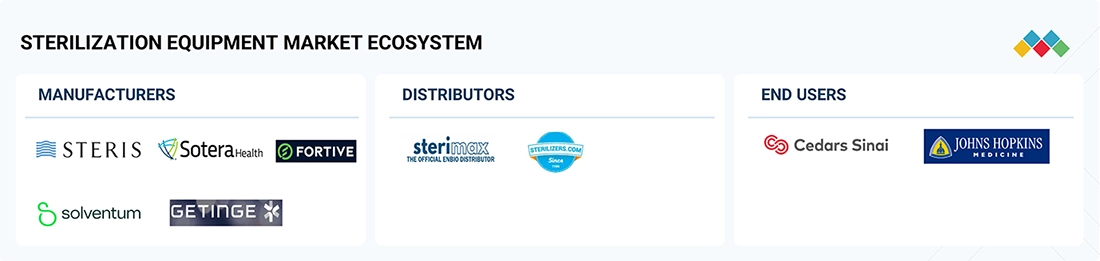
25 Leading Sterilization Equipment Companies Shaping Innovation and Market Growth to 2031
Discover the top 25 companies driving innovation in the sterilization equipment market. This in-depth analysis explores competitive advantages, transformative technologies, and key players poised to influence healthcare infection prevention, pharmaceutical manufacturing, and medical device sterilization through 2031. Access the comprehensive sterilization equipment market research report for further insights.
Spotlights on the Industry's Top Sterilization Equipment Companies
The global sterilization equipment market is evolving as healthcare providers, pharmaceutical manufacturers, medical device producers, and life sciences organizations strengthen their infection prevention and contamination control practices. Advances in steam sterilization, vaporized hydrogen peroxide, ethylene oxide, and radiation-based technologies are expanding the options available for processing heat-sensitive instruments and complex medical products. Automation, digital cycle monitoring, process validation, and energy-efficient equipment are also influencing product development. Meanwhile, regulatory compliance, patient safety, and demand for outsourced sterilization services are intensifying competition among equipment manufacturers and specialized service providers.
1. STERIS
STERIS is a prominent provider of infection prevention and procedural products, serving hospitals, laboratories, pharmaceutical manufacturers, and medical device companies. Its portfolio includes steam sterilizers, low-temperature sterilization systems, washer-disinfectors, and sterile processing solutions. The company also offers sterilization and laboratory services through its life sciences operations. By combining equipment, consumables, technical support, and process expertise, STERIS supports customers throughout the sterilization workflow. Its broad product offering and international presence strengthen its competitive position across healthcare and industrial applications.
2. Sotera Health
Sotera Health is a global provider of mission-critical sterilization and laboratory testing services for healthcare and life sciences industries. Through Sterigenics, the company provides contract sterilization using technologies including ethylene oxide, gamma irradiation, and electron beam processing. Its wider operations also include Nordion, which supplies medical isotopes and irradiation technology, and Nelson Labs, which specializes in microbiological and analytical testing. Sotera Health supports medical device and pharmaceutical manufacturers seeking validated sterilization processes, regulatory compliance, and dependable outsourced services for products requiring specialized treatment.
3. Fortive
Fortive is a diversified industrial technology company with an indirect connection to sterilization equipment through its portfolio of operating businesses and instrumentation capabilities. Its broader expertise encompasses precision measurement, industrial automation, environmental monitoring, and workflow technologies. These capabilities can support quality assurance, equipment monitoring, and compliance-oriented processes in regulated environments. However, Fortive is not primarily a dedicated sterilizer manufacturer, and its relevance to this market should be assessed through the specific products and business units serving healthcare sterilization and adjacent applications.
4. Getinge AB
Getinge AB is a global medical technology company serving hospitals, surgical facilities, and pharmaceutical manufacturers with products for infection control and sterile processing. Its portfolio includes steam sterilizers, washer-disinfectors, decontamination equipment, and solutions for sterile supply departments. The company also provides systems designed for pharmaceutical production and life sciences applications. Getinge's expertise in equipment integration, process control, and hospital workflows supports healthcare organizations seeking consistent sterilization outcomes. Its established international distribution and service network contribute to its relevance in the global sterilization equipment market.
5. Solventum
Solventum is a healthcare-focused technology company whose infection prevention portfolio includes products for sterilization monitoring, instrument processing, and healthcare-associated infection prevention. Its offerings include chemical and biological indicators, sterilization assurance products, and related supplies used to monitor the effectiveness of sterilization cycles. These solutions help healthcare facilities verify process performance and maintain documented quality controls. Solventum's relevance lies particularly in sterilization consumables and monitoring rather than the manufacture of complete sterilizer systems. Its specialized portfolio supports sterile processing departments seeking reliable verification and traceability.
6. Cardinal Health
Cardinal Health is a major healthcare products and distribution company with relevance to sterilization through its medical supplies, surgical products, and infection prevention offerings. Its healthcare portfolio supports hospitals and clinical facilities with products used in sterile processing, operating rooms, and broader patient care workflows. The company's distribution infrastructure helps healthcare providers source essential medical supplies and maintain operational continuity. Although Cardinal Health is not primarily known as a manufacturer of industrial sterilization systems, its role in supplying healthcare products and supporting infection prevention makes it relevant to the wider sterilization ecosystem.
7. Stryker Corporation
Stryker Corporation is a global medical technology company whose surgical instruments, operating room equipment, and medical devices require appropriate cleaning, disinfection, and sterilization before reuse where applicable. Its products serve hospitals and surgical facilities across orthopedics, endoscopy, and other procedural specialties. Stryker's contribution to the sterilization market is closely connected to instrument compatibility, reprocessing requirements, and the safe handling of reusable medical equipment. By developing devices for demanding clinical environments and providing product-specific reprocessing instructions, the company supports healthcare professionals in maintaining instrument safety and procedural readiness.
8. Merck KGaA
Merck KGaA, operating as Merck in many markets and EMD Electronics in North America for its electronics business, is a science and technology company active in life sciences, healthcare, and electronics. Its life sciences business supplies laboratory materials, bioprocessing products, and technologies used in pharmaceutical manufacturing and research. These activities intersect with sterilization through contamination control, sterile manufacturing workflows, and the processing requirements of regulated laboratories. Merck KGaA is not principally a sterilizer equipment manufacturer, so its position in this market is better understood through its supporting role in life sciences production and quality-controlled environments.
9. MMM Group
MMM Group is a specialist provider of sterilization and disinfection equipment for healthcare facilities and industrial applications. Its portfolio includes steam sterilizers, washer-disinfectors, and systems designed for central sterile supply departments and laboratory environments. The company focuses on reliable instrument reprocessing, operational efficiency, and compliance with applicable hygiene and sterilization requirements. Its equipment supports hospitals and other professional users that need repeatable processing cycles and dependable decontamination workflows. MMM Group's specialized product range and experience in sterile processing position it as a relevant European participant in the sterilization equipment market.
10. Antonio Matachana, S.A.
Antonio Matachana, S.A. develops sterilization and disinfection equipment for healthcare, laboratory, pharmaceutical, and research environments. Its product portfolio includes steam sterilizers, washer-disinfectors, and specialized systems designed for instrument reprocessing and contamination control. The company serves facilities that require validated processes, controlled operating conditions, and dependable equipment performance. Its experience across hospital sterilization departments and laboratory applications supports demand for integrated hygiene workflows. By addressing the needs of professional users with different processing requirements, Antonio Matachana contributes to the competitive landscape of sterilization equipment manufacturers in international markets.
11. Miele Group (Joint Venture with Metall Zug)
Miele Group has a presence in professional cleaning and reprocessing equipment through Miele Professional, including washer-disinfectors and related systems used in medical and laboratory environments. These products help prepare instruments and laboratory equipment for subsequent sterilization, although cleaning and disinfection are distinct from sterilization itself. The company's professional equipment expertise, process documentation, and emphasis on reliable performance support demanding healthcare workflows. The supplied joint-venture reference involving Metall Zug should be checked against current corporate information before publication, as ownership and business relationships may change. Miele's direct relevance is primarily in instrument reprocessing and associated equipment.
12. Tuttnauer (Part of Fortissimo Capital)
Tuttnauer is a manufacturer of sterilization and infection control equipment serving hospitals, dental clinics, laboratories, research facilities, and pharmaceutical applications. Its portfolio includes tabletop autoclaves, large steam sterilizers, laboratory sterilization systems, and equipment for specialized processing requirements. The company also supplies solutions for healthcare and life sciences users seeking reliable thermal sterilization. Its product range accommodates facilities of different sizes, from small clinical practices to centralized processing departments. Tuttnauer's established international market presence and focus on autoclave technology make it a notable participant in the global sterilization equipment industry.
13. Andersen Sterilizers
Andersen Sterilizers specializes in ethylene oxide sterilization equipment and related solutions for medical devices and other products requiring low-temperature processing. Its systems are designed for applications where heat or moisture may damage materials that must nevertheless undergo validated sterilization. Ethylene oxide technology remains important for compatible medical devices with complex geometries and challenging material requirements. Andersen's specialized focus allows it to serve manufacturers and facilities seeking alternatives to conventional steam sterilization. Its role is particularly relevant to low-temperature sterilization equipment, where process control, material compatibility, and safety requirements are critical purchasing considerations.
14. Noxilizer, Inc.
Noxilizer, Inc. focuses on nitrogen dioxide sterilization technology for medical devices and pharmaceutical applications. Its approach offers an alternative to established methods such as ethylene oxide and radiation for suitable products and manufacturing workflows. Nitrogen dioxide can be relevant for sterilizing certain heat-sensitive devices, making material compatibility and validated process performance important considerations. Noxilizer's specialized technology addresses manufacturers seeking additional options for terminal sterilization and contamination control. Its position in the market is centered on a differentiated low-temperature sterilization method rather than a broad portfolio of conventional steam or radiation equipment.
15. De Lama S.p.A.
De Lama S.p.A. is an Italian manufacturer of sterilization equipment serving pharmaceutical, biotechnology, healthcare, and industrial customers. Its portfolio includes steam sterilizers, autoclaves, and systems designed for applications requiring controlled thermal processing and validated sterilization cycles. The company also addresses specialized production environments in which equipment design, process repeatability, and documentation are important. Its experience in pharmaceutical and industrial sterilization supports customers with demanding quality requirements. De Lama's specialization in engineered sterilization systems positions it within the equipment segment, particularly for organizations seeking solutions tailored to regulated manufacturing and professional processing operations.
16. C.B.M. S.r.l. Medical Equipment
C.B.M. S.r.l. Medical Equipment is an Italian medical equipment supplier associated with healthcare and sterilization-related applications. Its relevance should be evaluated against its current product portfolio, particularly the availability of sterilization instruments, autoclaves, and complementary equipment for clinical environments. Buyers in this segment typically assess equipment reliability, cycle control, service support, and compliance with applicable medical device requirements. Before publication, the company's precise sterilization product range and current market positioning should be verified through primary corporate sources. This confirmation helps distinguish direct sterilizer manufacturing activities from distribution or other medical equipment operations.
17. E-Beam Services, Inc.
E-Beam Services, Inc. provides electron beam irradiation services for sterilization and other industrial processing applications. Electron beam technology uses high-energy electrons to treat suitable products, including medical devices and healthcare materials that require microbial control. Compared with some alternative sterilization methods, e-beam processing can offer rapid treatment and may support continuous or high-throughput production workflows. Its application depends on product geometry, packaging, material compatibility, and validated dose requirements. E-Beam Services contributes to the market primarily as a specialized irradiation service provider, helping manufacturers access radiation-based processing without necessarily investing in their own irradiation infrastructure.
18. Life Science Outsourcing, Inc.
Life Science Outsourcing, Inc. supports medical device manufacturers through outsourced manufacturing, packaging, sterilization coordination, and related quality services. Its activities are relevant to sterilization when manufacturers require integrated support for preparing products for commercial distribution and meeting applicable regulatory requirements. Outsourcing can help medical device companies manage complex production workflows, documentation, and supplier relationships. The company's precise sterilization capabilities should be confirmed for the specific service location and product category, as available processes may vary. Its broader role is in supporting medical device commercialization and manufacturing operations that depend on validated sterilization and packaging arrangements.
19. Systec GmbH & Co. KG
Systec GmbH & Co. KG develops autoclaves and steam sterilization systems for laboratories, research institutions, pharmaceutical applications, and industrial users. Its portfolio includes laboratory autoclaves and specialized systems designed for sterilizing instruments, liquids, media, and other compatible materials. Process control, programmable cycles, and options suited to different laboratory workflows are important aspects of its offering. Systec serves customers that require repeatable sterilization performance and equipment aligned with laboratory operating procedures. Its specialization in steam sterilization and laboratory applications supports its position in a market spanning clinical, scientific, and pharmaceutical environments.
20. Continental Equipment Company
Continental Equipment Company is included among the market participants identified for sterilization equipment and related services. Its direct contribution should be evaluated against its current business activities, product catalog, and service capabilities, particularly whether it manufactures, supplies, or supports sterilization systems. In this market, relevant capabilities may include autoclaves, industrial processing equipment, or complementary systems used in regulated production environments. Because similarly named businesses can operate in different equipment categories, confirming the exact company's identity and sterilization-related portfolio is essential before assigning specific technical strengths or competitive advantages to this profile.
21. Midwest Sterilization Corporation
Midwest Sterilization Corporation is a contract sterilization provider serving manufacturers that require outsourced processing for medical devices and other compatible products. Its operations are relevant to companies seeking specialized sterilization capacity, validated processes, and support for regulatory quality requirements. Contract sterilization can reduce the need for manufacturers to build and operate their own sterilization facilities, although service selection depends on the product, approved method, and process validation. Midwest Sterilization's market role is primarily service-oriented, connecting manufacturers with external sterilization capabilities rather than focusing exclusively on the sale of sterilization equipment.
22. BGS Beta-Gamma-Service GmbH & Co. KG
BGS Beta-Gamma-Service GmbH & Co. KG is a German provider of radiation processing services, including electron beam and gamma irradiation for suitable industrial and healthcare products. Its capabilities support the sterilization of medical devices and other materials requiring controlled radiation treatment. These services help manufacturers address microbial control requirements while outsourcing specialized processing infrastructure. The selection of electron beam or gamma technology depends on product characteristics, packaging, dose requirements, and validation needs. BGS is therefore particularly relevant to the radiation sterilization segment, where processing capacity, technical expertise, and quality assurance influence supplier selection.
23. ACMAS Technologies (P) Ltd.
ACMAS Technologies (P) Ltd. is an Indian manufacturer associated with sterilization and laboratory equipment for healthcare, pharmaceutical, and research applications. Its relevance to the market centers on equipment used for controlled processing, laboratory workflows, and infection prevention. Buyers evaluating its offerings should confirm the availability and specifications of individual sterilization systems, including operating capacity, cycle controls, documentation, and applicable conformity requirements. As healthcare and pharmaceutical infrastructure expands across emerging markets, locally accessible equipment and service support can be important purchasing considerations. ACMAS's current sterilization product range should be verified before making specific claims about technical capabilities.
24. Celitron Medical Technologies Kft.
Celitron Medical Technologies Kft. is a Hungarian medical technology company known for solutions addressing healthcare waste treatment and sterilization. Its portfolio includes integrated systems designed to treat infectious medical waste, combining sterilization processes with waste-management workflows. These systems serve healthcare facilities seeking to reduce biological hazards before disposing of treated waste. Waste sterilization differs from the sterilization of finished medical devices, making application-specific equipment selection important. Celitron's relevance lies in infection control and healthcare waste treatment, where process effectiveness, operational safety, and compliance with applicable environmental and healthcare requirements are central considerations.
25. Prince Sterilization Services, LLC
Prince Sterilization Services, LLC is identified as a participant in the sterilization services landscape. Its market relevance should be assessed through its current operating facilities, validated processing methods, customer industries, and service portfolio. Contract sterilization providers generally support manufacturers that need specialized processing capacity without maintaining an in-house sterilization operation. Important evaluation criteria include method availability, process validation, quality systems, product compatibility, and regulatory compliance. The company's precise technologies and geographic coverage should be confirmed using current primary sources before publication to avoid attributing unverified capabilities or service offerings to the business.
80% of the Forbes Global 2000 B2B companies rely on MarketsandMarkets to identify growth opportunities in emerging technologies and use cases that will have a positive revenue impact.
- Food Packaging Market Size Set for Strong Growth Through 2030 Amid Rising Demand for Convenience Foods
- Crop Protection Chemical Market Size, Share & Growth Forecast (2025–2030)
- Mulch Films Market: Driving Sustainable Agriculture Through Innovation
- Agricultural Adjuvants Market Analysis, Trends, and Growth Outlook (2026–2031)
- Japan Enterprise Asset Management Market Growth: AI and Smart Infrastructure Drive Demand

The sterilization equipment market is positioned for continued development as healthcare providers and life sciences manufacturers prioritize infection prevention, patient safety, and reliable production processes. Steam sterilization remains important for compatible products, while low-temperature technologies and radiation-based methods offer additional options for heat-sensitive medical devices and specialized applications. Automation, digital monitoring, process validation, and equipment efficiency are also shaping competitive differentiation. At the same time, manufacturers and service providers must navigate stringent regulatory requirements, material compatibility challenges, and evolving environmental and operational expectations.
According to MarketsandMarkets, the global sterilization equipment market is valued at US$19.39 billion in 2026 and is projected to reach US$27.60 billion by 2031, representing a CAGR of 7.3% during 2026–2031. These market projections underscore the importance of understanding technology adoption, product and service segmentation, regional opportunities, and competitive positioning. For detailed market forecasts, company assessments, technology trends, and strategic insights, explore the full report: Sterilization Equipment Market by Product (Instruments, Accessories (Pouches, Indicators), Service (Off-site, On-site), Technology (Heat (Steam, Dry), Low-temperature (H2O2, EtO, CH2O), Radiation (E-beam, Gamma, X-Ray)), Region - Global Forecast to 2031.