25 Leading Transplant Diagnostics Companies Shaping Innovation and Market Growth to 2031
Discover the top 25 companies driving innovation in the transplant diagnostics market. This in-depth analysis explores competitive capabilities, technological advancements, and key players influencing donor-recipient compatibility testing, histocompatibility assessment, infectious disease screening, and transplant monitoring through 2031.
Spotlights on the Industry's Top Transplant Diagnostics Market Companies
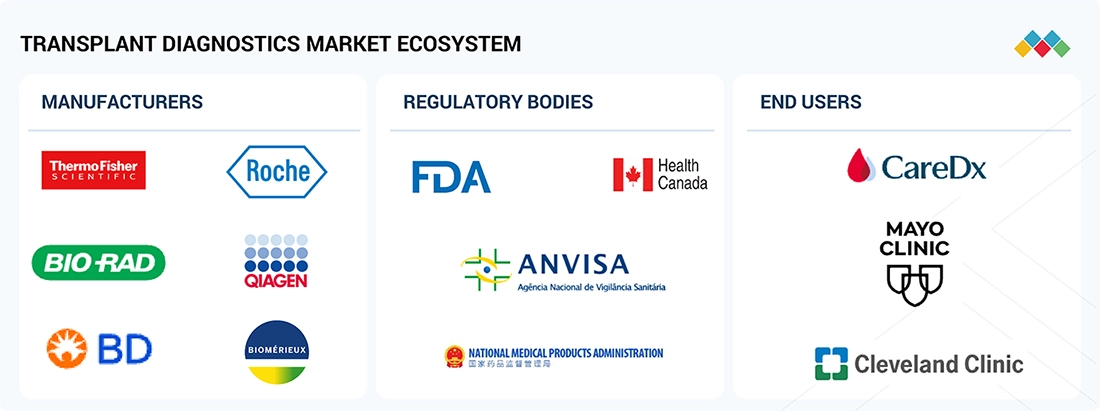
The transplant diagnostics industry plays a critical role in evaluating donor-recipient compatibility and supporting decisions before and after organ or stem cell transplantation. Demand is being shaped by rising transplant procedures, chronic diseases that can lead to organ failure, and the need for accurate human leukocyte antigen (HLA) typing and infectious disease testing. PCR-based assays, next-generation sequencing (NGS), and other molecular diagnostic methods are expanding testing capabilities and helping laboratories characterize genetic compatibility with greater detail. At the same time, transplant monitoring approaches, including donor-derived cell-free DNA testing, are supporting post-transplant assessment. Competition spans diagnostic instrument and reagent suppliers, specialized histocompatibility laboratories, and companies developing transplant-focused testing solutions.
1. Thermo Fisher Scientific Inc.
Thermo Fisher Scientific participates in transplant diagnostics through One Lambda, a specialist provider of HLA typing and antibody testing solutions. Its portfolio includes NGS, quantitative PCR, sequence-specific oligonucleotide (SSO), and serological typing assays, alongside products for detecting donor-specific antibodies and monitoring transplant recipients. Laboratory instruments and analysis software support testing workflows from donor-recipient compatibility assessment to post-transplant surveillance. This specialized portfolio and established laboratory presence make Thermo Fisher an important supplier of transplant diagnostic technologies.
2. F. Hoffmann-La Roche Ltd.
Roche contributes to the broader transplant diagnostics ecosystem through its molecular diagnostics platforms, clinical laboratory systems, and infectious disease testing technologies. Sensitive molecular assays can support the detection and monitoring of infections that pose risks to immunocompromised transplant recipients. Its diagnostic infrastructure and assay development capabilities are relevant to clinical laboratories that require reliable testing workflows. Roche's broader diagnostics expertise supports transplant care, although its infectious disease and general molecular testing portfolio should be distinguished from dedicated HLA typing and transplant-specific rejection monitoring products.
3. Bio-Rad Laboratories, Inc.
Bio-Rad Laboratories supplies clinical diagnostic systems, reagents, quality-control materials, and life science research technologies. Its immunology, molecular biology, and laboratory quality solutions can support testing environments serving transplant patients, including workflows involving infectious disease screening and analytical quality assurance. Consistent controls and dependable laboratory results are particularly important when clinicians make decisions about transplantation and immunosuppression. Bio-Rad's relevance spans the wider diagnostics ecosystem; specific HLA typing or transplant-focused product availability should be verified for the intended testing application.
4. QIAGEN N.V.
QIAGEN develops sample preparation technologies, molecular testing solutions, and nucleic acid analysis workflows used in clinical diagnostics and research. Its platforms support the extraction and analysis of DNA and RNA, which are essential steps in molecular assays used to investigate infectious diseases and genetic characteristics. These capabilities can contribute to transplant-related testing workflows, especially where reliable nucleic acid preparation is required. QIAGEN's established molecular diagnostics portfolio makes it relevant to transplant laboratories, although dedicated HLA typing and transplant monitoring solutions should be assessed separately from its broader molecular testing products.
5. bioMérieux
bioMérieux specializes in in vitro diagnostics, particularly infectious disease detection, microbiology, and antimicrobial resistance testing. Its diagnostic systems and assays are relevant to transplant care because infections can pose significant risks before and after transplantation, particularly for patients receiving immunosuppressive treatment. Timely pathogen detection helps clinicians investigate infections and guide treatment decisions. The company's automated laboratory platforms and infectious disease expertise support transplant-related clinical workflows, although these strengths are distinct from specialized histocompatibility testing and HLA compatibility assessment.
6. Illumina, Inc.
Illumina develops next-generation sequencing systems and related reagents used in genomic analysis. Sequencing technologies can support high-resolution HLA typing by identifying genetic variation relevant to donor-recipient compatibility. Its platforms are used by laboratories and specialist assay developers to process sequencing data for applications in transplantation and immunogenetics. The company's sequencing infrastructure and established genomics ecosystem make it an important technology provider for transplant diagnostics. The specific clinical application depends on the assay, validated workflow, and regulatory status of the solution used by each laboratory.
7. Becton, Dickinson and Company
Becton, Dickinson and Company (BD) provides medical technologies, diagnostic systems, specimen collection products, and laboratory solutions. Its diagnostic and sample-handling technologies can support clinical workflows serving transplant recipients, including laboratory testing for infections and other complications associated with transplantation. Reliable specimen collection and processing are essential for obtaining accurate diagnostic results. BD's broad clinical laboratory presence makes it relevant to the wider transplant care infrastructure, although dedicated HLA typing and transplant rejection monitoring should not be assumed across its general diagnostics portfolio.
8. CareDx, Inc.
CareDx specializes in transplant-focused diagnostics and patient monitoring solutions. Its portfolio includes AlloSure donor-derived cell-free DNA testing for monitoring kidney, lung, and heart transplant health, AlloMap gene expression profiling for heart transplant rejection surveillance, and HLA typing products such as AlloSeq Tx. These technologies support assessment before and after transplantation and can provide clinicians with additional information about graft health. CareDx combines molecular testing, laboratory products, and digital workflow solutions, positioning it as a dedicated participant in transplant diagnostics.
9. DiaSorin S.p.A.
DiaSorin develops in vitro diagnostic technologies and assays, with transplant-related capabilities associated in part with its Luminex business. Luminex xMAP multiplexing technology supports assays that can simultaneously analyze multiple biological targets and is used in transplant testing workflows, including histocompatibility applications. Multiplex analysis helps specialist laboratories evaluate complex antibody profiles and other markers relevant to donor-recipient compatibility. DiaSorin's diagnostics expertise and Luminex technology platform make it relevant to this market, particularly through laboratory systems and assay technologies used by transplant diagnostic specialists.
10. Werfen
Werfen serves the transplant diagnostics market through its Immucor and related product portfolio, which includes HLA typing, antibody detection, and analysis software. Its offerings include LIFECODES HLA SSO typing kits, donor-specific antibody assays, KIR genotyping, and tools for interpreting test results. These solutions help histocompatibility laboratories assess donor-recipient compatibility and investigate immune risks before and after transplantation. Werfen's transplant-focused testing products and laboratory systems support specialized diagnostic workflows.
11. Merck KGaA
Merck KGaA supports life science research and diagnostic development through reagents, molecular biology products, cell analysis technologies, and laboratory materials. These resources can contribute to research involving transplant immunology, immune response, and molecular assay development. Its portfolio also supports laboratory workflows that investigate biological pathways and infectious agents relevant to transplant recipients. Merck's role is primarily through research tools and enabling technologies rather than a dedicated portfolio of clinical HLA typing or transplant rejection tests, making its relevance strongest in the supporting research and development ecosystem.
12. Hologic, Inc.
Hologic develops diagnostic technologies and assays, with strengths in molecular diagnostics and women's health testing. Its molecular testing platforms can support infectious disease detection in clinical laboratories, including testing relevant to patient management before or after transplantation. Reliable detection of infections is important when evaluating patients who may undergo transplantation or receive immunosuppressive therapy. Hologic's automated diagnostic systems and assay expertise contribute to the broader laboratory infrastructure serving transplant care, although its main portfolio is not centered on HLA compatibility testing or transplant-specific rejection monitoring.
13. Eurobio Scientific
Eurobio Scientific has a direct presence in transplant diagnostics through specialized molecular diagnostic products and its GenDx business. Its portfolio includes NGS-based HLA typing assays and software used to analyze sequencing results, supporting high-resolution donor-recipient compatibility assessment. These technologies help histocompatibility laboratories process complex genetic data for organ and stem cell transplantation. The company's transplant science offering also includes solutions relevant to chimerism and immune monitoring. Its specialized diagnostic portfolio and focus on molecular testing position Eurobio Scientific as a notable participant in the transplant diagnostics market.
14. Biofortuna Limited
Biofortuna develops and manufactures molecular diagnostic products, including real-time PCR assays and custom assay development services. Its expertise in molecular diagnostics and lyophilized reagent technologies can support laboratories seeking stable, standardized testing products. These capabilities are relevant to diagnostic workflows that require dependable nucleic acid amplification, including certain infectious disease and genotyping applications. Biofortuna's broader molecular diagnostics experience makes it a potential contributor to transplant-related testing, although the availability of specific clinically validated HLA typing or transplant monitoring assays should be confirmed for the required application.
15. BAG Diagnostics GmbH
BAG Diagnostics specializes in histocompatibility and transplantation diagnostics. Its product portfolio includes molecular genetic HLA typing, serological typing, HLA antibody testing, and software-supported laboratory workflows. Products such as HISTO TYPE and HISTO SPOT support different testing approaches, including PCR-based typing and antibody analysis. These solutions help laboratories assess donor-recipient compatibility for solid organ and hematopoietic stem cell transplantation. BAG Diagnostics' focused portfolio and experience in immunogenetics make it a direct participant in transplant diagnostics.
16. Fujirebio
Fujirebio develops in vitro diagnostic products, instruments, assays, and laboratory solutions across several disease areas, including infectious diseases and transplantation-related applications. Its wider diagnostic capabilities support the detection of clinically relevant biomarkers and pathogens. In transplant care, infectious disease testing can help identify risks that may affect treatment planning and patient monitoring. Fujirebio's assay development and diagnostic manufacturing expertise make it relevant to the broader transplant testing landscape, although specific HLA typing or rejection-monitoring capabilities should be verified separately from its general diagnostics portfolio.
17. Histogenetics LLC
Histogenetics specializes in histocompatibility testing and molecular HLA typing services for transplantation. Its laboratory services support the assessment of donor-recipient compatibility, which is a central step in organ and hematopoietic stem cell transplantation. High-resolution HLA analysis helps transplant teams evaluate genetic differences that may influence matching decisions and immune-related risks. The company's focus on specialized testing and immunogenetics distinguishes it from broader diagnostic suppliers. Histogenetics is particularly relevant to laboratories and transplant programs that outsource or supplement their histocompatibility testing capabilities.
18. PacBio
PacBio develops high-fidelity long-read sequencing technologies that support detailed analysis of complex genomic regions. In transplant diagnostics, sequencing approaches can help resolve challenging HLA alleles and characterize genetic variation relevant to donor-recipient matching. Long-read methods may complement other sequencing strategies where greater resolution or improved interpretation of complex loci is needed. PacBio primarily provides sequencing platforms and related technologies rather than a complete transplant diagnostic service. Its relevance depends on how laboratories and assay developers apply its systems within validated HLA typing workflows.
19. TBG Biotechnology Corp.
TBG Biotechnology Corp. operates in the life sciences and diagnostic products space, with relevance to laboratory testing and molecular biology applications. Diagnostic suppliers in this segment may support transplant-related workflows through reagents, analytical products, or technologies used in biological testing. However, the specific contribution of TBG Biotechnology to clinical transplant diagnostics should be confirmed against its current product portfolio and validated applications. In particular, HLA typing, antibody screening, and transplant rejection monitoring require specialized evidence of assay performance and regulatory suitability before a product can be considered for routine clinical use.
20. SciSCo Genetics, Inc.
SciSCo Genetics, Inc. is included among companies associated with genetic testing and related diagnostic services. Genetic analysis can contribute to the broader transplant diagnostics ecosystem when it supports molecular characterization, immunogenetic research, or testing workflows relevant to compatibility assessment. However, the company's specific transplant diagnostic products and current clinical capabilities require further verification before a direct market role can be established. Buyers and researchers should confirm whether it offers validated HLA typing, transplant-specific testing, or other services suitable for regulated clinical laboratory workflows.
21. Inno-Train Diagnostik GmbH
Inno-Train Diagnostik specializes in in vitro diagnostics for transplantation and transfusion medicine. Its transplant portfolio includes HLA typing using serological methods, SSP-PCR, real-time PCR, and next-generation sequencing, alongside software for interpreting molecular results. These products support compatibility testing for organ and hematopoietic stem cell transplantation and help laboratories select workflows suited to their testing volumes. The company's focused diagnostic range and product development expertise make it a direct market participant.
22. Bionobis
Bionobis is listed among companies associated with the transplant diagnostics landscape, but its specific role in clinical transplant testing requires confirmation. The market includes specialized HLA typing providers, reagent suppliers, sequencing technology developers, and laboratories supporting compatibility and post-transplant monitoring. To establish Bionobis's relevance accurately, its current product portfolio, intended clinical applications, and regulatory status should be reviewed. Without verified evidence of transplant-specific assays or services, it would be inappropriate to attribute particular HLA typing, antibody detection, or transplant monitoring capabilities to the company.
23. Takara Bio Inc.
Takara Bio provides molecular biology reagents, nucleic acid amplification technologies, and research tools used in genetic analysis and biomedical research. Its products can support laboratory workflows involving DNA and RNA extraction, amplification, and analysis, which are relevant to molecular diagnostic development. These capabilities may be used in research related to transplant immunology or infectious disease testing. Takara Bio's core strength is in enabling technologies and research products; a direct role in clinical transplant diagnostics depends on the specific assay and validated workflow rather than its general molecular biology portfolio.
24. Krishgen Biosystems Private Limited
Krishgen Biosystems supplies research and diagnostic assay products, including immunoassays and related laboratory solutions. Its offerings can support investigations of biological markers and immune responses, which are relevant to biomedical research surrounding transplantation. Assays that measure immune or inflammatory markers may be useful in research settings, but they should not automatically be considered validated transplant diagnostic tests. The company's relevance to this market should be evaluated by confirming the availability of transplant-specific assays, intended use, and regulatory status for clinical testing, particularly for donor-recipient compatibility and rejection monitoring.
25. ProImmune Ltd.
ProImmune specializes in immune monitoring and immunology research products and services, including tools for investigating antigen-specific immune responses. Its technologies support the study of T-cell responses, immune recognition, and other immunological processes that may be relevant to transplant research. Such capabilities can help researchers investigate immune mechanisms associated with graft acceptance or rejection, although research services are distinct from routine clinical transplant diagnostics. ProImmune's role is therefore primarily in the supporting research ecosystem, and any direct clinical testing application should be verified against the specific service and its validated intended use.
80% of the Forbes Global 2000 B2B companies rely on MarketsandMarkets to identify growth opportunities in emerging technologies and use cases that will have a positive revenue impact.
- Food Packaging Market Size Set for Strong Growth Through 2030 Amid Rising Demand for Convenience Foods
- Crop Protection Chemical Market Size, Share & Growth Forecast (2025–2030)
- Mulch Films Market: Driving Sustainable Agriculture Through Innovation
- Agricultural Adjuvants Market Analysis, Trends, and Growth Outlook (2026–2031)
- Japan Enterprise Asset Management Market Growth: AI and Smart Infrastructure Drive Demand

The transplant diagnostics market is expected to continue evolving as transplant programs seek more accurate compatibility testing, reliable infectious disease screening, and improved methods for monitoring graft health. PCR and NGS technologies are strengthening molecular testing capabilities, while HLA typing, antibody analysis, and donor-derived cell-free DNA approaches are contributing to increasingly comprehensive transplant care. Competition includes diversified diagnostics companies, sequencing technology providers, specialist histocompatibility laboratories, and transplant-focused precision medicine businesses. Continued development will depend on analytical performance, clinical validation, regulatory requirements, laboratory workflow integration, and access to reliable testing infrastructure. To explore market drivers, technology developments, competitive positioning, and opportunities through 2031, access the full report: Transplant Diagnostics Market by Product & Service (Instrument, Software), Technology (PCR, NGS), Application [Diagnostic (Infectious Disease, HLA) Research], Type [Solid Organ (Heart), Bone Marrow], End User (Hospital) & Region -Global Forecast to 2031.