
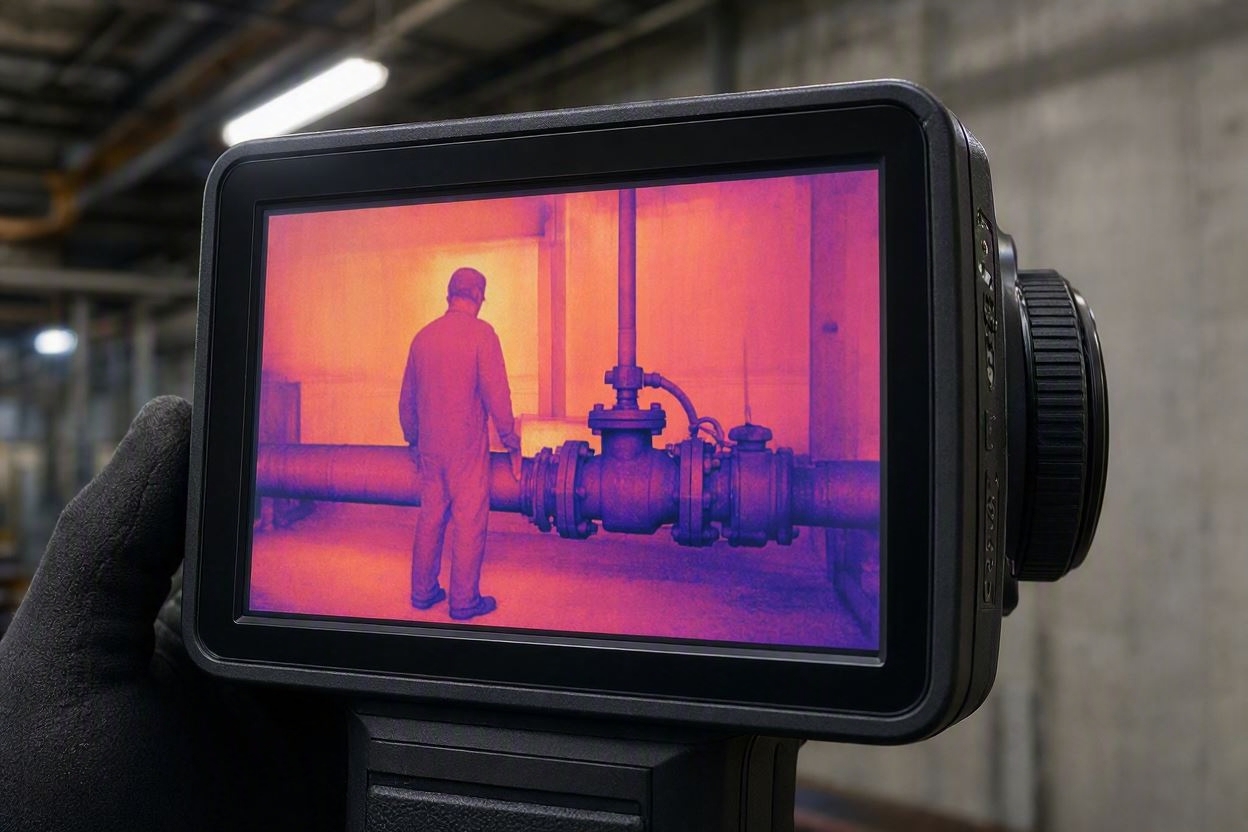
LWIR Thermal Imaging Market Trends, Applications, Technologies, and Growth Drivers
The LWIR thermal imaging market is gaining importance as organizations increasingly require reliable visual information in darkness, low visibility, smoke, and challenging environmental conditions. Long wave infrared technology detects thermal radiation emitted by objects rather than depending on visible light reflected from surfaces. This allows thermal cameras to identify differences in temperature and convert them into images that can support monitoring, inspection, detection, and decision making. Long wave infrared generally operates within the 8 to 14 micrometer atmospheric window, making it particularly useful for observing objects at or near normal environmental temperatures.
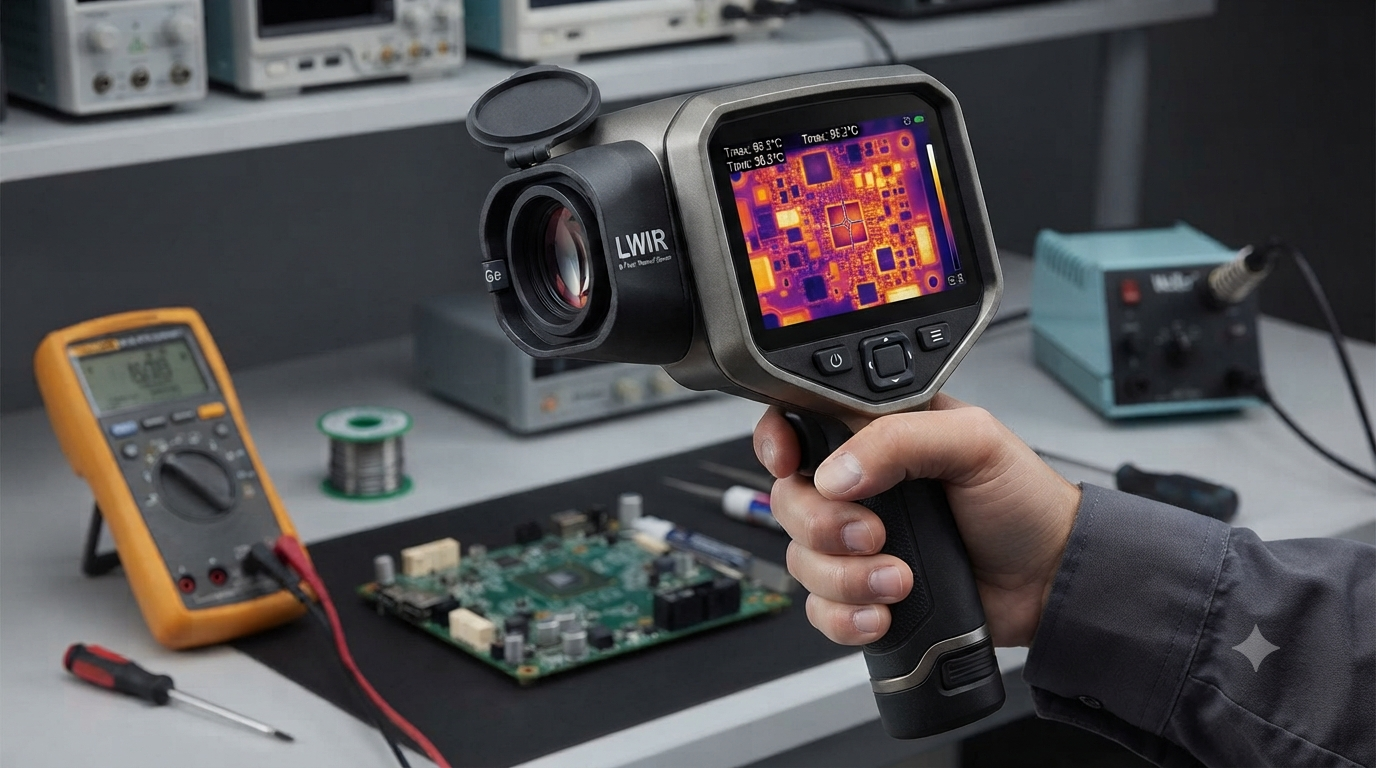
The growing use of thermal sensing across industrial, security, transportation, infrastructure, aerospace, environmental, and consumer applications is shaping the LWIR thermal imaging market. Improvements in detector sensitivity, image processing, optics, calibration, and compact electronics are expanding the range of systems that can use long wave infrared imaging. Modern thermal cameras are increasingly connected with intelligent software that can identify temperature anomalies, objects, movement patterns, and potential equipment problems. These developments are moving thermal imaging from simple heat visualization toward intelligent sensing and automated analysis.
According to Marketsandmarkets, the global infrared imaging market size is projected to grow from USD 9.13 billion in 2026 to USD 12.79 billion by 2032, growing at a CAGR of 5.8% from 2026 to 2032.
Download PDF Brochure @ https://www.marketsandmarkets.com/pdfdownloadNew.asp?id=593
Understanding Long Wave Infrared Thermal Imaging
Long wave infrared thermal imaging works by detecting infrared radiation naturally emitted from objects. Every object above absolute zero emits thermal radiation, while the intensity and distribution of this radiation vary according to temperature and surface properties. A thermal detector captures the radiation and converts it into electrical information, which is processed into a thermal image. Unlike conventional cameras, the system does not require visible illumination to produce an image. This makes the technology particularly useful for nighttime observation and applications where visible cameras have limited effectiveness.
The LWIR thermal imaging market benefits from this fundamental capability because many commercial and industrial environments operate continuously regardless of lighting conditions. Thermal imaging can reveal overheated electrical components, abnormal machinery temperatures, heat losses, people, vehicles, and other objects that may be difficult to identify using conventional imaging. However, performance depends on factors such as emissivity, atmospheric conditions, optical design, detector sensitivity, distance, and thermal contrast. Understanding these variables is essential when selecting an appropriate thermal imaging system.
Importance of LWIR Technology in Modern Imaging
The importance of LWIR technology is closely connected to the ability to obtain useful information when visible imaging becomes unreliable. Darkness, glare, smoke, and certain atmospheric conditions can reduce the effectiveness of conventional optical systems. Thermal imaging provides a different source of information by measuring emitted infrared energy. This makes it valuable as a complementary sensing technology rather than simply a replacement for conventional cameras. The LWIR thermal imaging market is therefore developing alongside broader investments in multi sensor perception and intelligent imaging.
Another important advantage is the ability to identify thermal patterns before visible signs of failure become apparent. Industrial equipment may develop abnormal heat because of friction, electrical resistance, poor lubrication, or component degradation. Thermal imaging can help operators identify these differences without physical contact. In infrastructure applications, thermal inspection can reveal heat leakage, insulation problems, electrical faults, and abnormal temperature distributions. Such capabilities support preventive maintenance and improve the visibility of conditions that may otherwise remain difficult to detect.
Detector Technology Supporting Market Development
Detector technology remains a central component of the LWIR thermal imaging market. Uncooled detectors have become particularly important for applications that require compact, lightweight, relatively simple, and energy efficient systems. Microbolometer based sensors can detect infrared radiation without requiring the cooling systems associated with many cooled detector configurations. This makes them suitable for portable cameras, industrial inspection equipment, security systems, automotive applications, and other environments where system size and power consumption matter.
Cooled detectors continue to have an important role in applications requiring high sensitivity, longer detection distances, or demanding measurement conditions. Cooling can improve detector performance by reducing certain forms of thermal noise and enabling greater sensitivity. The selection between cooled and uncooled technology depends on the application, required sensitivity, operating distance, response speed, environmental conditions, system architecture, and cost considerations. Advances in both detector categories are contributing to broader adoption across the LWIR thermal imaging market.
AI Integration Transforming Thermal Image Analysis
Artificial intelligence is becoming increasingly important in the LWIR thermal imaging market because thermal cameras can generate large volumes of image data that require rapid interpretation. Traditional thermal imaging generally presents temperature differences to an operator, while intelligent systems can automatically identify objects, classify events, detect anomalies, and prioritize alerts. Machine learning and deep learning algorithms can improve the interpretation of thermal imagery, especially when systems must operate continuously.
Recent research highlights the movement toward integrated sensing and computing, where infrared devices and edge processing work together rather than relying entirely on offline analysis. This approach can reduce response time and support real time decision making. AI based thermal image enhancement can also help improve contrast, suppress noise, and preserve important features. These capabilities are particularly relevant for surveillance, industrial inspection, autonomous systems, and safety applications.
Industrial Inspection and Predictive Maintenance
Industrial inspection represents an important application area for the LWIR thermal imaging market. Manufacturing facilities contain motors, electrical panels, bearings, pumps, conveyors, transformers, control systems, and other equipment that can develop abnormal thermal conditions. Regular thermal inspection allows operators to observe temperature patterns without interrupting operations. When thermal anomalies are detected early, maintenance teams can investigate the underlying issue before it develops into a more serious equipment failure.
Thermal imaging also supports predictive maintenance programs by providing historical temperature information. Repeated inspections can establish normal operating conditions for specific machines and identify deviations over time. Integration with industrial software can make this information easier to manage across large facilities. As manufacturers increasingly adopt automation, connected equipment, and digital monitoring, thermal imaging can become another data source within broader asset management systems.
Security and Surveillance Applications
Security and surveillance continue to influence the LWIR thermal imaging market because thermal cameras can operate without visible illumination. This capability is useful for monitoring industrial facilities, transportation infrastructure, restricted areas, borders, energy installations, and large outdoor environments. Thermal systems can identify people and vehicles based on their heat signatures even when conventional cameras produce limited visual information.
Thermal imaging can also complement visible cameras in integrated surveillance architectures. A visible camera can provide detailed visual information during favorable lighting conditions, while a thermal camera can provide heat based detection during darkness or reduced visibility. Combining both sources can improve situational awareness and provide additional information for automated detection systems. The increasing integration of analytics, edge computing, and network connectivity is further expanding the role of thermal surveillance.
Aerospace and Defense Related Applications
Aerospace applications require sensing technologies that can operate under demanding conditions and provide reliable information across different environments. LWIR imaging can support thermal observation, equipment inspection, navigation assistance, situational awareness, and object detection. Its ability to operate without external illumination makes it valuable for nighttime operations and environments where visible imagery may be limited.
The LWIR thermal imaging market also benefits from continuing improvements in detector size, optical performance, stabilization, image processing, and system integration. Compact thermal imaging modules can be integrated into aircraft, unmanned systems, vehicles, and other platforms. Research into advanced optical architectures is also addressing the need to reduce size and weight while maintaining imaging quality. Recent work on hybrid optical systems demonstrates continued interest in improving field of view and thermal imaging performance while addressing environmental temperature effects.
Automotive and Autonomous Systems
Automotive sensing is another area where LWIR technology can provide complementary information. Thermal cameras can detect pedestrians, animals, vehicles, and other objects based on temperature differences, particularly during nighttime operation. This can provide information that may not be consistently available from visible cameras in low illumination. When combined with radar, visible cameras, lidar, and onboard computing, thermal sensing can contribute to broader perception systems.
The LWIR thermal imaging market is also connected to the development of autonomous machines and mobile robots. Robots operating in warehouses, industrial facilities, outdoor environments, and infrastructure inspection can use thermal information to detect equipment abnormalities or identify objects under difficult lighting conditions. Edge processing enables these systems to interpret thermal information closer to the point of sensing, supporting faster responses and reducing dependence on continuous cloud connectivity.
Building Inspection and Energy Management
Buildings represent a significant opportunity for thermal imaging because temperature patterns can reveal conditions that are difficult to identify visually. Thermal cameras can be used to inspect insulation, windows, roofs, electrical systems, heating equipment, cooling equipment, and building envelopes. Areas with unusual heat loss or heat accumulation can be identified through differences in thermal patterns.
The LWIR thermal imaging market can benefit from increasing attention toward building energy efficiency and maintenance. Thermal inspections can help facility managers understand where energy may be escaping and where equipment may be operating outside normal conditions. When thermal information is combined with building automation systems and other sensors, it can support more comprehensive energy management. The technology can therefore contribute to both maintenance and operational efficiency.
Key Technology Trends Shaping Adoption
Several technology trends are influencing the development of the LWIR thermal imaging market. Smaller detectors, improved pixel performance, better optics, advanced image processing, and intelligent analytics are helping thermal systems become more capable while maintaining practical system dimensions. Improvements in manufacturing processes are also supporting greater accessibility across commercial and industrial applications.
The major technology trends include:
- Greater adoption of compact uncooled thermal detectors for portable and embedded applications.
- Increased use of AI for object detection, classification, anomaly identification, and image enhancement.
- Development of lightweight optical architectures for smaller thermal imaging systems.
- Integration of thermal cameras with edge computing and multi sensor perception platforms.
- Expansion of high resolution thermal imaging for detailed inspection and monitoring.
Recent research is also exploring metasurfaces and computational approaches to address limitations associated with conventional thermal optics. Hybrid meta optics can potentially reduce optical complexity while supporting wider fields of view and broad spectral operation. Other research is investigating programmable spectral imaging systems that combine advanced optical structures with computational reconstruction. These developments demonstrate that the LWIR thermal imaging market is evolving beyond conventional camera architectures toward more integrated optical and computational systems.
Regional Adoption and Application Diversity
North America has a strong base of applications across security, industrial inspection, aerospace, transportation, and infrastructure monitoring. The region benefits from established use of thermal imaging technologies and demand for advanced sensing systems. Industrial facilities and critical infrastructure operators can use thermal imaging for maintenance and monitoring, while security applications require reliable imaging across different operating conditions.
Europe has significant application potential across industrial automation, energy efficiency, transportation, environmental monitoring, and infrastructure management. The focus on operational efficiency and advanced sensing supports the adoption of thermal inspection technologies. Asia Pacific is also becoming an important area for thermal imaging applications because of industrial expansion, electronics manufacturing, smart infrastructure development, transportation investment, and growing automation. Other regions are using thermal imaging across security, energy, infrastructure, and industrial applications according to local operational requirements.
Challenges Affecting Thermal Imaging Adoption
Despite its advantages, the LWIR thermal imaging market faces several technical and operational challenges. Thermal images can be affected by emissivity differences, reflections, atmospheric conditions, humidity, distance, and temperature variations. An object that appears thermally prominent in one environment may produce lower contrast under different conditions. Operators therefore need appropriate calibration, image interpretation, and system configuration to achieve reliable results.
Optical design is another important challenge. Traditional LWIR systems can require specialized materials and multiple optical elements, which can increase size, weight, complexity, and cost. Temperature changes can also influence optical and detector performance. Recent research is addressing these challenges through hybrid optical designs, thermal stabilization methods, and advanced computational techniques.
Opportunities for Future Technology Development
Future opportunities in the LWIR thermal imaging market are closely linked to miniaturization, intelligent analytics, sensor integration, and improved imaging performance. Compact thermal modules can expand the technology into portable devices, robotics, unmanned platforms, industrial sensors, and embedded systems. Improved processing can make thermal cameras more autonomous by allowing them to interpret images without constant human supervision.
Another opportunity involves combining thermal imaging with other sensing technologies. Visible cameras, radar, lidar, environmental sensors, and thermal cameras can provide complementary information. Sensor fusion can improve object recognition and environmental understanding when individual sensors encounter limitations. This approach is particularly relevant to autonomous systems, industrial automation, smart infrastructure, and advanced security applications.
Role of Thermal Imaging in Preventive Safety
Safety applications are another important area for the LWIR thermal imaging market. Thermal cameras can monitor electrical systems, industrial equipment, storage facilities, mechanical components, and other assets where excessive temperature may indicate a potential problem. Continuous monitoring can provide alerts when temperature conditions move outside defined thresholds.
In workplaces, thermal imaging can also support inspection in locations where physical access is difficult or where direct contact with equipment may create safety risks. Remote observation can reduce the need for personnel to approach potentially hazardous machinery. When combined with automated alerts and connected monitoring systems, thermal imaging can become part of a broader preventive safety strategy.
Future Direction of LWIR Thermal Imaging
The future direction of the LWIR thermal imaging market will be shaped by the convergence of sensing, optics, computing, and artificial intelligence. Thermal cameras are increasingly becoming intelligent sensing devices rather than standalone imaging instruments. Edge processing can enable faster analysis, while AI algorithms can extract useful information from complex thermal scenes.
Research into metasurfaces, computational imaging, advanced detectors, and hybrid optical systems is also creating new possibilities for compact and capable thermal systems. Dynamic spectral imaging and programmable optical structures are examples of technologies being investigated for more flexible infrared sensing.
Conclusion
The LWIR thermal imaging market is developing as thermal sensing becomes increasingly important across industrial inspection, security, aerospace, transportation, infrastructure, building management, environmental monitoring, and intelligent machines. The technology offers a distinct advantage by detecting naturally emitted thermal radiation instead of relying solely on visible illumination. Advances in detectors, optics, image processing, AI, and edge computing are broadening its practical applications.
The next stage of development will likely focus on making thermal systems smaller, smarter, more efficient, and easier to integrate with other sensing platforms. Improvements in image quality and computational analysis can help organizations extract more useful information from thermal data. As intelligent sensing becomes increasingly important across industrial and commercial environments, the LWIR thermal imaging market will remain closely connected to advancements in infrared detectors, optical engineering, artificial intelligence, and automated decision systems.
FAQs
What is LWIR thermal imaging?
LWIR thermal imaging is a technology that detects long wave infrared radiation emitted by objects and converts differences in thermal radiation into images. It generally operates within the 8 to 14 micrometer atmospheric window and is widely used for observing objects under low light and nighttime conditions.
How does LWIR thermal imaging work?
LWIR thermal imaging uses infrared detectors to capture thermal radiation from objects. The detector converts the radiation into electrical signals, which are processed to create an image showing temperature differences and thermal patterns.
What are the major applications of LWIR thermal imaging?
Major applications include industrial inspection, predictive maintenance, security surveillance, aerospace, transportation, building inspection, energy management, environmental monitoring, robotics, and safety monitoring.
What is the difference between LWIR and visible imaging?
Visible imaging primarily detects reflected visible light, while LWIR imaging detects thermal radiation emitted by objects. This allows LWIR systems to provide useful imagery in darkness and other situations where visible illumination is limited.
Why are uncooled detectors important?
Uncooled detectors can operate without dedicated cooling systems, which can support smaller, lighter, simpler, and more energy efficient thermal imaging devices. This makes them useful for many commercial, industrial, security, and embedded applications.
How is AI being used in thermal imaging?
AI can analyze thermal images for object detection, classification, anomaly identification, image enhancement, and automated alerts. Edge AI can also allow thermal systems to process information close to the camera and respond quickly.
What factors affect LWIR image quality?
Detector sensitivity, pixel size, optical design, atmospheric conditions, emissivity, temperature difference, calibration, distance, image processing, and environmental conditions can all influence thermal image quality.
What is the role of LWIR in industrial maintenance?
LWIR imaging can identify unusual heat patterns in machinery, electrical equipment, motors, bearings, and other assets. Detecting thermal abnormalities can help maintenance teams investigate potential problems before equipment failure occurs.
Can LWIR thermal cameras work in complete darkness?
Yes. LWIR thermal cameras detect emitted thermal radiation rather than depending on visible illumination. This allows them to generate thermal information in complete darkness, although environmental conditions and thermal contrast still influence image quality.
What is the future of LWIR thermal imaging?
The technology is moving toward smaller detectors, advanced optics, intelligent image processing, AI based analysis, edge computing, sensor fusion, and more compact optical architectures. Research into metasurfaces and computational thermal imaging is also creating new approaches for improving system flexibility and performance.
80% of the Forbes Global 2000 B2B companies rely on MarketsandMarkets to identify growth opportunities in emerging technologies and use cases that will have a positive revenue impact.
- Food Packaging Market Size Set for Strong Growth Through 2030 Amid Rising Demand for Convenience Foods
- Crop Protection Chemical Market Size, Share & Growth Forecast (2025–2030)
- Mulch Films Market: Driving Sustainable Agriculture Through Innovation
- Agricultural Adjuvants Market Analysis, Trends, and Growth Outlook (2026–2031)
- Japan Enterprise Asset Management Market Growth: AI and Smart Infrastructure Drive Demand


