

Leading Automated Guided Vehicle Companies Transforming Warehousing, Manufacturing, and Material Handling
The according automated guided vehicle (AGV) market to this research report. AGV market growth is driven by increasing adoption of automation across manufacturing, warehousing, logistics, and e-commerce industries. Rising labor costs, the need for efficient material handling, and the shift toward smart factories and warehouse automation are accelerating AGV deployments. Continuous advancements in navigation technologies, fleet management software, and system integration capabilities are further supporting market expansion.
Leading automated guided vehicle (AGV) companies are transforming warehousing, manufacturing, and material handling by developing intelligent mobile automation solutions that improve operational efficiency, workplace safety, and supply chain productivity. AGVs transport raw materials, work-in-progress components, finished products, pallets, and containers across industrial facilities with minimal manual intervention. Growing demand for faster order fulfillment, reduced labor-intensive activities, and optimized inventory movement is encouraging businesses to adopt AGV technologies across distribution centers, automotive plants, electronics manufacturing, and logistics facilities. Companies such as Toyota Industries Corporation, KION Group, Daifuku, Jungheinrich, and Mitsubishi Logisnext are among the established industrial automation and material handling players serving this evolving market.
Download PDF Brochure:
https://www.marketsandmarkets.com/pdfdownloadNew.asp?id=27462395
Technological innovation is a major factor differentiating leading AGV manufacturers. Modern systems integrate laser navigation, magnetic guidance, cameras, sensors, fleet management software, and warehouse management system (WMS) connectivity to support reliable material movement. Some solutions also incorporate artificial intelligence (AI), machine learning, and real-time data analytics to improve route planning, fleet coordination, obstacle detection, and equipment utilization. Companies such as MiR, Omron, and SSI SCHÄFER offer automation technologies designed for different industrial workflows. Although AGVs traditionally operate along predefined routes or controlled paths, autonomous mobile robots (AMRs) can offer greater flexibility in dynamic environments. Businesses evaluate both technologies based on facility layout, payload requirements, navigation capabilities, safety standards, and integration costs.The competitive landscape is evolving as manufacturers invest in smarter automation platforms, flexible vehicle designs, and integrated warehouse solutions.
Key opportunities include e-commerce fulfillment, automotive production, pharmaceutical distribution, food and beverage processing, and high-volume manufacturing operations. AGVs can help reduce repetitive manual transport tasks, improve material traceability, and support consistent production workflows. However, implementation costs, facility modifications, system integration, maintenance, and workforce training remain important considerations for buyers. Companies that combine reliable vehicles with scalable fleet management software, strong after-sales service, and interoperability with existing industrial systems are well positioned to address changing automation requirements. As warehouses and factories pursue digital transformation, AGV providers are expected to remain important contributors to the development of connected, data-driven material handling operations.
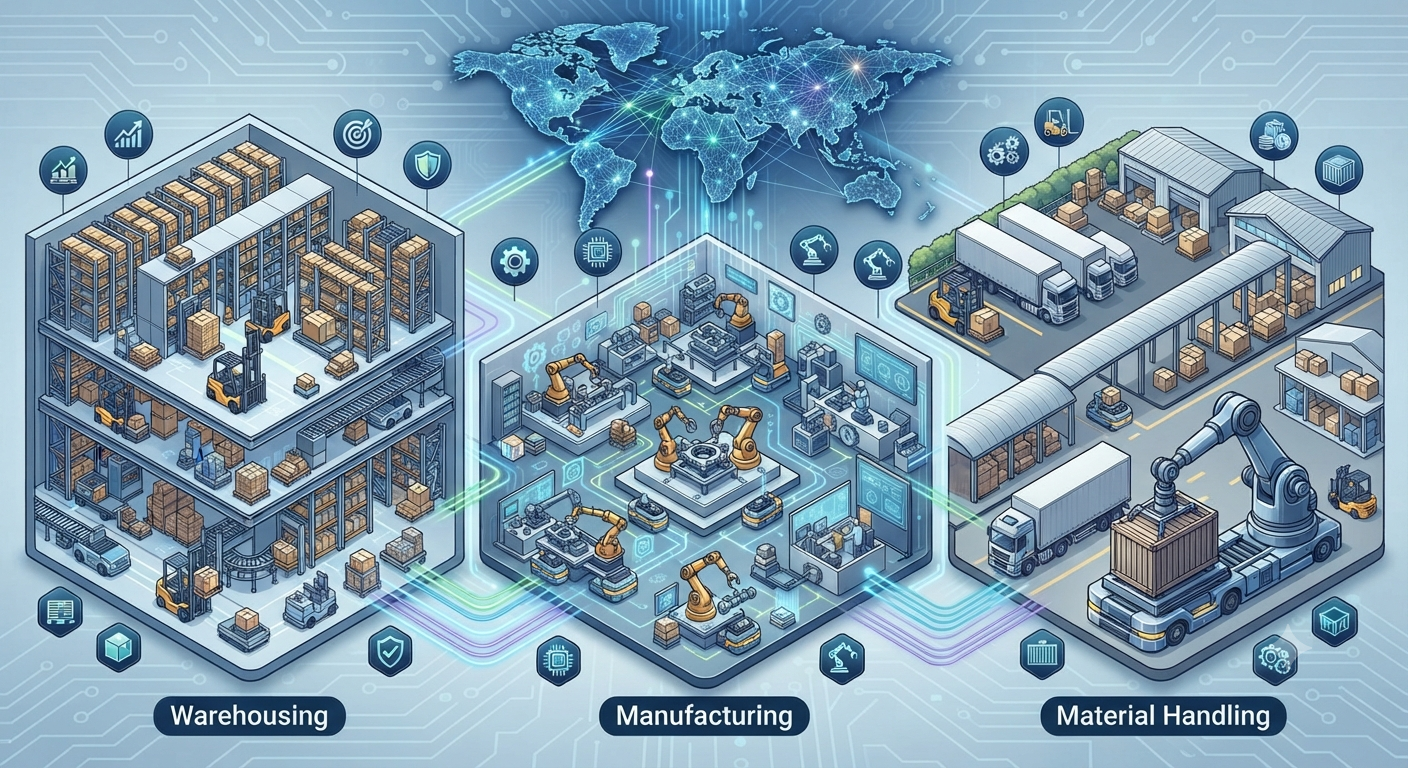
Top Automated Guided Vehicles (AGV) Companies -
There are several key players in the AGV market, each with a significant global presence. These include Daifuku (Japan), JBT (US), KION (Germany), Toyota Industries (Japan), and KUKA (Germany). To fortify their market positions, these companies have employed various strategies, including product development, partnerships, contracts, expansions, and acquisitions.
Leading Automated Guided Vehicle Companies: An In-depth Analysis
The Automated Guided Vehicle (AGV) market is expanding as industries increasingly adopt automated material-handling solutions to improve productivity, reduce operational costs, and optimize warehouse and manufacturing workflows. AGVs are used to transport raw materials, work-in-progress components, finished products, pallets, and other loads with limited human intervention. Leading companies are focusing on improving navigation, fleet management, safety, battery performance, and integration with warehouse management systems (WMS) and manufacturing execution systems (MES). The competitive landscape includes established industrial automation companies as well as specialized robotics providers.
Daifuku
Daifuku is a major global provider of material-handling and logistics automation solutions, with AGVs forming part of its broader portfolio. The company provides automated transportation and storage solutions for manufacturing facilities, distribution centers, airports, and other industrial environments. Its solutions are designed to connect material movement with automated storage and retrieval systems, conveyors, sorting systems, and warehouse software. Daifuku's broad automation portfolio enables customers to implement integrated material-handling environments rather than deploying individual AGVs as standalone systems.
JBT Corporation
JBT Corporation is another prominent participant in the AGV industry, offering automated vehicle solutions for manufacturing and warehouse applications. Its automated guided vehicles are designed to transport materials between different production and logistics areas while supporting repetitive material-handling operations. JBT emphasizes flexible automation that can be adapted to different facility layouts and operational requirements. Its technology is particularly relevant for industries that require reliable transportation of heavy loads and continuous movement of materials across production environments.
KUKA
KUKA is well known for industrial robotics and automation technologies and has expanded its presence in autonomous material transportation. The company's mobile automation solutions combine robotics, navigation, and intelligent software to support intralogistics operations. KUKA's expertise in industrial robotics allows AGV and mobile robot systems to be integrated with robotic workstations and automated production lines. This combination can help manufacturers create interconnected production environments where material transportation and manufacturing processes operate as part of a coordinated automation system.
Toyota Industries
Toyota Industries is an important participant in the automated material-handling industry, supported by its extensive expertise in industrial trucks and warehouse equipment. The company has developed automated solutions for applications such as pallet transportation and repetitive warehouse movement. Toyota's presence in forklifts and material-handling equipment provides a strong foundation for integrating automation into conventional warehouse operations. Automated vehicles can help companies address repetitive transportation tasks while allowing employees to focus on activities requiring greater flexibility and decision-making.
Kollmorgen
Kollmorgen provides technologies for automated material movement and vehicle automation, including navigation and control solutions used in AGV applications. The company's capabilities cover motion control, vehicle guidance, and automation technologies that can support customized AGV deployments. Kollmorgen's solutions are particularly relevant to manufacturers and system integrators developing specialized automated vehicles for industrial environments. The company's technology can help improve vehicle positioning, navigation accuracy, and coordination within complex facilities.
Murata Machinery
Murata Machinery provides automation and material-handling solutions for manufacturing and logistics applications. Its portfolio includes automated transportation technologies designed to move materials efficiently within industrial facilities. The company has experience serving sectors such as semiconductor manufacturing, electronics, and other high-precision industries where controlled material movement is essential. Integration between automated transportation systems and production equipment remains an important area of development for Murata Machinery.
Oceaneering
Oceaneering is involved in mobile robotics and automated transportation solutions for industrial environments. Its automated vehicle technologies can support material transportation and logistics operations where conventional manual handling can be inefficient. The company focuses on developing flexible automation solutions capable of operating in demanding industrial settings. Advances in autonomous navigation, sensing, and fleet management are expected to increase the applicability of these systems across manufacturing and logistics facilities.
Future Competitive Landscape
Competition among leading AGV companies is increasingly centered on autonomous navigation, artificial intelligence, fleet optimization, safety systems, and software integration. Traditional AGVs that depend heavily on fixed routes are increasingly being complemented by autonomous mobile robots (AMRs) capable of dynamically navigating changing environments. Companies are also developing cloud-connected fleet management platforms that allow multiple vehicles to coordinate transportation tasks. As warehouses and factories move toward smart manufacturing and Industry 4.0 environments, AGV providers that can combine reliable hardware with intelligent software, scalable fleet management, and seamless system integration are positioned to play an important role in the evolution of industrial automation.
Final Thoughts on the Automated Guided Vehicle Market
The Automated Guided Vehicle (AGV) market is expected to continue evolving as manufacturers, warehouses, distribution centers, and logistics operators increase investments in automation. Rising labor costs, growing e-commerce volumes, the need for faster order fulfillment, and increasing emphasis on workplace safety are encouraging businesses to automate repetitive material-handling activities. AGVs can help organizations improve material flow, reduce manual transportation, and achieve more consistent operational performance. As companies modernize their facilities, demand is likely to expand beyond traditional manufacturing applications into retail, healthcare, food and beverage, and third-party logistics.
Growth Opportunities and Technological Advancements
Future growth in the AGV market will be strongly influenced by advances in artificial intelligence, machine vision, sensors, wireless connectivity, and fleet management software. Modern vehicles are becoming more flexible and capable of operating in dynamic environments, allowing businesses to automate transportation without making extensive changes to facility layouts. Integration with warehouse management systems, enterprise resource planning platforms, robotics, and smart factory technologies is also creating opportunities for more connected automation ecosystems. These developments can make AGV deployments more scalable, particularly for organizations seeking to gradually increase automation capacity.
Outlook for Leading AGV Companies
The competitive environment is expected to remain dynamic as established automation companies and specialized robotics providers introduce new vehicle designs, navigation technologies, and software platforms. Companies that combine vehicle reliability, intelligent navigation, safety, interoperability, and efficient fleet management can address the increasingly complex requirements of modern industrial facilities. The transition toward Industry 4.0 and smart logistics is likely to create additional opportunities for AGV manufacturers, system integrators, and technology providers. Overall, continued investment in warehouse automation and intelligent manufacturing is expected to support the long-term growth of the AGV industry and encourage further innovation among leading automated guided vehicle companies.
FAQs
1. What are automated guided vehicle companies?
Automated guided vehicle companies develop and supply driverless industrial vehicles used to transport materials, components, pallets, and finished goods within warehouses, factories, and distribution centers.
2. Which are the leading companies in the automated guided vehicle market?
Notable companies include Toyota Industries Corporation, KION Group, Daifuku, Jungheinrich, Mitsubishi Logisnext, Omron, MiR, and SSI SCHÄFER. Their product portfolios and geographic presence vary, and the leading companies by market share depend on the market segment and research methodology.
3. How are AGVs transforming warehousing and manufacturing?
AGVs automate repetitive material transport, support production-line replenishment, improve inventory movement, and reduce dependence on manual transportation. They can also improve workflow consistency and help facilities use labor and floor space more efficiently.
4. What technologies are driving innovation in automated guided vehicles?
Key technologies include laser navigation, sensors, machine vision, AI-assisted route planning, fleet management software, real-time monitoring, and integration with warehouse management and manufacturing execution systems.
5. What factors should businesses consider when selecting an AGV provider?
Businesses should assess payload capacity, navigation technology, safety features, operating environment, battery performance, fleet scalability, software integration, installation costs, maintenance support, and the provider's experience in the relevant industry.
80% of the Forbes Global 2000 B2B companies rely on MarketsandMarkets to identify growth opportunities in emerging technologies and use cases that will have a positive revenue impact.
- Food Packaging Market Size Set for Strong Growth Through 2030 Amid Rising Demand for Convenience Foods
- Crop Protection Chemical Market Size, Share & Growth Forecast (2025–2030)
- Mulch Films Market: Driving Sustainable Agriculture Through Innovation
- Agricultural Adjuvants Market Analysis, Trends, and Growth Outlook (2026–2031)
- Japan Enterprise Asset Management Market Growth: AI and Smart Infrastructure Drive Demand

