
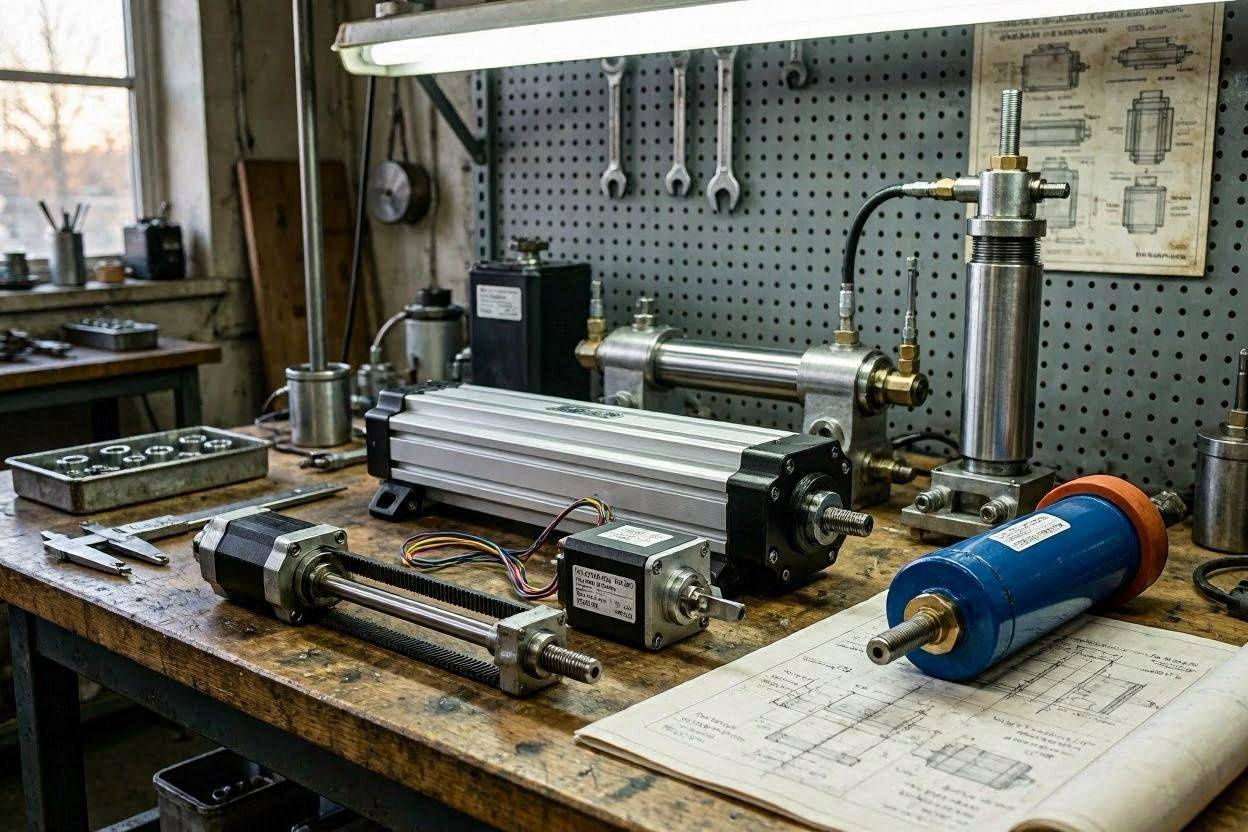
Actuators Innovation: Key Trends, Growth Drivers and Opportunities
Actuators innovation is fundamentally reshaping the global motion control industry by integrating advanced technologies such as IoT connectivity, artificial intelligence, smart sensors, and wireless communication systems. Unlike conventional actuators that simply convert energy into mechanical motion based on predetermined commands, modern intelligent actuators automatically adjust their performance parameters based on real-time data inputs, environmental conditions, and system requirements. These sophisticated capabilities enable organizations to achieve unprecedented levels of precision, operational efficiency, and energy optimization across diverse applications. As industries worldwide accelerate their digital transformation journeys and embrace Industry 4.0 principles, actuators have become indispensable components of smart manufacturing, autonomous systems, and intelligent infrastructure. The convergence of electrification trends, robotics adoption, and the growing demand for energy-efficient solutions continues to drive significant innovation in actuator technologies, positioning them as critical enablers of next-generation industrial automation.
Evolution of Actuators Technology
The historical evolution of actuators began with simple mechanical and hydraulic systems that provided basic motion control capabilities for industrial applications. Early automation relied heavily on pneumatic and hydraulic actuators, which offered significant force and power but presented challenges related to energy efficiency and maintenance complexity. The introduction of electric actuators marked a transformative shift, delivering superior precision, enhanced controllability, and reduced operational costs. Rapid advances in microprocessors, wireless communication protocols, and sensor technologies have since revolutionized the actuators landscape, enabling the development of intelligent systems capable of self-diagnostics, predictive maintenance, and adaptive control. The emergence of advanced networking standards such as EtherNet/IP, PROFINET, and IO-Link has further transformed actuators into connected infrastructure components that seamlessly integrate with broader automation ecosystems. Today, AI-powered analytics, cloud-based management platforms, and edge computing capabilities allow organizations to monitor, control, and optimize actuator performance remotely while significantly improving operational reliability.
Key Benefits of Smart Actuators
Smart actuators deliver substantial measurable value across multiple industries by enhancing precision, reducing operating expenses, and enabling sophisticated automation capabilities. The integration of advanced sensors and embedded intelligence allows actuators to perform real-time monitoring, automatically detect anomalies, and communicate diagnostic information to central control systems. These intelligent capabilities help organizations minimize downtime through predictive maintenance, optimize energy consumption through adaptive control strategies, and improve product quality through superior motion precision. Additionally, smart actuators support sustainability initiatives by reducing mechanical losses, optimizing power usage, and enabling more efficient system designs. The ability to collect and analyze operational data from connected actuators provides valuable insights for continuous improvement and facilitates data-driven decision-making across manufacturing and automation processes.
Key benefits of smart actuators include
- Significant energy savings through optimized power usage and reduced mechanical losses
- Extended equipment lifespan and reduced maintenance costs through predictive diagnostics
- Enhanced precision and accuracy in motion control applications
- Real-time monitoring and remote management capabilities
- Seamless integration with broader industrial IoT and automation platforms
- Improved operational reliability through self-diagnostic and fault detection features
- Lower carbon emissions supporting organizational sustainability goals
Current Market Size and Growth Trends
According to MarketsandMarkets, the global actuators market size was valued at USD 71.22 billion in 2025 and is projected to reach USD 100.41 billion by 2030, growing at a CAGR of 7.1% from 2025 to 2030. The actuators industry is experiencing robust expansion as automation technologies and smart manufacturing solutions continue transforming industrial operations worldwide. The Asia Pacific region leads the global actuators market, driven by extensive automation adoption, a strong automotive and electronics manufacturing base, and supportive government initiatives promoting industrial modernization. North America and Europe also represent significant markets, characterized by advanced industrial infrastructure, strong emphasis on technological innovation, and increasing investments in smart manufacturing capabilities. The automotive vertical holds the largest market share, driven by rapid electrification, advanced driver-assistance systems (ADAS) requirements, and increasing automation levels in vehicle manufacturing. Industrial automation and robotics applications are witnessing accelerated growth, reflecting the broader adoption of Industry 4.0 principles across manufacturing sectors.
Key Growth Drivers
Several major factors are driving the robust expansion of the global actuators market. The accelerating adoption of industrial automation across manufacturing, automotive, and process industries creates sustained demand for precise motion control solutions that enhance operational efficiency and product quality. The progressive integration of sensors, controllers, and IoT connectivity into modern actuators enables real-time monitoring, predictive control, and enhanced system intelligence, making them increasingly valuable for complex applications. Organizations across industries are intensifying their focus on reducing energy consumption, and advanced actuators help optimize power usage through accurate control and reduced mechanical losses. The rising deployment of robotics in industrial, medical, and service applications significantly boosts the need for high-performance actuators that ensure precise and reliable movement. Vehicle electrification and the rapid development of autonomous driving technologies further drive demand, as actuators are essential components in systems such as braking, throttle control, HVAC, and advanced suspension mechanisms. Urbanization, digital transformation initiatives, and increasing investments in smart infrastructure projects continue creating new growth opportunities for actuator manufacturers worldwide.
Emerging Trends Shaping the Industry
The actuators industry is witnessing several transformative trends that are reshaping product development and market dynamics. Smart actuators equipped with sensors, embedded intelligence, and connectivity features represent the most significant trend, enabling real-time monitoring, predictive maintenance, and seamless integration with industrial IoT platforms. The ongoing transition from traditional hydraulic and pneumatic systems to electric actuation continues gaining momentum, driven by superior efficiency, precision, and lower maintenance requirements. Miniaturization of actuators enables new applications in medical devices, consumer electronics, and compact robotic systems. The integration of edge AI capabilities allows actuators to perform local data processing and make autonomous decisions, reducing dependency on centralized control systems. Artificial muscles and advanced materials are emerging as complementary technologies, offering new possibilities for soft robotics and biomimetic applications. Industry 4.0 adoption continues accelerating, with actuators serving as critical components in smart factory environments. Cybersecurity enhancements are increasingly important as connected actuators become integral parts of larger network infrastructures. Energy harvesting technologies are being explored to power wireless actuators, reducing wiring requirements and enabling new deployment scenarios.
Opportunities Across Industries
Smart actuators present significant growth opportunities across diverse industry verticals and application areas. The automotive sector offers substantial potential, driven by vehicle electrification, autonomous driving developments, and increasing demand for comfort and safety features. Industrial automation and robotics represent another major opportunity, as manufacturers worldwide invest in advanced motion control solutions to improve productivity and quality. The power generation sector, including renewable energy installations, requires reliable actuation solutions for valve control, turbine regulation, and balance-of-plant operations. Healthcare and medical devices present emerging opportunities, particularly in surgical robotics, diagnostic equipment, and patient handling systems. The aerospace and defense industry demands high-performance, reliable actuators for flight control, landing gear, and weapon systems. Infrastructure modernization projects, including smart city developments, require actuators for traffic management, building automation, and utilities control. The food and beverage industry needs hygienic actuators designed to meet strict sanitation requirements. Mining, oil and gas, and heavy machinery applications require robust actuators capable of operating in demanding environments. Retrofit and modernization of legacy systems offer substantial opportunities for actuator manufacturers to capture replacement and upgrade demand. Residential and commercial building automation represents an expanding market segment, with actuators increasingly used in HVAC systems, security systems, and smart home applications.
Innovations and Technological Advancements
Manufacturers are introducing numerous innovations to enhance actuator performance, reliability, and intelligence. Advanced electric actuators featuring high-power density, improved thermal management, and precise position feedback are becoming increasingly prevalent. Intelligent actuators incorporating embedded sensors, microprocessors, and communication interfaces enable real-time diagnostics, condition monitoring, and predictive maintenance capabilities. Development of energy-efficient actuation systems focuses on reducing power consumption through optimized motor designs, advanced materials, and intelligent control algorithms. Integration of artificial intelligence and machine learning algorithms enables actuators to learn operating patterns, predict failures, and optimize performance automatically. Advanced materials, including lightweight composites and specialized coatings, improve actuator durability and expand operating temperature ranges. Modular actuator designs facilitate customization, simplify maintenance, and reduce inventory requirements for end users. Wireless actuation solutions are emerging, eliminating cabling costs and enabling deployment in previously challenging locations. Developments in piezoelectric and shape memory alloy actuators offer new possibilities for high-precision, compact applications. Progress in additive manufacturing techniques enables production of complex actuator components with optimized geometries.
Future Applications and Market Expansion
The actuators market is poised for continued expansion across diverse application domains and industry verticals. Smart city development projects will increasingly incorporate actuators for traffic management, waste management, water treatment, and building automation applications. Autonomous vehicles will require sophisticated actuation systems for steering, braking, throttle, and suspension control. Advanced robotics applications will demand increasingly precise, compact, and intelligent actuators for manipulation, locomotion, and human-robot interaction. Renewable energy installations, including solar tracking systems and wind turbine pitch control, will require reliable actuators capable of operating in outdoor environments. Electric vertical takeoff and landing (eVTOL) aircraft represent an emerging application requiring lightweight, high-performance actuators. Medical and healthcare applications will expand, particularly in surgical robotics, rehabilitation devices, and assistive technologies. Agricultural automation, including precision farming and autonomous equipment, will drive demand for rugged actuators capable of operating in challenging environmental conditions. The integration of actuators with building automation systems, HVAC systems, and security infrastructure will enable more intelligent, energy-efficient built environments. Industrial Internet of Things (IIoT) deployments will increasingly incorporate actuators as intelligent edge devices, providing valuable operational data and enabling closed-loop control. Continued technological advancement and declining hardware costs will enable broader adoption across developing economies, further expanding the global market.
Actuators innovation is fundamentally transforming how industries achieve motion control, automation, and operational efficiency across built environments and industrial processes. Intelligent actuation systems support sustainability goals, enhance productivity, improve product quality, and enable sophisticated automation capabilities that were previously unattainable. The shift toward electric actuation, integration of sensors and IoT connectivity, and increasing adoption of robotics and autonomous systems are creating significant opportunities for manufacturers and technology providers. With substantial investments in industrial automation, smart manufacturing initiatives, and vehicle electrification, coupled with growing demand for energy-efficient and intelligent solutions, the actuators industry is well-positioned to maintain robust growth throughout the forecast period. Manufacturers that successfully develop innovative products addressing evolving customer requirements, demonstrate sustainability benefits, and effectively navigate integration challenges will capture significant market share in this dynamic and rapidly evolving industry.
Download Sample Research Report for Actuators Market Future:: https://www.marketsandmarkets.com/Market-Reports/global-actuators-market-59465451.html
80% of the Forbes Global 2000 B2B companies rely on MarketsandMarkets to identify growth opportunities in emerging technologies and use cases that will have a positive revenue impact.
- Food Packaging Market Size Set for Strong Growth Through 2030 Amid Rising Demand for Convenience Foods
- Crop Protection Chemical Market Size, Share & Growth Forecast (2025–2030)
- Mulch Films Market: Driving Sustainable Agriculture Through Innovation
- Agricultural Adjuvants Market Analysis, Trends, and Growth Outlook (2026–2031)
- Japan Enterprise Asset Management Market Growth: AI and Smart Infrastructure Drive Demand


