

Advanced Smart Lighting Dimmers Enable Personalized Illumination and Energy Savings Across Commercial Spaces
Commercial buildings are increasingly adopting intelligent lighting technologies to improve energy efficiency, occupant comfort, and operational performance. Offices, shopping centers, hotels, hospitals, and educational institutions require flexible illumination that adapts to different activities, occupancy levels, and environmental conditions. Advanced Smart Lighting dimmers are becoming an important part of this transformation by enabling precise control over brightness, lighting schedules, and connected fixtures. These systems allow facility managers to adjust illumination according to the requirements of individual spaces. By combining dimming capabilities with sensors, automation, and centralized management, businesses can create comfortable environments while reducing unnecessary electricity consumption.
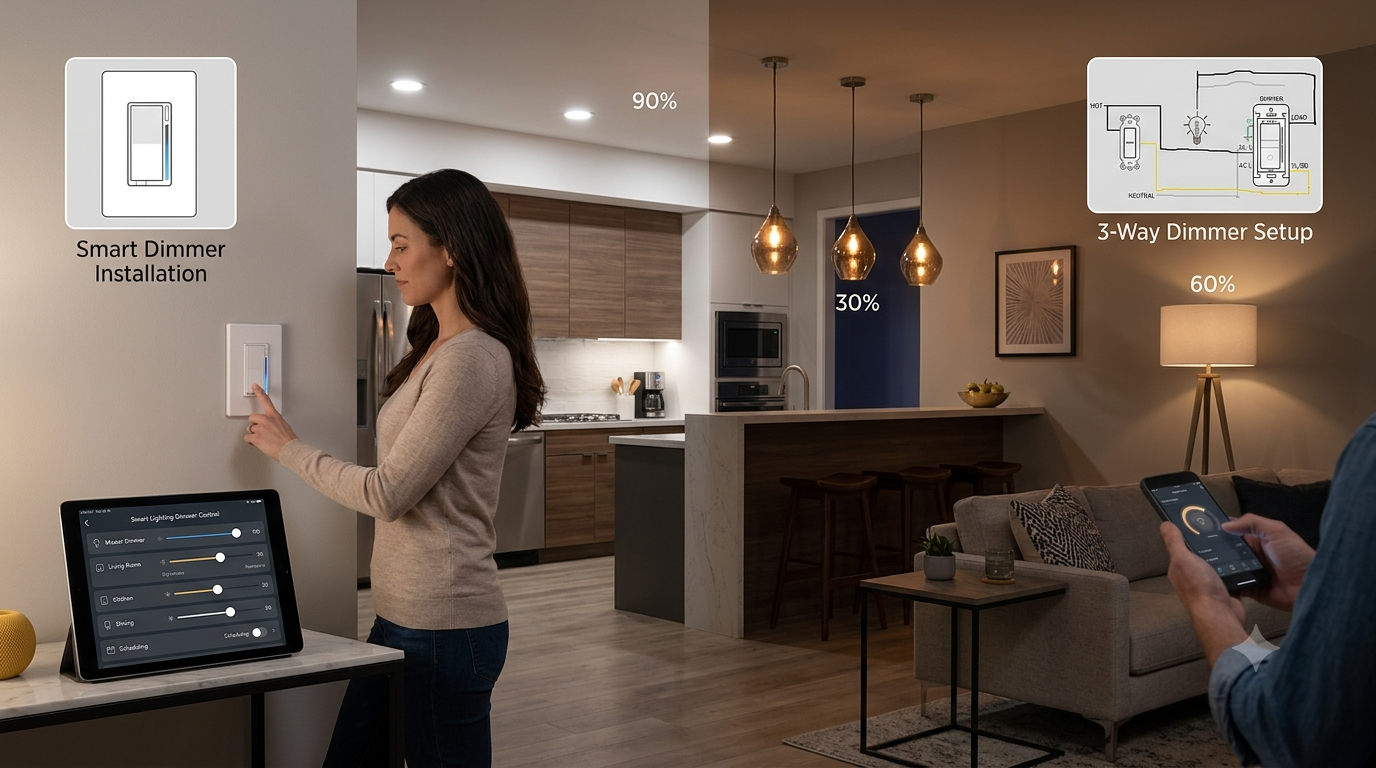
Traditional lighting systems generally provide limited control over brightness and operating schedules. Lights may remain at maximum intensity even when natural daylight is sufficient or when certain areas are unoccupied. Smart Lighting dimmers address these inefficiencies by adjusting light output according to real time requirements. Their ability to integrate with building management systems, wireless networks, and occupancy sensors makes them suitable for modern commercial infrastructure. As organizations prioritize sustainability and operational cost reduction, intelligent dimming solutions are gaining importance in commercial lighting strategies.
According to Marketsandmarkets, the global smart lighting market size is projected to grow from USD 11.00 billion in 2026 to USD 20.50 billion by 2032, growing at a CAGR of 10.9% from 2026 to 2032.
Download PDF Brochure @ https://www.marketsandmarkets.com/pdfdownloadNew.asp?id=985
Understanding Advanced Smart Lighting Dimmers
Smart Lighting dimmers are electronic control devices that regulate the brightness of compatible lighting fixtures. Unlike conventional dimmers, advanced models can connect with digital controls, mobile applications, occupancy sensors, daylight sensors, and building automation platforms. This connectivity enables users to manage illumination remotely or automatically according to predefined conditions. Commercial property managers can establish different lighting levels for meeting rooms, corridors, reception areas, workstations, and conference facilities. These capabilities support more efficient lighting management while maintaining appropriate illumination for specific activities.
Modern dimmers support different communication protocols and control technologies, including Digital Addressable Lighting Interface, Bluetooth, Zigbee, and selected Wi Fi based solutions. The appropriate technology depends on the building design, existing electrical infrastructure, scalability requirements, and compatibility with installed luminaires. Some systems allow individual fixture control, while others coordinate lighting across entire floors or buildings. Integration with centralized platforms also provides information about operating schedules and energy usage. This combination of controllability and connectivity makes advanced dimmers an essential component of intelligent commercial lighting installations.
Personalized Illumination Improves Workplace Comfort
Personalized illumination allows occupants and facility managers to select lighting conditions that match different activities and preferences. In offices, employees may require bright, uniform illumination for detailed work, while collaborative areas benefit from softer lighting during informal discussions. Smart Lighting dimmers make these adjustments possible without requiring separate lighting circuits for every situation. Programmable scenes can establish preferred brightness levels for presentations, video conferences, focused work, and relaxation areas. This flexibility helps organizations create adaptable workplaces that support changing operational requirements.
Lighting preferences also vary according to individual sensitivity, screen usage, time of day, and available daylight. Adjustable illumination can help reduce excessive brightness and uncomfortable contrasts when systems are properly designed. In meeting rooms, for example, dimmers can lower overhead lighting during presentations while maintaining sufficient visibility for participants. Hospitality facilities can use customized lighting scenes to create welcoming reception areas and comfortable dining environments. Although lighting preferences differ between individuals, flexible control gives businesses greater opportunities to improve comfort and the overall user experience.
Energy Savings Through Intelligent Brightness Control
Reducing electricity consumption is one of the most important advantages of advanced Smart Lighting dimmers. LED fixtures already consume less energy than many traditional lighting technologies, and dimming can further reduce consumption when the fixtures and control equipment are compatible. Instead of operating at full brightness throughout the day, connected lighting systems can provide only the illumination required for a particular activity. This approach is especially beneficial in commercial buildings with long operating hours and extensive lighting installations. Over time, lower electricity consumption can contribute to reduced operating expenses and improved energy management.
The actual savings depend on the installed lighting technology, dimming levels, occupancy patterns, daylight availability, and control strategy. Dimming alone does not guarantee a particular percentage of energy reduction, and poorly configured systems may deliver limited benefits. Businesses should evaluate baseline electricity consumption and compare it with performance after installation. Energy monitoring tools can help identify unnecessary lighting operation and opportunities for further optimization. When combined with efficient LED fixtures and automated controls, intelligent dimmers can support broader building energy reduction objectives.
Daylight Harvesting and Occupancy Based Automation
Daylight harvesting is an important application of Smart Lighting dimmers in buildings with windows, skylights, and other sources of natural illumination. Daylight sensors measure available ambient light and communicate with lighting controls to adjust artificial illumination. When sunlight provides sufficient brightness, compatible fixtures can dim automatically to maintain the desired lighting level. During cloudy conditions or evening hours, the system increases artificial illumination as necessary. This continuous adjustment helps balance visual comfort with electricity efficiency throughout the working day.
Occupancy based automation provides another opportunity to reduce unnecessary lighting operation. Motion sensors, presence detectors, and scheduled controls can adjust illumination when rooms are occupied or vacant. Conference rooms, storage areas, corridors, and shared facilities often experience changing occupancy throughout the day. Smart Lighting dimmers can reduce brightness or switch off compatible fixtures when lighting is no longer required, subject to safety and operational needs. Combining occupancy detection with daylight harvesting allows buildings to respond more accurately to changing conditions and avoid excessive lighting consumption.
Major Commercial Applications of Smart Lighting Dimmers
Advanced dimming solutions are suitable for a wide range of commercial environments where illumination requirements change according to activities, occupancy, and business schedules. Their flexibility allows organizations to establish distinct lighting strategies for different zones while managing the overall installation through centralized platforms. Common applications include:
- Corporate offices: Adjustable brightness supports focused work, collaboration, conference presentations, and flexible workspaces.
- Retail stores and shopping centers: Controlled illumination highlights merchandise, enhances product displays, and adapts lighting to different shopping areas.
- Hotels and hospitality facilities: Programmable scenes create welcoming environments in lobbies, restaurants, guest facilities, and event spaces.
- Healthcare buildings: Adjustable lighting supports suitable illumination in administrative areas, waiting rooms, and selected patient facilities.
- Educational institutions: Dimming controls help adapt classrooms, lecture halls, libraries, and laboratories to different learning activities.
- Warehouses and industrial facilities: Automated controls can reduce unnecessary lighting in vacant areas while preserving required visibility and workplace safety.
These applications demonstrate how Smart Lighting dimmers can accommodate different operational requirements without relying entirely on manual switching. However, system configuration must reflect the intended use of each space. Healthcare environments, industrial workplaces, and emergency routes may have specific illumination and safety requirements that restrict how far lighting can be dimmed. Appropriate planning ensures that efficiency improvements do not compromise visibility, accessibility, or regulatory compliance.
Integration With Building Management Systems
Integration with building management systems allows lighting controls to operate alongside heating, ventilation, air conditioning, access management, and other building technologies. This coordination can provide facility managers with a consolidated view of building operations and improve the ability to respond to changing occupancy patterns. For example, a meeting room reservation system may trigger a predefined lighting scene before a scheduled meeting. When the room becomes vacant, occupancy sensors can adjust illumination according to established control policies. Such automation reduces the need for repeated manual intervention.
Connected Smart Lighting dimmers can also support centralized monitoring and remote configuration across multiple locations. Facility teams can update lighting schedules, adjust brightness levels, and investigate control issues without visiting every room individually. Larger organizations may use analytics to compare operating patterns between floors or buildings. Nevertheless, successful integration depends on interoperability, network reliability, cybersecurity measures, and suitable system architecture. Businesses should assess compatibility with existing equipment before deployment to avoid unnecessary replacement costs and integration difficulties.
The Role of LED Technology and Connected Controls
LED technology has accelerated the adoption of advanced dimming because LEDs offer efficient illumination, long service life, and compatibility with a wide range of electronic control systems. However, not every LED lamp or driver supports every dimming method. Compatibility issues can cause flickering, limited dimming ranges, audible noise, or inconsistent brightness. Businesses should therefore confirm that luminaires, drivers, dimmers, and control protocols work together before purchasing equipment. Proper commissioning is essential to ensure smooth operation and reliable performance.
Connected controls expand the functionality of Smart Lighting systems beyond basic brightness adjustment. Wireless communication allows certain installations to reduce cabling requirements and simplify control changes when commercial spaces are renovated. Wired systems may remain preferable where reliability, building scale, or established infrastructure makes them more suitable. Hybrid installations can combine both approaches according to project requirements. As connected lighting technologies evolve, organizations are increasingly evaluating solutions based on interoperability, cybersecurity, ease of maintenance, and long term flexibility rather than initial equipment costs alone.
Implementation Challenges and Cost Considerations
Although intelligent dimming offers several operational advantages, commercial deployment requires careful planning. Initial expenditure may include compatible luminaires, dimmers, sensors, gateways, software, installation, and commissioning. Retrofitting an older building can introduce additional complexity because existing wiring and lighting equipment may not support modern control technologies. Businesses should assess whether a phased installation can deliver practical benefits while limiting disruption to daily operations. A detailed site assessment helps identify suitable areas for implementation and estimate the resources required.
Another challenge involves employee awareness and system usability. Complicated controls may discourage occupants from using available features or lead to frequent manual overrides. Simple interfaces, clearly defined lighting scenes, and appropriate training can improve adoption. Facility managers should also establish maintenance procedures for sensors, communication equipment, and software updates. Before installation, organizations should define performance indicators such as electricity consumption, lighting availability, maintenance requirements, and occupant satisfaction. These measurements provide a stronger basis for evaluating the long term value of Smart Lighting investments.
Future Trends in Commercial Lighting Controls
The future of commercial lighting will increasingly involve connected devices, intelligent automation, and data driven building management. Artificial intelligence and advanced analytics can help identify recurring occupancy patterns, recommend operating schedules, and detect unusual energy consumption. These capabilities may enable facility managers to refine lighting strategies using actual building performance rather than fixed assumptions. However, the benefits depend on data quality, system compatibility, and effective implementation.
Another important trend is the growing emphasis on human centric lighting. These systems aim to adjust brightness and, where supported, color temperature according to activities, daylight conditions, and time of day. In suitable environments, carefully designed lighting can improve visual comfort and create more adaptable spaces. Integration with wireless building controls and energy management platforms may also simplify the coordination of lighting across large facilities. As commercial buildings pursue energy efficiency and occupant focused design, advanced dimmers are likely to remain an important part of connected lighting infrastructure.
Conclusion
Advanced Smart Lighting dimmers are transforming commercial illumination by combining personalized brightness control, automation, and energy management. Their ability to respond to daylight, occupancy, and activity requirements helps businesses create flexible environments while limiting unnecessary electricity consumption. Offices, retail facilities, hotels, educational institutions, and other commercial properties can benefit from lighting systems designed around their operational needs. Successful implementation requires compatible equipment, thoughtful control strategies, reliable integration, and ongoing performance monitoring.
As organizations modernize their buildings, intelligent dimming can contribute to broader sustainability and digital transformation initiatives. Businesses that evaluate lifecycle costs, occupant requirements, interoperability, and measurable energy performance are better positioned to realize long term benefits. By combining efficient LED fixtures with connected controls and appropriate automation, commercial facilities can build more responsive, comfortable, and energy conscious lighting environments.
Frequently Asked Questions
1. What are Smart Lighting dimmers?
Smart Lighting dimmers are connected control devices that adjust the brightness of compatible lighting fixtures. They may integrate with sensors, mobile applications, wireless networks, and building management systems to automate illumination.
2. How do advanced dimmers reduce energy consumption?
Advanced dimmers reduce unnecessary lighting output by adjusting brightness according to daylight availability, occupancy, schedules, and operational requirements. Energy savings depend on the original installation and the selected control settings.
3. Which commercial buildings can benefit from intelligent dimming?
Corporate offices, shopping centers, hotels, educational institutions, healthcare facilities, warehouses, and other commercial buildings can benefit from adjustable illumination and automated lighting management.
4. Can smart dimmers work with existing LED lights?
Some smart dimmers can work with existing LED fixtures, provided the lamps and drivers support the selected dimming technology. Compatibility should be checked before installation to avoid flickering or inconsistent performance.
5. What is daylight harvesting in commercial lighting?
Daylight harvesting uses sensors to measure natural light and automatically adjusts artificial illumination to maintain a suitable brightness level. This approach can reduce electricity consumption in spaces with sufficient daylight.
6. How do occupancy sensors improve lighting efficiency?
Occupancy sensors detect the presence or movement of people and adjust lighting according to configured rules. They help reduce unnecessary operation in vacant rooms and low traffic areas.
7. Can smart dimmers integrate with building management systems?
Yes. Compatible dimmers can connect with building management platforms to support centralized control, automated schedules, remote configuration, and coordinated building operations.
8. What factors should businesses consider before installing smart dimmers?
Businesses should evaluate equipment compatibility, installation costs, communication protocols, cybersecurity, control requirements, maintenance needs, and expected energy savings before selecting a solution.
9. Do smart dimmers improve employee comfort?
They can improve lighting flexibility by allowing brightness adjustments for different tasks and environmental conditions. Good lighting design is still necessary to avoid glare, insufficient illumination, and uncomfortable contrasts.
10. What is the future of smart dimming technology?
Future developments are expected to emphasize intelligent automation, advanced analytics, human centric lighting, wireless connectivity, and integration with broader building management platforms. These technologies can support more efficient and responsive commercial environments.
80% of the Forbes Global 2000 B2B companies rely on MarketsandMarkets to identify growth opportunities in emerging technologies and use cases that will have a positive revenue impact.
- Food Packaging Market Size Set for Strong Growth Through 2030 Amid Rising Demand for Convenience Foods
- Crop Protection Chemical Market Size, Share & Growth Forecast (2025–2030)
- Mulch Films Market: Driving Sustainable Agriculture Through Innovation
- Agricultural Adjuvants Market Analysis, Trends, and Growth Outlook (2026–2031)
- Japan Enterprise Asset Management Market Growth: AI and Smart Infrastructure Drive Demand

