

AI in Mining Technology Innovation Key Trends, Growth Drivers and Opportunities
AI in mining technology is transforming the way companies explore, extract, and process minerals and metals. Powered by machine learning (ML), computer vision, generative AI, the Internet of Things (IoT), and predictive analytics, modern AI solutions deliver real-time insights that enhance safety, productivity, and operational efficiency. From autonomous haulage systems and smart drills to digital twins and AI-enabled mine planning, this technology is becoming an integral part of modern mining operations and the broader Industry 4.0 landscape.
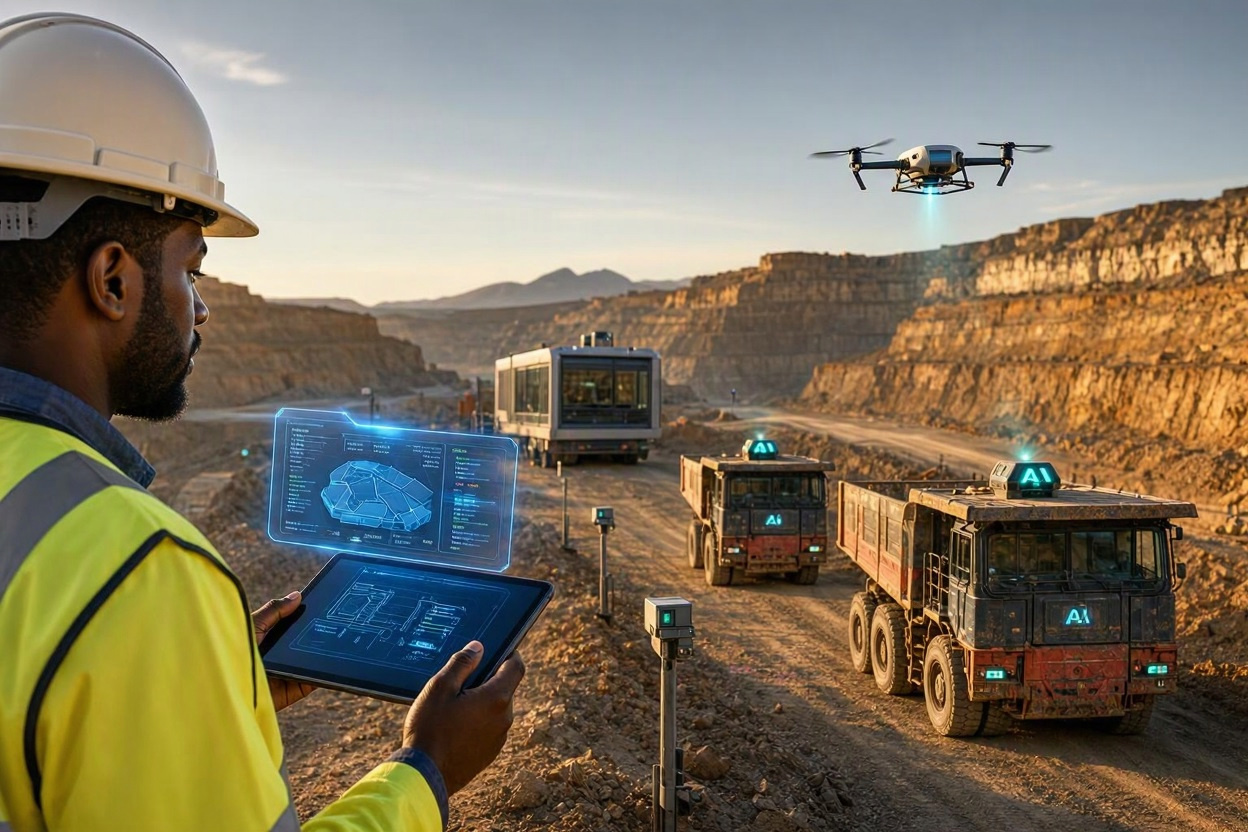
History of AI in mining technology
The mining industry has evolved from manual labor and basic mechanization to intelligent, connected ecosystems. Advances in computing power, sensor technology, wireless communication, and data analytics have enabled AI to support critical functions like predictive maintenance, autonomous operations, and geological modeling. This evolution has shifted mining from a reactive, labor-intensive industry to a proactive, data-driven one, unlocking new levels of safety and productivity.
Benefits of AI in mining technology
AI in mining technology offers numerous advantages across operational, safety, and environmental domains:
Enhanced Worker Safety: Automating hazardous tasks and using AI-powered monitoring reduces human exposure to high-risk environments, improving overall site safety.
- Improved Productivity: Autonomous trucks, drills, and loaders enable continuous operations, reduce operational errors, and boost output.
- Reduced Operational Costs: AI-driven predictive analytics monitor equipment health in real time, reducing unexpected breakdowns and costly downtime.
- Optimized Resource Utilization: AI helps optimize workflows, improve ore grade estimation, and streamline decision-making, leading to higher yields and lower waste.
- Data-Driven Decision Making: Integration with IoT sensors provides real-time data for smarter exploration, planning, and production.
Current market size and growth trends of AI in mining industry
The AI in mining market is experiencing robust growth as digital transformation, automation, and data-driven decision-making become mainstream. According to MarketsandMarkets, the global AI in mining market size was valued at USD 2.60 billion in 2025 and is projected to reach USD 9.93 billion by 2032, growing at a CAGR of 21.1% from 2025 to 2032. The Asia Pacific region is expected to account for a 42.9% share of the market in 2025 due to massive mining production volumes and strong investments in automation and digital mining technologies.
Download PDF Brochure @ https://www.marketsandmarkets.com/pdfdownloadNew.asp?id=89359179
- Growing demand for autonomous haulage systems and predictive maintenance.
- Expansion of smart, connected mining ecosystems.
- Increasing adoption of AI for safety, efficiency, and productivity improvements.
- Continuous innovation in AI technologies like generative AI and computer vision.
Key drivers and factors influencing the future of AI in mining technology
AI, IoT, cloud analytics, and edge intelligence are enabling more capable and autonomous mining operations across the globe.
- AI-powered predictive maintenance and real-time monitoring.
- Deployment of autonomous trucks, drills, and loaders.
- Focus on automating dangerous tasks to improve worker safety.
- Optimization of resource utilization and workflow streamlining.
- Integration with IoT sensors for smarter exploration and production planning.
Emerging trends in AI in mining technology
Generative AI, digital twins, computer vision-based safety monitoring, and autonomous equipment are reshaping the industry.
- Generative AI for exploration and mine planning.
- Digital Twins for operational simulation.
- Computer Vision for safety and security.
- Edge AI for real-time decision-making.
- Advanced Machine Learning for ore grade optimization.
Opportunities and challenges in the AI in mining market
Major opportunities lie in digital transformation and smart connected mining, while high deployment costs, data quality, and interoperability remain significant challenges.
- Opportunity: Inclination of mine operators toward digital technologies and smart mining.
- Opportunity: Rising adoption of remote operations centers and intelligent automation.
- Challenge: High deployment costs and complex integration with legacy systems.
- Challenge: Poor data quality and limited digital infrastructure in remote sites.
- Challenge: Interoperability issues between AI platforms, sensors, and equipment.
Innovations and advancements in AI in mining technology
Machine learning, computer vision, IoT, and high-precision mapping are driving innovation in the mining sector.
- Machine Learning and Predictive Analytics.
- Computer Vision and Autonomous Systems.
- IoT and Edge Computing.
- High-Precision Mapping and Geospatial Analytics.
- Cloud-native Platforms and Digital Twins.
Future applications and industries that will benefit from AI in mining technology
Metal mining, coal mining, and mineral mining will increasingly benefit from AI innovation, along with the broader manufacturing and energy sectors.
- Metal Mining (e.g., critical minerals for EVs).
- Coal Mining (focus on safety and automation).
- Mineral Mining (resource optimization).
- Equipment Manufacturing and OEMs.
- Renewable Energy and EV Supply Chains.
The promising future of AI in mining technology
AI in mining technology will remain a cornerstone of digital transformation as the industry seeks to enhance safety, efficiency, and sustainability. Organizations investing in AI innovation can improve operational efficiency, worker safety, and resource optimization. With the market projected to grow at a CAGR of 21.1% to reach USD 9.93 billion by 2032, AI is set to fundamentally reshape the future of mining.
Download Sample Research Report for AI in Mining Market Future: https://www.marketsandmarkets.com/Market-Reports/ai-in-mining-market-89359179.html
80% of the Forbes Global 2000 B2B companies rely on MarketsandMarkets to identify growth opportunities in emerging technologies and use cases that will have a positive revenue impact.
- Food Packaging Market Size Set for Strong Growth Through 2030 Amid Rising Demand for Convenience Foods
- Crop Protection Chemical Market Size, Share & Growth Forecast (2025–2030)
- Mulch Films Market: Driving Sustainable Agriculture Through Innovation
- Agricultural Adjuvants Market Analysis, Trends, and Growth Outlook (2026–2031)
- Japan Enterprise Asset Management Market Growth: AI and Smart Infrastructure Drive Demand

