
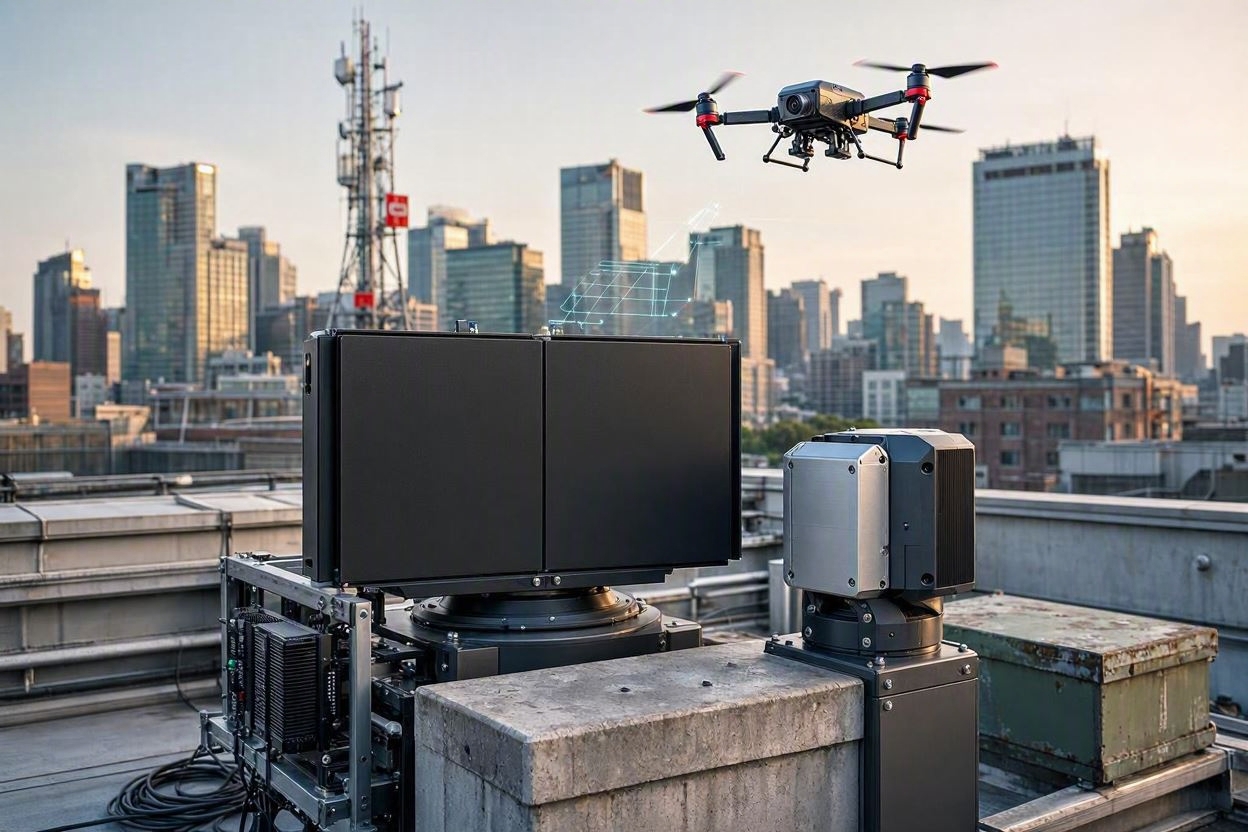
Anti Drone Market: Revenue Growth, Market Forecast, and Key Business Opportunities Through 2030
The Anti Drone Market is becoming an increasingly important part of modern airspace security as the use of unmanned aerial vehicles expands across defense, commercial, industrial, and public environments. Drones provide valuable capabilities for surveillance, logistics, inspection, agriculture, emergency response, and infrastructure monitoring, but their accessibility also creates new security challenges. Unauthorized drones can enter restricted airspace, collect sensitive information, disrupt operations, or create safety risks around airports and public facilities. As a result, organizations are investing in technologies that can identify, track, classify, and respond to unauthorized aerial activity. The growing complexity of drone threats is encouraging the development of integrated systems rather than relying on a single detection or mitigation technology.
The Anti Drone Market is evolving from basic detection equipment toward sophisticated, multilayered security architectures. Modern solutions can combine radar, radio frequency sensing, electro optical and infrared cameras, acoustic sensors, artificial intelligence, command and control software, electronic countermeasures, and physical interception technologies. This integrated approach improves the ability to distinguish legitimate drones from potentially harmful aerial objects while reducing false alarms. Artificial intelligence is also helping operators process multiple streams of information and identify unusual flight behavior more efficiently. These developments are creating new opportunities for technology providers, system integrators, software developers, and security service companies.
According to Marketsandmarkets, the global anti-drone market size will reach USD 14.51 billion by 2030 from USD 4.48 billion in 2025, registering a CAGR of 26.5% from 2025 to 2030.
Download PDF Brochure @ https://www.marketsandmarkets.com/pdfdownloadNew.asp?id=177013645
Rising Drone Threats Strengthen Demand for Counter Measures
One of the strongest growth factors for the Anti Drone Market is the rapid expansion of drone applications across different sectors. As drones become smaller, cheaper, more autonomous, and easier to operate, the number of aerial platforms operating near sensitive locations is increasing. Unauthorized flights can interfere with airport operations, industrial facilities, military installations, government buildings, sporting venues, and large public gatherings. Security teams therefore require reliable technologies capable of detecting drones before they reach protected areas. The increasing variety of drone designs also means that counter drone systems must operate effectively against different sizes, speeds, flight patterns, and communication methods.
The threat landscape is also becoming more technically sophisticated. Modern drones may operate with autonomous navigation, encrypted communications, advanced cameras, low observable characteristics, or alternative control mechanisms that reduce the effectiveness of traditional countermeasures. Fibre optic controlled drones, for example, can present challenges for conventional radio frequency based mitigation because their control architecture differs from traditional wireless systems. These developments are encouraging security organizations to adopt multiple detection and response technologies instead of depending exclusively on radio frequency disruption.
AI and Sensor Fusion Transform Anti Drone Technology
Artificial intelligence is emerging as one of the most important technology trends influencing the Anti Drone Market. AI algorithms can analyze radar signatures, radio frequency information, optical imagery, infrared data, and acoustic signals to improve drone identification. Instead of treating each sensor as an independent source, sensor fusion allows multiple data streams to be evaluated together. This can help distinguish drones from birds, aircraft, weather effects, and other objects that may otherwise generate false alerts. As computing capabilities improve, AI enabled systems are expected to support faster classification and more automated threat assessment.
Sensor fusion is particularly valuable in complex environments where visibility, electromagnetic conditions, and background activity can change rapidly. Radar can provide detection and tracking information, while optical and infrared systems can provide visual confirmation. Radio frequency sensors can identify communication activity, while acoustic systems can provide additional information at shorter ranges. Bringing these inputs together enables a more comprehensive understanding of an aerial threat. The growing importance of multimodal sensing, intelligent decision making, and distributed counter drone architectures is also highlighted in recent technical research.
Detection Technologies Create Strong Growth Opportunities
Detection remains a fundamental component of the Anti Drone Market because effective mitigation begins with accurate identification and tracking. Radar based systems can monitor airspace and detect objects across defined areas, making them useful for airports, military facilities, industrial locations, and border environments. Radio frequency detection can identify signals associated with drone communications, while electro optical and infrared cameras can provide visual confirmation. Acoustic sensors can complement other technologies in environments where visual or radio frequency detection is difficult. Combining these technologies allows security operators to create broader and more reliable detection coverage.
The growing demand for detection technology is also creating opportunities for compact and mobile solutions. Fixed installations are suitable for permanent protection of airports, military bases, energy facilities, and other strategic locations, while mobile systems can be deployed for temporary events or rapidly changing security requirements. Portable detection equipment is particularly relevant for law enforcement and security teams that need flexible monitoring capabilities. As drone threats become more dynamic, buyers are increasingly evaluating detection systems based on range, accuracy, mobility, integration capabilities, and response time rather than individual sensor specifications.
Electronic Countermeasures Remain an Important Technology Segment
Electronic countermeasures continue to represent an important opportunity within the Anti Drone Market because many commercial and recreational drones rely on wireless communication and navigation signals. Radio frequency jamming can interfere with communication links, while spoofing technologies can attempt to manipulate navigation or control information. These approaches can provide a non kinetic method of addressing certain drone threats and may reduce the need for physical interception. However, their effectiveness depends on the design of the drone, operating environment, frequency conditions, and applicable regulations.
The increasing sophistication of drone control systems is encouraging the development of more adaptable electronic warfare capabilities. Security organizations require systems that can respond to changing frequencies, communication protocols, and autonomous behaviors. At the same time, electronic countermeasures must be carefully managed because interference can affect legitimate communications and navigation systems. Regulatory restrictions therefore remain an important consideration when deploying active counter drone technologies. This combination of technological opportunity and regulatory complexity is creating demand for specialized engineering, integration, testing, and compliance services.
Directed Energy Technologies Open New Business Opportunities
Directed energy technologies are gaining attention as potential components of advanced counter drone architectures. High energy lasers and high power microwave systems can provide alternative methods for defeating drones without relying solely on conventional kinetic interception. These technologies are particularly attractive for scenarios where repeated engagements may be required and where operators need scalable response options. Continued development in power management, beam control, targeting, thermal management, and mobile platforms could expand their practical deployment.
The Anti Drone Market can benefit from the development of directed energy systems because these technologies introduce new product categories and integration opportunities. However, deployment requires sophisticated engineering and careful operational planning. Atmospheric conditions, range, target characteristics, power availability, and safety requirements can influence performance. For this reason, future commercial opportunities are likely to involve complete system architectures that combine directed energy with detection, tracking, command software, and other mitigation technologies rather than standalone effectors.
Kinetic and Autonomous Interception Gain Attention
Kinetic interception remains relevant when electronic methods are ineffective or unsuitable. Physical countermeasures can include specialized interception systems, capture mechanisms, interceptor drones, and other approaches designed to prevent a hostile drone from reaching its intended target. These technologies can be particularly important when the target operates without a conventional communication link or when electronic disruption cannot provide a reliable response. The development of autonomous interception capabilities is also increasing interest in drone versus drone defense concepts.
Autonomous interception creates another important opportunity within the Anti Drone Market. An autonomous counter drone platform can potentially detect a threat, calculate its trajectory, select an appropriate response, and coordinate with other systems. Human oversight remains important for safety, authorization, and engagement decisions, particularly around populated areas. Nevertheless, increasing automation can reduce operator workload and improve response speed. Future systems are therefore expected to place greater emphasis on decision support, automated tracking, threat prioritization, and coordinated response.
Defense Applications Continue to Drive Market Expansion
Defense and military applications represent a major area of demand for anti drone technologies. Military bases, forward operating locations, naval assets, logistics facilities, and temporary deployments can face drone surveillance and attack risks. Small drones can provide adversaries with relatively inexpensive tools for reconnaissance, targeting, disruption, and tactical operations. This has increased interest in layered protection architectures capable of identifying and addressing multiple threats simultaneously.
The Anti Drone Market is also benefiting from the growing requirement for mobile and expeditionary solutions. Military users may need systems that can be transported between locations and rapidly integrated into existing defense networks. Vehicle mounted platforms, portable systems, and modular command architectures can provide greater operational flexibility. The emphasis is increasingly shifting from individual countermeasures toward complete protection systems that combine detection, classification, tracking, decision support, and mitigation capabilities.
Critical Infrastructure Becomes a Major Opportunity
Critical infrastructure protection is another significant growth area for the Anti Drone Market. Power generation facilities, electrical substations, oil and gas installations, telecommunications sites, ports, transportation hubs, and water facilities can be vulnerable to unauthorized drone activity. A drone operating near such locations may create operational, safety, or security concerns even when no direct physical attack occurs. Continuous monitoring can therefore become an important component of broader physical security strategies.
Infrastructure operators increasingly require scalable systems that can cover large geographic areas while integrating with existing security platforms. Anti drone technologies can be connected with video surveillance, access control, perimeter monitoring, security operations centers, and emergency response systems. This integration creates opportunities for software companies and system integrators because customers increasingly seek centralized visibility rather than isolated security equipment. Recurring revenue can also emerge through software updates, maintenance, monitoring, analytics, training, and system optimization.
Airports and Public Venues Increase Adoption
Airports represent an important application area because unauthorized drone activity can disrupt aircraft operations and create significant safety concerns. Airports require highly accurate detection technologies that can identify small aerial objects while minimizing false alarms. The challenge becomes more complex in busy airspace where legitimate aircraft, birds, helicopters, and drones may operate within overlapping areas. Anti drone systems must therefore provide reliable identification and tracking without creating unnecessary disruption to normal aviation activity.
Large public venues are also emerging as attractive opportunities for anti drone technology providers. Stadiums, concerts, political gatherings, exhibitions, and major sporting events can attract unauthorized drone activity because aerial platforms can provide surveillance or media footage. Temporary deployments may be preferred for such events, creating demand for mobile, rapidly deployable systems. Security service providers can also benefit by offering monitoring, equipment rental, threat assessment, and event specific protection packages.
Commercial Security Creates New Revenue Streams
The commercial sector is becoming an increasingly important customer base for the Anti Drone Market. Industrial companies, logistics operators, private security organizations, data centers, research facilities, and large corporate campuses may require protection from unauthorized drone activity. The increasing use of drones for legitimate commercial operations also creates a need for systems capable of distinguishing authorized and unauthorized aircraft.
Commercial customers often prioritize ease of installation, operational reliability, integration, scalability, and total ownership cost. This creates opportunities for modular systems that can be expanded as security requirements change. Cloud connected monitoring platforms can also provide remote visibility and centralized management across multiple sites. Subscription based software, analytics, maintenance contracts, and managed security services can complement hardware sales and create recurring business models.
Regional Expansion Supports Long Term Growth
The Anti Drone Market is expected to experience expanding demand across North America, Europe, Asia Pacific, the Middle East, and other regions as governments and organizations strengthen airspace security capabilities. Regional demand is influenced by defense modernization, critical infrastructure development, border security requirements, airport security, and the increasing use of drones. Countries with strong technology ecosystems may focus on advanced sensors, artificial intelligence, electronic warfare, and autonomous systems.
Asia Pacific represents an important opportunity because of expanding infrastructure investment, increasing drone adoption, border security requirements, and growing technology development. The Middle East is also attracting attention because of the importance of protecting energy infrastructure, airports, military facilities, and other strategic assets. European demand is supported by increased attention to low altitude airspace security and protection of critical infrastructure. Regional requirements differ significantly, creating opportunities for localized system integration and application specific solutions.
Portable and Mobile Systems Expand Addressable Demand
Portable anti drone systems are gaining importance because security teams increasingly need flexible protection capabilities. Handheld detection devices can provide rapid situational awareness, while portable electronic countermeasure systems can be deployed where fixed infrastructure is unavailable. These solutions can support law enforcement, border patrol, military teams, event security, and emergency response operations.
Mobile platforms provide another attractive opportunity for the Anti Drone Market. Vehicle mounted systems can combine sensors, command software, and countermeasures into a deployable platform capable of protecting moving units or temporary locations. Mobility is especially valuable when the threat environment changes quickly. As systems become smaller and more power efficient, manufacturers can develop compact platforms that provide sophisticated capabilities without requiring permanent infrastructure.
Key Business Opportunities Through 2030
The Anti Drone Market presents opportunities across hardware, software, integration, services, analytics, training, and maintenance. Businesses that focus only on individual detection or mitigation devices may face increasing competition as customers move toward integrated architectures. Companies capable of combining multiple technologies into scalable security platforms can potentially address a broader range of applications. Software and artificial intelligence are particularly attractive because they can enhance existing hardware through continuous upgrades.
Important business opportunities include:
• AI based drone detection and classification platforms that improve threat identification and reduce false alarms.
• Multi sensor fusion systems combining radar, RF, optical, infrared, and acoustic information.
• Portable and vehicle mounted systems for defense, law enforcement, border security, and temporary events.
• Managed counter drone services covering monitoring, maintenance, analytics, training, and operational support.
Software and Services Become Strategic Growth Areas
Software is becoming increasingly important because modern counter drone systems generate large amounts of sensor data. Command and control platforms can organize information from multiple sensors and present it through a unified operational interface. Analytics software can identify patterns, classify threats, prioritize alerts, and support operator decisions. Cloud connected architectures may also allow organizations to manage multiple protected locations from centralized security operations centers.
Services can create recurring revenue opportunities throughout the lifecycle of an anti drone deployment. Customers may require installation, system integration, operator training, maintenance, calibration, software updates, threat assessment, and technical support. As counter drone technologies become more complex, specialist expertise becomes increasingly valuable. Service providers that understand both technology and operational requirements can develop long term customer relationships beyond the initial equipment sale.
Challenges Affecting Anti Drone Market Development
Despite strong growth opportunities, the Anti Drone Market faces several challenges. Regulations surrounding radio frequency interference, navigation disruption, airspace operations, and physical interception can limit where and how certain technologies are deployed. Different countries and jurisdictions may apply different rules, making international commercialization more complex. Manufacturers must therefore design solutions that consider regulatory compliance from the beginning.
Technical challenges also remain significant. Small drones can be difficult to detect in urban environments because buildings, trees, birds, electromagnetic interference, and other objects can create complex backgrounds. Weather can affect optical and infrared systems, while terrain can influence radar coverage. Autonomous and swarm based threats may further increase system complexity. These challenges are encouraging continued development of sensor fusion, AI based classification, distributed architectures, and adaptive response technologies.
Competitive Differentiation Will Depend on Integration
Competition in the Anti Drone Market is increasingly shifting from individual product performance toward system level capabilities. Customers want technologies that can operate together and provide a coordinated security response. A high quality sensor has limited value if the information cannot be quickly processed and shared with the appropriate response system. Similarly, a powerful mitigation device may not provide sufficient protection if threats cannot be detected early.
Integration therefore represents a major source of competitive differentiation. Vendors that can connect detection, tracking, analytics, command and control, and mitigation technologies may have stronger opportunities in complex deployments. Open architectures can also become important because customers may want to integrate counter drone capabilities with existing security infrastructure. Interoperability, scalability, cybersecurity, and upgradeability are likely to remain important purchasing criteria through 2030.
Future Outlook for the Anti Drone Market
The future of the Anti Drone Market will be shaped by the continuing evolution of drone technology and the increasing complexity of low altitude airspace. Counter drone systems are expected to become more intelligent, automated, modular, and interconnected. Artificial intelligence will play a larger role in classification and threat prioritization, while sensor fusion will help improve detection accuracy. Electronic, kinetic, and directed energy technologies are likely to coexist as different layers within broader protection architectures.
Through 2030, customers are expected to place greater emphasis on adaptable systems that can respond to emerging drone technologies without requiring complete hardware replacement. Software upgrades, modular effectors, distributed sensors, autonomous platforms, and centralized command systems can help organizations adapt to changing threats. The Anti Drone Market is therefore moving beyond simple drone detection toward comprehensive airspace protection ecosystems. Businesses that combine advanced technology with integration expertise, lifecycle services, and application specific solutions are positioned to capture emerging opportunities across defense, infrastructure, transportation, government, and commercial security.
Conclusion
The Anti Drone Market is entering a period of significant technological and commercial transformation as drones become more accessible, autonomous, and operationally diverse. Demand is being supported by the need to protect military installations, airports, critical infrastructure, public venues, borders, industrial sites, and commercial facilities. The transition from standalone equipment to layered security architectures is creating opportunities across sensors, artificial intelligence, electronic countermeasures, directed energy, kinetic interception, software, and services.
The strongest opportunities through 2030 are likely to emerge from integrated platforms capable of detecting, identifying, tracking, assessing, and responding to aerial threats. AI enabled analytics, sensor fusion, mobile platforms, autonomous interception, and lifecycle services will continue to influence product development and customer purchasing decisions. As regulatory frameworks and technical requirements evolve, companies that prioritize interoperability, scalability, reliability, cybersecurity, and operational efficiency can establish stronger positions in the evolving Anti Drone Market.
FAQs
What is the Anti Drone Market?
The Anti Drone Market covers technologies and services designed to detect, identify, track, monitor, disrupt, intercept, or otherwise neutralize unauthorized or potentially harmful drones. It includes detection sensors, command software, electronic countermeasures, kinetic systems, directed energy technologies, and related services.
What is driving the Anti Drone Market?
Major growth drivers include increasing drone adoption, unauthorized drone activity, military modernization, critical infrastructure protection, airport security, border protection, and the need for reliable low altitude airspace monitoring. The growing sophistication of drones is also encouraging demand for advanced multilayered defense systems.
Which technologies are used in anti drone systems?
Common technologies include radar, radio frequency detection, electro optical cameras, infrared sensors, acoustic detection, artificial intelligence, sensor fusion, radio frequency jamming, spoofing, directed energy, kinetic interception, and command and control software.
Why is artificial intelligence important for anti drone systems?
Artificial intelligence can analyze large amounts of sensor data and help identify, classify, and prioritize potential drone threats. AI can also support automated tracking and decision making, helping security teams respond faster while reducing false alarms.
Which industries use anti drone technologies?
Major applications include defense, homeland security, airports, critical infrastructure, energy, transportation, industrial facilities, public venues, logistics, government facilities, and commercial security operations.
What are the major opportunities through 2030?
Key opportunities include AI based detection, sensor fusion, portable systems, vehicle mounted platforms, autonomous interception, directed energy, command and control software, managed security services, system integration, maintenance, training, and recurring software services.
What challenges affect anti drone technology adoption?
Important challenges include regulatory restrictions, false detection, complex operating environments, changing drone designs, electromagnetic interference, weather conditions, integration requirements, cybersecurity, and the need to balance effective mitigation with public safety.
What is the future of the Anti Drone Market?
The future is expected to focus on intelligent, multilayered, autonomous, and highly integrated airspace protection systems. AI, sensor fusion, mobile platforms, advanced electronic countermeasures, directed energy, autonomous interception, and software driven security management are expected to shape the industry through 2030.
80% of the Forbes Global 2000 B2B companies rely on MarketsandMarkets to identify growth opportunities in emerging technologies and use cases that will have a positive revenue impact.
- Food Packaging Market Size Set for Strong Growth Through 2030 Amid Rising Demand for Convenience Foods
- Crop Protection Chemical Market Size, Share & Growth Forecast (2025–2030)
- Mulch Films Market: Driving Sustainable Agriculture Through Innovation
- Agricultural Adjuvants Market Analysis, Trends, and Growth Outlook (2026–2031)
- Japan Enterprise Asset Management Market Growth: AI and Smart Infrastructure Drive Demand


