

Capacitive Sensing Innovations Drive Next Generation Humidity Sensor Performance in Smart Electronics
Smart electronics are becoming increasingly dependent on environmental sensing technologies that deliver accurate, reliable, and continuous measurements. From connected home appliances and wearable devices to industrial controllers and smart building systems, humidity monitoring helps electronic products respond intelligently to changing environmental conditions. As these applications become more compact and interconnected, manufacturers require sensors that combine precision with low power consumption and dependable operation. These requirements are encouraging advances in capacitive sensing technologies.
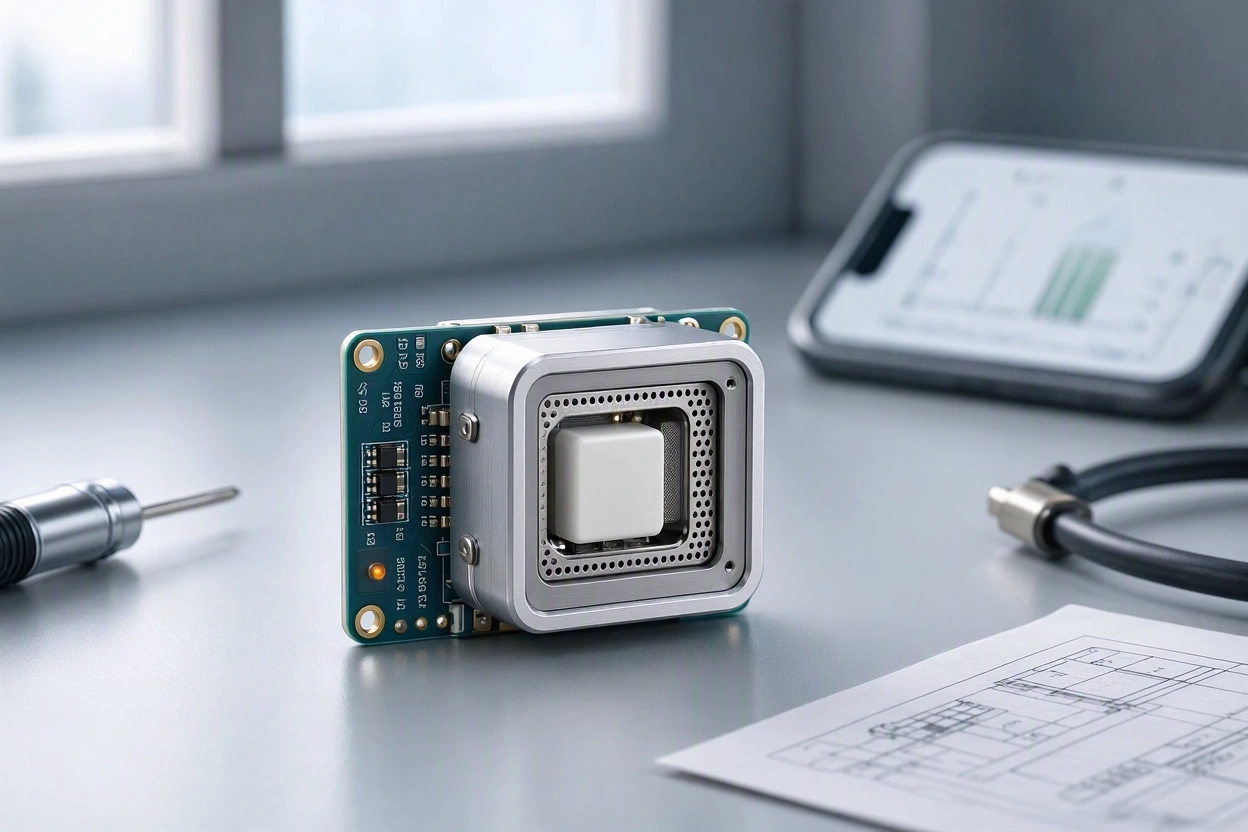
According to Marketsandmarkets, the global humidity sensor market size is projected to grow from USD 3.64 billion in 2026 to USD 5.32 billion by 2032, growing at a CAGR of 6.5% from 2026 to 2032.
Download PDF Brochure @ https://www.marketsandmarkets.com/pdfdownloadNew.asp?id=222120714
Capacitive sensing has emerged as an important approach to improving Humidity Sensor Performance in Smart Electronics because it enables moisture detection through changes in electrical capacitance. Unlike conventional approaches that rely on more complex measurement arrangements, capacitive sensors can support compact designs suitable for modern electronic circuits. Innovations in sensing materials, electrode structures, signal processing, and calibration are further improving measurement consistency. These developments are expanding the role of humidity sensors across consumer electronics, healthcare equipment, automotive systems, and industrial applications.
The growing adoption of connected devices is also increasing the importance of reliable humidity data. Smart electronics frequently operate in environments where temperature, airflow, condensation, and moisture exposure can influence component performance. Accurate humidity readings help embedded controllers make informed decisions, improve operating efficiency, and protect sensitive equipment. Consequently, advances in capacitive technology are becoming an important factor in the development of next generation humidity monitoring solutions.
Understanding Capacitive Humidity Sensing Technology
Capacitive humidity sensors generally consist of electrodes separated by a moisture sensitive dielectric material. This material absorbs or releases water vapor as surrounding humidity changes, affecting its dielectric properties and the capacitance measured between the electrodes. Electronic circuitry converts the resulting capacitance variation into a signal that can be processed and translated into relative humidity readings. This measurement principle supports continuous environmental monitoring in a wide range of electronic products.
The effectiveness of this approach depends on the quality of the dielectric material, electrode geometry, sensor packaging, and measurement electronics. Materials must respond predictably to moisture while maintaining stability over repeated humidity cycles. Electrode designs must provide sufficient sensitivity without increasing device size or introducing unwanted electrical interference. When these elements work together, capacitive sensing can support the accuracy, responsiveness, and integration requirements associated with advanced smart electronics.
Another advantage is compatibility with modern semiconductor manufacturing and embedded system architectures. Capacitive sensing elements can be combined with application specific integrated circuits, digital interfaces, and microcontrollers to simplify product integration. This makes it possible to develop compact modules that deliver environmental measurements alongside other sensor data. Such integration is helping manufacturers improve Humidity Sensor Performance in Smart Electronics while reducing design complexity in connected devices.
Advanced Sensing Materials Improve Measurement Accuracy
Material innovation is one of the most important factors influencing the development of modern capacitive humidity sensors. Researchers and manufacturers continue to evaluate polymer films, porous materials, ceramic structures, and composite dielectrics that respond to changes in water vapor. The selected material influences moisture absorption, electrical characteristics, response time, hysteresis, and long term stability. Optimizing these properties allows sensors to deliver more consistent readings under different environmental conditions.
Polymer based sensing materials are particularly useful because their moisture absorption characteristics can be adjusted through material composition and manufacturing processes. Carefully engineered polymer films can provide useful sensitivity across defined humidity ranges while supporting compact sensor structures. Porous materials can also increase the surface area available for interaction with water vapor, potentially improving responsiveness. However, material selection must account for contamination, aging, moisture saturation, and recovery behavior.
Emerging material combinations are creating additional opportunities for improving sensor reliability. Composite dielectrics may combine desirable electrical properties with improved mechanical strength or environmental resistance. Surface treatments can also help manage moisture interaction and reduce unwanted effects caused by contaminants. These developments are valuable for applications in which stable readings are essential, including medical equipment, precision instruments, and industrial monitoring systems.
Miniaturization Supports Compact Smart Electronics
The continued miniaturization of electronic products is increasing demand for humidity sensors that occupy less board space without compromising measurement quality. Wearable devices, wireless earbuds, smart home accessories, and portable medical equipment have limited space for environmental sensing components. Capacitive sensing technology can support compact sensor structures and integration with digital electronics, making it suitable for space constrained designs.
Manufacturers are addressing miniaturization through optimized electrode patterns, advanced fabrication techniques, and integrated signal conditioning circuits. Smaller sensing elements can be incorporated into circuit boards or compact sensor modules, depending on the application's requirements. Nevertheless, reducing sensor dimensions requires careful engineering because packaging, airflow, thermal effects, and nearby electronic components may influence the measured signal. A compact design must therefore preserve both environmental exposure and electrical stability.
Miniaturization also supports the development of multifunctional sensing platforms. A single electronic module may combine humidity measurement with temperature sensing and other environmental monitoring capabilities. This allows devices to collect richer contextual information while limiting additional hardware requirements. Such integration strengthens Humidity Sensor Performance in Smart Electronics by helping product designers balance functionality, physical size, and energy efficiency.
Low Power Operation Extends Battery Life
Energy efficiency is a central design consideration for battery powered electronics. Smart wearables, wireless environmental monitors, remote sensors, and portable health devices often need to operate for extended periods without frequent charging or battery replacement. Humidity sensing solutions must therefore deliver dependable measurements while minimizing energy consumption across sensing, processing, and communication functions.
Capacitive sensors can be designed to operate with low power measurement circuits and intermittent sampling strategies. Rather than continuously collecting measurements at the highest possible frequency, a device can sample humidity according to environmental changes and application requirements. Integrated electronics may also use sleep modes between measurements, reducing unnecessary power consumption. The appropriate configuration depends on the required response time and the consequences of missing rapid humidity changes.
Low power operation is particularly beneficial in connected sensor networks, where many devices may transmit environmental information over long periods. Reduced energy requirements can support longer battery life and lower maintenance costs. However, power savings must be balanced against noise, resolution, and measurement frequency. Effective system design ensures that Humidity Sensor Performance in Smart Electronics remains reliable without placing unnecessary demands on limited energy resources.
Faster Response Improves Real Time Monitoring
Response time determines how quickly a sensor detects changes in surrounding humidity. In applications involving rapid environmental fluctuations, delayed measurements can reduce the usefulness of monitoring systems. Capacitive sensing innovations aim to improve moisture interaction, optimize the physical structure of the sensing element, and accelerate the processing of electrical signals.
The thickness and porosity of the dielectric material can influence how quickly water vapor enters or leaves the sensing layer. Packaging design also matters because restricted airflow may delay the sensor's exposure to changing environmental conditions. In addition, efficient signal conditioning and digital processing can reduce the time required to produce a usable measurement. Engineers must evaluate the complete sensor assembly rather than considering the sensing material alone.
Faster response is valuable in applications such as ventilation control, electronic equipment protection, and environmental monitoring. For example, a smart ventilation system can use humidity measurements to identify changing indoor conditions and adjust airflow accordingly. Electronic enclosures can also use humidity information to support moisture management strategies. In these scenarios, responsive sensing improves the usefulness of automated decisions, provided that measurements remain accurate and appropriately filtered.
Temperature Compensation Enhances Sensor Reliability
Humidity measurements are influenced by temperature because air's moisture holding capacity and the electrical properties of sensing materials vary with thermal conditions. A sensor that does not account for these effects may produce readings that become less reliable as the environment changes. Temperature compensation is therefore an important component of advanced humidity measurement systems.
Modern sensor modules may integrate temperature sensing elements alongside capacitive humidity sensing structures. Embedded algorithms use the temperature measurement and calibrated sensor characteristics to improve the interpretation of humidity data. Depending on the design, compensation can address predictable temperature related variations, correct known nonlinearities, and improve consistency across the operating range. Accurate compensation requires reliable calibration data and appropriate modeling of the sensor's behavior.
Temperature compensation is especially useful in automotive electronics, smart appliances, industrial controllers, and portable devices exposed to changing environmental conditions. However, compensation cannot eliminate every source of measurement error. Poor sensor placement, condensation, contamination, and rapid thermal gradients can still affect readings. Manufacturers must combine suitable materials, thoughtful packaging, calibration, and validation testing to deliver dependable Humidity Sensor Performance in Smart Electronics.
Signal Processing and Digital Integration Advance Performance
Advances in signal processing are helping capacitive humidity sensors deliver more usable environmental data. Small changes in capacitance can be affected by electrical noise, circuit parasitics, electromagnetic interference, and variations in the surrounding hardware. Improved measurement circuits can help distinguish the sensor's response from these unwanted influences, supporting more stable readings.
Digital signal processing enables techniques such as filtering, averaging, linearization, and compensation for known measurement characteristics. Integrated circuits can also convert sensor signals into digital outputs that communicate with microcontrollers through commonly supported interfaces. This simplifies the development of connected devices and reduces the need for separate external measurement components. The resulting architecture can make sensor integration more efficient for manufacturers producing electronics at different scales.
Calibration and firmware design remain essential to achieving reliable performance. Filtering that is too aggressive may smooth out short term changes, while insufficient filtering may allow electrical noise to affect reported humidity values. Designers must select processing parameters that match the intended application. Combining optimized sensing hardware with well designed firmware helps improve measurement stability without sacrificing the responsiveness required by smart electronics.
Key Applications of Capacitive Humidity Sensors
Capacitive humidity sensing is relevant to several electronic product categories because moisture conditions can influence comfort, safety, product quality, and equipment reliability. As connected systems become more capable, humidity data is increasingly used alongside temperature and other environmental measurements to support automated monitoring and control.
Important application areas include:
- Smart homes and buildings: Humidity sensors help connected thermostats, ventilation systems, and air quality monitors track indoor environmental conditions and support automated airflow control.
- Wearable and portable electronics: Compact sensing components can help selected devices monitor environmental moisture and support context aware functions where humidity information is relevant.
- Automotive electronics: Cabin climate control and selected electronic monitoring systems use humidity data to support comfort, visibility management, and environmental awareness.
- Industrial automation: Humidity monitoring helps track conditions in manufacturing areas, equipment enclosures, storage facilities, and environments sensitive to moisture.
- Healthcare and laboratory equipment: Environmental monitoring systems use humidity readings to help maintain suitable conditions for equipment operation, sample storage, and controlled environments.
The performance requirements vary considerably across these applications. A consumer device may prioritize low cost and minimal power consumption, while an industrial installation may require long term stability and resistance to contamination. Medical and laboratory environments may require documented calibration procedures and application specific validation. Understanding these differences allows manufacturers to select appropriate sensing technologies and optimize product designs.
Key Factors Driving Industry Adoption
The adoption of advanced humidity sensing solutions is supported by the expansion of the Internet of Things, growing demand for connected devices, and increased attention to environmental monitoring. Smart buildings increasingly use sensor data to support ventilation strategies and building automation. Industrial operators use connected monitoring systems to observe environmental conditions and identify potential risks to sensitive equipment or stored materials.
Another important factor is the growing expectation that electronic products should operate reliably under diverse environmental conditions. Manufacturers must consider moisture exposure during product design, particularly where condensation or persistent high humidity could affect sensitive components. Better sensing capabilities can support early detection of changing conditions and enable suitable control responses. These benefits are encouraging investment in integrated environmental sensing technologies.
The main development priorities for manufacturers include:
- Improving measurement accuracy and long term stability across a wide range of humidity and temperature conditions.
- Reducing sensor dimensions and power requirements for battery powered and space constrained devices.
- Enhancing resistance to contamination, condensation, and material aging through improved packaging and calibration.
- Simplifying integration through digital interfaces, combined sensor modules, and embedded signal processing.
Together, these priorities are shaping the development of Humidity Sensor Performance in Smart Electronics and encouraging sensor manufacturers to focus on both sensing element innovation and complete system performance.
Challenges and Future Development Opportunities
Despite continued innovation, capacitive humidity sensors face several engineering challenges. Contamination from dust, oils, chemicals, and other airborne substances may change the behavior of sensing materials. Prolonged exposure to demanding conditions can also affect calibration stability, while condensation may temporarily interfere with measurements or damage components that are not designed for such exposure. These risks must be evaluated according to the intended operating environment.
Manufacturing consistency is another important consideration. Differences in dielectric composition, electrode geometry, packaging, and assembly can introduce variations between individual sensors. Calibration procedures and quality control testing help reduce these differences, but they can increase production complexity. Manufacturers must balance accuracy requirements with cost, production volume, and the expected service life of the final device.
Future development is likely to focus on more stable sensing materials, improved contamination resistance, integrated diagnostic functions, and smarter calibration techniques. Sensor modules may increasingly combine humidity, temperature, and other environmental data to support predictive monitoring and automated control. Advances in embedded processing could also help identify abnormal readings and distinguish genuine environmental changes from sensor faults. These developments offer opportunities to improve reliability and broaden the use of capacitive sensing across connected electronics.
The Future of Humidity Sensing in Smart Devices
Capacitive sensing innovations are improving the way electronic devices measure and respond to environmental moisture. Developments in dielectric materials, electrode design, miniaturization, low power circuitry, temperature compensation, and digital processing are helping manufacturers address increasingly demanding sensing requirements. These improvements are important as connected devices become smaller, more energy efficient, and more dependent on reliable environmental information.
The future of Humidity Sensor Performance in Smart Electronics will depend on combining sensitive measurement structures with robust packaging, effective calibration, and application specific system design. No single innovation can address every requirement because operating conditions differ across consumer, industrial, automotive, and healthcare applications. Manufacturers that evaluate the complete sensing system will be better positioned to deliver dependable and efficient electronic products.
As the adoption of connected monitoring and intelligent automation continues, capacitive humidity sensing is expected to remain an important technology for environmental measurement. Continued progress in materials engineering and integrated electronics can support more compact, responsive, and reliable sensor solutions. These capabilities will help smart electronics monitor their surroundings more effectively and make better informed decisions across an expanding range of applications.
Frequently Asked Questions (FAQs)
1. What is a capacitive humidity sensor?
A capacitive humidity sensor measures moisture in the surrounding air by detecting changes in the capacitance of a moisture sensitive dielectric material. As water vapor interacts with the material, its electrical properties change, allowing the sensor circuitry to estimate relative humidity.
2. How does capacitive sensing improve humidity sensor performance in smart electronics?
Capacitive sensing supports compact designs, continuous measurement, and integration with low power electronic circuits. Advances in materials, signal processing, and temperature compensation can further improve accuracy, stability, and response time when the sensor is properly designed and calibrated.
3. What are the main benefits of capacitive humidity sensors?
Key benefits include compact construction, compatibility with digital electronics, low power design potential, and the ability to provide continuous humidity measurements. Actual performance depends on sensor materials, circuit design, calibration, and operating conditions.
4. Which industries use capacitive humidity sensors?
These sensors are used in consumer electronics, smart buildings, automotive systems, industrial automation, healthcare equipment, laboratories, and environmental monitoring devices. Each industry has specific requirements for accuracy, response time, operating range, and durability.
5. How do sensing materials affect humidity measurement accuracy?
Sensing materials determine how the sensor responds to moisture and how consistently it performs over time. Their absorption characteristics, dielectric properties, hysteresis, contamination resistance, and aging behavior influence the accuracy and stability of humidity readings.
6. Why is low power consumption important for humidity sensors?
Low power consumption helps battery powered devices operate longer between charges or battery replacements. It is particularly important for wearables, wireless sensor networks, portable electronics, and remote environmental monitoring systems.
7. What role does temperature compensation play in humidity sensing?
Temperature compensation helps correct predictable changes in sensor behavior caused by variations in temperature. Integrated temperature sensors and calibration algorithms can improve measurement consistency across different operating conditions, although they cannot eliminate every environmental error.
8. How are humidity sensors integrated into smart devices?
Humidity sensors can be integrated into electronic modules that include sensing elements, signal conditioning circuits, and digital communication interfaces. These modules connect to microcontrollers or embedded processors, which interpret humidity readings and use them in monitoring or control applications.
9. What challenges affect capacitive humidity sensor reliability?
Common challenges include contamination, condensation, sensor aging, calibration drift, temperature variations, and electrical interference. Appropriate material selection, protective packaging, calibration, and environmental testing help address these issues.
10. What are the future trends in capacitive humidity sensing?
Emerging trends include advanced dielectric materials, smaller sensor packages, lower power measurement circuits, improved digital calibration, integrated environmental sensing, and intelligent diagnostics. These developments aim to improve reliability and enable more efficient environmental monitoring in next generation smart electronics.
80% of the Forbes Global 2000 B2B companies rely on MarketsandMarkets to identify growth opportunities in emerging technologies and use cases that will have a positive revenue impact.
- Food Packaging Market Size Set for Strong Growth Through 2030 Amid Rising Demand for Convenience Foods
- Crop Protection Chemical Market Size, Share & Growth Forecast (2025–2030)
- Mulch Films Market: Driving Sustainable Agriculture Through Innovation
- Agricultural Adjuvants Market Analysis, Trends, and Growth Outlook (2026–2031)
- Japan Enterprise Asset Management Market Growth: AI and Smart Infrastructure Drive Demand

