

Chemical Compatibility and Safety Standards Reshape Industrial Rubber Hose Selection
Chemical Compatibility and Safety Standards Reshape Industrial Rubber Hose Selection
Industrial rubber hoses are used across chemical processing, manufacturing, water treatment, petroleum-related applications, and numerous fluid-transfer operations. Their flexibility and availability in different constructions make them suitable for many demanding industrial environments.
However, not every rubber hose is compatible with every fluid or operating condition. Selecting the wrong hose can result in swelling, softening, cracking, leakage, contamination, or premature failure. These problems can disrupt operations and expose workers and the environment to avoidable risks.
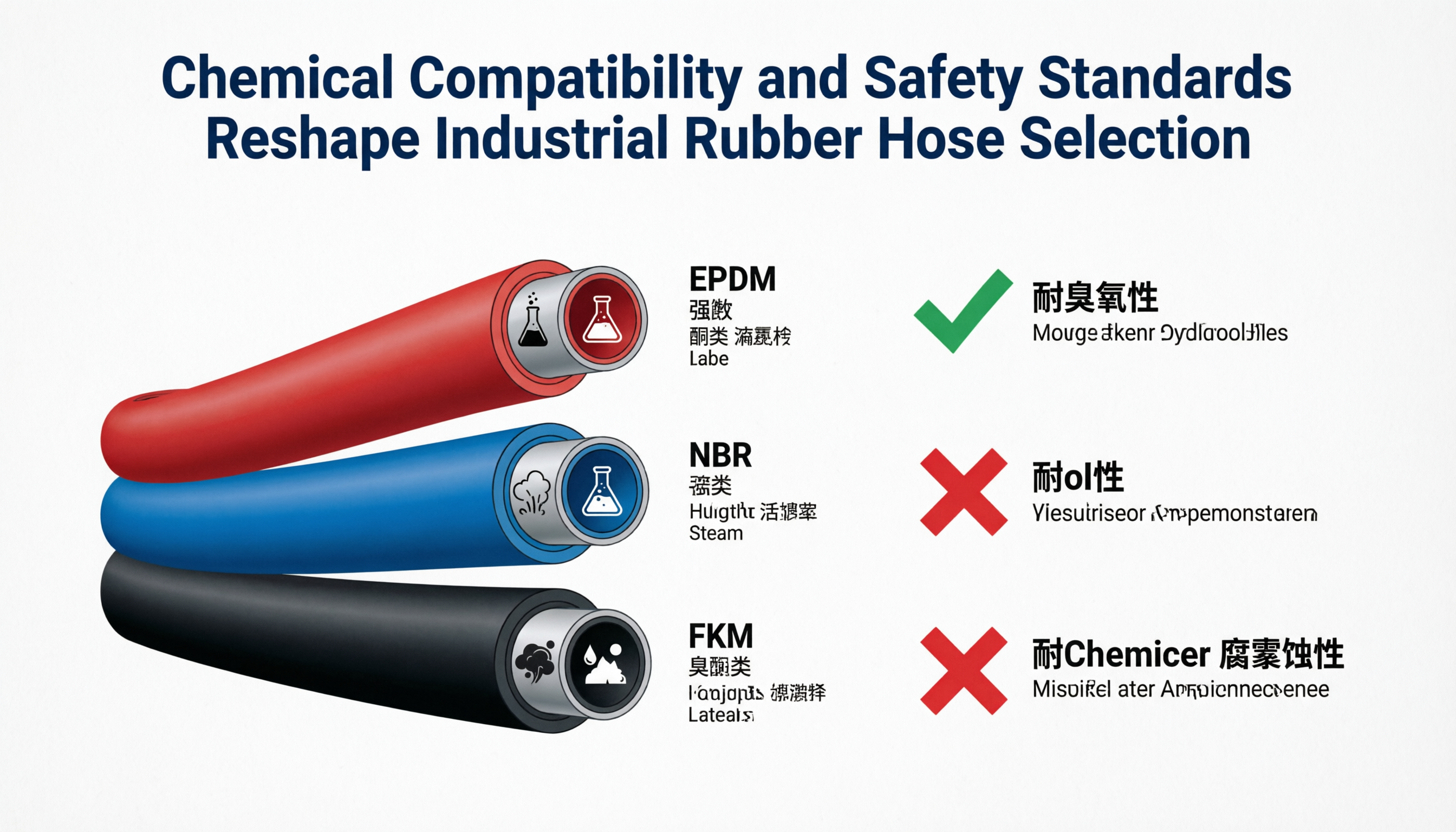
As industrial facilities strengthen maintenance procedures and product qualification processes, chemical compatibility and application-specific specifications are becoming increasingly important purchasing considerations.
Get More Details Download PDF Brochure@
https://www.marketsandmarkets.com/pdfdownloadNew.asp?id=8695843
For industrial hose manufacturers and suppliers, this creates opportunities to differentiate products through reliable technical information, suitable material selection, traceability, and customer support.
Understanding Industrial Rubber Hose Construction
An industrial rubber hose generally consists of an inner tube, reinforcement layers where required, and an outer cover. Each component serves a different purpose.
The inner tube contacts the conveyed material and must be compatible with the fluid and operating conditions. Reinforcement provides structural strength to meet specified pressure or vacuum requirements. The outer cover protects the assembly against environmental exposure, abrasion, and other external conditions, depending on the product design.
Different rubber compounds have different performance characteristics. Nitrile rubber, EPDM, chloroprene, and other elastomers may be used in hose products designed for particular applications.
The suitability of a compound depends on more than the general chemical name of the fluid. Concentration, temperature, exposure duration, pressure, and other operating conditions may influence compatibility.
Consequently, buyers should rely on application-specific manufacturer data rather than assuming that all rubber hoses have interchangeable performance.
Why Chemical Compatibility Matters
Chemical compatibility is a central factor in industrial hose selection because the inner tube remains in direct contact with the conveyed material.
An incompatible fluid can affect the hose material, potentially leading to changes in dimensions, flexibility, strength, or sealing performance. The consequences may include leaks, contamination, equipment damage, and unexpected replacement requirements.
Industrial facilities should evaluate several factors before specifying a rubber hose.
Fluid composition: The exact chemical or mixture must be identified, including concentration where relevant.
Operating temperature: Chemical resistance can change with temperature, making it important to assess the actual service range.
Pressure and vacuum conditions: The hose must meet the system's specified pressure or vacuum requirements.
Exposure duration: Continuous service may create different demands from intermittent transfer or occasional cleaning.
External environment: Sunlight, ozone, abrasion, oils, weather, and nearby chemicals may affect the outer cover.
Cleaning requirements: Cleaning agents and sterilization procedures may impose additional material compatibility requirements.
Where compatibility is uncertain, the manufacturer should provide application-specific guidance before the hose is placed into service.
Applications Across Chemical and Process Industries
1. Chemical manufacturing
Chemical plants transfer raw materials, intermediate products, and finished chemicals through pipes, pumps, and flexible connections. Industrial rubber hose may be appropriate for certain applications, provided the construction is specifically designed for the conveyed substance and operating conditions.
Buyers should also consider static control, electrical conductivity, grounding, and other safety requirements where relevant to the process.
2. Water and wastewater treatment
Treatment facilities use hoses for water transfer, cleaning, chemical dosing, and maintenance operations. Different duties require different specifications, especially where treatment chemicals are involved.
A hose suitable for ordinary water service may not be appropriate for concentrated chemicals used in treatment processes.
3. Manufacturing and industrial cleaning
Manufacturing plants use industrial hoses for fluid transfer, equipment cleaning, and maintenance. Hoses may encounter detergents, oils, elevated temperatures, or abrasive materials.
Product selection should account for both normal operating conditions and foreseeable cleaning procedures.
4. Oil, fuel, and industrial fluid handling
Certain industrial rubber hose products are designed for oil or fuel transfer, but their suitability depends on the specific fluid, construction, temperature, and pressure requirements.
Using a general-purpose rubber hose in an application requiring a specialized product can create significant operational and safety risks.
Standards, Documentation, and Product Qualification
Industrial buyers often require documented evidence that a hose meets relevant technical and regulatory requirements.
Depending on the application, requirements may involve pressure performance, material compatibility, electrical properties, food-contact suitability, fire performance, or other specialized characteristics. Applicable standards vary by product type, industry, geography, and intended use.
Suppliers should identify the correct standard for the actual application instead of making broad claims that a product is universally compliant.
Useful documentation may include technical datasheets, working-pressure ratings, temperature limits, compatibility guidance, product identification, batch information, and instructions for installation and maintenance.
Traceability is particularly valuable in facilities where products must be inspected, qualified, or replaced according to documented procedures.
Rubber Hose Compared With Other Industrial Hose Materials
Rubber is one of several materials used in industrial hose manufacturing. Buyers may also consider polyurethane hose, thermoplastic hose, and other specialized constructions.
Rubber hose can offer useful flexibility and durability for many industrial duties, depending on the compound and reinforcement. Polyurethane hose is often considered where abrasion resistance and flexibility are important, while specialized thermoplastic hoses may suit applications requiring particular combinations of weight, pressure performance, or chemical compatibility.
There is no universally superior material. The correct choice depends on the conveyed material, operating conditions, required service life, and manufacturer's specifications.
A lower purchase price may not represent the lowest total cost if the product requires frequent replacement or is unsuitable for the application.
How Suppliers Can Build Competitive Advantage
Industrial hose suppliers can differentiate themselves through application expertise and dependable documentation.
Provide clear compatibility guidance
Customers should be able to identify the intended applications and limitations of each product. Where necessary, suppliers should refer buyers to the manufacturer for confirmation of chemical compatibility.
Offer application-specific product ranges
Organizing products by fluid category, operating temperature, pressure requirements, and industrial application can make purchasing easier.
Improve traceability
Consistent product identification and batch records can help customers manage quality documentation and replacement requirements.
Support technical enquiries
Suppliers that respond promptly to questions about specifications, connections, and operating conditions can strengthen relationships with maintenance and procurement teams.
Build industry partnerships
Working with engineering contractors, process equipment manufacturers, distributors, and maintenance providers can create opportunities for long-term supply relationships.
Common Selection Mistakes to Avoid
Several mistakes can undermine industrial rubber hose performance.
One is choosing a product solely because it has the correct diameter. Dimensions alone do not establish chemical compatibility or pressure suitability.
Another is overlooking temperature. A hose that is suitable for a fluid at one temperature may not be appropriate at a higher temperature.
Buyers should also avoid assuming that a hose's working pressure is equivalent to its burst pressure. The specified working pressure and any relevant safety requirements must be followed.
Finally, incorrect fittings, unsuitable installation, excessive bending, and inadequate inspection can compromise the complete hose assembly.
Hoses should be inspected and replaced according to manufacturer guidance and site procedures. A visibly damaged hose should not be kept in service merely to avoid replacement costs.
Conclusion
Chemical compatibility and safety requirements are essential considerations in industrial rubber hose selection. The correct product must suit the conveyed fluid, pressure, temperature, installation conditions, and applicable industry requirements.
Industrial hose manufacturers and distributors can create value by providing accurate technical information, suitable product options, traceable documentation, and application-specific support.
For industrial buyers, a disciplined selection process helps reduce the risk of premature failure, fluid leakage, contamination, and unplanned maintenance. For suppliers, technical credibility and dependable service can support stronger customer relationships and sustainable business growth.
Frequently Asked Questions
1. What is industrial rubber hose used for?
It is used for transferring compatible fluids, air, water, oils, and other materials across manufacturing and industrial processes.
2. Why is chemical compatibility important?
An incompatible fluid can degrade hose materials, cause leakage, contaminate products, and create safety risks.
3. Is rubber hose suitable for every chemical?
No. Compatibility depends on the rubber compound, fluid composition, concentration, temperature, exposure, and operating conditions.
4. How should buyers select a rubber hose?
They should verify the fluid, pressure, temperature, dimensions, fittings, applicable standards, and manufacturer's compatibility guidance.
80% of the Forbes Global 2000 B2B companies rely on MarketsandMarkets to identify growth opportunities in emerging technologies and use cases that will have a positive revenue impact.
- Food Packaging Market Size Set for Strong Growth Through 2030 Amid Rising Demand for Convenience Foods
- Crop Protection Chemical Market Size, Share & Growth Forecast (2025–2030)
- Mulch Films Market: Driving Sustainable Agriculture Through Innovation
- Agricultural Adjuvants Market Analysis, Trends, and Growth Outlook (2026–2031)
- Japan Enterprise Asset Management Market Growth: AI and Smart Infrastructure Drive Demand

