

Drone Defense System Market Emerging Technologies, Innovation Trends, and Digital Transformation
The drone defense system market is becoming an important part of modern airspace security as unmanned aerial vehicles become more accessible, autonomous, and capable. Drones are increasingly used across defense, infrastructure monitoring, logistics, public safety, and commercial operations, creating new requirements for controlled and protected airspace. Security organizations are therefore focusing on technologies that can detect, identify, track, and respond to unauthorized aerial activity. Modern counter drone architectures increasingly combine several sensing and response technologies instead of depending on a single solution. Recent technical research identifies radar, radio frequency, electro optical, infrared, acoustic sensing, and multimodal sensor fusion as important elements of contemporary counter unmanned aerial system architectures.
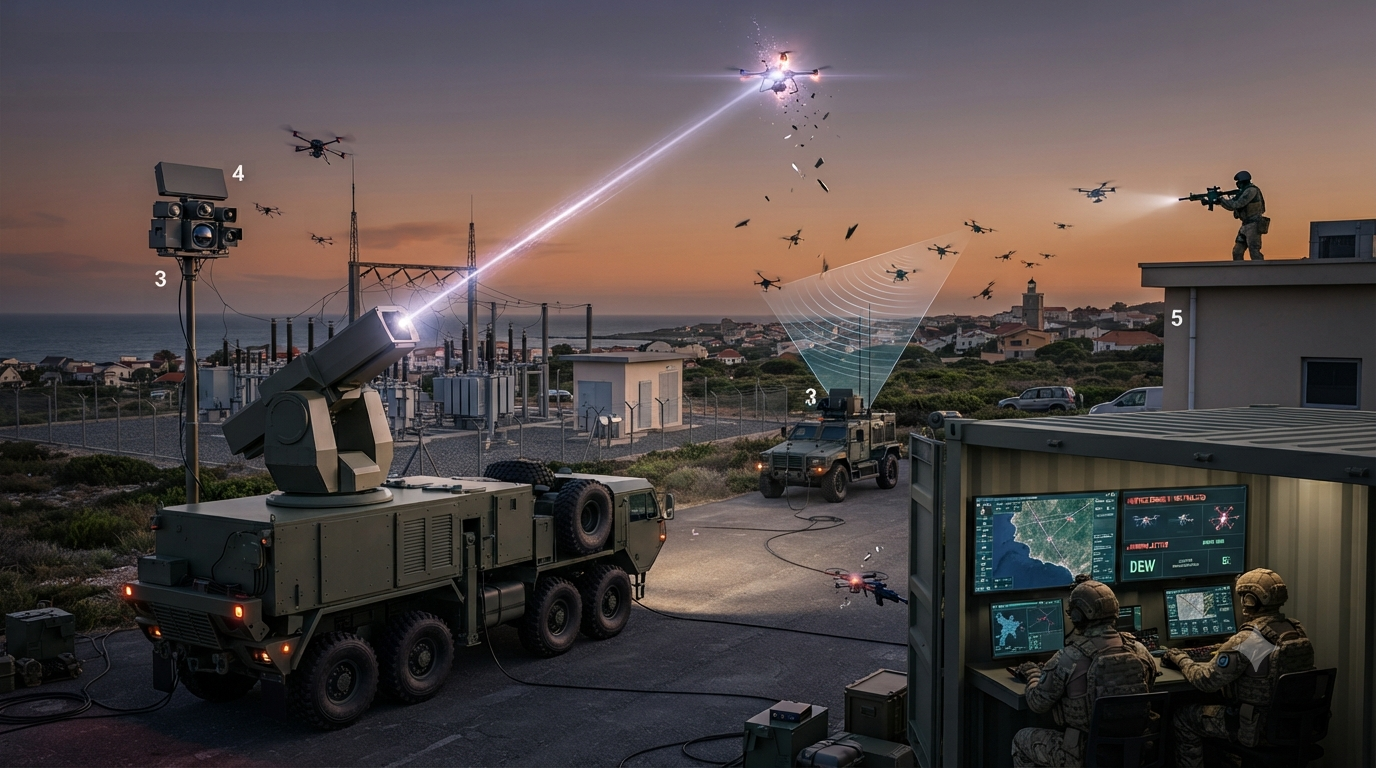
The drone defense system market is also evolving because drone threats are becoming more diverse. Small commercial drones, autonomous platforms, coordinated groups, and systems operating with alternative communication methods can create different detection and response challenges. A defense architecture designed for one type of drone may not perform equally well against another type operating under different conditions. This has encouraged greater emphasis on layered protection, real time analytics, command and control integration, and flexible response mechanisms. The objective is increasingly to establish continuous airspace awareness while providing operators with appropriate response options based on the nature and location of the threat.
According to Marketsandmarkets, the global anti-drone market size will reach USD 14.51 billion by 2030 from USD 4.48 billion in 2025, registering a CAGR of 26.5% from 2025 to 2030.
Download PDF Brochure @ https://www.marketsandmarkets.com/pdfdownloadNew.asp?id=177013645
Growing Need for Low Altitude Airspace Security
The expansion of low altitude drone activity is creating new security requirements for military facilities, airports, public venues, energy installations, transportation infrastructure, and other sensitive locations. Unauthorized drones can create safety, privacy, operational, and security concerns even when their intentions are difficult to determine. Detection technology alone cannot establish whether an aircraft represents a genuine threat, making identification and contextual assessment important parts of the overall security process. The Federal Aviation Administration notes that detection technologies can provide alerts but cannot independently determine the intent or threat level of an unmanned aircraft.
The drone defense system market is consequently moving toward integrated systems that combine detection with tracking, identification, assessment, and response coordination. This approach allows security teams to create a more complete picture of activity within protected airspace. Instead of treating every detected drone as an identical target, advanced systems can evaluate movement patterns, location, altitude, speed, signal characteristics, and other available information. Such capabilities can help operators distinguish authorized activity from potentially unauthorized activity. This development is particularly relevant in environments where numerous legitimate drones may operate alongside restricted airspace.
Evolution of Drone Detection Technologies
Detection represents one of the fundamental layers of the drone defense system market because an effective response depends on discovering a drone early enough to assess and manage it. Radar remains important because it can provide information about the position and movement of aerial objects, while radio frequency sensors can identify relevant communications and signal characteristics. Electro optical and infrared technologies can provide visual or thermal information that supports identification. Acoustic systems can add another layer of information, particularly in situations where visual or radio frequency detection is challenging. Research published in 2026 highlights the growing role of combining these sensing methods rather than relying exclusively on one detection technology.
Modern detection architectures increasingly emphasize sensor fusion because individual sensors have inherent limitations. Radar performance can be affected by clutter and the physical characteristics of small targets, while optical systems can be influenced by weather, lighting, and line of sight. Radio frequency detection can become less useful when drones operate with limited or different emissions, while acoustic detection can be affected by environmental noise. Combining information from several sensors can provide a more complete operational picture. The resulting architecture can support faster classification and more reliable tracking across changing environmental conditions.
Role of Artificial Intelligence in Drone Defense
Artificial intelligence is becoming an important technology within the drone defense system market because security systems must process large volumes of sensor information quickly. AI based analytics can assist with object classification, track correlation, anomaly detection, and prioritization of potential threats. Machine learning models can analyze patterns across radar, radio frequency, optical, infrared, and acoustic inputs to help distinguish drones from birds, aircraft, environmental objects, or other sources of interference. This capability can reduce the amount of information that operators need to manually evaluate.
AI can also support continuous monitoring of protected airspace by identifying unusual movement patterns and generating alerts based on predefined operational requirements. In environments where multiple drones appear simultaneously, automated analytics can help associate individual detections with corresponding tracks. This becomes increasingly important as coordinated drone activity becomes more sophisticated. However, AI should generally operate as part of a broader command and control architecture because sensor uncertainty, environmental conditions, and false detections can affect automated decisions. Human oversight remains important where response actions have significant operational or safety consequences.
Importance of Sensor Fusion
Sensor fusion is emerging as a central development area in the drone defense system market because modern aerial threats can exploit the limitations of individual sensors. A radar system may detect an object without providing sufficient identification information, while an optical sensor may provide strong visual confirmation only when the target is within its field of view. Radio frequency information can contribute additional context about communication activity, while acoustic signals can provide another detection channel. Combining these inputs allows the system to build a more comprehensive understanding of the aerial environment.
A sensor fusion architecture can also improve tracking continuity when one sensor temporarily loses visibility. For example, an optical sensor may experience reduced performance during darkness or poor weather, while radar can continue supplying tracking information. Similarly, RF information can provide additional clues when visual identification is difficult. The integration of these technologies requires sophisticated software, data processing, communication networks, and command interfaces. As a result, software driven integration is becoming increasingly important alongside the physical sensing equipment.
Development of Layered Counter Drone Architecture
The drone defense system market is shifting toward layered architectures that combine multiple detection and response capabilities. A layered approach recognizes that no individual countermeasure can address every type of drone threat under every operating condition. Detection sensors establish awareness, command systems coordinate information, and mitigation technologies provide response options. The European Commission has also described a multi layered and multi effector approach involving technologies such as jammers, lasers, high power microwave systems, drone capture technologies, cyber measures, and kinetic solutions.
Important elements within a layered drone defense architecture include:
- Detection and tracking systems for identifying aerial activity and maintaining target tracks
- Command and control platforms for integrating sensor information and coordinating responses
- Electronic countermeasures for disrupting certain communication or navigation functions
- Physical interception technologies for situations where non kinetic measures are unsuitable
- Directed energy technologies for emerging high precision response requirements
- Human operator interfaces for threat assessment, authorization, and operational decision making
The appropriate combination depends on the operating environment, regulatory framework, threat characteristics, infrastructure requirements, and acceptable risk level. A military installation may require capabilities that differ significantly from those required at an airport or large public event. This variation is encouraging modular architectures that can integrate different sensors and effectors according to mission requirements.
Electronic Countermeasures and Response Technologies
Electronic countermeasures remain an important area of the drone defense system market because some unmanned aircraft depend on communication, navigation, or control links that can potentially be disrupted. Jamming can interfere with relevant radio signals, while other electronic techniques can target navigation or communication mechanisms. These approaches can provide a response without physically destroying an aircraft, which may be useful in certain controlled environments. However, effectiveness can vary depending on the drone architecture, operating frequency, autonomy, environmental conditions, and countermeasure configuration.
Research on counter unmanned aerial systems identifies several response categories, including electronic interference, navigation manipulation, physical capture, interception, and energy based approaches. It also highlights challenges involving adaptability, coordination, integration, response speed, and lifecycle requirements. This diversity is pushing the drone defense system market toward flexible architectures rather than single purpose equipment. Future systems are likely to combine several response options so that operators can select an appropriate method according to the specific situation.
Directed Energy Technologies Gain Attention
Directed energy is receiving greater attention within the drone defense system market as security organizations investigate response technologies capable of engaging aerial targets without relying exclusively on conventional ammunition. High energy laser systems can potentially provide precise engagement against suitable targets when sufficient power, tracking accuracy, and environmental conditions are available. High power microwave technologies represent another area of development, particularly for scenarios involving electronic disruption. These technologies remain technically demanding and require careful integration with tracking and command systems.
The effectiveness of directed energy depends on several factors, including atmospheric conditions, target characteristics, power availability, beam control, detection accuracy, and engagement distance. As a result, directed energy is generally considered part of a broader layered defense architecture rather than a universal replacement for other counter drone technologies. Continued development in sensing, power electronics, thermal management, beam control, and automated tracking can influence the practical deployment of these systems.
Drone Defense and Critical Infrastructure Protection
Critical infrastructure is becoming an important application area for the drone defense system market because facilities such as energy plants, ports, transportation hubs, communication sites, and industrial installations can require controlled airspace. Unauthorized drones can create operational disruptions or introduce safety and security concerns around sensitive facilities. Security teams therefore need continuous visibility over relevant airspace while minimizing unnecessary interference with legitimate aircraft and authorized drone operations.
The protection strategy for critical infrastructure typically depends on facility geography, surrounding population density, airspace regulations, environmental conditions, and the potential consequences of an unauthorized intrusion. Fixed installations can use permanent sensor networks, while mobile systems may be useful for temporary sites or changing security requirements. Integration with existing surveillance infrastructure can also improve situational awareness. These requirements are encouraging modular solutions that can be expanded as operational needs change.
Airport and Public Safety Applications
Airports represent another significant application environment because unauthorized drones can create aviation safety concerns. Detection systems at airports can use combinations of radar, RF, electro optical, and acoustic sensors, while mitigation capabilities may be integrated or deployed separately. Regulatory restrictions are particularly important in civilian aviation environments because countermeasure technologies can potentially affect communications, navigation, or other legitimate systems. The FAA states that C UAS mitigation technologies include capabilities to disrupt, disable, destroy, take control of, or provide alternate instructions to an unmanned aircraft, while their use is subject to statutory authority.
The drone defense system market therefore has to address both technological and regulatory requirements in airport environments. Detection and identification may often be separated from active mitigation, allowing security personnel to evaluate an incident before further action. This approach supports safer integration with existing aviation operations. As drone activity increases around transportation infrastructure, demand for reliable detection, classification, tracking, and coordinated response is likely to remain an important area of technology development.
Military Applications and Battlefield Requirements
Military applications continue to influence the evolution of the drone defense system market because modern defense environments can involve reconnaissance drones, small attack platforms, autonomous systems, and coordinated aerial activity. Military users require systems that can operate under difficult environmental conditions while responding to rapidly changing threats. Mobility, electronic resilience, automation, interoperability, and rapid deployment are therefore important considerations for defense oriented systems.
Recent military developments have also increased attention toward countering groups of drones rather than individual aircraft. A system designed to track one target may face significant challenges when numerous targets appear simultaneously. Automated tracking, sensor fusion, distributed command systems, and scalable effectors can help address this challenge. The increasing diversity of drone designs also means that defense systems must remain adaptable rather than being optimized around a single threat profile.
Drone Swarm Defense and Autonomous Threats
Drone swarms are creating a new technology requirement within the drone defense system market because multiple coordinated aircraft can place significant demands on detection and response systems. Swarm defense requires systems to identify individual tracks, understand relationships between targets, prioritize threats, and coordinate responses. Automation becomes increasingly important because manually processing every target can create delays when the number of objects increases rapidly.
Autonomous drones can also introduce additional challenges because they may not depend continuously on conventional communication links. A defense system based entirely on RF disruption may therefore have limitations against certain autonomous architectures. This is encouraging broader use of multimodal detection, advanced tracking, optical identification, and physical or directed energy response technologies. The overall trend is toward defense architectures that remain functional even when individual countermeasures are ineffective against particular drone configurations.
Software and Command and Control Integration
Software is becoming a central component of the drone defense system market because modern systems depend on the ability to integrate data from multiple sensors and coordinate response technologies. Command and control platforms can consolidate information into a common operational picture and provide operators with real time alerts. Effective software can also support target prioritization, track management, sensor tasking, system health monitoring, and response coordination.
Interoperability is particularly important because defense environments can contain equipment from different generations and technology providers. Open and modular architectures can make it easier to integrate new sensors and countermeasures without replacing an entire system. Cybersecurity is equally important because connected defense systems can become targets for unauthorized access or disruption. Protecting data, communications, software, and command interfaces is therefore becoming an essential part of overall system design.
Regulatory and Operational Considerations
Regulation is a major factor shaping the drone defense system market, particularly in civilian environments. Technologies that interfere with radio communications, navigation, or aircraft operation may be subject to strict legal controls. Authorities must balance the protection of people and infrastructure with aviation safety, communications reliability, privacy, and lawful drone operations. Regulatory requirements can therefore influence where and how different counter drone technologies can be deployed.
Recent regulatory developments demonstrate that governments are working to establish clearer frameworks for authorized counter UAS operations. In the United States, a 2026 interim final rule established a framework for certain state, local, Tribal, and territorial law enforcement and correctional agencies to conduct authorized C UAS operations under specified conditions. Such developments demonstrate that technological progress must occur alongside governance, training, authorization, and accountability mechanisms.
Key Challenges in the Drone Defense System Market
The drone defense system market faces several technical challenges because drones continue to evolve rapidly. Small aircraft can be difficult to detect, while autonomous platforms can reduce dependence on conventional communication links. Environmental conditions can affect optical, acoustic, and RF detection, while crowded airspace can create challenges in distinguishing authorized aircraft from potential threats. Another challenge involves balancing rapid response with the need to avoid unintended consequences.
Other challenges include integration complexity, cybersecurity, interoperability, system mobility, energy consumption, maintenance, operator training, and lifecycle costs. Systems deployed in remote locations may require independent power and communication infrastructure, while urban deployments may face strict regulatory and safety requirements. These factors encourage developers to focus on modular architectures, automated analytics, scalable sensors, and adaptable response technologies.
Future Technology Trends
The future direction of the drone defense system market is likely to center on greater automation, sensor fusion, artificial intelligence, modular architectures, and layered protection. AI enabled systems can increasingly support detection and classification, while improved sensors can expand coverage across different operating conditions. Distributed architectures may allow multiple sensors and effectors to cooperate across larger protected areas. These technologies can improve situational awareness while reducing the workload placed on human operators.
Another important trend is the development of response technologies that can address drones without relying on a single mechanism. Electronic, physical, and directed energy approaches each have different operational characteristics, making integration increasingly valuable. Research and policy developments are also emphasizing system level coordination rather than isolated countermeasures. This indicates that future solutions will increasingly be designed as complete airspace security ecosystems rather than standalone devices.
Conclusion
The drone defense system market is developing in response to the rapid evolution of unmanned aerial technology and the growing need for controlled low altitude airspace. Detection, identification, tracking, sensor fusion, artificial intelligence, command and control, and layered countermeasures are becoming closely connected components of modern security architectures. The increasing diversity of drones means that no single detection or response technology can address every operational scenario. Instead, flexible systems that combine multiple technologies are becoming increasingly important.
Future development will depend on the ability to integrate sensors, software, analytics, communications, and response technologies into reliable operational frameworks. Regulatory compliance, cybersecurity, human oversight, interoperability, and system adaptability will remain important considerations alongside technical performance. As drone applications continue expanding across military, infrastructure, transportation, and public safety environments, the drone defense system market will remain closely connected to developments in autonomous systems, artificial intelligence, advanced sensing, electronic warfare, and airspace management.
FAQs
What is the drone defense system market?
The drone defense system market refers to technologies and solutions designed to detect, identify, track, monitor, and respond to unauthorized or potentially threatening unmanned aerial systems. These solutions can include radar, RF sensors, optical and infrared systems, acoustic sensors, command and control platforms, electronic countermeasures, interception systems, and directed energy technologies.
How does a drone defense system work?
A drone defense system generally begins by detecting aerial activity through one or more sensors. The system then tracks and analyzes the object to determine its characteristics and potential threat level. Command and control software can combine information from multiple sensors before presenting it to an operator. Depending on authorization and operational conditions, an appropriate mitigation technology may then be used.
Why is artificial intelligence important for drone defense?
Artificial intelligence can process large amounts of sensor information and assist with drone classification, tracking, anomaly detection, and threat prioritization. It can help reduce the workload on operators and improve the speed at which aerial activity is assessed. AI is particularly useful when multiple drones or complex environmental conditions create large quantities of sensor data.
What technologies are used to detect drones?
Common detection technologies include radar, radio frequency sensing, electro optical cameras, infrared sensors, and acoustic systems. Each technology has different strengths and limitations. Combining multiple sensor types can improve situational awareness and help compensate for the limitations of individual detection methods.
What are counter drone technologies?
Counter drone technologies are systems designed to mitigate an unauthorized or threatening drone after detection. Depending on legal authorization and operational requirements, these technologies can include electronic disruption, navigation interference, physical interception, capture mechanisms, directed energy, and other response methods. The appropriate technology depends on the threat and deployment environment.
Why is sensor fusion important in drone defense?
Sensor fusion combines information from different detection technologies to create a more complete picture of airspace activity. Radar may provide tracking information, optical systems can support visual identification, and RF sensors can provide information about communications. Combining these inputs can improve detection confidence and tracking continuity.
How are drone defense systems used at airports?
Airport drone defense systems can monitor protected airspace using technologies such as radar, RF, optical, infrared, and acoustic sensors. These systems can help security teams identify unauthorized aircraft and coordinate appropriate responses. Active mitigation is subject to legal authority and aviation safety requirements, making regulatory compliance an important part of airport deployment.
What challenges affect drone defense systems?
Major challenges include detecting very small drones, identifying autonomous aircraft, handling multiple simultaneous targets, managing false detections, operating in difficult weather, integrating different technologies, protecting systems against cyber threats, and complying with regulations. These challenges are encouraging greater use of layered architectures and intelligent software.
What is the future of the drone defense system market?
Future development is expected to focus on AI assisted detection, multimodal sensor fusion, autonomous tracking, modular command and control, scalable countermeasures, directed energy, and improved protection against coordinated drone activity. Greater integration between sensors, software, and response systems is likely to remain a central direction for the technology.
80% of the Forbes Global 2000 B2B companies rely on MarketsandMarkets to identify growth opportunities in emerging technologies and use cases that will have a positive revenue impact.
- Food Packaging Market Size Set for Strong Growth Through 2030 Amid Rising Demand for Convenience Foods
- Crop Protection Chemical Market Size, Share & Growth Forecast (2025–2030)
- Mulch Films Market: Driving Sustainable Agriculture Through Innovation
- Agricultural Adjuvants Market Analysis, Trends, and Growth Outlook (2026–2031)
- Japan Enterprise Asset Management Market Growth: AI and Smart Infrastructure Drive Demand

.jpg)
