

AI in Agriculture Market: Unlocking the Future of Precision Farming in North America
North America's agricultural sector is entering a new phase of digital transformation as artificial intelligence (AI), machine learning, computer vision, IoT, satellite imagery, drones, and autonomous machinery become increasingly integrated into farming operations. The AI in Agriculture Market is gaining momentum as producers seek technologies that can improve productivity, optimize input utilization, address labor constraints, and support more data-driven farm management.
Precision farming is at the center of this transformation. AI systems can combine information from soil sensors, weather stations, satellites, drones, connected machinery, and historical farm records to generate actionable insights for planting, irrigation, crop protection, harvesting, and yield management. The US Department of Agriculture's National Institute of Food and Agriculture (NIFA) specifically identifies AI applications in crop and soil monitoring, remote sensing, satellite imagery, drones, precision technologies, and autonomous agricultural robots.
AI in Agriculture Market in North America
North America represents an important market for AI-enabled agriculture because of its large-scale commercial farming operations, established precision-farming ecosystem, advanced agricultural machinery, and increasing adoption of connected technologies.
According to MarketsandMarkets, the North America precision farming market size is projected to grow from USD 4.10 billion in 2025 to USD 6.46 billion by 2032, registering a CAGR of 6.7%. The market encompasses technologies such as guidance systems, variable-rate technology, yield monitoring, automation and control systems, cloud-based software, and farm-management solutions.
Recent farmer adoption data also demonstrates the growing importance of precision technology. A 2026 CNH Farmer Pulse survey of 217 farmers and ranchers in the US and Canada found that 89% of respondents used auto-guidance technology, while 54% planned to invest in additional precision technology over the following two years.
Key Takeaways:
AI in agriculture is evolving from isolated analytics tools toward connected intelligent farming ecosystems.
Precision agriculture remains a major application area, with AI supporting crop monitoring, soil analysis, irrigation, pest management, and input optimization.
Generative AI is gaining traction among farmers, particularly for information retrieval and farm-related decision support.
Computer vision, drones, satellites, and IoT sensors are expanding the volume and quality of agricultural data available to AI systems.
Autonomous tractors, robots, harvesters, and drones are creating new opportunities for AI-enabled agricultural automation.
AI-powered irrigation and resource management can support more precise use of water, fertilizers, and crop-protection inputs.
Livestock monitoring is becoming an important AI application, using sensors and computer vision to track animal health and behavior.
Climate-resilient agriculture is creating additional demand for AI-based forecasting and decision-support systems.
Download PDF Brochure for Info @ https://www.marketsandmarkets.com/pdfdownloadNew.asp?id=159957009
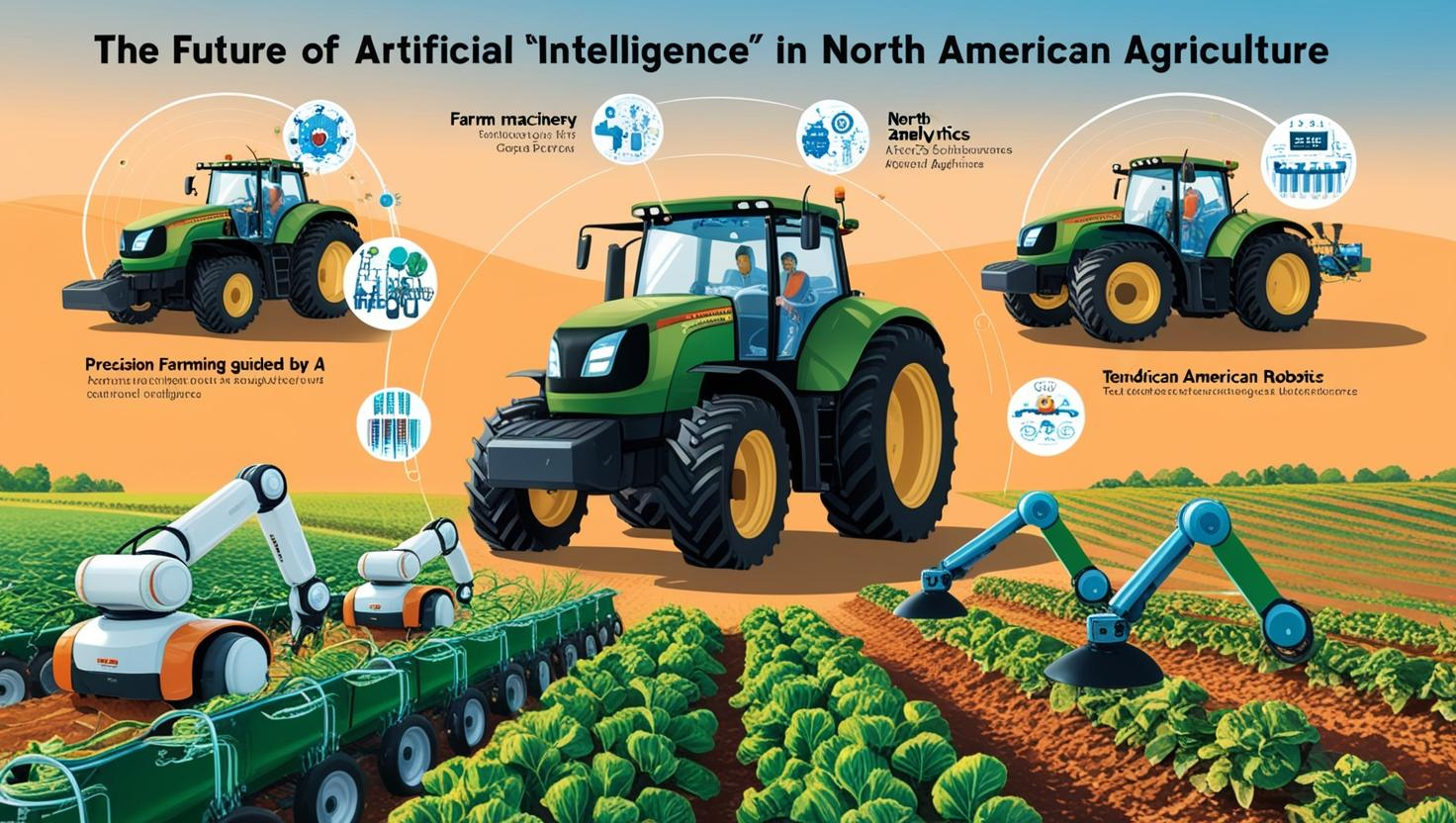
AI-Powered Precision Farming Enhances Farm-Level Decision-Making
AI is helping transform precision farming from basic field mapping and GPS guidance into increasingly predictive and automated systems.
Machine learning models can analyze field-level datasets to identify crop variability, estimate yield potential, detect disease and pest pressure, and determine where agricultural inputs may be required. When integrated with variable-rate technology, these insights can support site-specific application of water, fertilizer, and crop-protection products.
The result is a shift from uniform field management toward data-driven, field-specific decision-making.
Computer Vision and Remote Sensing Improve Crop Monitoring
Computer vision is becoming an important component of AI-enabled agricultural systems. Cameras mounted on drones, tractors, robots, and other agricultural equipment can capture detailed images of crops and field conditions.
AI algorithms can analyze these images to identify:
-
Crop diseases and pest infestations
-
Weed growth
-
Plant stress
-
Nutrient deficiencies
-
Crop maturity
-
Plant population
-
Field variability
USDA-supported research is already combining aircraft, UAV, and satellite imagery with AI-based agricultural analytics. One USDA-supported platform provides per-plant information such as tree count, canopy area, leaf density, and nutrient-related field analysis.
Autonomous Machinery Accelerates AI Adoption
Autonomous and semi-autonomous agricultural machinery is another major growth area for AI in agriculture. Modern tractors, sprayers, harvesters, drones, and agricultural robots increasingly combine AI, machine vision, GPS/GNSS, sensors, and advanced control systems.
These technologies can automate or assist with repetitive tasks such as:
-
Tractor navigation
-
Precision spraying
-
Weed detection
-
Crop scouting
-
Harvesting
-
Field mapping
-
Autonomous material handling
The combination of AI and agricultural robotics could become particularly important as farms seek to improve labor efficiency and operational consistency.
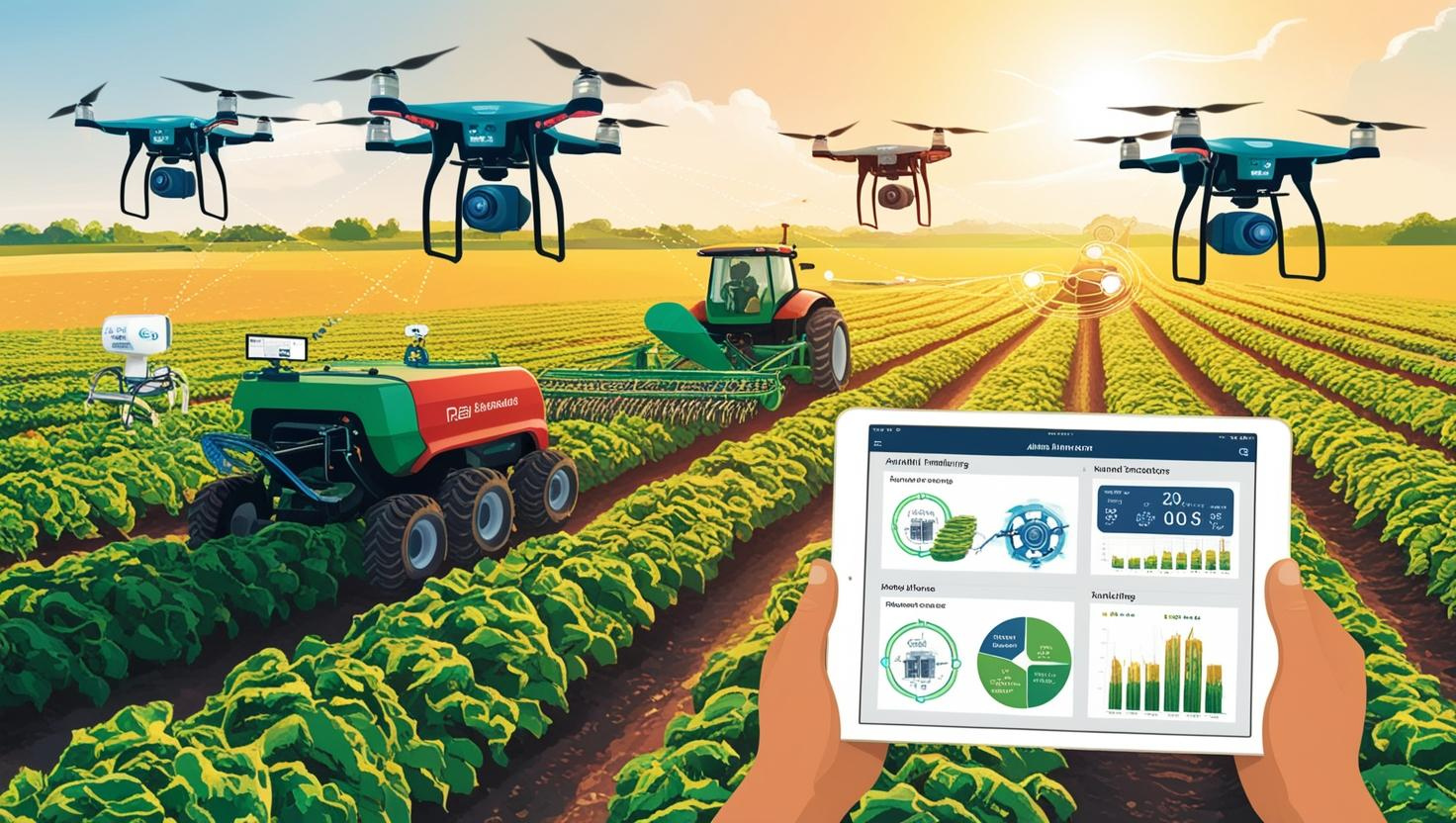
AI Is Transforming Irrigation and Resource Management
Water and input optimization are becoming increasingly important applications of AI. AI-enabled irrigation systems can combine soil-moisture measurements, crop requirements, weather information, and field history to determine when and where water should be applied.
USDA NIFA highlighted research in 2026 involving small sensors, software, and machine learning designed to provide more direct information about crop water use and nitrogen requirements.
Similar AI-based approaches can support fertilizer and crop-protection decisions, enabling farmers to target resources more precisely.
Generative AI Creates New Agricultural Advisory Opportunities
Generative AI is introducing another layer of intelligence into agricultural technology. Instead of requiring farmers to interpret multiple dashboards and datasets independently, conversational AI systems can potentially summarize field information, answer agricultural questions, generate reports, and provide context around operational decisions.
This creates opportunities for AI-powered agricultural advisory platforms that make complex farm data more accessible to producers, agronomists, and farm managers.
The next stage could involve combining generative AI with real-time farm data, sensor networks, weather information, satellite imagery, and machinery platforms to create more personalized agricultural decision-support systems.
North American Precision Farming Moves Toward Greater Automation
The convergence of AI with IoT, robotics, remote sensing, cloud computing, and connected machinery is creating a more integrated agricultural technology ecosystem.
MarketsandMarkets expects future growth in North American precision farming to be supported by autonomous equipment, climate-smart farming, precision irrigation, drone technologies, and integrated farm-management platforms.
As interoperability and rural connectivity improve, AI technologies can potentially become more accessible across different farm sizes and agricultural applications.
Challenges for AI Adoption in Agriculture
Despite significant opportunities, AI adoption faces challenges related to data availability, technology costs, connectivity, interoperability, cybersecurity, and technical expertise.
Agricultural environments also vary substantially by crop, soil type, geography, climate, and farming practices. AI models therefore require reliable and representative datasets to produce useful results across different operating conditions.
Data ownership and privacy are additional considerations as farms increasingly generate large volumes of information through connected equipment and digital platforms.
Future Outlook for AI in Agriculture Market
The future of the AI in Agriculture Market in North America is expected to be shaped by increasing convergence between artificial intelligence, precision farming, robotics, IoT, computer vision, remote sensing, and autonomous equipment.
AI is gradually moving beyond simple monitoring toward prediction, recommendation, and automation. Future agricultural systems are likely to connect real-time field data with intelligent decision engines that can identify changing conditions and recommend or initiate appropriate actions.
For North American agriculture, this evolution could support more precise resource utilization, improved operational efficiency, enhanced crop monitoring, and increasingly automated farm workflows. As AI technologies mature, their role in precision farming is expected to expand across crop production, livestock management, irrigation, agricultural machinery, and farm-management platforms.
The broader direction is clear: AI is becoming an important technological layer for the next generation of precision farming in North America, helping transform agricultural operations from reactive and experience-driven processes into increasingly connected, predictive, and data-driven systems.
FAQs on AI in Agriculture Market
What is AI in agriculture?
AI in agriculture refers to the use of artificial intelligence technologies such as machine learning, computer vision, predictive analytics, and generative AI to analyze agricultural data, automate operations, and support farming decisions.
How is AI used in agriculture?
AI is used for crop monitoring, disease and pest detection, precision irrigation, soil analysis, yield prediction, livestock monitoring, autonomous machinery, agricultural robotics, supply-chain optimization, and farm-management decision support.
What are the major trends shaping the AI in agriculture market?
Key trends include generative AI for agricultural advisory services, AI-powered computer vision, autonomous farm machinery, drone-based crop monitoring, IoT-enabled smart farming, predictive analytics, precision irrigation, and AI-driven climate and weather intelligence.
What are the benefits of AI in agriculture?
AI can help farmers improve decision-making, monitor crops more efficiently, optimize resource utilization, automate repetitive tasks, identify crop problems earlier, and support productivity and sustainability objectives.
What is the future of AI in agriculture?
The future is expected to involve greater integration of AI with IoT, robotics, drones, satellites, connected agricultural machinery, and generative AI. The industry is moving toward more automated, predictive, and data-driven agricultural operations.
80% of the Forbes Global 2000 B2B companies rely on MarketsandMarkets to identify growth opportunities in emerging technologies and use cases that will have a positive revenue impact.
- Food Packaging Market Size Set for Strong Growth Through 2030 Amid Rising Demand for Convenience Foods
- Crop Protection Chemical Market Size, Share & Growth Forecast (2025–2030)
- Mulch Films Market: Driving Sustainable Agriculture Through Innovation
- Agricultural Adjuvants Market Analysis, Trends, and Growth Outlook (2026–2031)
- Japan Enterprise Asset Management Market Growth: AI and Smart Infrastructure Drive Demand


