
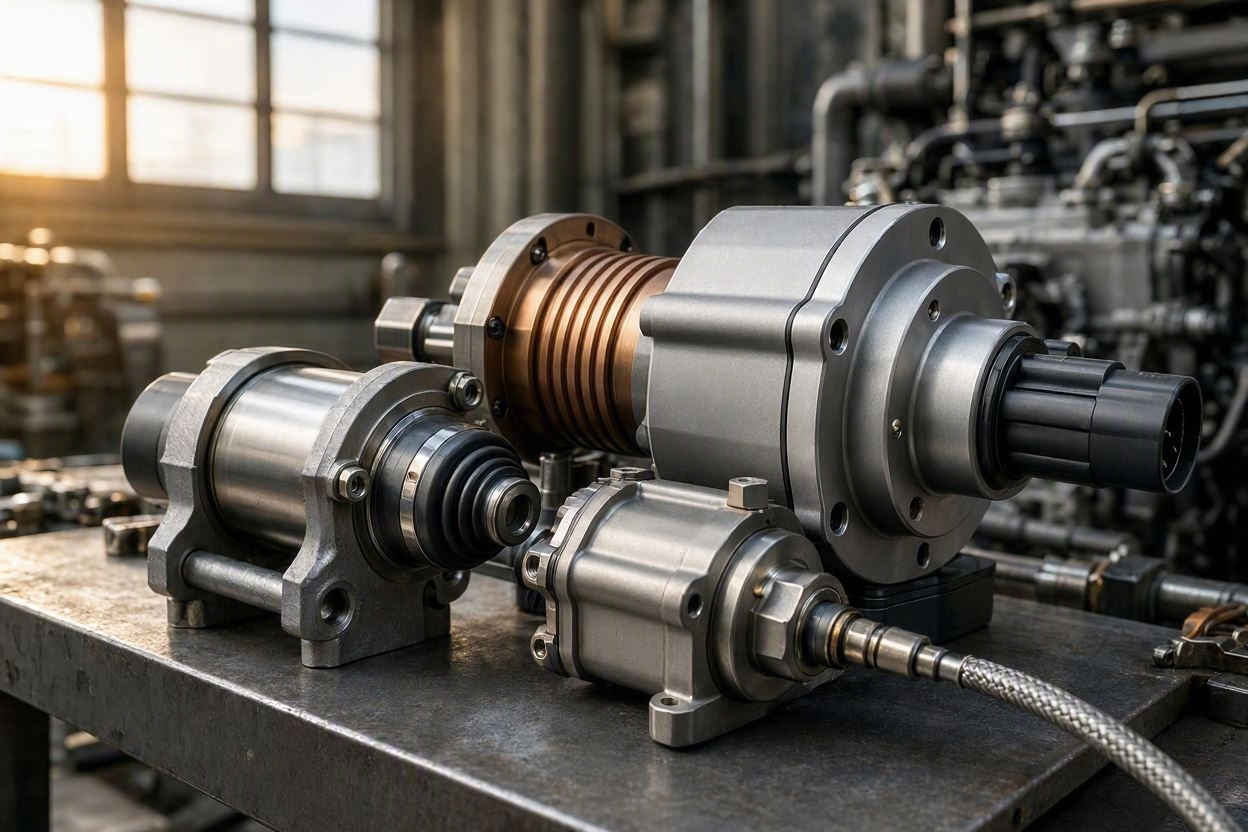
Global Engine Actuators Market Trends, Growth Drivers, Applications, and Industry Opportunities
The global engine actuators market is evolving as modern engines require greater precision, efficiency, responsiveness, and control. Engine actuators convert electrical, pneumatic, hydraulic, or mechanical commands into controlled movement that regulates important engine functions. These components are used across throttle systems, exhaust gas recirculation systems, turbochargers, variable valve mechanisms, air management systems, and other engine control applications. Increasing demand for efficient powertrains is encouraging manufacturers to adopt more accurate and electronically controlled actuation technologies. The transition toward connected vehicle architectures is also increasing the importance of actuator feedback, diagnostics, and communication with electronic control systems.
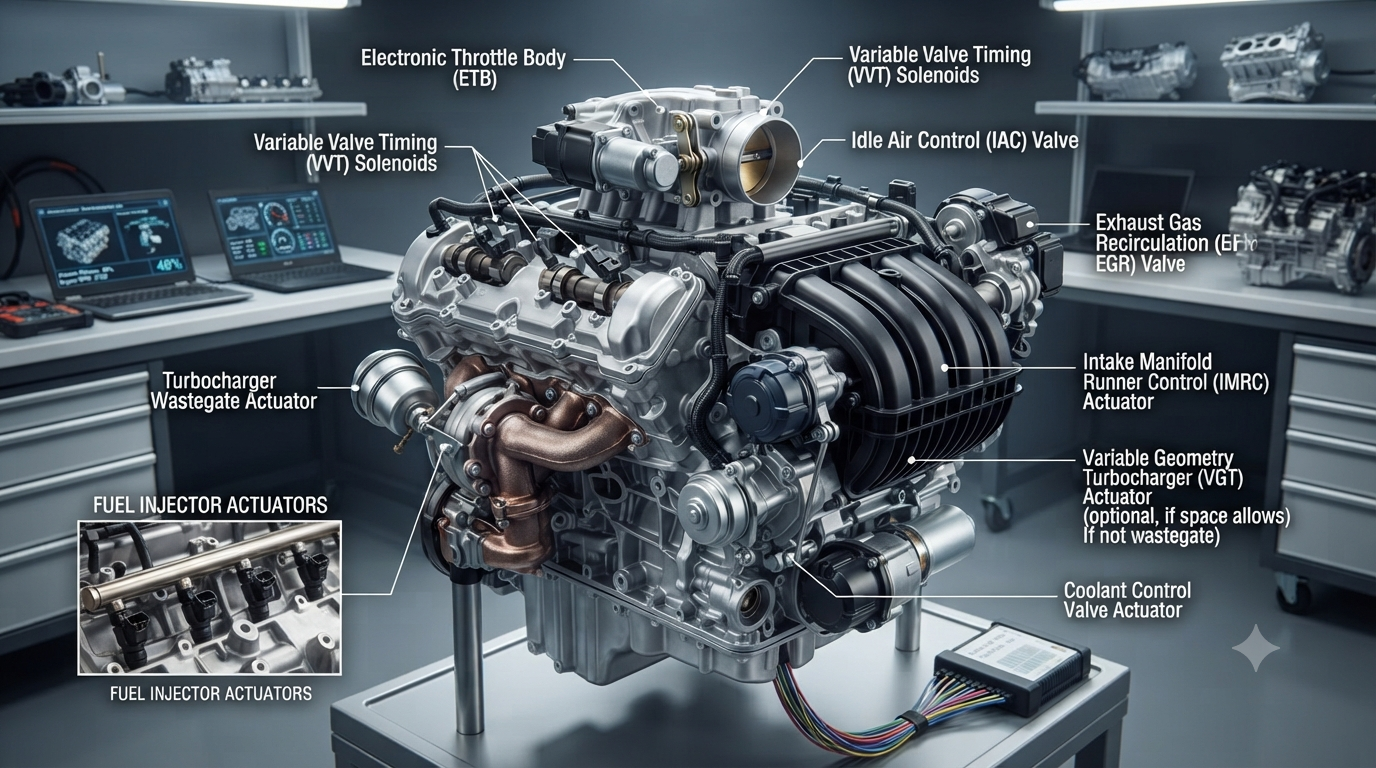
Engine actuators play an important role in maintaining the relationship between engine control software and physical engine operation. When an electronic control unit sends a command, an actuator performs the required mechanical movement with a specific level of speed and accuracy. This capability is particularly important in modern engines where air intake, fuel efficiency, exhaust management, and combustion performance need to be continuously optimized. As vehicle manufacturers improve engine control strategies, the global engine actuators market is gaining importance across passenger vehicles, commercial vehicles, off road vehicles, and other engine powered platforms.
According to Marketsandmarkets, the global actuators market size was valued at USD 71.22 billion in 2025 and is projected to reach USD 100.41 billion by 2030, growing at a CAGR of 7.1% from 2025 to 2030.
Download PDF Brochure @ https://www.marketsandmarkets.com/pdfdownloadNew.asp?id=59465451
Rising Demand for Precise Engine Control
The growing complexity of engine management systems is one of the major factors supporting the global engine actuators market. Modern engines operate under continuously changing conditions involving engine speed, load, temperature, pressure, and driving requirements. Actuators allow electronic control systems to respond to these changes by adjusting valves, airflow components, turbocharger mechanisms, and other moving parts. Precise actuation can help improve combustion management and support consistent engine performance. It also enables manufacturers to integrate advanced control strategies without depending entirely on conventional mechanical linkages.
Emission reduction requirements are another important influence on actuator development. Engine systems must increasingly control combustion and exhaust related functions with greater accuracy. Variable valve actuation, exhaust gas recirculation control, turbocharger adjustment, and throttle management can require rapid and repeatable movement. Actuators therefore need to deliver reliable performance under high temperature, vibration, pressure, and contamination conditions. This requirement is encouraging development of compact and electronically controlled actuator systems for different engine architectures.
Electrification Is Changing Actuator Technology
Vehicle electrification is changing the role of engine actuators rather than eliminating the need for actuation across the automotive industry. Hybrid powertrains continue to combine combustion engines with electric propulsion systems, creating new requirements for precise engine operation. In hybrid applications, the combustion engine may operate during specific driving conditions where efficiency becomes particularly important. Accurate control of valves, throttle systems, turbocharging mechanisms, and exhaust components can help optimize engine operation within these operating windows.
The global engine actuators market is also being influenced by the increasing integration of electronics within powertrain systems. Electric actuators can receive commands directly from electronic control units and can provide position feedback to improve control accuracy. This architecture supports more sophisticated engine management strategies and enables actuator operation to be coordinated with sensors and software. As powertrain systems become more software controlled, actuator performance becomes increasingly connected with overall vehicle control architecture.
Variable Valve Actuation Creates New Opportunities
Variable valve actuation is an important application area for engine actuator technologies. Conventional engine designs operate valves according to relatively fixed mechanical timing arrangements, while advanced systems can adjust valve timing or lift according to operating conditions. This allows the engine to modify airflow characteristics based on speed, load, temperature, and other parameters. Actuation systems are essential for translating electronic control commands into accurate valve movement.
The global engine actuators market can benefit from continued interest in variable valve technologies because manufacturers seek greater control over engine breathing and combustion. Advanced valve actuation can support improvements in fuel efficiency, torque delivery, emissions performance, and engine responsiveness. The technology can also provide greater flexibility in engine calibration. As engine control systems become more sophisticated, the actuator needs to operate with high precision while maintaining reliability over extended operating cycles.
Turbocharger Actuators Improve Boost Management
Turbocharger actuation represents another significant application within the global engine actuators market. Turbocharger systems depend on controlled airflow and exhaust energy management to provide appropriate boost pressure across different engine operating conditions. Variable geometry systems use adjustable components that can modify airflow through the turbine. Wastegate systems also require controlled movement to regulate boost pressure.
Research on variable geometry turbocharging highlights the importance of controlled adjustment of turbine and compressor flow characteristics for engine performance and efficiency. Modern turbocharger development increasingly focuses on precise control, rapid response, thermal durability, and integration with electronic engine management. These requirements create opportunities for actuator technologies capable of operating reliably under demanding temperature and vibration conditions.
Throttle Actuators Support Efficient Airflow Control
Throttle actuation is a fundamental application for electronically controlled engine systems. A throttle actuator regulates airflow entering the engine based on commands from the engine management system. In electronically controlled throttle systems, accelerator input does not necessarily translate directly into mechanical movement. Instead, sensors and control software determine the required throttle position before the actuator moves the throttle mechanism.
This architecture provides greater flexibility in controlling engine response and coordinating multiple powertrain functions. The global engine actuators market is therefore supported by the continued adoption of electronically managed throttle systems. Modern throttle actuators must provide fast response, accurate positioning, low power consumption, and high durability. Safety and diagnostic requirements are also important because incorrect throttle operation can affect engine response and vehicle behavior.
Exhaust Gas Recirculation Requires Accurate Actuation
Exhaust gas recirculation systems use controlled movement to regulate the amount of exhaust gas returned to the engine intake. This process can influence combustion temperature and help support emissions management. EGR actuators therefore operate in challenging environments involving high temperatures, carbon deposits, vibration, and exposure to exhaust gases.
The global engine actuators market is being influenced by the need for improved EGR control in combustion engines. Greater precision allows engine control systems to adjust exhaust gas flow according to operating conditions. Electric actuator designs can provide direct electronic control and position feedback, supporting more accurate operation. Durability remains a critical consideration because actuator failure or movement restrictions can affect engine performance and emissions behavior.
Electronic Actuators Are Gaining Importance
Electronic actuation is becoming increasingly important because modern engine systems depend on continuous communication between sensors, control units, and mechanical components. Electric actuators can be integrated with position sensors, control electronics, and communication networks. This creates a closed control loop in which the system can compare the commanded position with actual actuator movement.
For the global engine actuators market, this transition creates opportunities for intelligent actuator designs. Important characteristics include compact construction, low energy consumption, fast response, accurate positioning, thermal resistance, and diagnostic capability. Integrated electronics can also simplify system architecture by reducing the number of separate control components. However, higher electronic content increases requirements for software validation, electromagnetic compatibility, cybersecurity, and functional safety.
Key Factors Supporting Market Development
Several technology and industry factors are influencing demand for engine actuator systems. These factors extend across vehicle efficiency, engine downsizing, emissions control, electronic integration, and powertrain modernization.
- Increasing use of electronically controlled engine functions is creating demand for accurate actuator systems.
- Greater emphasis on fuel efficiency is encouraging advanced airflow, valve timing, turbocharger, and exhaust management technologies.
- Stricter emissions requirements are increasing the need for precise control of combustion and exhaust related functions.
- Hybrid powertrains are creating new operating requirements for combustion engines and their control systems.
- Growth in connected vehicle architectures is increasing integration between actuators, sensors, control units, and software.
These developments are encouraging actuator manufacturers and automotive engineering teams to focus on reliability, precision, response time, packaging, and energy consumption. The global engine actuators market is consequently becoming more closely connected with electronic engine management and software controlled powertrain development.
Technology Trends Shaping Engine Actuators
One major trend is the transition from traditional mechanical or pneumatic actuation toward electric actuation. Electric systems can provide rapid response and easier integration with electronic control units. They can also support position sensing and diagnostic functions. This makes them suitable for applications where the actuator needs to respond dynamically to changing engine conditions.
Another important trend is actuator miniaturization. Engine compartments contain numerous components within limited space, creating demand for smaller and lighter actuator packages. Designers are working to reduce motor size, optimize gear mechanisms, improve materials, and integrate electronics without sacrificing durability. Thermal management is particularly important because actuators positioned close to engines and turbochargers can experience severe operating temperatures.
Intelligent Actuation and Sensor Integration
The integration of sensors with actuators is becoming increasingly relevant to engine control. A basic actuator moves a component according to an external command, while an intelligent actuator can also provide information about its position and operating condition. This feedback allows control systems to identify deviations and adjust commands accordingly.
For the global engine actuators market, sensor integration creates opportunities for advanced diagnostic functions. Position sensors can verify whether the actuator has reached the requested location. Temperature and current monitoring can also provide information about abnormal operating conditions. Such capabilities can support predictive maintenance strategies and help identify potential actuator problems before they become major system issues.
Lightweight Design Supports Efficiency Goals
Weight reduction remains an important objective in vehicle engineering. Lightweight actuator designs can contribute to overall powertrain optimization when they replace heavier components or simplify mechanical arrangements. Materials such as engineered polymers, aluminum alloys, and advanced composites can be used depending on the application and required operating conditions.
The global engine actuators market is responding to these requirements through improvements in motor design, gear systems, housings, and mounting arrangements. Lightweight construction must still provide resistance to vibration, thermal cycling, moisture, chemicals, and mechanical stress. Consequently, material selection and durability testing remain essential parts of actuator development.
Challenges Affecting Engine Actuator Development
Despite growing opportunities, engine actuators face several technical challenges. High temperature is one of the most important issues because actuators installed near engines, exhaust systems, or turbochargers can experience severe thermal conditions. Continuous exposure to vibration and mechanical movement can also accelerate wear.
Another challenge involves maintaining precise movement throughout the actuator lifecycle. Gear wear, contamination, electrical degradation, sensor errors, and mechanical obstruction can affect performance. Manufacturers therefore need robust validation procedures to ensure actuator reliability across different operating environments. The global engine actuators market is also affected by the increasing complexity of electronic systems, which requires closer coordination between mechanical engineering, electronics, software, and vehicle control teams.
Opportunities in Hybrid Powertrains
Hybrid vehicles create a distinct opportunity for engine actuator technologies because their combustion engines often operate within carefully managed operating windows. The engine may start, stop, accelerate, or operate at optimized load conditions depending on battery status and driving requirements. These changes increase the importance of responsive engine control.
The global engine actuators market can benefit from actuator systems designed specifically for frequent operating transitions. Throttle control, valve adjustment, turbocharger management, and exhaust control may need to respond rapidly as the powertrain switches between different operating modes. Actuator reliability is particularly important because repeated start and stop cycles can increase mechanical and electrical demands.
Regional Development Across the Industry
Asia Pacific represents an important production and consumption region for engine related technologies because of its extensive automotive manufacturing ecosystem and growing vehicle production. Demand for compact engines, commercial vehicles, motorcycles, and hybrid vehicles contributes to opportunities for actuator manufacturers. Increasing adoption of electronic engine control systems is also supporting technological development across the region.
Europe continues to emphasize efficient powertrain technologies, emissions management, and advanced vehicle engineering. These priorities support demand for sophisticated actuator systems capable of precise engine control. North America also represents an important environment for engine actuator development, particularly across passenger vehicles, commercial vehicles, off road equipment, and performance oriented powertrain applications.
Emerging automotive manufacturing regions in Latin America and the Middle East and Africa are also contributing to demand through vehicle production, commercial transportation, industrial equipment, and aftermarket applications. Regional differences in vehicle technology, fuel types, regulations, and infrastructure influence the types of actuator systems adopted. As a result, suppliers increasingly need flexible designs that can support different engine architectures and operating environments.
Role of Commercial Vehicles and Industrial Engines
Commercial vehicles require durable engine components because trucks, buses, construction equipment, agricultural machinery, and other heavy duty platforms can operate for long periods under demanding conditions. Engine actuators used in these applications must withstand vibration, temperature changes, dust, moisture, and continuous operating cycles.
The global engine actuators market therefore has opportunities beyond passenger vehicles. Commercial and industrial engines require precise control of throttle systems, turbochargers, exhaust management components, and other engine functions. The increasing focus on fuel efficiency and emissions performance in commercial transportation further increases the importance of accurate engine control.
Aftermarket Demand Creates Additional Opportunities
The aftermarket represents another important area for engine actuator suppliers. Actuators can experience wear or electrical failure over the service life of a vehicle, creating replacement requirements. The growing complexity of modern engine systems increases the importance of correct actuator selection and calibration during repair.
Diagnostic equipment also plays a greater role in actuator replacement. Technicians may need to identify electrical faults, sensor problems, mechanical restrictions, or communication errors before installing a replacement component. The global engine actuators market can therefore benefit from improvements in aftermarket diagnostics, service tools, replacement components, and technical training.
Future Direction of Engine Actuator Technology
The future development of engine actuators is expected to focus on precision, integration, intelligence, durability, and energy efficiency. Actuators will increasingly operate as part of connected control systems rather than as isolated mechanical components. Greater communication between sensors, control units, software, and actuators will support more responsive engine management.
The global engine actuators market is also likely to experience continued technology diversification as combustion, hybrid, and electrified powertrains coexist across different regions and applications. Advanced combustion engines will continue requiring sophisticated actuation for airflow, valve timing, turbocharging, and exhaust management. Hybrid systems will introduce additional control requirements, while software based vehicle architectures will increase the need for diagnostics and communication capabilities.
Key Opportunities for Industry Participants
The development of intelligent and electronically controlled actuator systems creates opportunities across several areas. Companies involved in actuator design, electronics, sensors, motors, gear systems, control software, and vehicle engineering can participate in the evolving ecosystem.
- Development of compact electric actuator systems for advanced engine applications.
- Integration of position sensing and diagnostic capabilities into actuator assemblies.
- Development of durable actuators for high temperature turbocharger and exhaust applications.
- Expansion of actuator technologies for hybrid powertrain architectures.
- Development of lightweight components that reduce packaging requirements and energy consumption.
These opportunities are closely connected with the wider transition toward electronically managed powertrains. The global engine actuators market is therefore not limited to a single actuator technology. Instead, it encompasses multiple technologies designed to provide controlled movement across increasingly sophisticated engine systems.
Conclusion
The global engine actuators market is becoming increasingly important as engine systems evolve toward greater electronic control, efficiency, precision, and integration. Actuators provide the physical movement required to translate software and electronic commands into engine operation. Their applications span throttle systems, variable valve mechanisms, turbochargers, exhaust gas recirculation systems, and other powertrain functions.
Technology development is increasingly focused on electric actuation, sensor integration, compact packaging, lightweight construction, thermal durability, and intelligent diagnostics. Hybrid powertrains are also creating new requirements for responsive engine control. At the same time, commercial vehicles, industrial engines, and aftermarket applications provide additional areas of demand.
As vehicle architectures continue to change, actuator technology will remain an important link between electronic control and mechanical engine operation. The global engine actuators market is consequently positioned around the broader movement toward efficient, electronically controlled, connected, and highly responsive powertrain systems.
Frequently Asked Questions
What is the global engine actuators market?
The global engine actuators market refers to the industry covering actuator technologies used to control engine functions through electrical, hydraulic, pneumatic, or mechanical movement. These systems are used in throttle control, valve timing, turbocharger systems, exhaust gas recirculation, and other engine management applications.
What are engine actuators used for?
Engine actuators are used to control the movement of components that influence airflow, combustion, exhaust management, boost pressure, and valve operation. They translate commands from engine control systems into controlled physical movement.
What is driving demand for engine actuators?
Demand is influenced by the increasing electronic control of engines, fuel efficiency requirements, emissions management, hybrid powertrain development, advanced turbocharging, variable valve technologies, and growing integration between sensors and control units.
Why are electric actuators becoming important?
Electric actuators can provide accurate movement, rapid response, electronic control, and position feedback. These characteristics make them suitable for modern engine systems that depend on continuous communication between electronic control units and mechanical components.
What are the major applications of engine actuators?
Major applications include throttle control, exhaust gas recirculation, turbocharger control, variable valve actuation, air management, intake systems, and other engine control functions.
How does hybridization affect engine actuators?
Hybrid powertrains can require combustion engines to operate under changing conditions and frequent transitions. This increases the importance of precise throttle, valve, turbocharger, and exhaust control, creating opportunities for advanced actuator technologies.
What are the major challenges for engine actuators?
Important challenges include high operating temperatures, vibration, contamination, mechanical wear, sensor reliability, electronic integration, packaging limitations, and the need for long service life under demanding operating conditions.
Which regions are important for engine actuator development?
Asia Pacific, Europe, and North America are important regions because of their automotive manufacturing capabilities, powertrain engineering activities, regulatory requirements, and adoption of electronically controlled engine technologies. Other regions also contribute through commercial vehicles, industrial engines, and aftermarket demand.
What role do actuators play in turbocharger systems?
Turbocharger actuators control components such as wastegates or variable geometry mechanisms. Their movement helps regulate airflow and boost behavior according to engine operating requirements.
What is the future of engine actuator technology?
Engine actuator development is expected to emphasize electric actuation, sensor integration, intelligent diagnostics, compact design, lightweight materials, thermal durability, and closer integration with software controlled engine management systems.
80% of the Forbes Global 2000 B2B companies rely on MarketsandMarkets to identify growth opportunities in emerging technologies and use cases that will have a positive revenue impact.
- Food Packaging Market Size Set for Strong Growth Through 2030 Amid Rising Demand for Convenience Foods
- Crop Protection Chemical Market Size, Share & Growth Forecast (2025–2030)
- Mulch Films Market: Driving Sustainable Agriculture Through Innovation
- Agricultural Adjuvants Market Analysis, Trends, and Growth Outlook (2026–2031)
- Japan Enterprise Asset Management Market Growth: AI and Smart Infrastructure Drive Demand


