
How AI and IoT Are Transforming the Latest Smart Glass Trends
Smart glass technology is changing how people interact with buildings, vehicles, wearable devices, and connected environments. The integration of Artificial Intelligence (AI) and the Internet of Things (IoT) is making modern glass more intelligent, responsive, and adaptable to different environmental conditions. Traditional glass primarily provides visibility, protection, and insulation, whereas smart glass can dynamically control light transmission, privacy, temperature, and digital information. These capabilities are creating new opportunities across residential, commercial, automotive, healthcare, and industrial applications. As connected technologies become more advanced, smart glass is evolving from a passive material into an intelligent component of modern infrastructure.

AI and IoT are playing complementary roles in this transformation by combining data collection, intelligent decision making, and automated control. IoT sensors collect information about temperature, sunlight, occupancy, humidity, and surrounding conditions, while AI algorithms analyze this information to determine appropriate responses. For example, an intelligent window can automatically adjust its tint according to sunlight intensity and indoor temperature. Similarly, connected glass systems can communicate with building management platforms to coordinate lighting and cooling operations. Understanding how AI and IoT are transforming the latest smart glass trends provides valuable insights into the development of intelligent buildings and connected environments.
According to Marketsandmarkets, the global smart glass market size is projected to grow from USD 7.10 billion in 2026 to USD 12.91 billion by 2032, growing at a CAGR of 10.5% from 2026 to 2032.
Download PDF Brochure @ https://www.marketsandmarkets.com/pdfdownloadNew.asp?id=907
Understanding the Role of AI and IoT in Smart Glass
Smart glass refers to specially designed glass that can change its optical properties when exposed to electrical signals, temperature variations, light, or other environmental conditions. Depending on the technology, it can control transparency, reduce glare, regulate solar heat, and provide privacy without requiring traditional curtains or blinds. Electrochromic, thermochromic, photochromic, suspended particle device, and polymer dispersed liquid crystal technologies are important approaches used in smart glass applications. Each technology offers different capabilities depending on its operating mechanism and intended application. Integration with AI and IoT adds another layer of intelligence by enabling automated monitoring and responsive functionality.
AI improves smart glass performance by analyzing environmental information and identifying patterns that influence glass operation. Machine learning algorithms can evaluate historical temperature readings, sunlight exposure, weather conditions, and occupancy patterns to determine suitable glass settings. IoT devices provide the communication infrastructure required to connect sensors, controllers, smart windows, and building automation platforms. Together, these technologies create an intelligent ecosystem in which glass can respond to changing conditions with minimal human intervention. This combination is particularly valuable in buildings where maintaining comfortable indoor environments and managing energy consumption are important operational priorities.
Latest Smart Glass Trends Driven by AI and IoT
AI Powered Adaptive Smart Windows
AI powered adaptive windows are becoming an important development in intelligent building technology. These windows use environmental sensors and intelligent algorithms to adjust their transparency according to changing outdoor and indoor conditions. Instead of relying entirely on manual controls, smart windows can analyze sunlight intensity, temperature, and occupant preferences before selecting an appropriate tint level. This helps maintain comfortable indoor lighting while limiting excessive solar heat entering through windows. AI based automation also allows different windows within the same building to operate according to their individual environmental requirements.
The latest smart glass trends emphasize predictive control rather than simple automatic switching. AI systems can learn how sunlight moves across different sections of a building throughout the day and adjust window settings accordingly. IoT connectivity allows these systems to exchange information with weather monitoring devices and building automation platforms. As a result, windows can prepare for changing environmental conditions before occupants experience discomfort. This intelligent approach supports improved daylight management, thermal comfort, and building energy efficiency.
IoT Enabled Real Time Glass Monitoring
Real time monitoring is another important development influencing smart glass applications. IoT sensors installed within or around glass systems can continuously collect information about temperature, humidity, light intensity, and operational performance. This information is transmitted to connected platforms where users can monitor the condition of individual windows or entire glazing installations. Facility managers can use centralized dashboards to understand how different glass systems are performing. Continuous monitoring also helps identify operational problems before they affect the overall functionality of the installation.
Connected monitoring systems are particularly useful in commercial buildings, hospitals, airports, and industrial facilities where multiple smart windows operate simultaneously. For example, facility managers can monitor whether individual windows are responding correctly to control signals and environmental changes. Sensor based alerts can notify maintenance teams when a system experiences unusual operating conditions. This reduces the need for frequent manual inspections and improves maintenance planning. The integration of IoT monitoring is therefore helping smart glass become a more manageable and reliable building technology.
Intelligent Electrochromic Glass Technology
Electrochromic glass is attracting attention because it can change its transparency through controlled electrical signals. This technology allows windows to become darker or lighter depending on the required level of sunlight and privacy. When integrated with AI and IoT, electrochromic glass can automatically respond to environmental information collected through connected sensors. AI algorithms can evaluate sunlight exposure, temperature, and indoor comfort requirements before sending appropriate control instructions. This creates a more intelligent approach to managing natural lighting and solar heat.
An important development is the integration of electrochromic windows with centralized building management systems. These connected systems can coordinate window tinting with indoor lighting, heating, ventilation, and air conditioning operations. For instance, when strong sunlight increases indoor temperatures, the system can adjust the glass to reduce solar heat entering the building. Similarly, it can allow more natural light during suitable environmental conditions. These capabilities are improving the role of electrochromic glass in energy conscious architectural designs.
Smart Glass and Automated Building Management
The integration of smart glass with building management systems is transforming how commercial properties operate. Traditional building automation primarily focuses on controlling lighting, heating, cooling, and security systems. Connected smart glass adds dynamic daylight and solar heat management to this ecosystem. IoT communication allows windows, occupancy sensors, lighting controllers, and HVAC equipment to exchange operational information. AI analyzes this information to coordinate different building functions according to environmental conditions and occupant requirements.
Intelligent building platforms can use predictive algorithms to determine when windows should change their transparency. These decisions can consider occupancy schedules, external temperatures, daylight availability, and indoor comfort settings. Instead of controlling each building system independently, AI enables coordinated operation across multiple connected devices. This approach can reduce unnecessary cooling and artificial lighting requirements while improving indoor environmental conditions. The growing connection between smart glass and intelligent building automation is making windows an active part of modern infrastructure.
AI Based Privacy Control Solutions
Privacy management is becoming an important application of smart glass technology, particularly in offices, healthcare facilities, conference rooms, and residential spaces. Switchable glass can change from transparent to opaque, allowing users to control visibility without installing traditional window coverings. AI and IoT make this functionality more convenient by enabling automatic privacy adjustments according to room occupancy, schedules, and user preferences. For example, an intelligent meeting room can automatically switch its glass partitions to an opaque state when a confidential discussion begins.
Connected privacy systems can also integrate with access control platforms and occupancy detection sensors. When an authorized user enters a designated space, the glass can respond according to predefined privacy settings. Users can also operate connected glass through mobile applications or centralized control panels. These capabilities support flexible interior layouts while maintaining convenient privacy management. The combination of automated controls and switchable glazing is creating new possibilities for modern workplaces and healthcare environments.
Smart Glass in Connected Vehicles
The automotive industry is exploring smart glass technologies to improve passenger comfort, visibility, and vehicle interior experiences. Intelligent windows, sunroofs, panoramic roofs, and mirrors can dynamically control light transmission according to driving and environmental conditions. AI systems can analyze sunlight intensity, vehicle temperature, and external conditions to determine suitable glass settings. IoT connectivity allows smart glazing to communicate with vehicle electronics and climate control systems. This creates a more integrated approach to managing the vehicle interior environment.
Smart glass can also support personalized passenger experiences. For example, individual window sections may adjust their tint according to passenger preferences or sunlight exposure. Intelligent panoramic roofs can reduce excessive glare while maintaining suitable natural lighting inside the vehicle. Connected systems may also coordinate glass operation with cabin temperature controls to improve overall comfort. These developments are particularly relevant to electric vehicles, where efficient thermal management is an important consideration.
Integration of Smart Glass with Voice Assistants
Voice controlled functionality is becoming another useful development in connected smart glass applications. Users can interact with intelligent glass systems through voice commands instead of relying exclusively on physical switches or mobile applications. AI powered voice recognition systems can understand instructions related to transparency, privacy, lighting, and temperature management. IoT connectivity then communicates these commands to the relevant glass controllers. This creates a more accessible and convenient interaction experience across residential and commercial environments.
Voice based controls can also be combined with personalized automation. For instance, users can create preferred settings for working, relaxing, presentations, or sleeping. AI systems can recognize these preferences and recommend suitable operating conditions. In larger buildings, voice enabled controls can simplify the management of multiple connected windows and partitions. As natural language processing improves, voice interaction is becoming an important element of intelligent environmental control.
Predictive Energy Management Through Smart Glass
Energy management is one of the most significant applications of AI integrated smart glass. Windows influence how much natural light and solar heat enter a building, directly affecting indoor lighting and cooling requirements. IoT sensors collect information about external sunlight, indoor temperature, and occupancy levels. AI algorithms use this information to identify opportunities for adjusting glass transparency before environmental conditions become uncomfortable. This allows smart glass systems to support more efficient building operations.
Predictive energy management also enables smart windows to coordinate with renewable energy systems and building automation platforms. For example, an intelligent building can adjust its glazing according to expected solar exposure and available cooling capacity. AI can analyze historical environmental patterns to improve the timing of window adjustments. These capabilities help building operators manage energy consumption while maintaining suitable indoor conditions. As energy efficiency becomes an important architectural priority, intelligent glazing is gaining greater relevance in sustainable building designs.
Augmented Reality and AI Enabled Smart Glasses
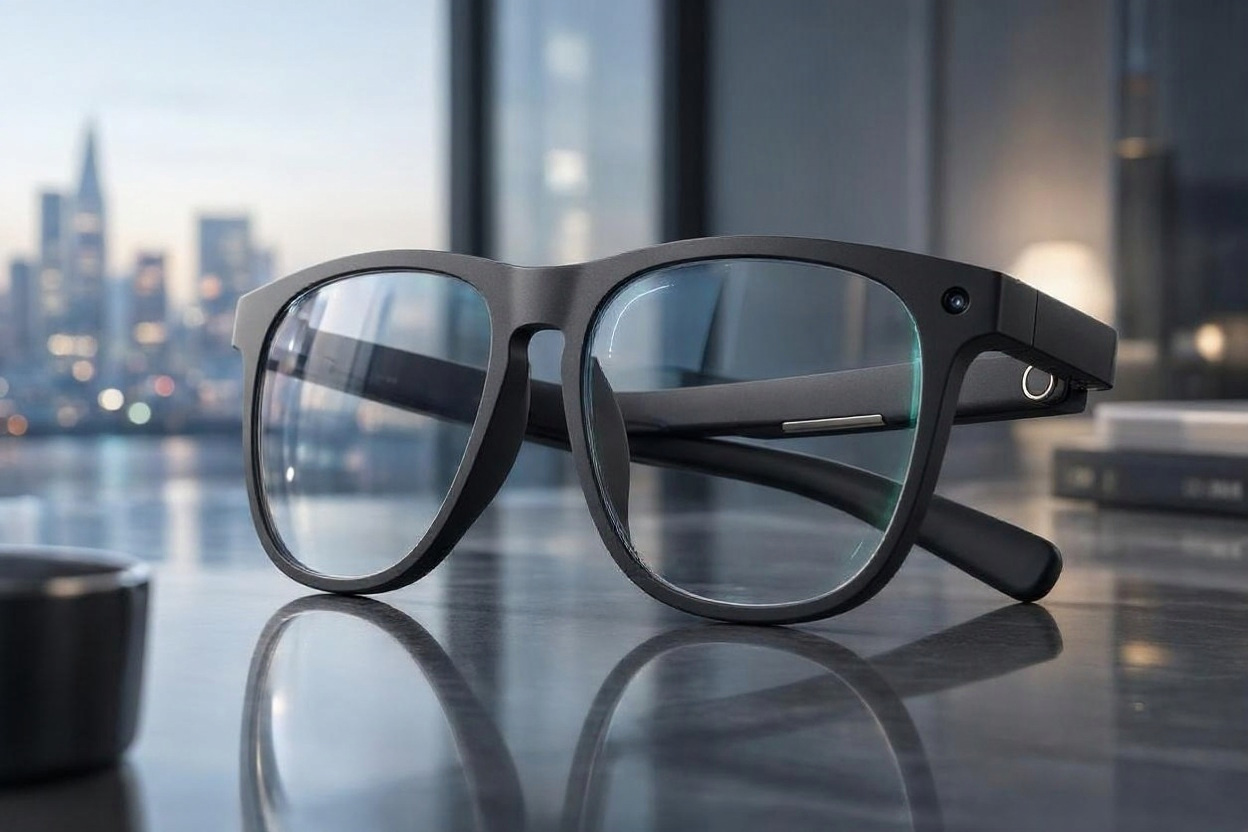
Smart glass technology also includes wearable devices that integrate transparent displays, cameras, microphones, sensors, and wireless connectivity. Unlike architectural smart windows, these devices place digital information within the user's field of view. AI enables smart glasses to understand voice instructions, recognize visual information, translate conversations, and provide contextual assistance. IoT connectivity allows wearable devices to communicate with smartphones, industrial equipment, cloud platforms, and other connected systems. These capabilities are expanding the role of smart glasses beyond conventional eyewear.
In industrial environments, employees can use AI enabled smart glasses to access digital instructions while performing maintenance, inspection, and assembly activities. Healthcare professionals can use wearable displays to access relevant information without constantly looking away from their work. In education, smart glasses can support interactive learning through digital visual information and contextual explanations. These applications demonstrate how AI and IoT are transforming wearable smart glass into an important interface between people and connected digital environments.
Advanced Sensors and Computer Vision Integration
Advanced sensors and computer vision are creating additional opportunities for intelligent smart glass applications. Cameras and optical sensors can identify environmental conditions, detect movement, and recognize changes in surrounding spaces. AI algorithms analyze the collected information to support automated responses and context aware functionality. In architectural applications, occupancy sensors can help determine which areas require specific lighting and privacy settings. In wearable smart glasses, computer vision can help users understand objects, read text, and receive contextual information.
The combination of computer vision and IoT connectivity also supports industrial monitoring and remote assistance. Workers can capture visual information through smart glasses and share it with remote specialists for technical guidance. AI systems can assist with identifying equipment components and displaying relevant instructions. These capabilities can improve information accessibility and support complex operational tasks. However, responsible data collection and appropriate privacy controls remain essential when cameras and connected sensors are used.
Major Applications of AI and IoT Enabled Smart Glass
Smart Glass in Residential Buildings
Residential buildings are adopting intelligent glass solutions to improve comfort, privacy, and convenience. Homeowners can control window transparency through mobile applications, automated schedules, and connected home platforms. AI can learn individual preferences and adjust glass settings according to sunlight, temperature, and room occupancy. IoT sensors can also connect windows with lighting and air conditioning systems. These capabilities help create more comfortable living environments while reducing dependence on manual window coverings.
Smart Glass in Commercial Offices
Commercial offices require flexible spaces that support collaboration, concentration, and privacy. Switchable glass partitions allow meeting rooms and workspaces to change their visibility according to operational requirements. AI powered controls can automatically manage transparency based on meeting schedules and occupancy information. Connected systems also enable facility managers to monitor glass performance across different floors and departments. This flexibility makes intelligent glazing a useful solution for modern office environments.
Smart Glass in Healthcare Facilities
Healthcare facilities require environments that balance patient privacy, natural lighting, and operational convenience. Smart glass can provide adjustable privacy in patient rooms, consultation areas, diagnostic spaces, and treatment facilities. IoT enabled controls allow authorized staff to adjust transparency without physically operating traditional window coverings. AI based automation can also coordinate privacy settings with room occupancy and predefined operational requirements. These features support more adaptable healthcare environments while maintaining the importance of patient confidentiality.
Smart Glass in Industrial Environments
Industrial facilities can use intelligent glazing to manage visibility, lighting, and environmental conditions in specialized workspaces. Connected glass systems can integrate with industrial automation platforms to monitor operating conditions and support facility management. AI based analytics can identify patterns in sensor information and help optimize environmental controls. Wearable smart glasses also provide workers with access to technical instructions, equipment information, and remote assistance. Together, these applications are connecting physical industrial environments with digital information systems.
Key Benefits of Combining AI and IoT with Smart Glass
The integration of AI and IoT is expanding the functionality of smart glass across different applications. Intelligent automation allows windows and wearable devices to respond to changing conditions without requiring continuous manual intervention. Real time monitoring improves operational visibility, while predictive analytics supports better environmental management. Connected systems also enable centralized control of multiple glass installations through digital platforms. These improvements are making smart glass more adaptable to the requirements of modern buildings and connected environments.
Some of the major benefits include:
- Improved energy efficiency: Intelligent tint adjustment helps manage solar heat and natural lighting requirements.
- Enhanced occupant comfort: Automated controls support better indoor temperature, visibility, and glare management.
- Flexible privacy management: Switchable glass provides convenient privacy in offices, homes, and healthcare facilities.
- Predictive maintenance: Connected sensors help identify unusual operating conditions and maintenance requirements.
- Centralized automation: IoT connectivity allows multiple smart glass installations to be managed through integrated platforms.
- Personalized experiences: AI can adapt glass settings according to individual preferences and environmental conditions.
Another important advantage is improved coordination between smart glass and other connected technologies. AI can analyze information from multiple systems to support better operational decisions. For example, an intelligent building can coordinate window tinting, indoor lighting, and air conditioning instead of managing these functions separately. Wearable smart glasses can also improve access to digital information in professional environments. These combined capabilities demonstrate the growing importance of intelligent glazing within connected infrastructure.
Challenges Affecting AI and IoT Integration in Smart Glass
Despite its advantages, integrating AI and IoT into smart glass systems involves several technical and operational challenges. Advanced glazing technologies can involve higher installation costs compared with conventional glass. The integration of sensors, controllers, communication networks, and software platforms can further increase system complexity. Organizations must also consider compatibility between smart glass products and existing building automation infrastructure. These factors can influence installation decisions, particularly in projects with limited budgets or established building systems.
Data security and privacy are additional concerns, especially when connected systems use cameras, microphones, occupancy sensors, or cloud based analytics. Unauthorized access to connected devices could expose sensitive information or disrupt system operations. AI powered wearable glasses also raise questions about recording consent and the collection of information from people nearby. Manufacturers and building operators must implement appropriate access controls, encryption, transparent data policies, and secure communication protocols. Responsible technology deployment is essential for maintaining user confidence.
Performance and reliability also remain important considerations. Smart glass systems must maintain optical clarity, consistent switching performance, and long term durability under different environmental conditions. IoT connectivity should remain reliable, while AI algorithms must produce appropriate responses based on accurate sensor information. Regular maintenance, software updates, and system testing are necessary to ensure dependable operation. Addressing these challenges will be important for expanding the practical adoption of intelligent glass solutions.
Future Outlook for AI and IoT in Smart Glass Technology
The future of smart glass technology will increasingly depend on the combination of intelligent materials, advanced sensors, predictive analytics, and connected automation. AI systems are becoming more capable of understanding environmental conditions and coordinating responses across multiple devices. IoT platforms are providing the communication infrastructure needed to connect smart windows with building management systems, vehicles, and personal devices. These developments are creating opportunities for glass to become an active part of intelligent environments rather than simply serving as a physical barrier.
Another important development involves the growing integration of smart glass with digital twins and intelligent building platforms. Digital twins can represent physical buildings through connected digital models that receive information from sensors and operational systems. AI can analyze this information to identify environmental patterns and recommend adjustments to glazing, lighting, and cooling operations. Smart glass may also become increasingly integrated with renewable energy management and automated building controls. These developments can support more coordinated and resource efficient infrastructure.
Wearable smart glasses are also expected to become more useful through improvements in AI assistants, computer vision, display technology, and wireless connectivity. Their ability to provide contextual information without requiring users to interact constantly with smartphones can support professional and everyday activities. However, improvements in battery performance, display quality, comfort, data security, and privacy will remain important for broader acceptance. Overall, the convergence of AI and IoT is creating a more intelligent ecosystem for both architectural smart glass and wearable smart glasses.
AI and IoT are transforming smart glass technology by introducing intelligent automation, real time monitoring, predictive control, and connected functionality. From adaptive architectural windows and automated privacy partitions to intelligent vehicle glazing and wearable smart glasses, these technologies are expanding the practical applications of advanced glass solutions. AI enables systems to analyze information and make intelligent decisions, while IoT connects sensors, controllers, and digital platforms to support seamless communication. Their combined capabilities are improving environmental management, user convenience, operational flexibility, and access to digital information.
The latest smart glass trends demonstrate how traditional glass is evolving into an intelligent technology that can respond to changing user requirements and environmental conditions. Although installation costs, system compatibility, performance, and data privacy remain important challenges, continuous improvements in materials, sensors, connectivity, and intelligent software are creating new opportunities. As buildings, vehicles, and industrial environments become increasingly connected, AI and IoT integrated smart glass will play an important role in shaping more responsive, comfortable, and technologically advanced spaces.
Frequently Asked Questions (FAQs)
How are AI and IoT transforming smart glass technology?
AI and IoT are making smart glass more intelligent through automated controls, real time monitoring, and predictive environmental management. AI analyzes information collected by IoT sensors to adjust transparency, privacy, and light transmission according to changing conditions.
What are the latest smart glass trends?
Important trends include AI powered adaptive windows, IoT enabled monitoring, electrochromic glass, automated privacy solutions, connected building management, intelligent vehicle glazing, and augmented reality smart glasses.
What is the role of IoT in smart glass?
IoT connects smart glass systems with sensors, controllers, mobile applications, and building management platforms. It enables real time monitoring and automated adjustments based on temperature, sunlight, occupancy, and other environmental conditions.
How does AI improve smart window performance?
AI analyzes environmental information and historical patterns to determine suitable window settings. It can automatically adjust glass transparency to manage sunlight, reduce glare, improve indoor comfort, and support energy efficient building operations.
What are the major applications of AI enabled smart glass?
Major applications include residential buildings, commercial offices, healthcare facilities, industrial environments, automobiles, aerospace, and wearable smart glasses. These solutions support privacy management, environmental control, digital assistance, and improved user experiences.
Can smart glass reduce building energy consumption?
Yes. Smart glass can regulate sunlight and solar heat entering buildings, helping reduce excessive cooling and artificial lighting requirements. When integrated with AI and building automation systems, it can respond more effectively to changing environmental conditions.
What is electrochromic smart glass?
Electrochromic smart glass is a type of advanced glazing that changes its transparency when an electrical voltage is applied. It enables users or automated systems to control sunlight, glare, and indoor visibility according to specific requirements.
How is smart glass used in the automotive industry?
Smart glass is used in vehicle windows, panoramic sunroofs, mirrors, and other glazing components. It can adjust tint levels to manage sunlight, reduce glare, and improve passenger comfort through intelligent vehicle controls.
What challenges affect AI and IoT enabled smart glass?
Major challenges include installation costs, integration complexity, sensor reliability, connectivity issues, cybersecurity risks, data privacy, and long term product durability. Addressing these issues is essential for dependable implementation.
What is the future of AI and IoT in smart glass?
Future developments will focus on predictive automation, intelligent building integration, advanced electrochromic materials, computer vision, digital twins, and connected wearable devices. These innovations will make smart glass more responsive and adaptable across different applications.
80% of the Forbes Global 2000 B2B companies rely on MarketsandMarkets to identify growth opportunities in emerging technologies and use cases that will have a positive revenue impact.
- Food Packaging Market Size Set for Strong Growth Through 2030 Amid Rising Demand for Convenience Foods
- Crop Protection Chemical Market Size, Share & Growth Forecast (2025–2030)
- Mulch Films Market: Driving Sustainable Agriculture Through Innovation
- Agricultural Adjuvants Market Analysis, Trends, and Growth Outlook (2026–2031)
- Japan Enterprise Asset Management Market Growth: AI and Smart Infrastructure Drive Demand