
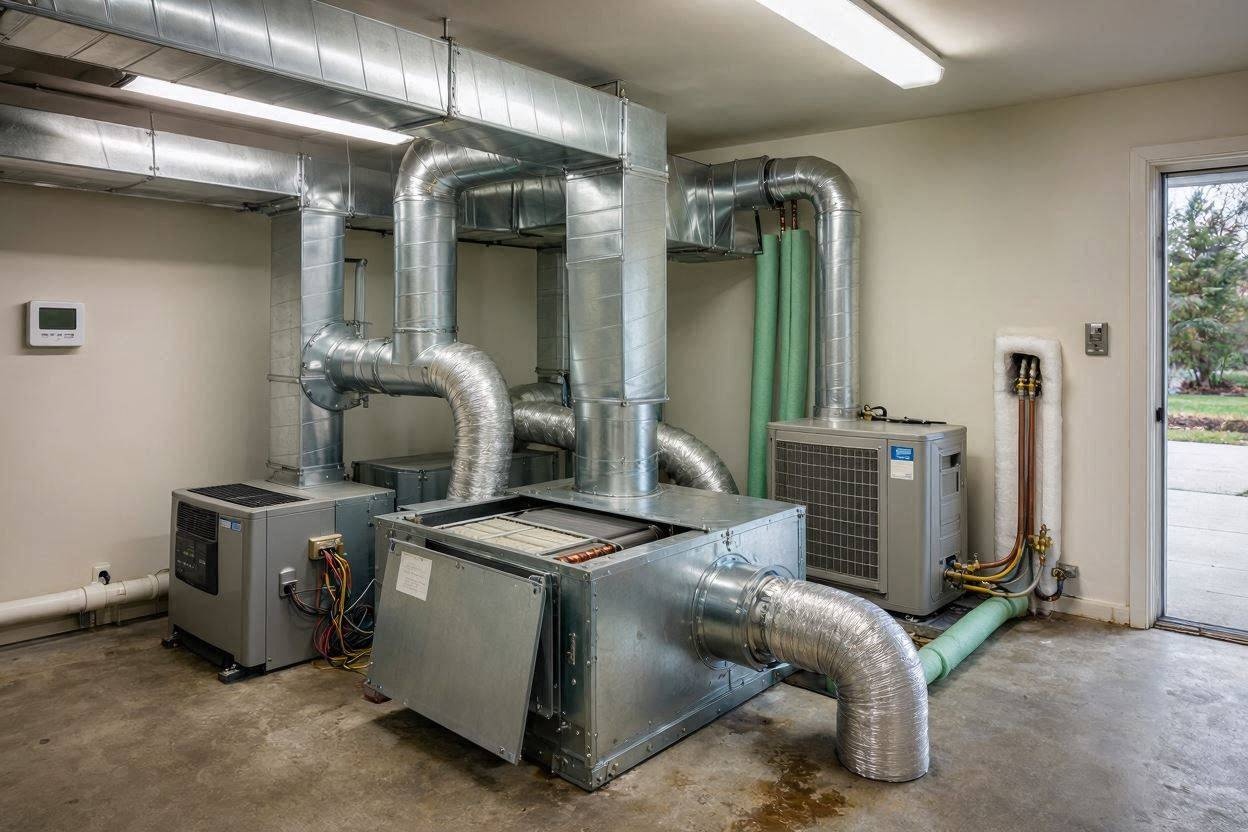
HVAC System Technology Innovation: Key Trends, Growth Drivers and Opportunities
Introduction to HVAC System Technology
Heating, Ventilation, and Air Conditioning (HVAC) system technology is undergoing a significant transformation, driven by the increasing demand for energy-efficient, sustainable, and intelligent climate control solutions across residential, commercial, and industrial sectors. As global temperatures rise, urbanization accelerates, and regulatory frameworks tighten around carbon emissions, the HVAC industry is evolving rapidly to meet the challenges of modern building infrastructure. Advanced HVAC systems now incorporate smart sensors, IoT connectivity, AI-driven controls, and variable refrigerant flow technologies that optimize energy consumption while maintaining superior indoor air quality and thermal comfort. These innovations are making HVAC systems more responsive, cost-effective, and environmentally sustainable, positioning them as critical components in the global transition toward green buildings and smart cities.
History of HVAC System Technology
The evolution of HVAC technology spans over a century, beginning with basic mechanical ventilation and steam heating systems in the late 19th century before advancing to modern air conditioning and sophisticated climate control solutions. The invention of modern air conditioning by Willis Carrier in 1902 marked a pivotal moment, enabling precise temperature and humidity control for industrial applications. Over the decades, continuous innovations in refrigeration cycles, compressor technologies, heat exchangers, and control systems have transformed HVAC from simple temperature regulation to comprehensive indoor environmental management. The introduction of variable speed drives, inverter technology, and digital controls in recent decades has further enhanced system efficiency and performance. Today, the integration of renewable energy sources, thermal storage systems, and intelligent building automation platforms is driving the next generation of HVAC innovation, supporting the development of net-zero energy buildings and sustainable urban infrastructure.
Benefits of HVAC System Technology
Modern HVAC systems provide substantial advantages over conventional climate control solutions by delivering superior energy efficiency, enhanced indoor air quality, and intelligent operational capabilities. Their ability to maintain optimal thermal comfort while minimizing environmental impact makes them indispensable for contemporary building design and facility management across multiple sectors.
Key Benefits Include:
- Significant energy savings through high-efficiency compressors, variable speed drives, and intelligent load-matching algorithms.
- Improved indoor air quality with advanced filtration, UV-C purification, and humidity control technologies.
- Smart building integration through IoT-enabled sensors, cloud-based analytics, and automated control systems.
- Reduced carbon footprint through the adoption of low-GWP refrigerants and renewable energy integration.
- Enhanced occupant comfort with precise temperature zoning, personalized climate control, and rapid response capabilities.
- Lower operational costs through predictive maintenance, real-time performance monitoring, and optimized energy usage.
- Extended equipment lifespan with advanced diagnostics and proactive maintenance alerts.
- Compliance with evolving environmental regulations and green building certification standards.
Current Market Size and Growth Trends of the HVAC System Market
The HVAC system market is experiencing robust growth as global construction activities expand, climate change intensifies cooling demands, and building owners increasingly invest in energy-efficient and intelligent climate control solutions. Rising urbanization, growing disposable incomes in emerging economies, and government incentives promoting sustainable building technologies are accelerating market expansion. Additionally, the ongoing digital transformation of building management systems and the increasing focus on indoor environmental quality post-pandemic are driving significant investments in next-generation HVAC technologies.
According to MarketsandMarkets, the global HVAC system market was valued at USD 299.28 billion in 2025 and is projected to reach USD 407.77 billion by 2030, registering a CAGR of 6.4% during the forecast period.
Download PDF Brochure: https://www.marketsandmarkets.com/pdfdownloadNew.asp?id=202111288
Key Market Growth Drivers
- Increasing construction activities in residential, commercial, and industrial sectors worldwide.
- Rising global temperatures and growing demand for cooling solutions in developing regions.
- Stricter government regulations on building energy efficiency and carbon emissions.
- Growing adoption of smart building technologies and IoT-enabled HVAC systems.
- Post-pandemic focus on improved indoor air quality and ventilation standards.
- Technological advancements in inverter compressors, heat pumps, and variable refrigerant flow systems.
- Expanding retrofit and replacement market for outdated HVAC equipment.
Key Drivers and Factors Influencing the Future of HVAC System Technology
The future of HVAC system technology is being shaped by the urgent need for sustainable building solutions, intelligent climate control, and enhanced indoor environmental quality across residential, commercial, and industrial applications. As governments worldwide implement stricter energy codes and carbon reduction targets, HVAC manufacturers are accelerating the development of high-efficiency, low-emission systems. Simultaneously, the integration of artificial intelligence, machine learning, and digital twin technologies is enabling predictive optimization, fault detection, and autonomous building management. The growing adoption of heat pump technology, thermal energy storage, and hybrid systems is further expanding the capabilities of modern HVAC solutions.
Key Growth Drivers
- Increasing global focus on building decarbonization and net-zero energy targets.
- Rapid adoption of smart building technologies and centralized automation platforms.
- Rising demand for energy-efficient heating and cooling solutions in residential and commercial sectors.
- Government incentives and subsidies promoting heat pump installation and HVAC system upgrades.
- Growing integration of renewable energy sources such as solar thermal and geothermal systems.
- Advancements in refrigerant technologies with lower global warming potential (GWP).
- Expansion of district heating and cooling networks in urban areas.
- Increasing awareness of indoor air quality and its impact on health and productivity.
Emerging Trends in HVAC System Technology
HVAC technology continues to evolve rapidly as manufacturers focus on developing smarter, more sustainable, and more responsive climate control solutions. Innovations in electrification, digitalization, and modular system design are expanding the capabilities of HVAC systems across diverse applications. Meanwhile, the convergence of HVAC with building information modeling (BIM), IoT platforms, and edge computing is enabling unprecedented levels of system optimization and operational efficiency.
Key Emerging Trends
- Adoption of AI-powered predictive maintenance and autonomous fault detection systems.
- Growing deployment of variable refrigerant flow (VRF) systems for zoned comfort control.
- Integration of heat pump technology for combined heating, cooling, and hot water generation.
- Expansion of smart thermostats and occupancy-based climate control solutions.
- Development of low-GWP and natural refrigerants for environmentally responsible systems.
- Implementation of thermal energy storage systems for load shifting and demand response.
- Rise of modular and prefabricated HVAC solutions for faster, cost-effective installation.
- Integration of building management systems (BMS) with cloud analytics and digital twins.
Opportunities and Challenges in the HVAC System Market
The HVAC system market presents substantial opportunities as global building stock expands, climate adaptation needs intensify, and sustainability regulations become more stringent. The industry's ability to deliver energy savings, carbon reductions, and improved occupant comfort positions HVAC technology as a critical enabler of green building and smart city initiatives. However, manufacturers and service providers must address technical complexities, cost pressures, and workforce development challenges to fully capitalize on market growth.
Key Opportunities
- Expanding retrofit and modernization market for aging building infrastructure.
- Growing demand for energy service companies (ESCOs) and performance contracting.
- Increasing adoption in developing economies with rapid urbanization and infrastructure investment.
- Rising integration with renewable energy systems and microgrid applications.
- Significant growth potential in data center cooling and high-density computing environments.
- Emerging applications in electric vehicle thermal management and battery cooling systems.
Key Challenges
- High initial capital costs for advanced HVAC systems and smart building integration.
- Skilled labor shortages in HVAC installation, maintenance, and commissioning.
- Complexity of integrating with existing building infrastructure and legacy systems.
- Rapidly evolving refrigerant regulations and compliance requirements.
- Fragmented market with numerous regional players and varying standards.
- Balancing energy efficiency with first-cost considerations in price-sensitive markets.
Innovations and Advancements in HVAC System Technology
Continuous innovation is strengthening the commercial adoption of advanced HVAC systems by improving energy performance, reliability, and intelligent control capabilities. Advances in compressors, heat exchangers, control algorithms, and system integration are enabling manufacturers to deliver increasingly sophisticated climate control solutions for next-generation buildings. These innovations are supporting the global transition toward energy-efficient, low-carbon, and resilient building infrastructure.
Recent Innovations
- Development of magnetic bearing chillers for ultra-high efficiency and reduced maintenance.
- Advanced variable speed inverter technology for precise capacity modulation.
- Implementation of machine learning algorithms for optimized building energy management.
- Integration of ultraviolet-C (UV-C) and photocatalytic oxidation for air purification.
- Next-generation heat pump systems with enhanced low-temperature performance.
- Wireless sensor networks and self-powered IoT devices for building monitoring.
- Additive manufacturing for customized heat exchanger designs and components.
- Advanced refrigerant leak detection and environmental monitoring systems.
Future Applications and Industries That Will Benefit from HVAC System Technology
HVAC system technology is poised to play an increasingly vital role in the future of building infrastructure as industries demand more energy-efficient, intelligent, and sustainable climate control solutions. Its capacity to maintain optimal indoor environments while minimizing energy consumption makes it indispensable for modern facilities across diverse sectors. As electrification, digitalization, and decarbonization initiatives accelerate globally, HVAC systems will become foundational components supporting human health, productivity, and environmental sustainability.
Key Future Applications
- Commercial Buildings: Provide energy-efficient heating, cooling, and ventilation for offices, retail spaces, hotels, and mixed-use developments, with smart zoning and occupancy-based controls to optimize energy usage and occupant comfort.
- Healthcare Facilities: Support critical environments in hospitals, laboratories, and pharmaceutical manufacturing with precise temperature, humidity, and air quality control essential for patient safety and research integrity.
- Data Centers: Deliver high-capacity cooling solutions for server rooms and cloud computing facilities, utilizing liquid cooling, free cooling, and intelligent thermal management to maintain optimal operating conditions for sensitive electronic equipment.
- Industrial Manufacturing: Enable process cooling, cleanroom environmental control, and climate management for production facilities requiring stable conditions for quality assurance and worker safety.
- Residential Housing: Provide efficient heating and cooling solutions for single-family homes and multi-family buildings, with smart thermostats, zoning, and heat pump technology for comfortable and cost-effective living environments.
- Educational Institutions: Maintain healthy indoor learning environments in schools and universities through enhanced ventilation, air filtration, and CO2 monitoring systems that support student concentration and well-being.
- Transportation Infrastructure: Support climate control in airports, railway stations, and transit hubs while delivering thermal management solutions for electric vehicle batteries and charging infrastructure.
- Cold Chain and Food Storage: Enable reliable refrigeration and temperature-controlled storage for food processing, pharmaceutical logistics, and distribution centers requiring precise environmental conditions for product preservation.
As adoption continues to expand, HVAC system technology will become an essential component supporting sustainable urban development, public health, and industrial competitiveness across global markets.
Conclusion: The Promising Future of HVAC System Technology
HVAC system technology is redefining the future of building climate control by delivering superior energy efficiency, intelligent automation, and enhanced indoor environmental quality compared to conventional solutions. As industries and governments accelerate investments in green buildings, carbon reduction, and smart city infrastructure, HVAC systems are becoming increasingly important for creating sustainable, healthy, and resilient built environments.
Continuous advancements in compressor technology, heat pump systems, AI-driven controls, and low-GWP refrigerants are making HVAC solutions more commercially viable across diverse applications. Their ability to reduce energy consumption, lower carbon emissions, and support occupant health and productivity makes them a preferred technology for next-generation building infrastructure and urban development.
Looking ahead, innovations in building automation, digital twins, thermal energy storage, and integrated renewable energy systems will continue to expand the capabilities of HVAC technology. Organizations adopting advanced HVAC solutions will be better positioned to improve building performance, reduce operational costs, and accelerate the transition toward carbon-neutral and intelligent built environments.
Find More Information on HVAC System Technology Innovation @ https://www.marketsandmarkets.com/Market-Reports/hvac-system-market-202111288.html
80% of the Forbes Global 2000 B2B companies rely on MarketsandMarkets to identify growth opportunities in emerging technologies and use cases that will have a positive revenue impact.
- Food Packaging Market Size Set for Strong Growth Through 2030 Amid Rising Demand for Convenience Foods
- Crop Protection Chemical Market Size, Share & Growth Forecast (2025–2030)
- Mulch Films Market: Driving Sustainable Agriculture Through Innovation
- Agricultural Adjuvants Market Analysis, Trends, and Growth Outlook (2026–2031)
- Japan Enterprise Asset Management Market Growth: AI and Smart Infrastructure Drive Demand


