

HVDC Transmission Technology Innovation: Key Trends, Growth Drivers and Opportunities
Introduction to HVDC Transmission Technology
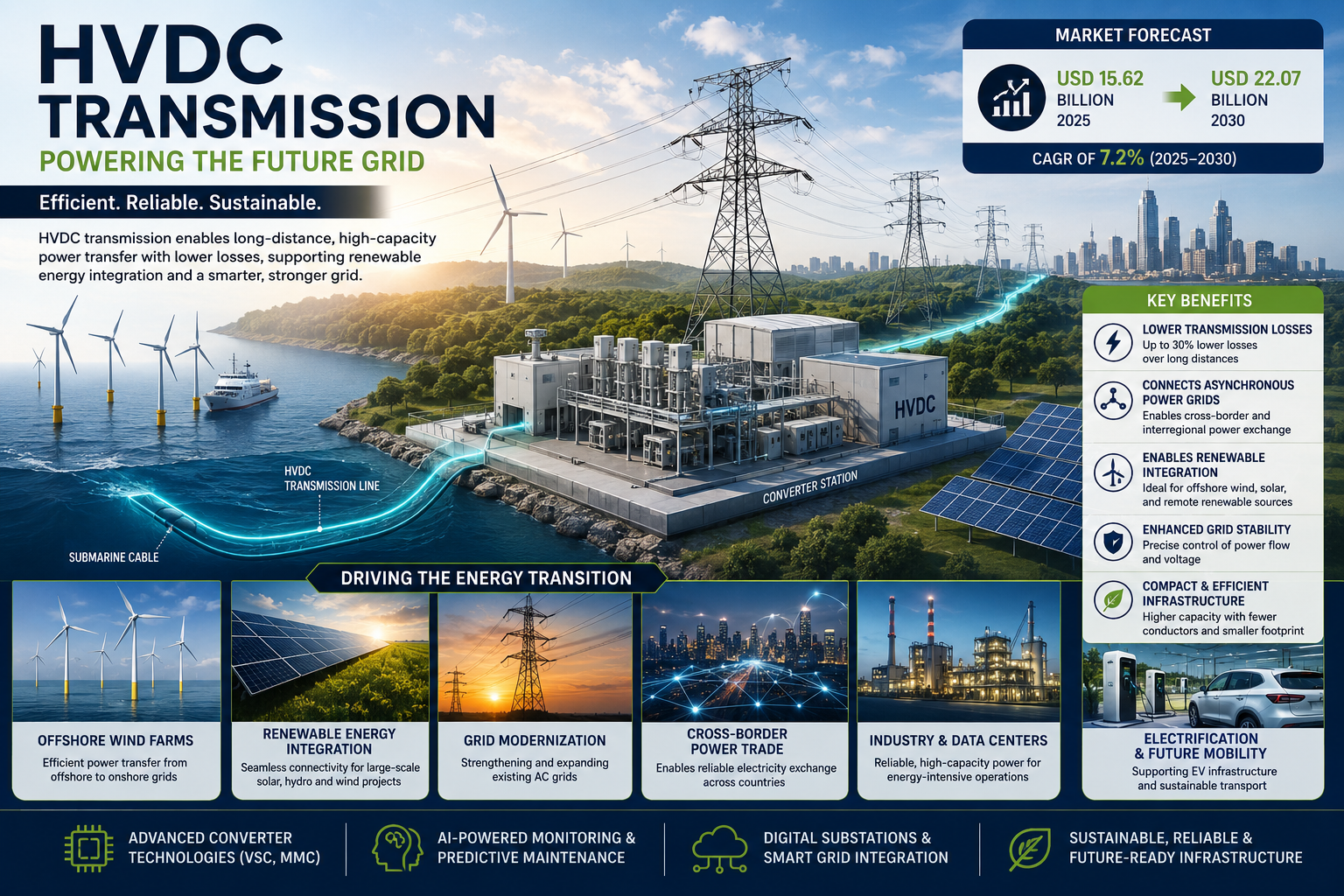
As the global energy landscape shifts toward renewable energy integration, long-distance power transmission, and smarter electricity grids, High Voltage Direct Current (HVDC) transmission technology has emerged as one of the most significant innovations in modern power infrastructure. Unlike conventional Alternating Current (AC) transmission systems, HVDC technology enables efficient transfer of large volumes of electricity over extended distances while minimizing transmission losses. It has become a preferred solution for connecting offshore wind farms, integrating renewable energy sources, linking asynchronous power grids, and supporting cross-border electricity trade.
The increasing global demand for clean energy, grid modernization, and resilient power infrastructure is accelerating investments in HVDC transmission systems. Governments and utilities worldwide are deploying HVDC networks to improve grid reliability, optimize energy efficiency, and facilitate the integration of renewable power into national electricity networks. Advancements in power electronics, voltage source converters (VSC), digital substations, and intelligent grid management systems are further expanding the capabilities of HVDC technology. As countries pursue ambitious decarbonization goals and invest in smart grid development, HVDC transmission is expected to play a central role in enabling a sustainable, interconnected, and reliable energy future.
History of HVDC Transmission Technology
The concept of transmitting electricity using direct current dates back to the late nineteenth century, during the early development of electrical power systems. However, technological limitations initially favored alternating current (AC) transmission for large-scale electricity distribution. The commercialization of high-power mercury arc valves during the mid-twentieth century marked the beginning of practical HVDC transmission, allowing electricity to be transmitted efficiently over long distances.
The introduction of thyristor-based converters in the 1970s significantly improved system performance, paving the way for large-scale HVDC projects worldwide. More recently, voltage source converter (VSC) technology has revolutionized the industry by enabling greater operational flexibility, easier integration of renewable energy sources, and improved power quality. Modern HVDC systems now incorporate advanced digital controls, artificial intelligence (AI), and real-time monitoring capabilities, making them an essential component of next-generation smart grids and renewable energy infrastructure.
Benefits of HVDC Transmission Technology
HVDC transmission technology offers numerous technical, economic, and environmental advantages over conventional AC transmission systems, particularly for long-distance and high-capacity power transfer. By reducing transmission losses and enabling precise control of power flows, HVDC systems improve overall grid efficiency while supporting the integration of renewable energy resources. They also enhance grid stability, facilitate cross-border electricity trading, and enable the reliable transmission of power from remote generation sites to urban demand centers.
Key benefits of HVDC transmission technology include:
- Lower transmission losses over long distances compared with traditional AC systems.
- Efficient integration of renewable energy from offshore wind farms, solar parks, and hydroelectric facilities.
- Improved grid stability and power quality through precise control of electricity flows.
- Interconnection of asynchronous power grids, enabling reliable cross-border electricity exchange.
- Reduced right-of-way requirements, making HVDC transmission suitable for densely populated regions.
- Higher transmission capacity using fewer conductors, reducing infrastructure costs.
- Enhanced operational flexibility, allowing utilities to respond quickly to changing energy demand.
Current Market Size and Growth Trends of the HVDC Transmission Industry
The global HVDC transmission market has experienced consistent growth as countries invest in renewable energy integration, grid modernization, and resilient electricity infrastructure. Rising electricity demand, increasing deployment of offshore wind farms, and the expansion of cross-border interconnection projects are driving widespread adoption of HVDC transmission systems. Utilities are increasingly recognizing the advantages of HVDC technology in reducing energy losses, improving transmission efficiency, and enabling large-scale renewable energy integration.
According to MarketsandMarkets, the global HVDC transmission market size was valued at USD 15.62 billion in 2025 and is projected to reach USD 22.07 billion by 2030, growing at a CAGR of 7.2% from 2025 to 2030.
The steady expansion of the market is supported by several important factors, including:
- Increasing investments in renewable energy generation and offshore wind projects.
- Growing deployment of smart grid infrastructure worldwide.
- Rising demand for long-distance electricity transmission with minimal energy losses.
- Expansion of cross-border power interconnection projects.
- Continuous advancements in voltage source converter (VSC) technologies.
- Government initiatives supporting energy transition and grid modernization.
- Increasing electricity demand driven by industrialization, urbanization, and electrification.
Key Drivers and Factors Influencing the Future of HVDC Transmission Technology
Several economic, technological, and environmental factors are accelerating the global adoption of High Voltage Direct Current (HVDC) transmission technology. As electricity demand continues to rise and countries commit to achieving net-zero carbon emissions, utilities are investing heavily in advanced transmission infrastructure capable of delivering reliable, efficient, and sustainable power over long distances. Unlike conventional AC systems, HVDC transmission offers greater efficiency, lower transmission losses, and enhanced grid stability, making it an ideal solution for modern energy networks.
One of the primary drivers is the rapid expansion of renewable energy generation. Large-scale wind farms, solar parks, and hydroelectric facilities are often located far from major consumption centers. HVDC transmission enables efficient transfer of electricity from these remote renewable energy sources while minimizing energy losses and maintaining grid reliability. Offshore wind farms, particularly in Europe and Asia-Pacific, have become one of the fastest-growing applications for HVDC technology due to its superior long-distance underwater transmission capabilities.
Emerging Trends in HVDC Transmission Technology
The future of HVDC transmission is being shaped by continuous innovation in power electronics, digital technologies, and renewable energy integration. As utilities seek more flexible and intelligent transmission solutions, several emerging trends are redefining the capabilities of modern HVDC systems.
One of the most significant developments is the increasing adoption of Voltage Source Converter (VSC)-HVDC technology. Compared with conventional Line Commutated Converter (LCC) systems, VSC technology provides independent control of active and reactive power, faster system response, black-start capability, and easier integration with weak power grids. These advantages make VSC-HVDC particularly suitable for offshore wind farms, urban transmission projects, and renewable energy integration.
Opportunities and Challenges in the HVDC Transmission Market
The global transition toward cleaner and more resilient energy systems presents enormous opportunities for the HVDC transmission market. Increasing investments in renewable energy, smart grids, offshore wind farms, and international electricity interconnections are creating strong demand for advanced transmission infrastructure capable of supporting future electricity networks. Emerging economies are also expanding national transmission networks to meet growing electricity demand, providing significant growth opportunities for equipment manufacturers, engineering companies, and technology providers.
Despite these opportunities, the industry faces several challenges. One of the most significant barriers is the high initial capital investment required for converter stations, cables, and associated infrastructure. Although HVDC systems provide long-term operational savings, project financing remains challenging for some utilities and developing economies.
Innovations and Advancements in HVDC Transmission Technology
Continuous technological innovation is transforming HVDC transmission into one of the most advanced power transmission solutions available today. Significant progress in power electronics, digital automation, artificial intelligence, and advanced materials is enabling utilities to build more reliable, efficient, and intelligent transmission networks.
Voltage Source Converter (VSC) technology remains one of the industry's most significant innovations. Modern VSC systems provide faster voltage regulation, improved reactive power control, black-start capability, and seamless integration with renewable energy sources. Compared with earlier converter technologies, VSC systems require smaller converter stations while offering greater operational flexibility and improved system stability.
Future Applications and Industries That Will Benefit from HVDC Transmission Technology
The future of HVDC transmission technology extends far beyond conventional long-distance electricity transmission. As countries accelerate their transition toward low-carbon energy systems, HVDC infrastructure will become the backbone of modern power networks, enabling efficient, reliable, and flexible electricity delivery across regions and continents. Continuous investments in renewable energy, smart grids, digital substations, and cross-border interconnections will further expand the scope of HVDC applications across multiple industries.
One of the largest application areas will be renewable energy integration. Offshore wind farms, large-scale solar parks, and hydroelectric power stations are often located far from major load centers. HVDC transmission enables efficient transportation of electricity over hundreds or even thousands of kilometers while minimizing transmission losses. This capability makes it an ideal solution for connecting remote renewable energy projects to national grids and supporting global decarbonization goals.
Conclusion: The Promising Future of HVDC Transmission Technology
HVDC transmission technology is transforming the future of global electricity infrastructure by enabling efficient, reliable, and sustainable long-distance power transmission. As governments, utilities, and industries continue investing in renewable energy, smart grids, and cross-border electricity networks, HVDC systems are becoming essential for building resilient and future-ready power systems. Their ability to minimize transmission losses, improve grid stability, integrate renewable energy resources, and connect asynchronous power networks makes HVDC one of the most strategically important technologies supporting the global energy transition.
The continued evolution of Voltage Source Converter (VSC) technology, Modular Multilevel Converters (MMC), artificial intelligence, digital substations, and predictive grid management will further enhance the capabilities of HVDC systems over the coming years. These technological advancements are improving transmission efficiency, operational flexibility, asset reliability, and environmental sustainability while reducing maintenance costs and supporting smarter electricity networks.
According to MarketsandMarkets, the global HVDC transmission market is projected to grow from USD 15.62 billion in 2025 to USD 22.07 billion by 2030, registering a CAGR of 7.2% during the forecast period. This steady growth reflects increasing global investments in renewable energy integration, offshore wind projects, grid modernization, and energy security initiatives.
Explore comprehensive market insights, technology trends, competitive landscape, regional analysis, and future growth opportunities in the HVDC Transmission Market.
https://www.marketsandmarkets.com/Market-Reports/hvdc-grid-market-1225.html
80% of the Forbes Global 2000 B2B companies rely on MarketsandMarkets to identify growth opportunities in emerging technologies and use cases that will have a positive revenue impact.
- Food Packaging Market Size Set for Strong Growth Through 2030 Amid Rising Demand for Convenience Foods
- Crop Protection Chemical Market Size, Share & Growth Forecast (2025–2030)
- Mulch Films Market: Driving Sustainable Agriculture Through Innovation
- Agricultural Adjuvants Market Analysis, Trends, and Growth Outlook (2026–2031)
- Japan Enterprise Asset Management Market Growth: AI and Smart Infrastructure Drive Demand

