

Imaging Spectroscopy Market Emerging Technologies, Applications, and Industry Trends
The imaging spectroscopy market is gaining attention as advanced sensing technologies become increasingly important for identifying materials, analyzing surfaces, and extracting detailed spectral information from complex environments. Unlike conventional imaging systems that primarily capture visible colors, imaging spectroscopy collects information across multiple wavelengths. This enables users to identify physical, chemical, and biological characteristics that may not be visible to the human eye. The technology combines imaging capabilities with spectroscopy to generate detailed spectral information for individual pixels. This capability is creating new opportunities across agriculture, healthcare, environmental monitoring, food processing, mining, defense, and industrial inspection.
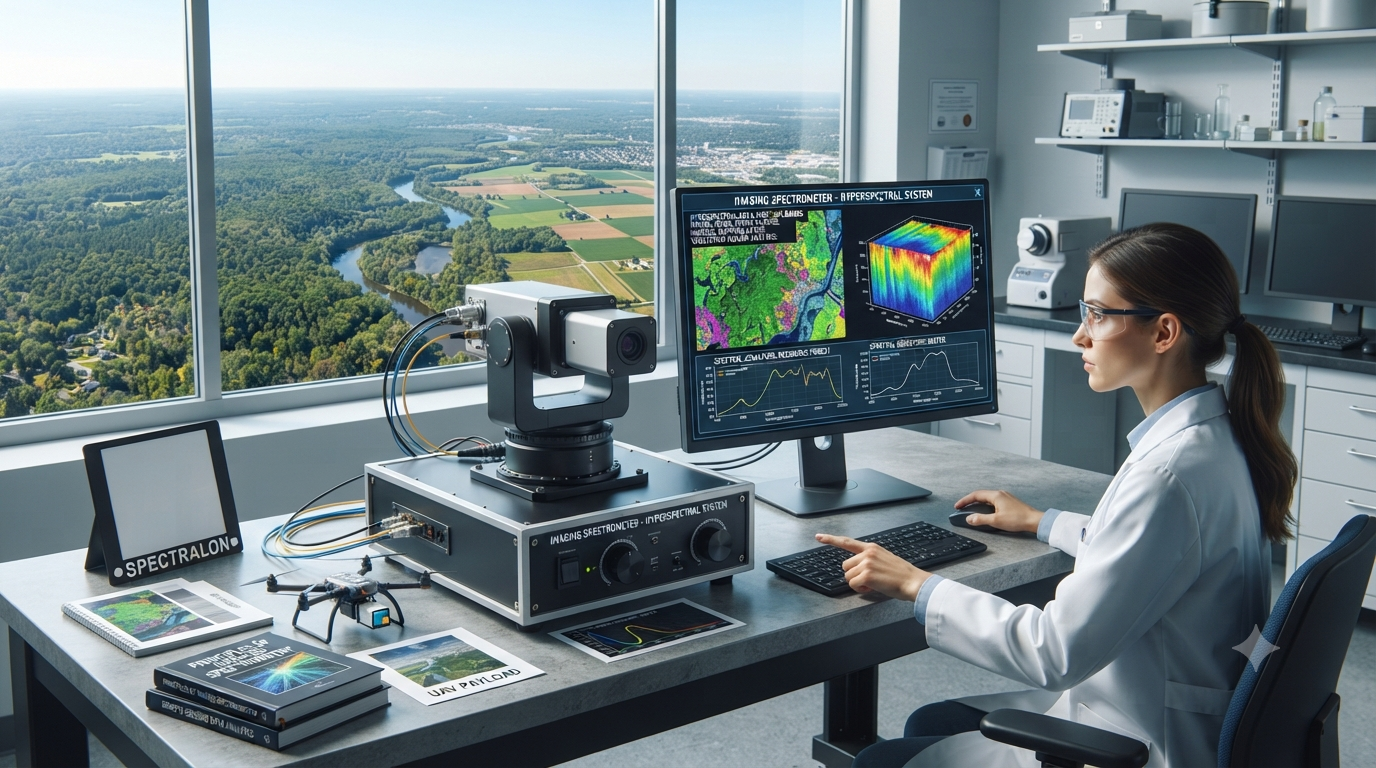
The imaging spectroscopy market is evolving alongside improvements in sensors, detectors, optics, computing, and artificial intelligence. Modern systems can capture large volumes of spectral information and process complex datasets using advanced algorithms. The resulting spectral data can support material classification, anomaly detection, quality inspection, and environmental assessment. Imaging spectroscopy is particularly valuable where conventional cameras cannot provide sufficient information about the composition or condition of an object. Its non destructive nature also makes it useful for applications where physical sampling or chemical testing may be difficult.
According to Marketsandmarkets, the global hyperspectral imaging system market size is estimated to be USD 0.92 billion in 2025 and is projected to reach USD 1.83 billion by 2030; it is expected to register a CAGR of 14.7% during the forecast period.
Download PDF Brochure @ https://www.marketsandmarkets.com/pdfdownloadNew.asp?id=246979343
Understanding Imaging Spectroscopy Technology
Imaging spectroscopy creates a detailed representation of an observed scene by recording spatial and spectral information simultaneously. The resulting data can be visualized as a three dimensional spectral cube containing two spatial dimensions and one wavelength dimension. Every pixel can therefore contain a spectral signature that helps distinguish one material or condition from another. This makes imaging spectroscopy different from ordinary RGB imaging, which generally relies on only three broad color channels. The additional spectral information can reveal subtle variations that are difficult to detect through conventional visual inspection.
The imaging spectroscopy market is benefiting from advances in data acquisition methods and sensor architecture. Imaging systems can use different approaches for collecting spectral information depending on application requirements. Point scanning, line scanning, staring systems, and snapshot approaches are among the techniques used for spectral image acquisition. Each approach has different implications for acquisition speed, spatial coverage, system complexity, and deployment conditions. Continued improvements in sensor design are helping expand the practical use of imaging spectroscopy beyond specialized laboratory environments.
Key Technologies Shaping the Market
The technology landscape surrounding the imaging spectroscopy market includes sensors, spectrometers, detectors, optical components, illumination systems, image processing platforms, and analytical software. Advances in detector sensitivity are helping systems capture useful spectral information under increasingly diverse operating conditions. Improvements in optics are also supporting better spectral resolution and image quality. At the same time, computational capabilities are enabling faster processing of large spectral datasets. These developments are important because imaging spectroscopy produces substantially more information than conventional imaging systems.
Artificial intelligence is becoming another important technology layer within the imaging spectroscopy market. Machine learning and deep learning algorithms can analyze spectral patterns, classify materials, detect anomalies, and automate image interpretation. Instead of relying entirely on manual analysis, organizations can use trained algorithms to identify patterns across large datasets. Deep learning can also support automated feature extraction from complex spectral images. Recent research highlights the growing relationship between hyperspectral imaging, image processing, remote sensing, and deep learning.
Major Applications of Imaging Spectroscopy
The imaging spectroscopy market serves a broad range of applications because spectral information can provide insights into the composition and condition of materials. In agriculture, imaging spectroscopy can support crop monitoring, plant health assessment, disease identification, weed detection, and nutrient analysis. Spectral signatures can reveal changes in vegetation before they become clearly visible through ordinary imaging. This creates opportunities for more targeted agricultural management and resource utilization. Research has demonstrated applications involving crop classification, plant stress identification, disease detection, and field variability assessment.
Key application areas include:
- Agriculture and precision farming for crop health monitoring, disease identification, nutrient assessment, weed detection, and field analysis.
- Healthcare and biomedical imaging for tissue characterization, surgical guidance, wound assessment, and non invasive analysis.
- Environmental monitoring for vegetation analysis, water assessment, pollution monitoring, and ecosystem observation.
- Food processing for quality inspection, freshness assessment, contamination detection, and product classification.
- Mining and geology for mineral identification, material characterization, and geological mapping.
- Industrial inspection for material sorting, defect detection, quality control, and process monitoring.
- Remote sensing for land classification, environmental observation, resource assessment, and large area mapping.
Healthcare represents another important application area for the imaging spectroscopy market. Hyperspectral imaging can capture both spatial and spectral characteristics of biological tissues, creating opportunities for non invasive tissue analysis. Researchers are investigating applications involving tissue oxygenation, wound assessment, tumor identification, disease diagnosis, and image guided surgery. The ability to obtain biochemical information without requiring traditional labeling techniques can be valuable in clinical environments. However, clinical adoption depends on factors such as validation, workflow integration, equipment requirements, and regulatory considerations.
Role of Imaging Spectroscopy in Agriculture
Agriculture is emerging as a major area of interest for the imaging spectroscopy market because crop conditions can vary significantly within the same field. Traditional visual inspection may not identify early signs of stress, nutrient deficiencies, or disease. Spectral imaging can capture information associated with plant structure and biochemical characteristics. This allows agricultural users to identify variations across crops and develop more targeted management strategies. Research has highlighted applications in crop classification, plant stress detection, disease identification, weed management, and nutrient assessment.
The integration of imaging spectroscopy with drones and remote sensing platforms is further expanding agricultural applications. Aerial systems can collect spectral information across large agricultural areas and generate detailed maps of crop conditions. When combined with artificial intelligence, these datasets can support automated classification and detection tasks. Such capabilities can contribute to precision agriculture by helping identify areas requiring specific attention. The combination of spectral sensing, aerial platforms, and intelligent analytics is therefore becoming an important technology direction.
Healthcare and Biomedical Applications
Healthcare is creating new opportunities for the imaging spectroscopy market as medical professionals seek additional information from biological tissues. Conventional imaging can reveal anatomical structures, but spectral imaging can provide additional information associated with tissue composition and physiological conditions. This combination can support applications in diagnosis, surgery, wound management, and tissue assessment. Research has identified potential uses in tumor detection, tissue viability assessment, burn analysis, and image guided procedures.
The technology is particularly attractive because it can operate without physically damaging the analyzed tissue. Imaging spectroscopy can produce detailed spectral information that may help distinguish between different tissue conditions. In surgical environments, real time or near real time spectral information could potentially assist physicians in identifying tissue boundaries and evaluating tissue characteristics. Nevertheless, practical implementation requires reliable calibration, rapid processing, suitable hardware, clinical validation, and integration with existing medical workflows.
Environmental Monitoring and Remote Sensing
Environmental monitoring is another significant area influencing the imaging spectroscopy market. Spectral information can help identify vegetation conditions, water characteristics, minerals, pollutants, and other environmental features. Airborne and spaceborne imaging spectroscopy systems can cover large geographic areas while collecting detailed information about the Earth's surface. This capability makes the technology valuable for ecosystem monitoring and natural resource assessment. Researchers are also exploring its use in water resources, flood management, vegetation analysis, and environmental observation.
Remote sensing applications are becoming more sophisticated as sensor resolution and computational capabilities improve. Imaging spectroscopy can distinguish materials based on their spectral signatures rather than relying only on visible appearance. This can support detailed classification of land surfaces and natural resources. The availability of advanced analytical algorithms is also improving the ability to interpret complex remote sensing datasets. As environmental monitoring becomes increasingly data driven, spectral imaging can provide another layer of information for decision support.
Food Safety and Quality Inspection
Food processing is another application area contributing to the development of the imaging spectroscopy market. Traditional quality inspection can require sampling, laboratory analysis, or visual examination. Imaging spectroscopy provides an opportunity to inspect products rapidly and without destroying the sample. Spectral information can help identify variations in composition, freshness, contamination, and physical characteristics. Research has identified applications in food safety and quality assessment across different types of products.
Automated inspection systems can combine spectral cameras with machine learning algorithms to classify products and identify irregularities. This can help improve consistency in high volume processing environments. Imaging spectroscopy can also provide information across an entire product rather than relying on a small physical sample. As food manufacturers seek more automated inspection capabilities, spectral imaging can become an important component of intelligent quality control systems.
Industrial Inspection and Material Classification
Industrial inspection is an important growth area for the imaging spectroscopy market because manufacturers increasingly require automated methods for identifying materials and detecting defects. Spectral signatures can help differentiate materials that appear visually similar but have different chemical or physical properties. This capability can be useful in sorting, recycling, quality control, pharmaceutical processing, and manufacturing inspection. Imaging spectroscopy can also support the identification of contaminants or irregular materials during production processes.
The integration of spectral imaging with robotics and automated inspection platforms can further expand industrial applications. A robotic system equipped with a spectral sensor can inspect objects while simultaneously collecting spatial and material information. Artificial intelligence can then analyze the captured data and classify objects according to predefined characteristics. This combination supports automated decision making and can reduce dependence on manual inspection. The imaging spectroscopy market is therefore closely connected with broader trends in smart manufacturing and industrial automation.
Artificial Intelligence and Data Analytics
Artificial intelligence is transforming how spectral information is processed within the imaging spectroscopy market. A single spectral image can contain thousands or millions of individual data points, making manual analysis difficult. Machine learning algorithms can identify relationships between spectral patterns and specific materials or conditions. Deep learning can further automate feature extraction and classification from complex datasets. These capabilities are helping transform imaging spectroscopy from a specialized sensing technology into a more intelligent analytical platform.
Advanced analytics can also improve anomaly detection and segmentation. Instead of simply producing an image, an intelligent imaging system can identify areas that differ from expected spectral patterns. This can be particularly valuable in industrial inspection, environmental monitoring, agriculture, and healthcare. Cloud computing and edge processing are also becoming relevant as organizations seek faster analysis of large datasets. The future development of the imaging spectroscopy market will therefore depend not only on better sensors but also on efficient data management and intelligent analytics.
Miniaturization and Portable Systems
Miniaturization is an important trend within the imaging spectroscopy market. Historically, advanced spectral imaging systems could require substantial equipment and controlled operating environments. Improvements in sensor design, electronics, optics, and computing are supporting the development of smaller and more portable systems. Portable devices can potentially bring spectral analysis closer to field environments, production facilities, healthcare settings, and inspection locations. This can reduce the need to transport samples to centralized laboratories.
Compact imaging spectroscopy systems can also support mobile platforms and unmanned systems. Drones, autonomous robots, handheld instruments, and other mobile platforms can carry spectral sensors into environments that are difficult or expensive to access manually. Recent research identifies lightweight and portable hyperspectral systems as an important direction for expanding real world applications.
Major Trends Influencing Market Development
Several technology trends are shaping the imaging spectroscopy market as organizations seek faster, more accurate, and more automated sensing solutions. Artificial intelligence is becoming increasingly important for classification and interpretation, while sensor miniaturization is expanding deployment possibilities. Real time processing is also gaining attention because many applications require decisions to be made immediately after data acquisition. Integration with drones, robotics, cloud computing, and edge computing is creating additional opportunities.
Important trends include:
- Greater integration of artificial intelligence and deep learning for automated spectral interpretation.
- Development of compact and portable spectral imaging systems for field applications.
- Increasing use of drones and autonomous platforms for remote sensing and agricultural monitoring.
- Greater emphasis on real time spectral data processing and automated decision making.
- Expansion of imaging spectroscopy into healthcare, food inspection, recycling, and industrial automation.
- Integration of spectral imaging with Internet of Things platforms and connected sensing environments.
- Development of improved algorithms for spectral classification, anomaly detection, image fusion, and data reduction.
Challenges Affecting Technology Adoption
Despite its capabilities, the imaging spectroscopy market faces several technical and operational challenges. Spectral imaging systems can generate very large datasets that require substantial processing and storage capabilities. Calibration is another important consideration because sensor performance can be affected by illumination, environmental conditions, and system characteristics. Organizations may also require specialized expertise to interpret spectral information correctly. These factors can make implementation more complex than conventional imaging solutions.
Another challenge involves balancing spectral resolution, spatial resolution, acquisition speed, and system cost. Increasing the amount of spectral information can also increase computational requirements. Real time applications may require optimized algorithms and specialized hardware to process data quickly. In healthcare and other sensitive applications, additional validation and regulatory requirements may also affect deployment. Addressing these challenges will be important for wider adoption across commercial and industrial environments.
Future Technology Opportunities
The future direction of the imaging spectroscopy market will be closely connected with intelligent sensing, automation, and miniaturization. Sensors are expected to become increasingly integrated with advanced processing systems capable of interpreting spectral information closer to the point of acquisition. This can reduce processing delays and support applications requiring rapid decisions. AI based classification and anomaly detection can further simplify the interpretation of complex spectral datasets. These developments can make spectral imaging more accessible to users outside specialized research environments.
Another opportunity involves combining imaging spectroscopy with other sensing technologies. Multimodal systems can integrate spectral, thermal, depth, radar, or conventional visual information to provide a more comprehensive understanding of an environment. Data fusion can improve classification and reduce the limitations associated with relying on a single sensor type. Such systems could become valuable in agriculture, autonomous inspection, environmental monitoring, robotics, and industrial automation. The imaging spectroscopy market can benefit as organizations increasingly adopt integrated sensing architectures.
Digital Transformation and Imaging Spectroscopy
Digital transformation is changing the way organizations collect, process, and use visual information. Imaging spectroscopy fits naturally into this transformation because it converts physical characteristics into structured digital datasets. These datasets can be connected with artificial intelligence platforms, cloud environments, digital twins, and automated decision systems. Instead of using spectral imaging solely as an inspection tool, organizations can integrate it into broader digital workflows. This can support continuous monitoring, automated alerts, predictive analysis, and data driven operational decisions.
The imaging spectroscopy market is therefore moving toward intelligent sensing ecosystems rather than isolated imaging equipment. Connected sensors can collect information continuously while software platforms analyze and distribute the results. In manufacturing, this could support automated quality monitoring, while agriculture could use spectral information for field level management. Environmental applications can combine remote sensing data with analytical platforms to monitor changes over time. This convergence of sensing and digital intelligence is likely to remain an important technology trend.
Conclusion
The imaging spectroscopy market is developing as industries seek more detailed information from visual environments and physical materials. By combining spatial information with spectral signatures, imaging spectroscopy can reveal characteristics that conventional imaging methods may not identify. Its applications extend across agriculture, healthcare, environmental monitoring, food processing, industrial inspection, mining, and remote sensing. Advances in artificial intelligence, sensor miniaturization, automation, and real time processing are expanding the technology's potential.
The next phase of development will focus on making spectral imaging faster, smaller, easier to deploy, and simpler to interpret. Integration with intelligent analytics, autonomous platforms, and connected digital systems can further expand practical applications. Challenges involving data volume, calibration, processing speed, system complexity, and deployment requirements will continue to influence adoption. As these challenges are addressed through technological innovation, the imaging spectroscopy market can become an increasingly important component of advanced sensing and digital transformation across multiple industries.
FAQs
What is imaging spectroscopy?
Imaging spectroscopy is an advanced sensing technique that combines imaging and spectroscopy to capture spatial and spectral information simultaneously. It can provide a spectral signature for individual pixels, helping users identify materials and characterize physical or chemical properties.
How does imaging spectroscopy differ from conventional imaging?
Conventional RGB imaging generally captures information through three broad color channels, while imaging spectroscopy collects information across many wavelengths. This additional spectral information allows systems to identify subtle material differences that may not be visible in ordinary images.
What are the major applications of imaging spectroscopy?
Major applications include agriculture, healthcare, environmental monitoring, remote sensing, food inspection, industrial quality control, mining, material classification, recycling, and forensic analysis. The technology is particularly useful when identifying materials or conditions requires more information than conventional imaging can provide.
Why is artificial intelligence important for imaging spectroscopy?
Artificial intelligence can process large spectral datasets and identify patterns that may be difficult to detect manually. Machine learning and deep learning can support classification, segmentation, anomaly detection, and automated interpretation of spectral images.
What are the major challenges of imaging spectroscopy?
Important challenges include large data volumes, processing requirements, sensor calibration, system complexity, acquisition conditions, and the need for specialized analytical expertise. Real time applications can also require advanced computing capabilities to process spectral data quickly.
Is imaging spectroscopy useful for agriculture?
Yes. Imaging spectroscopy can support crop monitoring, disease detection, plant stress identification, nutrient assessment, weed detection, crop classification, and field variability analysis. Its ability to identify spectral changes can provide information before some problems become visually obvious.
What is the future of imaging spectroscopy?
Future development is expected to emphasize compact sensors, artificial intelligence, real time processing, autonomous platforms, multimodal sensing, and connected digital systems. These developments can make spectral imaging more practical across field, industrial, environmental, and healthcare applications.
80% of the Forbes Global 2000 B2B companies rely on MarketsandMarkets to identify growth opportunities in emerging technologies and use cases that will have a positive revenue impact.
- Food Packaging Market Size Set for Strong Growth Through 2030 Amid Rising Demand for Convenience Foods
- Crop Protection Chemical Market Size, Share & Growth Forecast (2025–2030)
- Mulch Films Market: Driving Sustainable Agriculture Through Innovation
- Agricultural Adjuvants Market Analysis, Trends, and Growth Outlook (2026–2031)
- Japan Enterprise Asset Management Market Growth: AI and Smart Infrastructure Drive Demand

.jpg)
