
Infrared Optoelectronics Market Emerging Trends, Applications, and Growth Opportunities
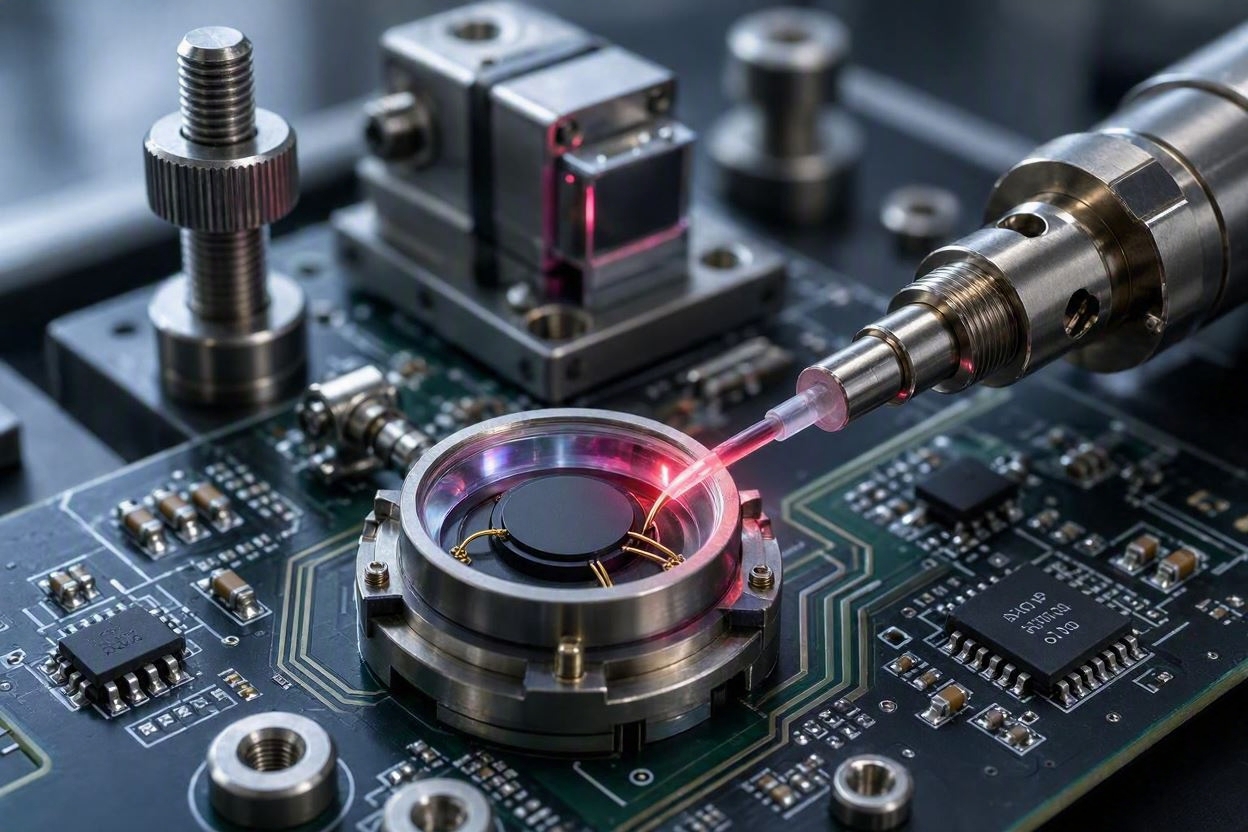
The infrared optoelectronics market is developing as infrared technologies become increasingly important across sensing, imaging, communication, healthcare, industrial automation, environmental monitoring, and security applications. Infrared optoelectronic devices detect, transmit, or process infrared radiation and convert optical information into useful electrical signals. The technology covers multiple wavelength regions, including near infrared, short wave infrared, mid wave infrared, and long wave infrared. Each region provides different characteristics for sensing and imaging applications. Recent technological progress is focused on improving sensitivity, response speed, spectral coverage, miniaturization, and energy efficiency.
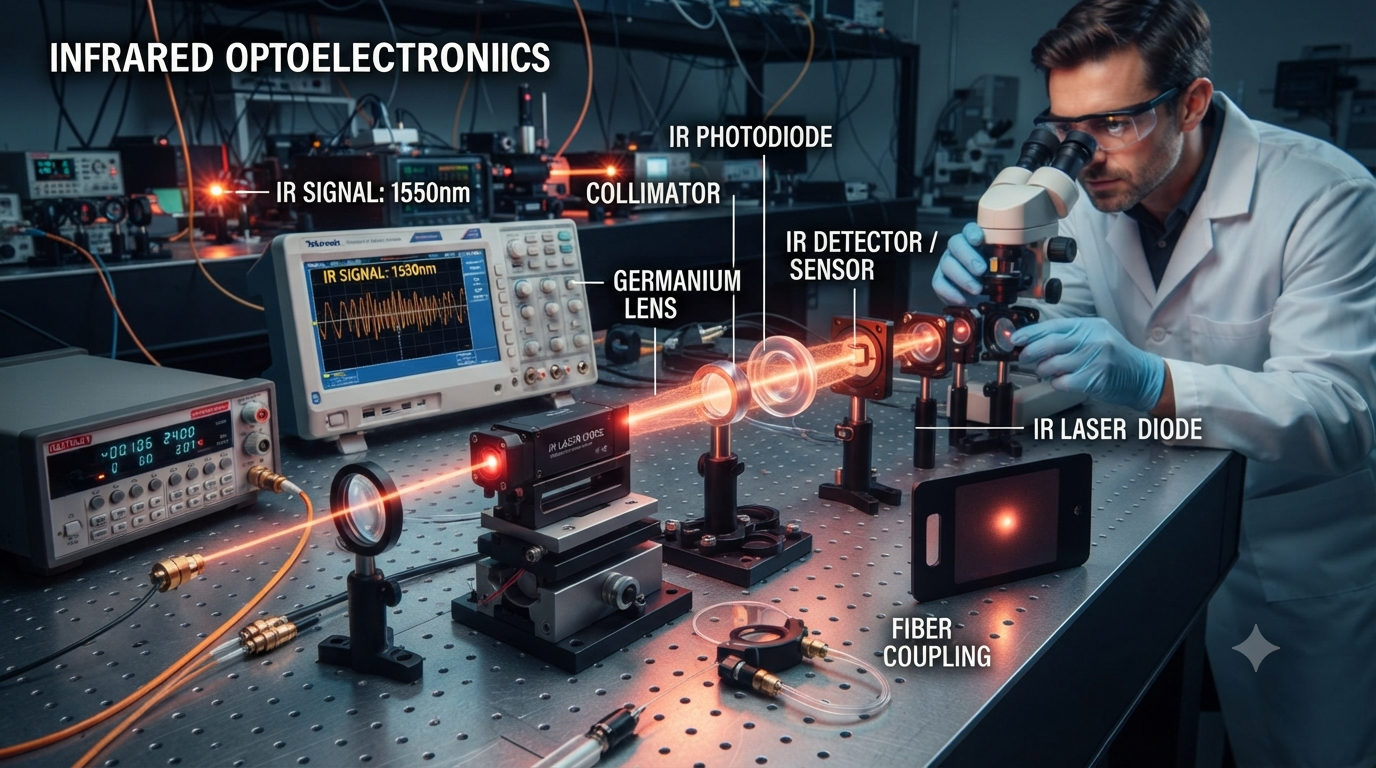
Infrared technology has an important advantage because infrared radiation provides information that is not readily available through visible light. Thermal characteristics, molecular absorption patterns, temperature variations, and material properties can be detected through appropriate infrared devices. This makes infrared optoelectronics useful for applications where conventional cameras or sensors may not provide sufficient information. Modern systems increasingly combine infrared detectors with optics, signal processing, artificial intelligence, and integrated electronics. These developments are expanding the role of infrared systems from conventional detection toward intelligent sensing and automated decision support.
According to Marketsandmarkets, the global infrared imaging market size is projected to grow from USD 9.13 billion in 2026 to USD 12.79 billion by 2032, growing at a CAGR of 5.8% from 2026 to 2032.
Download PDF Brochure @ https://www.marketsandmarkets.com/pdfdownloadNew.asp?id=593
How Infrared Optoelectronic Devices Work
Infrared optoelectronic devices operate by interacting with infrared radiation and converting the resulting optical information into an electrical response. Photon based detectors directly respond to incoming infrared photons, while thermal detectors measure changes caused by absorbed infrared energy. Hybrid approaches can combine different detection mechanisms to achieve specific performance characteristics. Important parameters include responsivity, detectivity, response speed, spectral range, noise characteristics, and operating temperature. The selection of a detection mechanism depends heavily on the application, wavelength requirements, environmental conditions, and desired system performance.
The infrared optoelectronics market includes technologies ranging from individual photodetectors to sophisticated focal plane arrays and integrated sensing systems. Photon detectors can provide high sensitivity and rapid response, although some high performance configurations require cooling to reduce thermal noise. Thermal detectors, including microbolometers and related technologies, can provide practical solutions for uncooled imaging systems. The continuing development of materials, device structures, and manufacturing processes is helping engineers balance sensitivity, cost, size, power consumption, and reliability. These improvements are particularly relevant to applications requiring compact and portable infrared equipment.
Major Infrared Technology Categories
Infrared systems are generally differentiated according to wavelength and detection technology. Near infrared technologies are widely associated with optical sensing, imaging, communications, and machine vision. Short wave infrared systems are increasingly used for material identification, inspection, sorting, agriculture, and industrial imaging. Mid wave and long wave infrared technologies are particularly valuable for thermal imaging, gas detection, surveillance, environmental monitoring, and temperature measurement. The appropriate wavelength depends on the physical characteristics that need to be detected and the operating environment of the system.
The infrared optoelectronics market is also influenced by the evolution of detector materials. Traditional infrared detector technologies include materials such as mercury cadmium telluride, indium antimonide, lead based compounds, and various III V semiconductor structures. Newer research is investigating two dimensional materials, group IV materials, nanostructures, organic materials, and heterogeneous structures. These materials can provide different combinations of spectral response, sensitivity, flexibility, integration capability, and operating temperature. Material innovation therefore remains an important area for improving infrared sensing performance.
Growing Demand for Infrared Imaging
Infrared imaging is one of the most important applications supporting demand for infrared optoelectronic technologies. Unlike conventional cameras that primarily capture reflected visible light, infrared imaging can reveal thermal radiation and other spectral information. This capability allows users to identify temperature differences, heat sources, material variations, and objects under conditions where visible imaging may be limited. Thermal imaging is used in industrial inspection, building diagnostics, firefighting, security, automotive applications, and scientific research. Continued improvements in detector arrays and image processing are helping make infrared imaging more compact and practical.
The increasing integration of infrared cameras with digital processing is also changing how thermal information is interpreted. Modern systems can analyze images automatically, identify abnormal temperature patterns, and support predictive maintenance workflows. In industrial environments, this can help identify overheating equipment before a failure occurs. In building applications, thermal imaging can help identify insulation problems and heat losses. These use cases demonstrate how infrared optoelectronics is moving beyond basic image capture toward continuous monitoring and intelligent analysis.
Industrial Automation and Inspection
Industrial automation represents an important application area for the infrared optoelectronics market. Manufacturing facilities require reliable methods for monitoring temperature, identifying defects, measuring material properties, and observing processes without physical contact. Infrared sensors and cameras can operate continuously while production equipment remains in operation. This makes them useful for applications such as electrical inspection, furnace monitoring, process control, mechanical equipment monitoring, and quality inspection. Infrared technology can also complement visible machine vision systems by providing information based on heat and spectral characteristics.
Noncontact measurement is particularly valuable in manufacturing environments where conventional contact sensors may be difficult to install or maintain. Infrared systems can monitor moving components, high temperature surfaces, and difficult to access equipment. As factories adopt greater automation, infrared sensing can be connected with industrial control systems and analytics platforms. The combination of infrared data and automated analytics creates opportunities for faster fault detection and more consistent quality monitoring.
Healthcare and Biomedical Applications
Healthcare is another area where infrared optoelectronics can provide valuable sensing capabilities. Infrared technologies are used in areas such as thermal imaging, tissue analysis, monitoring, spectroscopy, and noncontact temperature measurement. Infrared measurements can provide information related to heat distribution and physiological conditions without requiring physical contact with the measured area. Research is also exploring advanced infrared sensors for health monitoring and biomedical diagnostics. These applications require sensors with high sensitivity, stable operation, compact form factors, and reliable signal processing.
The infrared optoelectronics market can benefit from the broader movement toward portable and noninvasive healthcare technologies. Wearable devices and compact sensing platforms require components that consume limited power while delivering useful measurements. Advances in semiconductor materials and miniaturized photodetectors are supporting this direction. However, medical applications generally require rigorous validation, calibration, safety assessment, and regulatory compliance before technologies can become widely deployed.
Environmental Monitoring and Gas Detection
Environmental monitoring is an important application because many gases exhibit distinctive absorption characteristics in infrared wavelengths. Mid infrared photonics is particularly useful for chemical and gas sensing because molecular vibrations can create identifiable spectral signatures. This enables systems to detect and analyze gases in industrial facilities, environmental monitoring stations, laboratories, and other specialized applications. Infrared spectroscopy can provide information about the presence and concentration of specific chemical compounds.
Infrared gas sensing can support applications related to emissions monitoring, industrial safety, air quality assessment, and process control. The ability to perform measurements remotely or continuously can be particularly valuable in environments where conventional sampling methods are slower or more difficult. Recent developments in integrated photonics are also targeting smaller devices with improved optical efficiency and broader sensing capabilities. These developments can expand the use of infrared technologies beyond large laboratory instruments toward more compact sensing platforms.
Automotive and Transportation Applications
Automotive systems are creating additional opportunities for infrared optoelectronic components. Infrared cameras can support visibility in low light and challenging environmental conditions, while infrared sensors can contribute to driver assistance and occupant monitoring. Thermal imaging can help identify pedestrians, animals, vehicles, and other heat emitting objects under conditions where conventional cameras may face limitations. Infrared sensing can also support battery monitoring and thermal management in electric vehicles.
The development of advanced driver assistance systems is increasing the importance of multiple complementary sensing technologies. Infrared systems can provide another source of information alongside visible cameras, radar, lidar, and other sensors. The infrared optoelectronics market therefore has opportunities in applications where additional thermal or spectral information can improve situational awareness. However, automotive components must meet demanding requirements related to reliability, operating temperature, vibration, lifetime, and cost.
Security and Surveillance Applications
Security and surveillance systems have historically been important users of infrared technology. Infrared cameras can support monitoring during nighttime and in environments with limited visible illumination. Thermal imaging can detect heat signatures without depending entirely on ambient lighting, making it useful for perimeter monitoring, industrial facilities, infrastructure protection, and emergency response. Infrared systems can also complement conventional visible cameras by providing an additional imaging channel.
Advances in detector arrays, optics, image processing, and artificial intelligence are improving the capabilities of modern surveillance platforms. Automated systems can identify changes in thermal patterns and help operators focus on potentially important events. The growing requirement for continuous monitoring across critical infrastructure and industrial environments can support adoption of infrared sensing. At the same time, system designers must consider factors such as environmental interference, calibration, image quality, false alarms, and data security.
Emerging Material and Device Innovations
Material science is playing a significant role in the development of next generation infrared optoelectronic devices. Researchers are investigating two dimensional semiconductors, graphene based structures, ferroelectric materials, narrow bandgap materials, and heterogeneous device architectures. These technologies are being explored to achieve high responsivity, faster response, wider spectral coverage, and room temperature operation. Different material systems provide different advantages, so no single material is suitable for every infrared application.
One important direction is the development of infrared detectors that can operate effectively without complex cooling systems. Traditional high performance infrared detectors may require cooling to reduce thermal noise, which adds size, energy consumption, and system complexity. Research into new materials and device structures is aimed at overcoming some of these limitations. Room temperature detection can be particularly useful for portable devices, industrial sensors, automotive systems, and consumer applications. This trend is expected to remain important as manufacturers seek smaller and more energy efficient infrared platforms.
Integration With Silicon and Photonic Circuits
Integration is becoming an important development area for infrared technologies. Silicon based platforms can potentially support compact infrared photodetectors and photonic circuits using manufacturing processes associated with established semiconductor technologies. Recent research has explored group IV materials, III V compounds, and two dimensional materials for integrated infrared detection. Such approaches can help reduce component size and support the integration of sensing, optical processing, and electronic functions on compact platforms.
The infrared optoelectronics market can benefit from this movement toward integrated architectures because smaller components can enable new applications. Integration may reduce the need for multiple discrete optical components and can support faster signal processing. It can also make it easier to combine infrared sensing with computing and communication functions. However, challenges involving material compatibility, fabrication complexity, optical losses, thermal management, and manufacturing yield still need to be addressed.
Key Trends Shaping the Market
Several technology trends are influencing the development of infrared optoelectronics across industrial and commercial applications. Greater emphasis is being placed on compact devices, higher sensitivity, wider spectral response, lower power consumption, and room temperature operation. At the same time, artificial intelligence is increasingly being combined with infrared imaging to interpret large volumes of sensor data. These developments are expanding the role of infrared devices from simple detection toward intelligent perception systems.
Key developments include:
- Miniaturized infrared sensors for portable and embedded applications
- Uncooled detector technologies for simpler system architectures
- Advanced materials for broader spectral response
- Integrated photonic platforms for compact sensing
- Artificial intelligence based infrared image analysis
- Multispectral and hyperspectral infrared imaging
- High speed detection for communications and industrial systems
Role of Artificial Intelligence
Artificial intelligence is becoming increasingly relevant to infrared sensing because modern systems can generate large quantities of image and spectral data. Machine learning algorithms can identify patterns that may be difficult to recognize manually. In industrial inspection, AI can assist with anomaly detection and classification. In thermal imaging, intelligent algorithms can distinguish temperature patterns and identify potential abnormalities. Combining infrared sensors with edge computing can also allow data to be processed closer to the point of collection.
The integration of AI with infrared optoelectronics can improve the usefulness of sensors without necessarily requiring major changes to the optical hardware. Software can help extract additional information from existing sensor data and support automated monitoring. However, performance depends on the quality of training data, calibration, environmental conditions, computational resources, and algorithm robustness. Reliable AI enabled infrared systems therefore require coordinated development across sensors, optics, electronics, software, and data management.
Challenges Affecting Industry Development
Despite technological progress, the infrared optoelectronics market faces several technical and commercial challenges. High performance detectors can involve complex materials, sophisticated fabrication methods, specialized optics, and cooling requirements. These factors can increase system cost and make integration more difficult. Detector performance can also vary depending on wavelength, temperature, background radiation, noise, and operating conditions. Achieving high sensitivity while maintaining affordability and compact size remains an important engineering challenge.
Another challenge involves manufacturing scalability. Advanced materials and novel device structures may demonstrate strong performance in laboratory environments but can face difficulties during large scale production. Manufacturing consistency, packaging, thermal management, optical alignment, and long term reliability must be considered before commercial deployment. Developers also need to balance performance with energy consumption and system complexity. Addressing these challenges will be important for broader adoption across cost sensitive applications.
Opportunities Across Emerging Applications
The expanding use of connected sensors is creating new opportunities for infrared technologies. Smart factories can use infrared cameras for continuous equipment monitoring, while connected buildings can use thermal sensing for energy management and maintenance. Healthcare devices can incorporate infrared sensing into portable monitoring systems. Environmental platforms can combine infrared spectroscopy with automated analytics to monitor gases and other conditions. These applications demonstrate the potential for infrared components to become part of larger connected sensing ecosystems.
Another opportunity lies in combining multiple infrared wavelength bands within a single system. Multispectral and hyperspectral platforms can provide richer information than conventional single band sensors. Different wavelengths can reveal different material, chemical, and thermal characteristics. Advanced processing can then combine these measurements to create detailed information about the observed environment. This direction can support applications in agriculture, industrial inspection, environmental science, healthcare, and remote sensing.
Future Direction of Infrared Optoelectronics
The future development of the infrared optoelectronics market is expected to center on improving performance while reducing size, power consumption, and system complexity. Advances in detector materials, integrated photonics, semiconductor manufacturing, and computational imaging are creating opportunities for more capable sensing platforms. The movement toward room temperature operation is particularly significant because it can simplify system design and expand deployment possibilities. Research is also increasingly focused on combining sensing with on device processing and intelligent analysis.
The convergence of infrared sensing, artificial intelligence, photonics, and semiconductor technologies can create new architectures for intelligent perception. Instead of simply collecting infrared information, future systems can analyze spectral and thermal information directly within compact devices. This can support faster responses in industrial automation, healthcare monitoring, environmental sensing, automotive applications, and security systems. Continued progress will depend on improvements across materials, fabrication, packaging, optics, electronics, and software.
Conclusion
The infrared optoelectronics market is evolving as infrared sensing becomes increasingly integrated into imaging, industrial automation, healthcare, environmental monitoring, automotive systems, security, and communication technologies. Improvements in detector materials, integrated photonics, uncooled sensing, multispectral imaging, and intelligent data processing are expanding the capabilities of infrared devices. At the same time, challenges involving cost, cooling, manufacturing complexity, noise, integration, and reliability remain important considerations. The combination of advanced materials and compact semiconductor platforms is creating opportunities for more practical infrared systems. As infrared technologies become more intelligent and integrated, their role in next generation sensing and imaging platforms is expected to continue expanding.
FAQs
What is the infrared optoelectronics market?
The infrared optoelectronics market covers technologies and components that generate, detect, transmit, or process infrared radiation. Applications include thermal imaging, sensing, spectroscopy, communications, industrial inspection, healthcare, automotive systems, and security.
What are the major applications of infrared optoelectronics?
Major applications include thermal imaging, industrial monitoring, environmental sensing, gas detection, healthcare, automotive sensing, security surveillance, optical communication, and scientific instrumentation. The technology is particularly useful where thermal or spectral information is important.
What types of infrared detectors are used?
Infrared detectors broadly include photon detectors and thermal detectors. Photon detectors directly interact with infrared photons, while thermal detectors measure changes produced by absorbed infrared energy. Detector selection depends on wavelength, sensitivity, response speed, operating temperature, and application requirements.
Why is uncooled infrared detection important?
Uncooled detection can reduce the complexity, size, energy consumption, and operating requirements associated with cooling systems. This makes uncooled technologies attractive for portable equipment, industrial cameras, automotive systems, and other applications where compact designs are important.
How is artificial intelligence used with infrared technology?
Artificial intelligence can analyze infrared images and sensor data to identify patterns, detect anomalies, classify objects, and support automated monitoring. Combining AI with infrared sensing can improve the interpretation of thermal and spectral information.
What materials are used in infrared optoelectronics?
Common material technologies include mercury cadmium telluride, indium antimonide, III V semiconductor compounds, group IV materials, and various emerging two dimensional materials. Research continues to explore new materials and structures for improved sensitivity, spectral coverage, integration, and room temperature operation.
What are the major trends in infrared optoelectronics?
Major trends include miniaturization, uncooled detection, integrated photonics, advanced semiconductor materials, multispectral sensing, AI based image processing, low power operation, and improved room temperature performance. These trends are supporting the development of more compact and intelligent infrared systems.
Why is infrared technology important for industrial automation?
Infrared sensors enable noncontact monitoring of temperature, equipment condition, materials, and manufacturing processes. They can identify abnormal heat patterns and support preventive maintenance and quality inspection without interrupting production.
What opportunities exist in infrared optoelectronics?
Opportunities are emerging across smart manufacturing, connected buildings, healthcare monitoring, environmental sensing, automotive systems, intelligent surveillance, spectroscopy, and integrated photonic platforms. Advances in materials and semiconductor integration can further broaden these applications.
80% of the Forbes Global 2000 B2B companies rely on MarketsandMarkets to identify growth opportunities in emerging technologies and use cases that will have a positive revenue impact.
- Food Packaging Market Size Set for Strong Growth Through 2030 Amid Rising Demand for Convenience Foods
- Crop Protection Chemical Market Size, Share & Growth Forecast (2025–2030)
- Mulch Films Market: Driving Sustainable Agriculture Through Innovation
- Agricultural Adjuvants Market Analysis, Trends, and Growth Outlook (2026–2031)
- Japan Enterprise Asset Management Market Growth: AI and Smart Infrastructure Drive Demand


