

Intelligent Railway Transport System Market: Transforming Rail Networks Through AI, IoT, Analytics, and Smart Mobility
The intelligent railway transport system market is emerging as an important component of the broader intelligent transportation system (ITS) industry as railway operators, governments, and infrastructure developers increasingly adopt digital technologies to improve safety, operational efficiency, passenger experience, and asset utilization. Modern rail networks are moving beyond conventional signaling and scheduling toward connected ecosystems that use artificial intelligence (AI), Internet of Things (IoT), cloud computing, real-time monitoring, and transportation analytics.
According to MarketsandMarkets, the global intelligent transportation system market is projected to grow from USD 42.55 billion in 2025 to USD 55.36 billion by 2030, registering a CAGR of 5.4% from 2025 to 2030. Traffic management is expected to remain a major application area, while AI-based analytics, connected infrastructure, and smart mobility investments continue to influence the market.
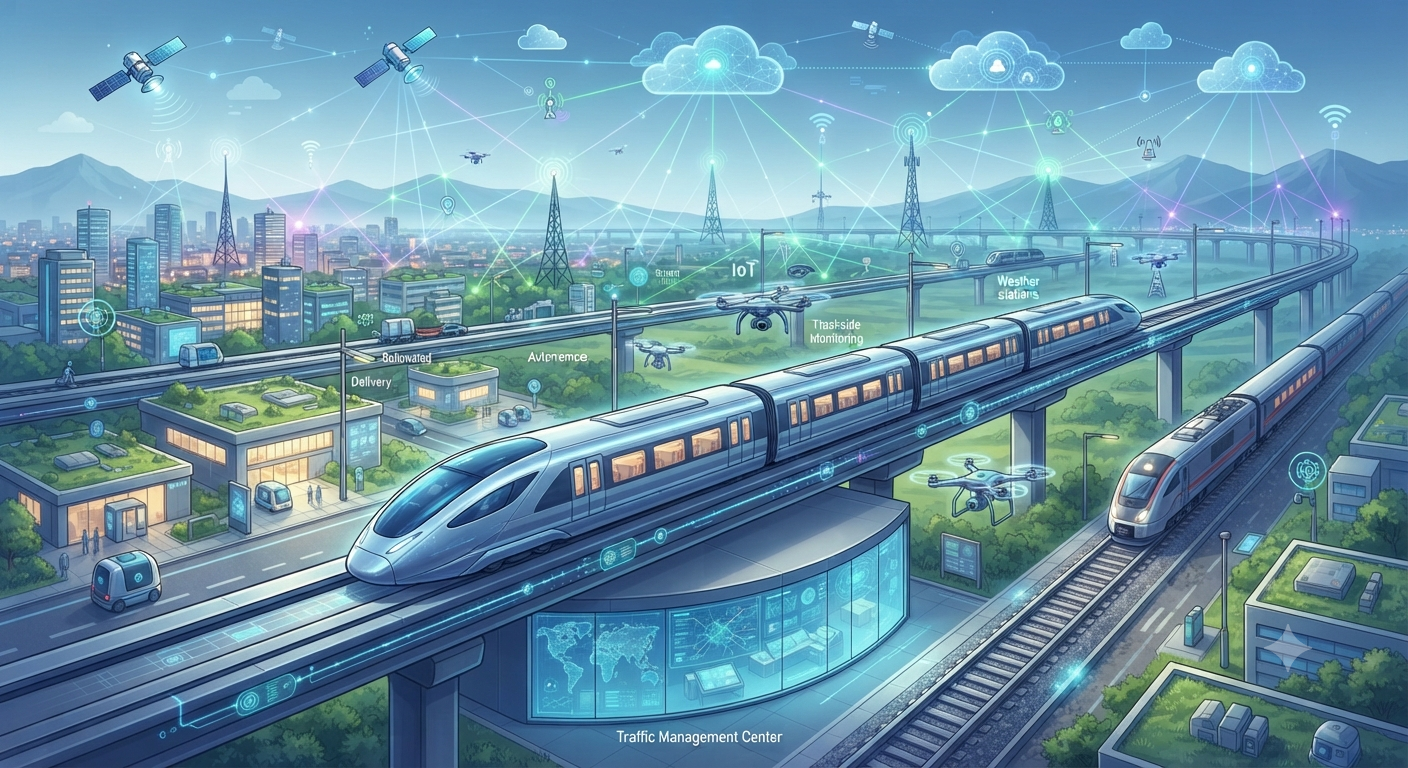
Digital Transformation Accelerates the Intelligent Railway Transport System Market
Railway networks generate enormous amounts of operational data from trains, tracks, signaling systems, stations, passengers, ticketing platforms, and maintenance equipment. The integration of sensors and connected systems enables railway operators to convert this data into actionable insights.
An intelligent railway transport system can monitor train locations, track conditions, passenger flows, energy consumption, equipment performance, and service disruptions in real time. AI and machine learning can then analyze this information to support predictive maintenance, optimize train schedules, identify operational anomalies, and improve network capacity.
This transformation is closely connected with the broader transportation analytics market, where real-time and historical transportation data are used to improve decision-making. Digital twins, cloud-based platforms, predictive analytics, and IoT-enabled infrastructure can further support railway planning and network optimization.
Integration With Smart Transportation Infrastructure
The growth of the transportation infrastructure market is creating opportunities for intelligent railway technologies. Governments and transportation authorities are investing in modernization programs that integrate railways with roads, airports, ports, and public transit systems.
This multimodal approach allows transportation authorities to coordinate different modes and provide passengers with more connected journeys. Railway stations can integrate smart ticketing, passenger information systems, automated access control, digital signage, surveillance, and real-time transportation information.
The broader ITS market is being driven by urbanization, traffic congestion, road-safety requirements, smart-city programs, and investments in transportation infrastructure. MarketsandMarkets also identifies AI-driven traffic prediction, IoT-based monitoring, 5G-enabled vehicle-to-infrastructure communication, digital twins, and integrated mobility systems as important trends shaping ITS development.
Fare Management Systems Enhance Passenger Experience
Another important area connected with the intelligent railway transport system market is the fare management system market. Traditional paper tickets and manually operated ticketing systems are increasingly being replaced by contactless cards, mobile ticketing, QR codes, account-based ticketing, and automated fare collection.
Intelligent fare management platforms can integrate ticketing across multiple transportation modes. For example, a passenger could use a single digital payment method for a train, metro, bus, or other connected transportation service.
These systems can also provide operators with valuable data about passenger volumes, travel patterns, peak periods, and station usage. Transportation operators can use such information to optimize services and improve revenue management.
AI and Predictive Maintenance Reshape Railway Operations
Predictive maintenance is one of the most significant applications of intelligent railway technology. Conventional maintenance schedules often rely on fixed inspection intervals. Intelligent systems can instead monitor equipment continuously and identify early signs of potential failures.
Sensors installed on trains, tracks, signaling equipment, bridges, tunnels, and other assets can collect data related to vibration, temperature, pressure, wear, and other operating conditions. Analytics platforms can analyze these datasets to identify unusual patterns.
This approach can help railway operators plan maintenance before equipment failures disrupt services. It can also support better spare-parts planning, workforce allocation, and asset lifecycle management.
The railway management system market provides a broader context for this transformation. MarketsandMarkets projects this market to grow from USD 55.49 billion in 2025 to USD 76.00 billion by 2030, at a 6.5% CAGR, covering areas such as rail operations management, rail traffic management, asset management, intelligent in-train solutions, passenger information, network management, and security and surveillance.
Smart Roads and Intelligent Railways Converge
Although railways and roadways are traditionally managed as separate transportation networks, intelligent mobility is increasingly connecting them. The development of smart roads market technologies—including connected infrastructure, intelligent traffic signals, vehicle-to-infrastructure communication, road sensors, and traffic analytics—can complement intelligent railway systems.
For example, traffic information around railway stations can be integrated with train schedules to coordinate buses, taxis, private vehicles, and pedestrian movements. Smart intersections near railway crossings can use real-time information to improve traffic management.
This convergence creates an integrated transportation ecosystem in which railway and roadway systems exchange information instead of operating independently.
Regional Growth Opportunities
Asia Pacific is becoming an important growth region for intelligent transportation technologies. The Asia Pacific intelligent transportation system market is projected to increase from USD 10.77 billion in 2025 to USD 15.15 billion by 2030, representing a 7.1% CAGR. Rapid urbanization, infrastructure development, smart-city programs, and investments in connected transportation are supporting regional growth.
This creates opportunities for the APAC intelligent traffic management system market, particularly in countries with rapidly expanding urban transportation networks. China, India, Japan, South Korea, Singapore, and other regional economies are investing in digital infrastructure, intelligent mobility, railway modernization, and connected transportation systems.
India is also becoming an important market for railway digitalization. MarketsandMarkets estimates that the India railway management system market will grow from approximately USD 2.83 billion in 2025 to USD 4.56 billion by 2030, corresponding to a 10.0% CAGR.
Opportunities in the UK and US Markets
The UK intelligent traffic management system market is benefiting from increasing adoption of connected transportation infrastructure, real-time traffic monitoring, intelligent signaling, and data-driven mobility management. Integration between rail, road, and public transportation networks can help transportation authorities improve network visibility and coordinate multimodal journeys.
Similarly, the US intelligent traffic management system market is supported by investments in connected infrastructure, smart highways, traffic monitoring, and digital transportation systems. MarketsandMarkets projects the broader North America intelligent transportation system market to increase from USD 15.29 billion in 2025 to USD 19.77 billion by 2030, at a 5.3% CAGR.
The US market also demonstrates how transportation analytics can be integrated with infrastructure and mobility systems to support traffic prediction, incident management, asset monitoring, and network planning.
Role of Transportation Management Systems
The transportation management system market is another complementary technology area. Transportation management platforms help organizations plan, execute, monitor, and optimize transportation activities.
For railway operators, integration with transportation management platforms can provide centralized visibility into schedules, assets, routes, passenger demand, and operational performance. When combined with AI and analytics, these systems can support dynamic planning and faster responses to disruptions.
The convergence of transportation management systems with intelligent railway platforms could therefore become an important development as transportation networks become increasingly connected.
FAQ
| Question | Answer |
|---|---|
| 1. What is the Intelligent Railway Transport System Market? | The Intelligent Railway Transport System Market covers technologies and solutions that use AI, IoT, cloud computing, sensors, automation, and analytics to improve railway operations, safety, passenger services, asset management, and network efficiency. |
| 2. What is driving the growth of the Intelligent Railway Transport System Market? | Key growth drivers include railway modernization, increasing urbanization, demand for safer and more efficient transportation, smart-city initiatives, connected infrastructure, predictive maintenance, real-time monitoring, and growing adoption of AI and IoT technologies. |
| 3. How is AI being used in intelligent railway transport systems? | AI is used for predictive maintenance, train scheduling, traffic optimization, anomaly detection, passenger-flow analysis, safety monitoring, demand forecasting, and automated decision-making. AI-based transportation analytics can help operators identify operational issues and optimize railway networks. |
| 4. What role does IoT play in intelligent railway systems? | IoT connects trains, tracks, signaling equipment, stations, sensors, and other railway assets. Real-time data collected through IoT devices can support equipment monitoring, predictive maintenance, asset management, energy optimization, and operational decision-making. |
| 5. How is the fare management system market connected to intelligent railways? | The fare management system market is closely connected with intelligent railway systems through automated fare collection, contactless payments, mobile ticketing, QR codes, and account-based ticketing. These technologies can improve passenger convenience while providing operators with useful travel and revenue data. |
| 6. What is the role of transportation analytics in intelligent railway transportation? | The transportation analytics market supports intelligent railways by analyzing data from trains, passengers, infrastructure, and traffic networks. Analytics can help operators forecast demand, optimize schedules, identify disruptions, improve asset utilization, and support predictive maintenance. |
| 7. Which regions offer growth opportunities for intelligent railway transport systems? | Asia Pacific, North America, and Europe represent important markets for intelligent transportation technologies. Asia Pacific is supported by rapid urbanization, smart-city development, railway modernization, and investments in connected transportation infrastructure. |
| 8. How are smart roads and intelligent railway systems becoming interconnected? | The smart roads market and intelligent railway systems are increasingly connected through integrated traffic management, connected infrastructure, railway crossings, multimodal transportation platforms, and real-time mobility information. This enables better coordination between road and rail networks. |
| 9. What challenges affect the Intelligent Railway Transport System Market? | Major challenges include high deployment costs, cybersecurity risks, |
Challenges and Future Outlook
Despite significant opportunities, intelligent railway deployment faces challenges, including high initial infrastructure costs, cybersecurity risks, interoperability issues, legacy systems, data management complexity, and the need for skilled professionals.
MarketsandMarkets identifies substantial investment requirements and infrastructure limitations as restraints for ITS adoption, while data management and privacy remain important challenges because intelligent transportation platforms process large volumes of real-time information.
Nevertheless, the long-term outlook remains closely linked to the digital transformation of transportation. AI, IoT, 5G, cloud computing, digital twins, predictive analytics, smart ticketing, and connected infrastructure are creating opportunities for railway operators to move toward more automated and data-driven operations.
As governments prioritize sustainable mobility and transportation authorities seek safer, more efficient networks, the intelligent railway transport system market is likely to become increasingly interconnected with the fare management system market, transportation infrastructure market, transportation systems and analytics market, smart roads market, transportation management system market, and transportation analytics market.
Ultimately, intelligent railways are evolving from standalone transportation networks into connected digital ecosystems. Their ability to combine real-time data, predictive analytics, intelligent infrastructure, and passenger-focused services will play an important role in shaping the future of smart and sustainable transportation.
80% of the Forbes Global 2000 B2B companies rely on MarketsandMarkets to identify growth opportunities in emerging technologies and use cases that will have a positive revenue impact.
- Food Packaging Market Size Set for Strong Growth Through 2030 Amid Rising Demand for Convenience Foods
- Crop Protection Chemical Market Size, Share & Growth Forecast (2025–2030)
- Mulch Films Market: Driving Sustainable Agriculture Through Innovation
- Agricultural Adjuvants Market Analysis, Trends, and Growth Outlook (2026–2031)
- Japan Enterprise Asset Management Market Growth: AI and Smart Infrastructure Drive Demand

