

Intelligent Transportation Systems Market: Investment Trends, Funding Opportunities, and Growth Outlook
Intelligent Transportation Systems Market: Investment Trends, Funding Opportunities, and Growth Outlook
The Intelligent Transportation Systems (ITS) Market is entering a new phase of growth as governments, transportation authorities, automotive companies, technology providers, and infrastructure investors accelerate the transition toward connected, data-driven, and automated mobility. Intelligent Transportation Systems combine sensors, communication networks, artificial intelligence, traffic-management platforms, connected vehicles, digital infrastructure, and analytics to improve transportation safety, efficiency, reliability, and sustainability.
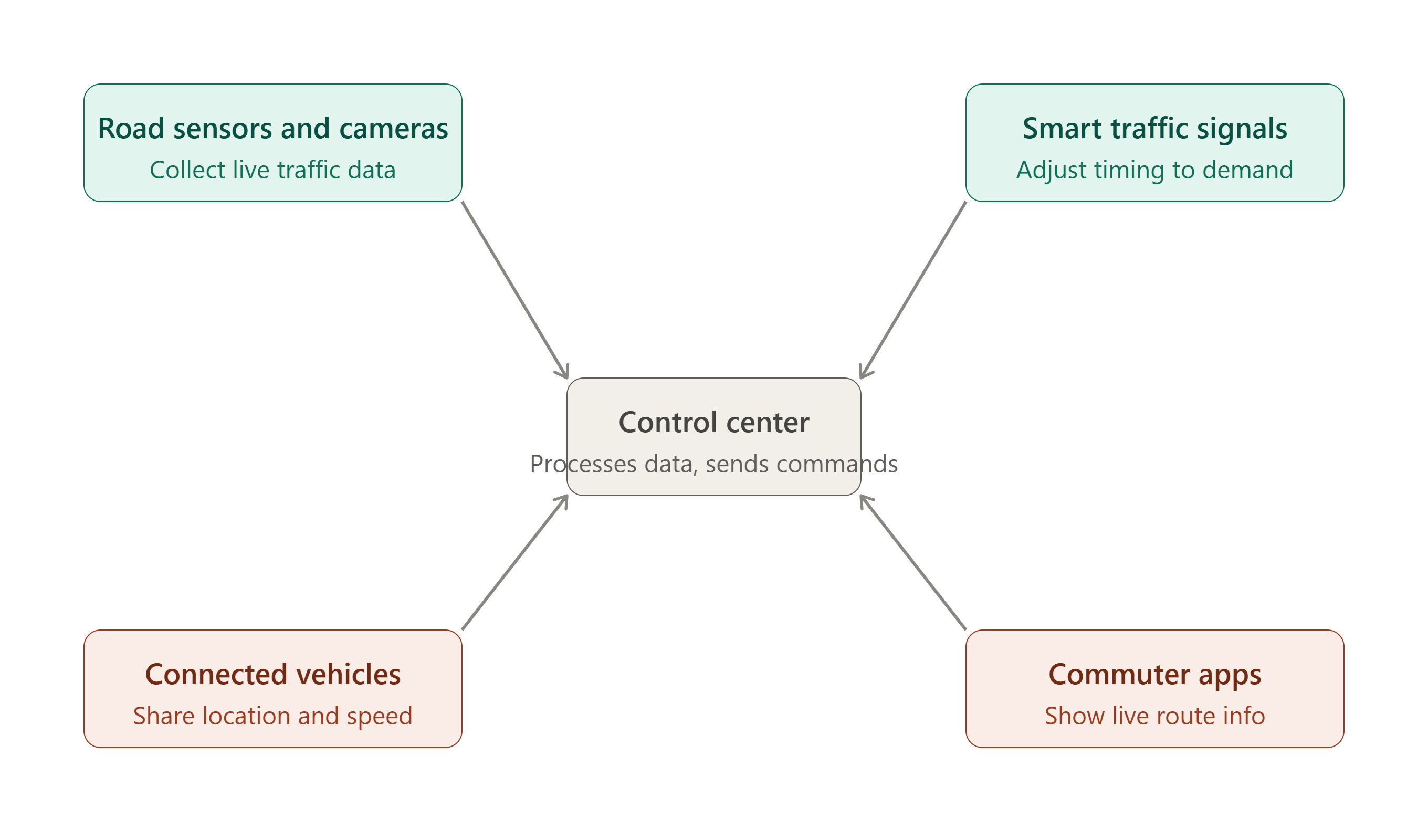
The market is benefiting from increasing urbanization, rising vehicle ownership, traffic congestion, road-safety requirements, infrastructure modernization, and the growing demand for sustainable transportation. At the same time, the rapid development of artificial intelligence, Internet of Things technologies, edge computing, cloud platforms, 5G connectivity, and vehicle-to-everything communication is expanding the role of ITS beyond conventional traffic management.
Download PDF Brochure:
https://www.marketsandmarkets.com/pdfdownloadNew.asp?id=764
For investors and technology companies, the opportunity is becoming broader. ITS is evolving from a market focused mainly on physical traffic infrastructure into a technology ecosystem that includes software, data analytics, cybersecurity, connected mobility, intelligent public transportation, smart tolling, digital twins, and autonomous transportation.
Intelligent Transportation Systems Market Growth Outlook
The Intelligent Transportation Systems Market is expected to experience sustained growth during the coming years as cities and transportation authorities invest in digital infrastructure. The increasing complexity of urban transportation networks is creating demand for systems that can monitor traffic conditions in real time, identify problems, optimize transportation flows, and improve road safety.
One of the most important market drivers is the growing cost of congestion. Traffic congestion reduces productivity, increases fuel consumption, increases emissions, and creates significant economic losses for cities. Intelligent traffic management systems can address these problems by analyzing traffic patterns and dynamically adjusting traffic signals, routes, and transportation operations.
Road safety is another major growth factor. Advanced cameras, radar, sensors, artificial intelligence, and connected-vehicle technologies can help identify dangerous conditions and provide early warnings to drivers and transportation operators.
The long-term growth outlook is also supported by smart-city development. Transportation is one of the most important components of a smart city because mobility influences employment, logistics, public services, environmental performance, and overall quality of life.
AI Is Reshaping Intelligent Transportation Systems
Artificial intelligence is becoming one of the most important technologies within the ITS ecosystem. Traditional transportation systems primarily collected information and presented it to operators. AI-enabled platforms can analyze large amounts of data and provide predictions, recommendations, and automated responses.
AI can analyze information from traffic cameras, road sensors, connected vehicles, GPS systems, weather platforms, public transportation networks, and historical traffic patterns. This allows transportation authorities to identify congestion before it becomes severe and optimize transportation operations.
AI-powered video analytics can identify accidents, pedestrians, vehicles, road obstructions, unusual driving behavior, and other incidents. This can reduce the time required for transportation operators to detect and respond to incidents.
Predictive analytics is another important opportunity. Instead of waiting for infrastructure or equipment to fail, AI systems can identify patterns that indicate potential failures. Transportation operators can then schedule maintenance before a breakdown occurs.
The combination of AI and transportation data is therefore creating opportunities for software companies, analytics providers, infrastructure vendors, and system integrators.
Investment Trends in Intelligent Transportation Systems
Investment in ITS is shifting from individual traffic-management projects toward integrated transportation ecosystems. Governments and private companies increasingly want platforms that connect roads, vehicles, public transportation, parking systems, tolling infrastructure, emergency services, and mobility applications.
One major investment trend is connected infrastructure. Roadside units, intelligent traffic signals, cameras, radar systems, sensors, and communication equipment are being deployed to create continuous connectivity between infrastructure and vehicles.
Cloud-based transportation management is another important investment area. Cloud platforms allow transportation authorities and fleet operators to consolidate information from multiple systems and manage transportation operations remotely. Cloud deployment can also simplify software updates, data management, analytics, and system integration.
Edge computing is gaining importance because many transportation applications require extremely low latency. Safety-critical applications cannot always depend on distant cloud servers. Processing data closer to the vehicle, intersection, or roadside sensor can enable faster decision-making.
Investment is also increasing in vehicle-to-everything communication. V2X technologies allow vehicles to communicate with other vehicles, infrastructure, pedestrians, and networks. This can support collision warnings, emergency-vehicle prioritization, traffic optimization, and cooperative driving.
Funding Opportunities for ITS Companies
The ITS funding environment is becoming increasingly diverse. Technology companies and startups can pursue government contracts, venture capital, strategic corporate investment, infrastructure partnerships, public-private partnerships, and transportation modernization programs.
Government funding remains particularly important because transportation infrastructure is traditionally a public-sector investment area. Smart-city programs, road-safety initiatives, public-transit modernization, digital infrastructure programs, and sustainability projects can create large procurement opportunities.
For startups, the most attractive funding areas are technologies that solve clearly defined transportation problems. These include AI-based traffic optimization, predictive maintenance, intelligent parking, fleet analytics, connected intersections, digital twins, transportation cybersecurity, smart tolling, and mobility-as-a-service platforms.
Strategic investment from automotive manufacturers, telecommunications companies, infrastructure providers, and technology companies can also provide an important route to commercialization. These companies already have distribution networks, technical capabilities, and customer relationships that can help ITS startups scale.
Smart Cities Create Long-Term Investment Demand
Smart-city development represents one of the strongest structural opportunities for the ITS industry. Cities are increasingly looking for integrated platforms rather than disconnected systems.
A smart transportation platform can combine traffic signals, public transportation, parking, road surveillance, tolling, emergency response, and traveler information. Such integration allows authorities to manage transportation networks more efficiently.
This trend creates opportunities for companies capable of providing interoperability between different systems.
Transportation authorities increasingly want open architectures and APIs that allow different systems to communicate with one another. Vendors that provide scalable and interoperable solutions can therefore gain an advantage over providers offering isolated technologies.
The shift toward integrated smart-city infrastructure also creates opportunities for long-term service contracts, software subscriptions, analytics, system maintenance, and managed transportation services.
Connected Vehicles and V2X Expand the Addressable Market
Connected vehicles are changing the relationship between automobiles and transportation infrastructure. Modern vehicles can generate information related to location, speed, braking, road conditions, traffic density, and driving behavior.
When this information is combined with roadside infrastructure, transportation systems become more responsive.
For example, an emergency vehicle could communicate with traffic signals and receive priority through an intelligent intersection system. A connected vehicle could receive warnings about an accident ahead. Traffic-management systems could adjust signals based on real-time vehicle flows.
V2X technology therefore creates a bridge between vehicles and infrastructure. As connected vehicles become more common, demand for intelligent roadside infrastructure is expected to increase.
This creates investment opportunities in sensors, communication modules, roadside units, cloud platforms, cybersecurity, data analytics, and transportation software.
Public Transportation Is an Important Growth Opportunity
ITS adoption is also increasing across buses, railways, airports, and other public transportation systems. Transit agencies are investing in fleet tracking, automated fare collection, passenger information systems, predictive maintenance, intelligent scheduling, and real-time service updates.
For passengers, these technologies can provide better information, shorter waiting times, more reliable services, and easier payment.
For operators, intelligent transportation technologies can improve fleet utilization and reduce operating costs.
Public transportation therefore represents an attractive market for technology companies because many solutions can generate recurring revenue through software subscriptions, maintenance contracts, analytics, and managed services.
Demand-responsive transportation is another emerging opportunity. AI and real-time passenger data can help transportation operators adjust routes and schedules based on actual demand rather than relying entirely on fixed schedules.
Smart Tolling and Intelligent Parking Create Revenue Opportunities
Electronic toll collection and intelligent parking are two ITS applications that combine transportation efficiency with direct revenue opportunities.
Smart tolling can reduce congestion at toll plazas and improve collection efficiency. Digital tolling systems can also support dynamic pricing based on congestion, travel time, vehicle type, or road usage.
Intelligent parking systems use sensors, cameras, mobile applications, and digital payment platforms to identify available spaces and improve parking utilization.
These systems are attractive to cities and private infrastructure operators because they can generate measurable financial benefits.
Technology providers can also create recurring revenue through software platforms, data analytics, maintenance, payment services, and system upgrades.
Cybersecurity Will Become a Major Investment Priority
As transportation infrastructure becomes more connected, cybersecurity becomes increasingly important.
Traffic signals, connected vehicles, tolling platforms, cameras, fleet systems, public transportation networks, and transportation management centers can all become potential targets for cyberattacks.
A cybersecurity incident affecting transportation infrastructure could create significant operational, economic, and safety consequences.
As a result, cybersecurity is becoming an essential part of ITS architecture. Investment opportunities include secure vehicle-to-infrastructure communication, encryption, identity management, network monitoring, anomaly detection, secure cloud infrastructure, and AI-powered threat detection.
Companies capable of combining transportation technology with cybersecurity expertise could benefit from this growing requirement.
Regional Growth Opportunities
North America remains an important ITS market because of its large transportation infrastructure base, smart-road programs, connected-vehicle initiatives, and transportation modernization investments.
The region has a mature transportation technology ecosystem and significant demand for advanced traffic management, public transportation technologies, connected vehicles, intelligent tolling, and transportation cybersecurity.
Europe represents another important market, particularly because of its focus on road safety, sustainable mobility, public transportation, emissions reduction, and connected transportation infrastructure.
Asia-Pacific presents significant growth potential due to rapid urbanization, increasing vehicle ownership, infrastructure development, smart-city projects, and transportation modernization.
Countries such as China, India, Japan, South Korea, Singapore, and Australia are developing advanced transportation infrastructure and investing in digital mobility technologies.
India represents a particularly attractive growth market. Rapid urbanization, increasing vehicle populations, highway modernization, smart-city initiatives, electronic tolling, public transportation improvements, intelligent traffic management, and connected mobility are creating opportunities for ITS companies.
Indian cities are increasingly looking for solutions that can address congestion, road safety, parking, public transportation, traffic enforcement, and emergency response. This creates opportunities for domestic technology companies as well as global ITS providers.
Companies Positioned to Benefit
The competitive landscape includes transportation technology companies, infrastructure providers, automation companies, telecommunications firms, automotive manufacturers, software companies, and engineering organizations.
Major participants in the broader ITS ecosystem include Siemens, Hitachi, Thales, Indra, Kapsch TrafficCom, Cubic Transportation Systems, Verra Mobility, and other specialized transportation technology providers.
Competition is increasingly moving away from individual hardware products toward integrated platforms.
Companies that can combine sensors, communications, artificial intelligence, cloud computing, cybersecurity, and transportation management software may be better positioned to capture high-value contracts.
The market also provides opportunities for smaller technology companies. Startups specializing in AI, computer vision, connected vehicles, cybersecurity, mobility analytics, and digital twins can become acquisition targets or strategic partners for larger infrastructure and technology companies.
Future Growth Outlook
The future of the Intelligent Transportation Systems Market will be shaped by the convergence of artificial intelligence, connected vehicles, 5G and next-generation communications, edge computing, cloud platforms, digital twins, autonomous mobility, and sustainable transportation.
One of the most important changes will be the transition from reactive transportation management to predictive transportation management.
Instead of waiting for congestion or accidents to occur, future systems will increasingly predict transportation problems and automatically recommend or implement responses.
Traffic signals could dynamically adjust according to real-time traffic. Public transportation could be optimized based on passenger demand. Connected vehicles could receive real-time warnings. Digital twins could allow transportation authorities to test infrastructure changes before implementing them in the real world.
Autonomous transportation will further increase the importance of intelligent infrastructure. Autonomous vehicles require reliable road information, connectivity, mapping, sensing, and communication infrastructure.
Electric mobility will also contribute to the ITS opportunity. As electric vehicles become more common, transportation systems will increasingly need intelligent charging infrastructure, energy management, route optimization, and integrated mobility platforms.
Conclusion
The Intelligent Transportation Systems Market is becoming a critical component of modern digital infrastructure. Rising congestion, urbanization, road-safety requirements, connected vehicles, smart-city investments, sustainability objectives, and transportation modernization are creating long-term demand for intelligent mobility solutions.
The most attractive investment opportunities are increasingly concentrated around AI-powered traffic analytics, connected infrastructure, V2X communication, cloud transportation platforms, edge computing, intelligent public transportation, smart tolling, parking management, predictive maintenance, cybersecurity, and mobility analytics.
The market is also moving from hardware-centric deployments toward software-driven and data-enabled transportation ecosystems. This transition creates opportunities for companies that can provide recurring software revenue, integrated platforms, interoperability, cybersecurity, and AI-powered automation.
Over the coming years, intelligent transportation will become increasingly important for cities, governments, logistics operators, automotive companies, and infrastructure providers. Companies and investors that establish strong positions in AI, connected mobility, transportation data, digital infrastructure, and cybersecurity are likely to benefit from the next generation of transportation modernization.
80% of the Forbes Global 2000 B2B companies rely on MarketsandMarkets to identify growth opportunities in emerging technologies and use cases that will have a positive revenue impact.
- Food Packaging Market Size Set for Strong Growth Through 2030 Amid Rising Demand for Convenience Foods
- Mulch Films Market: Driving Sustainable Agriculture Through Innovation
- Agricultural Adjuvants Market Analysis, Trends, and Growth Outlook (2026–2031)
- Crop Protection Chemical Market Size, Share & Growth Forecast (2025–2030)
- Japan Enterprise Asset Management Market Growth: AI and Smart Infrastructure Drive Demand

