

Manufacturing Execution System Technology Innovation: Key Trends, Growth Drivers and Opportunities
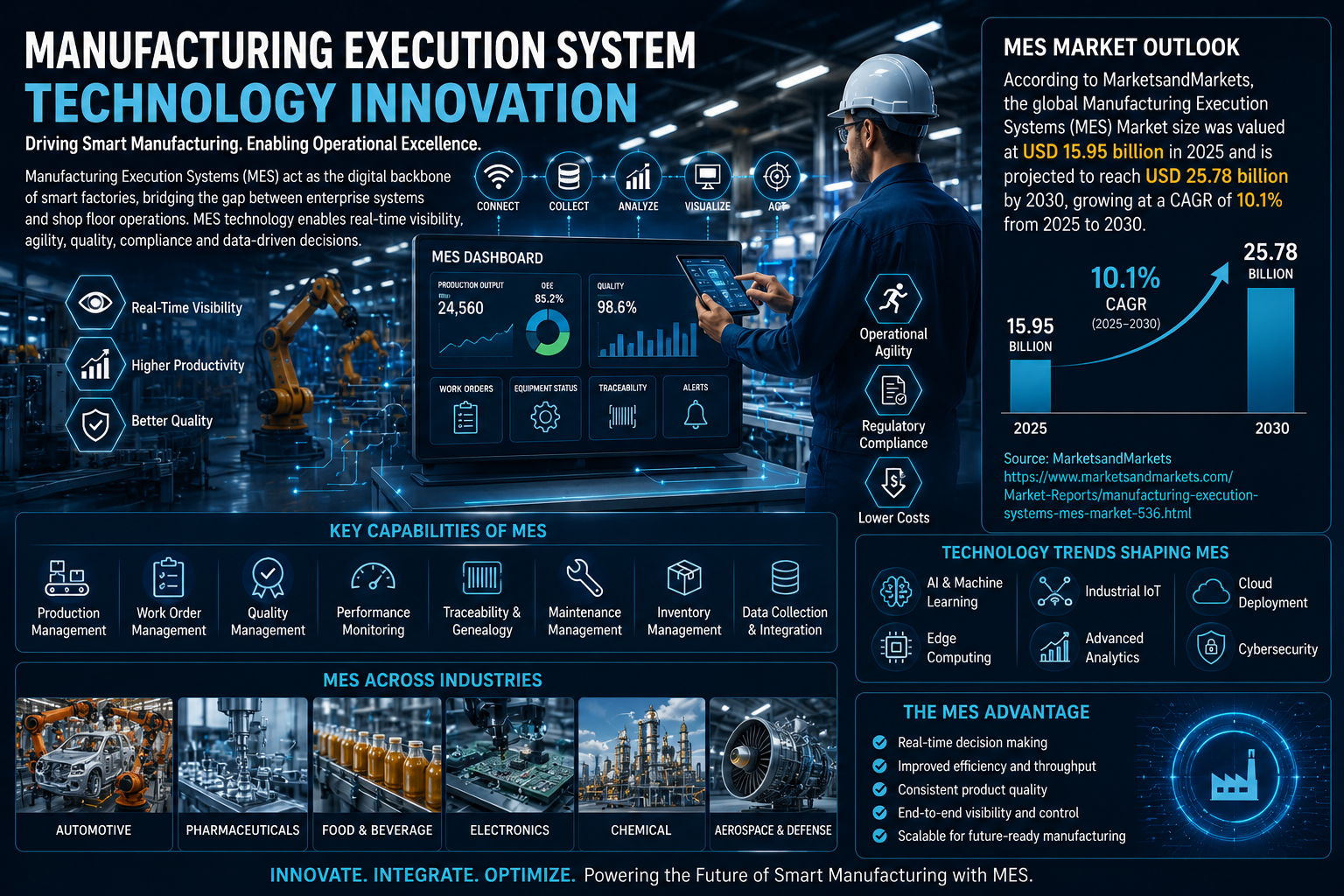
Introduction to Manufacturing Execution System technology
Manufacturing Execution Systems (MES) connect enterprise planning with shop floor operations, providing real time visibility into production, quality, inventory, and performance. Modern MES integrates AI, Industrial IoT, cloud computing, and analytics to improve productivity and decision making.
History of Manufacturing Execution Systems
MES has evolved from basic production tracking software into intelligent digital manufacturing platforms supporting Industry 4.0 initiatives.
Benefits of Manufacturing Execution Systems
- Real time production monitoring
- Improved quality and compliance
- Reduced downtime
- Better resource utilization
- Integration with ERP, AI, IoT, and cloud
Current market size and growth trends of Manufacturing Execution Systems industry
According to MarketsandMarkets, the global Manufacturing Execution Systems market was valued at USD 15.95 billion in 2025 and is projected to reach USD 25.78 billion by 2030, growing at a CAGR of 10.1% during the forecast period.
Key growth factors:
- Industry 4.0 adoption
- Smart factory investments
- AI driven manufacturing
- Industrial IoT deployment
- Need for end to end production visibility
Key drivers and factors influencing the future of MES
Industry 4.0, AI, predictive analytics, Industrial IoT, cloud adoption, and digital twins are transforming manufacturing operations.
Emerging trends in MES technology
Cloud native MES, AI assisted production optimization, cybersecurity, edge computing, and sustainability analytics are key trends.
Opportunities and challenges in the MES market
Growth opportunities span automotive, electronics, aerospace, pharmaceuticals, and food processing, while integration complexity and cybersecurity remain challenges.
Innovations and advancements in MES technology
Advanced MES platforms combine AI, machine learning, IoT, and real time analytics for predictive maintenance and quality management.
Future applications and industries that will benefit from MES
MES will support smart factories, autonomous production, semiconductor manufacturing, energy, healthcare, and aerospace industries.
Conclusion
MES technology will remain central to digital manufacturing by improving operational efficiency, product quality, and manufacturing agility.
Learn more: https://www.marketsandmarkets.com/Market-Reports/manufacturing-execution-systems-mes-market-536.html
80% of the Forbes Global 2000 B2B companies rely on MarketsandMarkets to identify growth opportunities in emerging technologies and use cases that will have a positive revenue impact.
- Food Packaging Market Size Set for Strong Growth Through 2030 Amid Rising Demand for Convenience Foods
- Mulch Films Market: Driving Sustainable Agriculture Through Innovation
- Agricultural Adjuvants Market Analysis, Trends, and Growth Outlook (2026–2031)
- Crop Protection Chemical Market Size, Share & Growth Forecast (2025–2030)
- Japan Enterprise Asset Management Market Growth: AI and Smart Infrastructure Drive Demand

