

Palm Vein Biometric Market: Technology, Applications, Trends, and Growth Outlook
The palm vein biometric market is emerging as an important segment of the broader biometric authentication industry, driven by the growing need for secure, contactless, and reliable identity verification. Unlike conventional authentication methods that depend on passwords, cards, or surface-level biometric characteristics, palm vein technology analyzes the unique vein patterns located beneath the skin of the palm.
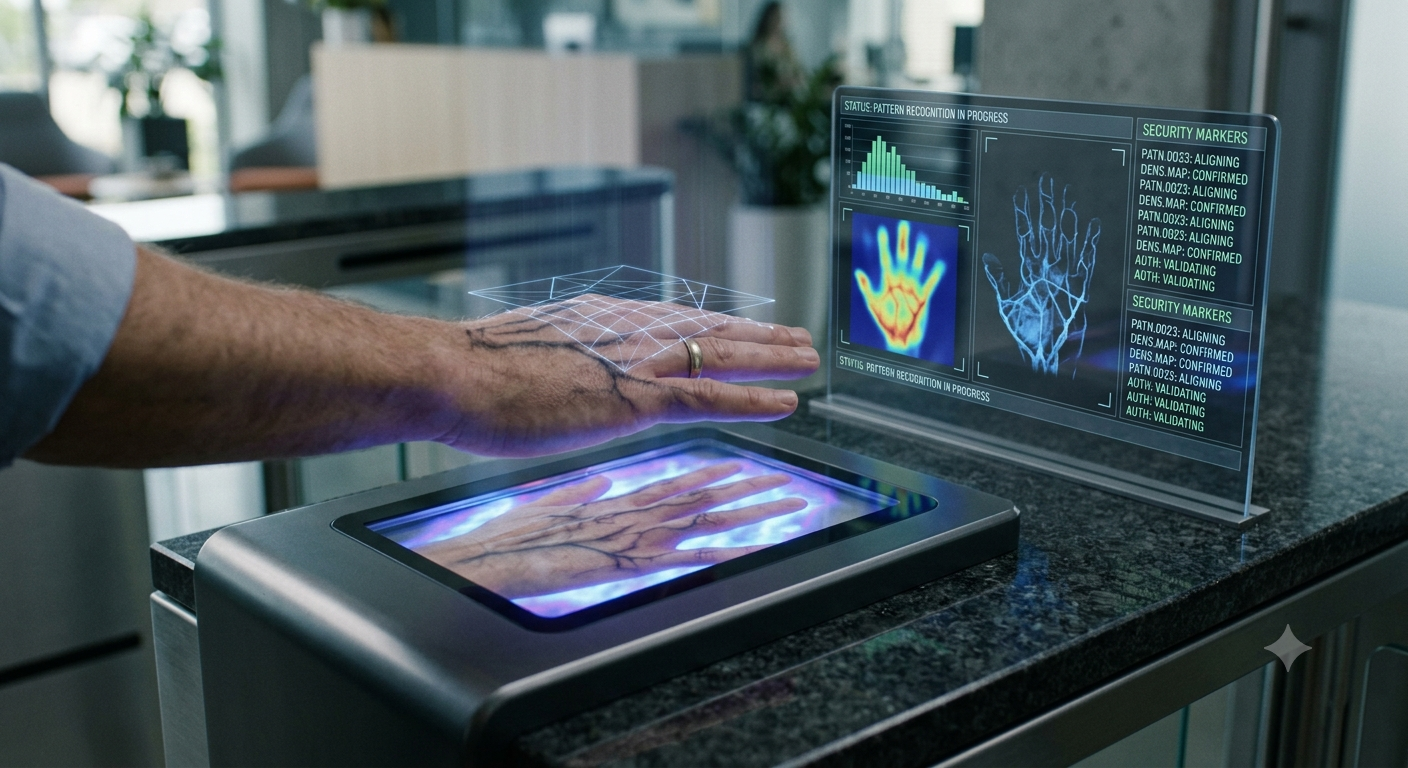
Palm vein recognition generally uses near-infrared imaging to capture the vascular pattern inside a person's hand. Because these patterns are internal rather than visible on the skin surface, the technology offers a distinct approach to biometric authentication. Current market research identifies applications across banking, healthcare, access control, government, retail, and other environments where identity security is important.
The broader Biometric System Market is projected by MarketsandMarkets to grow from USD 53.22 billion in 2025 to USD 95.14 billion by 2030, representing a CAGR of 12.3% during 2025–2030. The report includes vein and palm authentication alongside fingerprint, iris, facial, voice, signature, and other authentication technologies.
What Is Palm Vein Biometrics?
Palm vein biometrics is a contactless or low-contact authentication technology that identifies a person by analyzing the unique pattern of veins inside the palm. A specialized sensor typically uses near-infrared light to capture the vascular structure. Software then processes the image and compares the extracted biometric template with a previously registered template.
The technology is based on the premise that vascular patterns differ from person to person. Since the veins are located beneath the skin, they are not directly visible during ordinary observation. This provides an additional layer of security compared with authentication methods that rely on information that can be more readily observed or reproduced.
Palm vein authentication can be deployed through dedicated scanners, integrated access control systems, healthcare authentication platforms, financial service terminals, and other connected devices. The market includes hardware, software, and services supporting these deployments.
Download PDF brochure - https://www.marketsandmarkets.com/pdfdownloadNew.asp?id=697
Why Is the Palm Vein Biometric Market Growing?
Several factors are contributing to the expansion of palm vein biometrics. The first is the increasing requirement for stronger identity verification. Organizations handling financial information, healthcare records, government identities, and sensitive corporate resources need authentication systems that can reduce unauthorized access.
Traditional passwords and PINs can be forgotten, shared, stolen, or exposed through phishing and other cyber threats. Physical credentials such as cards can also be lost or misused. Biometrics provides an alternative by linking authentication to an individual's physical characteristics.
The broader biometric market is also benefiting from increasing adoption across government, banking, healthcare, and consumer electronics. MarketsandMarkets identifies the need for secure authentication, digital transformation, and contactless identity verification as important growth factors for the biometric system market.
Another important factor is the expansion of contactless technologies. Palm vein authentication can verify identity without requiring a person to repeatedly touch a shared surface. This characteristic can be particularly useful in hospitals, offices, financial institutions, and other environments with high user volumes.
Palm Vein Biometrics in Banking and Financial Services
Banking and financial services represent an important application area for palm vein biometrics. Financial institutions continuously seek ways to strengthen customer authentication while maintaining convenient user experiences.
Potential applications include ATM authentication, branch access, banking kiosks, secure facilities, and transaction verification. Palm vein recognition can complement existing authentication mechanisms rather than necessarily replacing them.
For high-value or sensitive transactions, biometric authentication can also form part of a multi-factor security architecture. MarketsandMarkets reports that multi-factor authentication is expected to record strong growth within the broader biometric system market as organizations combine biometrics with PINs, smart cards, tokens, or other credentials.
The expansion of digital banking is also increasing the importance of secure identity management. Financial institutions need authentication systems that can support fraud prevention while meeting regulatory and privacy requirements.
Healthcare Biometrics and Palm Vein Authentication
Healthcare is another important opportunity for palm vein biometric technology. Hospitals and healthcare organizations handle sensitive patient information and require accurate patient identification throughout the care process.
Palm vein recognition can potentially support patient identification, employee access, medication management, and authentication for healthcare information systems. Contactless authentication can also be useful in environments where reducing unnecessary contact with shared equipment is desirable.
The broader biometric system market is expected to see significant growth in healthcare, with MarketsandMarkets identifying healthcare as a vertical expected to register a high CAGR during its forecast period. Applications include patient identification, secure access, and electronic health record management.
Healthcare providers are also increasingly focused on reducing duplicate records and improving the accuracy of patient matching. A biometric identifier can provide another mechanism for associating the correct individual with healthcare information, although implementation must address privacy, consent, security, and regulatory requirements.
Palm Vein Biometrics for Access Control
Access control remains one of the fundamental applications for biometric technologies. Conventional systems often use keys, access cards, PINs, or passwords. These credentials can be lost, transferred, copied, or compromised.
Palm vein authentication provides another option for organizations that require controlled access to buildings, laboratories, data centers, manufacturing facilities, research environments, and restricted areas.
The technology can be integrated with electronic locks, security management software, employee databases, and centralized identity platforms. Organizations can also combine palm vein authentication with other credentials to create multi-factor access systems.
As enterprises increasingly adopt digital access management, biometric authentication can become part of a broader identity and security infrastructure rather than functioning as a standalone device.
Role of Near-Infrared Imaging
Near-infrared imaging is an important technology associated with palm vein recognition. The sensor illuminates the palm using near-infrared light and captures an image of the vascular pattern.
The captured image is processed using specialized algorithms to extract relevant characteristics. These characteristics are then converted into a biometric template that can be compared against registered information.
Current industry research identifies near-infrared imaging as a major technology used in palm vein biometric systems. Other approaches include optical imaging, thermal imaging, 3D imaging, and hybrid imaging technologies.
Advances in sensors, image processing, artificial intelligence, and machine learning can contribute to faster and more accurate biometric recognition. MarketsandMarkets specifically identifies the development of AI- and ML-based biometric solutions as an opportunity within the broader biometric system market.
Artificial Intelligence and Palm Vein Biometrics
Artificial intelligence is becoming increasingly important across biometric authentication. Machine learning algorithms can be used for image enhancement, pattern extraction, matching, anomaly detection, and system optimization.
For palm vein systems, AI can potentially help improve recognition under different operating conditions. Variations in hand positioning, lighting, sensor characteristics, and image quality can create challenges for biometric systems. Advanced algorithms can help process these variations.
AI can also support multimodal authentication. Instead of relying exclusively on palm vein patterns, organizations can combine palm vein recognition with facial, fingerprint, iris, voice, or behavioral authentication.
This approach can provide organizations with additional authentication options while allowing security systems to select authentication mechanisms based on application requirements.
Consumer and Commercial Applications
Although banking and healthcare receive significant attention, palm vein biometrics can also be applied across commercial environments.
Potential applications include:
- Employee access control
- Time and attendance management
- Retail authentication
- Secure payment environments
- Corporate facilities
- Educational institutions
- Transportation facilities
- Residential security
- Government facilities
- High-security commercial locations
Industry research also identifies retail, government, defense, transportation, education, consumer electronics, and home security as potential application areas for palm vein biometrics.
As biometric authentication becomes more integrated with cloud platforms and connected devices, organizations can deploy authentication systems as part of larger digital identity ecosystems.
Cloud-Based Biometric Systems
Cloud technology is changing how biometric solutions are deployed and managed. Instead of maintaining every component locally, organizations can connect biometric systems with centralized identity platforms and cloud-based software.
MarketsandMarkets expects cloud-based biometric solutions to register strong growth in the broader biometric system market because of scalability, flexibility, and support for remote identity verification.
For palm vein biometrics, cloud integration can support centralized administration, device management, software updates, analytics, and integration with enterprise identity systems.
However, cloud deployment also increases the importance of cybersecurity. Biometric information is highly sensitive, and organizations need appropriate encryption, access controls, template protection, and data governance practices.
Data Privacy and Security Challenges
Despite its potential advantages, palm vein biometric technology faces several challenges.
Biometric information is different from a conventional password. If a password is compromised, it can generally be changed. Biometric characteristics are much more difficult to replace.
This makes the protection of biometric templates extremely important. Organizations deploying palm vein authentication need to consider secure storage, encryption, access control, data minimization, consent, retention policies, and compliance with applicable privacy regulations.
MarketsandMarkets identifies stringent regulations related to biometric data collection, storage, and processing as a restraint for the broader biometric system market. Data security concerns and shortages of technical expertise are also identified as challenges.
Cost and Deployment Considerations
The initial cost of biometric hardware, software integration, infrastructure, and maintenance can influence adoption.
Organizations need to evaluate more than the price of an individual scanner. A complete deployment may require sensors, software platforms, databases, networking infrastructure, integration with existing identity systems, employee enrollment, technical support, and ongoing maintenance.
MarketsandMarkets identifies high costs associated with biometric systems as a restraint affecting market adoption.
For smaller organizations, cloud-based services and managed biometric platforms could potentially reduce the need for extensive in-house infrastructure.
Regional Growth Outlook
Palm vein biometrics is gaining attention across multiple geographic markets. North America has strong adoption of biometric security technologies, while Asia Pacific represents an important growth region for the broader biometric system market.
MarketsandMarkets projects Asia Pacific to register the highest CAGR in the overall biometric system market from 2025 to 2030, supported by digital transformation, e-governance, smart-city development, border management, and healthcare digitization.
Other market research estimates also identify substantial opportunities for palm vein biometrics across North America and Asia Pacific, although market size estimates vary considerably depending on methodology, segmentation, and forecast period.
Key Trends Shaping the Palm Vein Biometric Market
Several trends are likely to influence the development of the market:
Contactless authentication: Organizations are increasingly interested in authentication methods that minimize physical contact with shared surfaces.
AI-powered recognition: Artificial intelligence and machine learning are being integrated into biometric systems to improve processing, matching, and security.
Multimodal biometrics: Palm vein recognition can be combined with facial, fingerprint, iris, voice, and other biometric technologies.
Cloud deployment: Cloud-based platforms are supporting scalable biometric management and integration.
Healthcare adoption: Patient identification and secure healthcare access are creating new opportunities for biometric technologies.
Financial security: Banks and financial institutions continue to explore biometric authentication for secure customer and employee verification.
Mobile and portable biometrics: Portable biometric devices can support field authentication for government, healthcare, law enforcement, and other applications. MarketsandMarkets identifies mobile biometric systems as a fast-growing segment within the broader biometric system market.
Competitive Landscape
The palm vein biometric ecosystem includes hardware manufacturers, biometric software providers, system integrators, security companies, and digital identity providers.
The broader biometric system market includes companies such as Thales, IDEMIA, ASSA ABLOY, NEC Corporation, and Fujitsu, among others. MarketsandMarkets also identifies organizations involved in palm vein and facial recognition applications for healthcare, banking, and enterprise environments.
Competition is increasingly focused not only on biometric sensors but also on software, algorithms, security architecture, cloud integration, identity management, and end-to-end authentication platforms.
Future Outlook for Palm Vein Biometrics
The future of the palm vein biometric market will likely be shaped by the convergence of biometric authentication, artificial intelligence, cloud computing, cybersecurity, and digital identity.
As organizations move away from isolated security technologies toward integrated identity platforms, palm vein recognition can become one component within a broader authentication ecosystem.
The technology has particular relevance in environments where secure, accurate, and contactless authentication is required. Banking, healthcare, government, enterprise security, access control, and other high-security applications could provide opportunities for continued adoption.
At the same time, market development will depend on addressing privacy concerns, deployment costs, interoperability, biometric data protection, and user acceptance.
The broader biometric system market provides an important context for this development. MarketsandMarkets estimates that the global biometric system market will reach USD 95.14 billion by 2030, up from USD 53.22 billion in 2025, at a 12.3% CAGR.
Conclusion
The palm vein biometric market represents an evolving area within the global biometric authentication industry. Its ability to analyze internal vascular patterns, support contactless authentication, and integrate with security infrastructure makes it relevant to applications ranging from banking and healthcare to enterprise access control and government security.
Future growth will depend on advances in near-infrared imaging, AI, machine learning, cloud platforms, sensor technologies, and biometric data protection. As organizations increasingly prioritize secure digital identity and fraud prevention, palm vein recognition can play a role in the development of next-generation authentication systems.
For businesses evaluating biometric technologies, the key considerations will extend beyond recognition accuracy. Privacy, cybersecurity, interoperability, cost, scalability, regulatory compliance, and integration with existing identity systems will all influence adoption decisions.
80% of the Forbes Global 2000 B2B companies rely on MarketsandMarkets to identify growth opportunities in emerging technologies and use cases that will have a positive revenue impact.
- Food Packaging Market Size Set for Strong Growth Through 2030 Amid Rising Demand for Convenience Foods
- Crop Protection Chemical Market Size, Share & Growth Forecast (2025–2030)
- Mulch Films Market: Driving Sustainable Agriculture Through Innovation
- Agricultural Adjuvants Market Analysis, Trends, and Growth Outlook (2026–2031)
- Japan Enterprise Asset Management Market Growth: AI and Smart Infrastructure Drive Demand

