

Precision Aquaculture Technology Innovation Market Global Forecast to 2030
The global precision aquaculture market has emerged as one of the most dynamic segments within the broader agritech and blue economy landscape, reflecting the urgent need for sustainable, efficient, and technology-driven fish farming practices. According to MarketsandMarkets, the global precision aquaculture market size was valued at USD 0.85 billion in 2025 and is projected to reach USD 1.43 billion by 2030, growing at a remarkable CAGR of 11.1% from 2025 to 2030. This robust growth trajectory underscores the transformative role that advanced technologies are playing in reshaping traditional aquaculture operations worldwide. The convergence of artificial intelligence, Internet of Things (IoT), big data analytics, and automated feeding systems is fundamentally altering how fish farms monitor, manage, and optimize their production cycles. As global demand for seafood continues to rise driven by population growth, health consciousness, and protein diversification—precision aquaculture technology has become indispensable for meeting production targets while minimizing environmental impact.
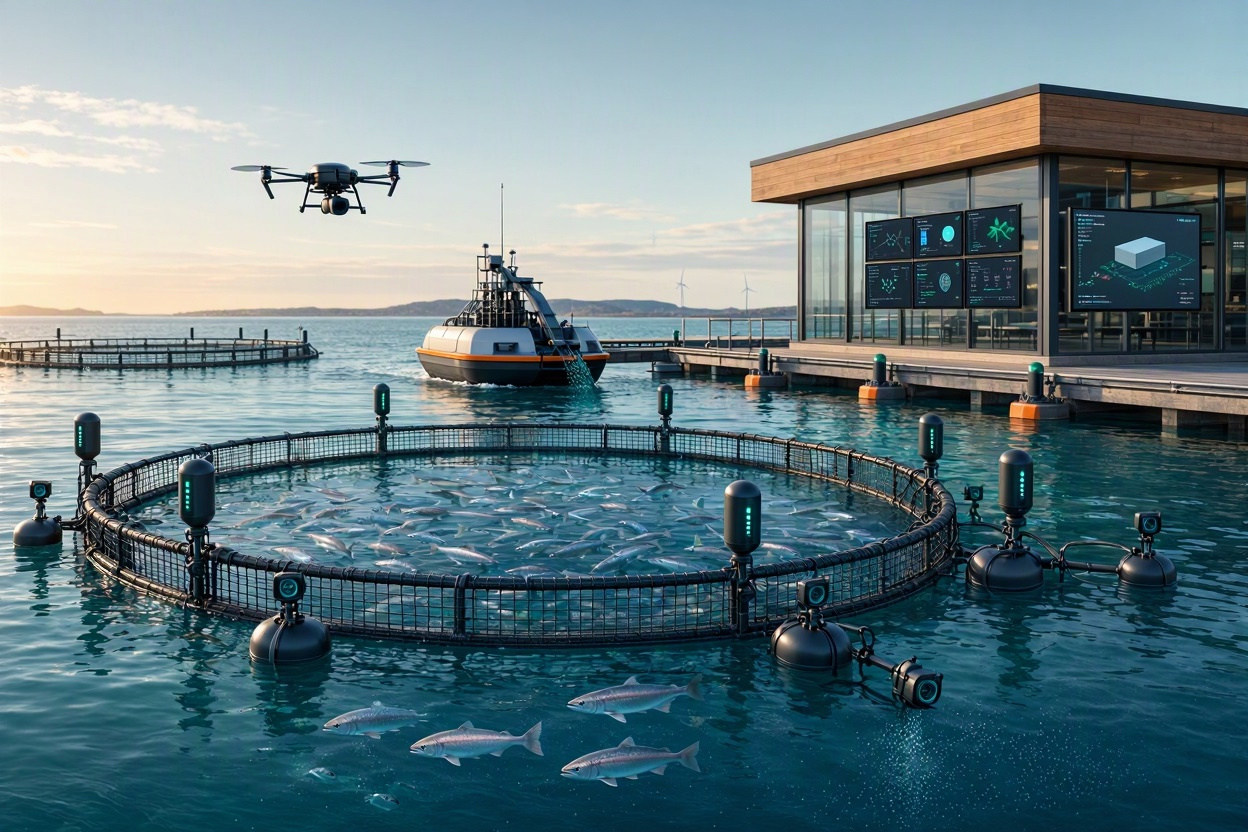
The market's expansion is further fueled by increasing investments from venture capital firms, government bodies, and established agribusiness corporations seeking to capitalize on the blue revolution. Countries across Asia-Pacific, Europe, and North America are actively deploying precision aquaculture solutions to address challenges such as disease outbreaks, feed inefficiency, water quality degradation, and labor shortages. The integration of real-time monitoring systems, underwater drones, and smart sensors has enabled farmers to make data-driven decisions that enhance yield, reduce mortality rates, and improve overall operational efficiency.
Key Market Drivers and Restraints
The precision aquaculture technology market is shaped by a complex interplay of driving forces and challenging constraints that influence its growth trajectory. Understanding these factors is essential for stakeholders seeking to navigate this evolving landscape and capitalize on emerging opportunities.
Download PDF Brochure @ https://www.marketsandmarkets.com/pdfdownloadNew.asp?id=242307580
Market Drivers
Rising Global Seafood Demand: With the global population projected to exceed 9 billion by 2050, the demand for sustainable protein sources has intensified, positioning precision aquaculture as a critical solution for meeting future food security requirements. Traditional capture fisheries are declining, making farmed seafood essential for bridging the supply-demand gap.
Technological Advancements in IoT and AI: The proliferation of affordable sensors, cloud computing platforms, and machine learning algorithms has democratized access to precision farming tools, enabling even small-scale aquaculture operations to leverage sophisticated monitoring and automation capabilities.
Government Support and Regulatory Frameworks: Many governments worldwide are implementing supportive policies, subsidies, and blue economy initiatives that encourage the adoption of sustainable aquaculture practices and technology investments.
Environmental Sustainability Imperatives: Growing awareness of the ecological footprint of traditional aquaculture has driven demand for precision technologies that minimize water usage, reduce feed waste, and prevent nutrient runoff into natural water bodies.
Market Restraints
High Initial Capital Investment: The upfront costs associated with implementing precision aquaculture systems—including sensors, software platforms, and infrastructure upgrades can be prohibitive for small and medium-sized enterprises, particularly in developing regions.
Technical Complexity and Skills Gap: Operating and maintaining advanced precision aquaculture systems requires specialized technical expertise, and the industry faces a significant shortage of trained professionals capable of managing these technologies effectively.
Data Security and Connectivity Challenges: Remote aquaculture operations often face unreliable internet connectivity, while concerns about data ownership and cybersecurity pose additional barriers to widespread technology adoption.
Segmentation Analysis: Technologies and Applications
The precision aquaculture market can be comprehensively segmented based on technology types, application areas, and regional dynamics, each presenting distinct opportunities and challenges. By technology, the market encompasses remote sensing and monitoring systems, artificial intelligence and machine learning platforms, automated feeding systems, underwater robotics and drones, and blockchain-based traceability solutions. Remote sensing technologies, including satellite imagery and underwater cameras, enable continuous monitoring of water quality parameters such as dissolved oxygen, temperature, pH, and salinity, allowing farmers to respond swiftly to potential threats.
Artificial intelligence and machine learning algorithms analyze vast datasets to predict disease outbreaks, optimize feeding schedules, and forecast growth trajectories, significantly enhancing operational decision-making. Automated feeding systems represent one of the fastest-growing segments, as they reduce feed costs by up to 30% while minimizing waste and environmental impact. By application, the market spans fish farming, shrimp farming, mollusk farming, and seaweed cultivation, with fish farming accounting for the largest share due to the high value of species such as salmon, tilapia, and sea bass. By region, Asia-Pacific dominates the precision aquaculture market, driven by countries like China, India, Vietnam, and Indonesia, where aquaculture is a major economic activity. Europe and North America follow closely, with advanced research infrastructure and strong regulatory support facilitating rapid technology adoption.
Competitive Landscape and Key Innovations
The precision aquaculture technology market features a diverse competitive landscape comprising technology providers, equipment manufacturers, software developers, and integrated solution providers. Leading companies are pursuing strategic collaborations, mergers and acquisitions, and product innovations to strengthen their market positions and expand their technological capabilities.
AKVA Group (Norway): A prominent player offering integrated aquaculture technology solutions, including automated feeding systems, sensor networks, and software platforms for fish farm management.
InnovaSea Systems (US): Specializes in open ocean aquaculture technologies, including autonomous underwater vehicles and advanced monitoring systems for offshore fish farming operations.
Xylem Inc. (US): Provides water quality monitoring and treatment solutions that are increasingly adopted in aquaculture facilities for real-time parameter tracking and environmental management.
Pentair Aquatic Eco-Systems (US): Offers a comprehensive range of aquaculture equipment, including aeration systems, filtration technologies, and precision feeding solutions.
Eruvaka Technologies (India): Focuses on IoT-enabled aquaculture management solutions, including automated feeders and water quality monitoring systems tailored for shrimp and fish farming.
These companies are investing heavily in research and development to introduce next-generation technologies such as AI-powered predictive analytics, blockchain-enabled supply chain traceability, and autonomous underwater robots capable of performing inspection and maintenance tasks. The competitive dynamics are further influenced by the entry of technology giants and startups alike, fostering innovation and driving down costs.
Regional Insights and Future Outlook
The precision aquaculture market exhibits significant regional variations in terms of adoption rates, regulatory environments, and technological maturity. Asia-Pacific remains the largest and fastest-growing regional market, accounting for a substantial share of global aquaculture production and technology deployment. China, as the world's largest aquaculture producer, is aggressively investing in smart farming technologies to enhance productivity and sustainability. India, Vietnam, and Indonesia are also emerging as key markets, supported by government initiatives promoting blue economy development and digital agriculture.
Europe represents a mature market for precision aquaculture, with Norway, Scotland, and Denmark leading in salmon farming technology adoption. The European Union's stringent environmental regulations and sustainability goals are driving demand for precision solutions that minimize ecological impact. North America is witnessing steady growth, particularly in the United States and Canada, where recirculating aquaculture systems (RAS) and land-based fish farming are gaining traction. Latin America and the Middle East & Africa are nascent markets with significant untapped potential, as countries seek to develop domestic aquaculture industries to reduce import dependency and enhance food security.
Looking ahead, the precision aquaculture market is poised for transformative growth, driven by continued technological advancements, increasing investment, and supportive regulatory frameworks. The integration of emerging technologies such as 5G connectivity, edge computing, and digital twins will further enhance the capabilities of precision aquaculture systems, enabling unprecedented levels of automation, efficiency, and sustainability. As the industry evolves, collaboration among technology providers, aquaculture operators, research institutions, and policymakers will be crucial for overcoming existing barriers and unlocking the full potential of precision aquaculture innovation.
Download Sample Research Report for Precision Aquaculture Market Future: https://www.marketsandmarkets.com/Market-Reports/precision-aquaculture-market-242307580.html
80% of the Forbes Global 2000 B2B companies rely on MarketsandMarkets to identify growth opportunities in emerging technologies and use cases that will have a positive revenue impact.
- Food Packaging Market Size Set for Strong Growth Through 2030 Amid Rising Demand for Convenience Foods
- Crop Protection Chemical Market Size, Share & Growth Forecast (2025–2030)
- Mulch Films Market: Driving Sustainable Agriculture Through Innovation
- Agricultural Adjuvants Market Analysis, Trends, and Growth Outlook (2026–2031)
- Japan Enterprise Asset Management Market Growth: AI and Smart Infrastructure Drive Demand

