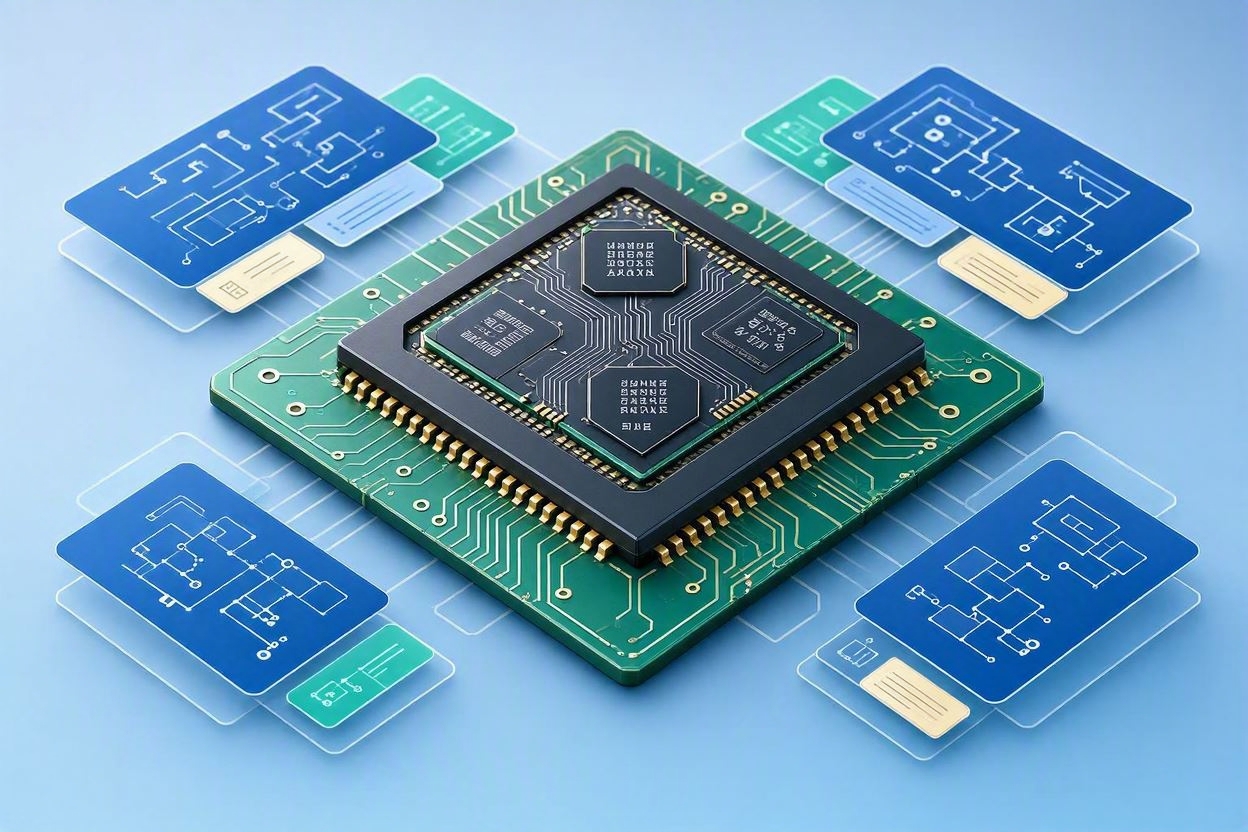
Semiconductor IP Technology Innovation: Market Growth, Trends & Future Outlook
Introduction
The semiconductor intellectual property (IP) industry has emerged as the cornerstone of modern electronics, enabling the creation of powerful system-on-chips (SoCs) that power everything from smartphones and data centers to autonomous vehicles and industrial automation systems. Semiconductor IP refers to reusable design blocks including processor cores, interface controllers, memory subsystems, and security modules that can be licensed and integrated into chip designs, significantly reducing development costs and accelerating time-to-market. As chip architectures become increasingly sophisticated, semiconductor companies are relying more heavily on third-party intellectual property to streamline development processes and manage escalating design complexity. The industry is undergoing a profound transformation, driven by the relentless pursuit of innovation across the global electronics sector, with artificial intelligence leading the charge as a primary growth catalyst.
Market Size and Growth Projections
According to Marketsandmarkets, the global semiconductor IP technology market size is projected to grow from USD 10.40 billion in 2026 to USD 18.64 billion by 2032, growing at a CAGR of 10.2% from 2026 to 2032. The market was estimated at USD 9.30 billion in 2025, establishing a strong foundation for sustained expansion throughout the forecast period. This robust growth trajectory reflects the increasing complexity of semiconductor designs, rapid adoption of artificial intelligence, proliferation of custom silicon programs, and rising demand for advanced computing across consumer electronics, automotive, data centers, industrial automation, and telecommunications applications. The data center segment is projected to register the highest CAGR of 14.9%, creating significant opportunities for IP providers offering processor, memory, and interconnect solutions. By design IP, the compute IP segment is estimated to hold the largest share of the market, driven by its foundational role in devices ranging from smartphones to AI accelerators and data center processors.
Download PDF Brochure @ https://www.marketsandmarkets.com/pdfdownloadNew.asp?id=651
Key Drivers of Semiconductor IP Market Growth
Rapid Adoption of Artificial Intelligence: The explosive demand for AI-specific and heterogeneous compute IP is reshaping the semiconductor IP landscape. As AI workloads move from the cloud to the edge, there is a growing need for specialized processor IP including neural processing units and AI accelerators that can deliver high performance while maintaining strict power and latency requirements. The compute IP segment, encompassing CPU, GPU, DSP, and NPU IP, is estimated to hold the largest share of the market.
Proliferation of Custom Silicon and SoC Complexity: Semiconductor companies face growing pressure to develop increasingly complex chips while reducing development costs and accelerating time-to-market. The increasing complexity of semiconductor designs has made reusable IP blocks essential to reducing design costs, accelerating time-to-market, and improving overall design efficiency. As semiconductor companies continue developing highly integrated SoCs, demand for reusable IP blocks has increased significantly.
Rise of RISC-V Open Architecture: The rapid ascent of open-source instruction set architectures, most notably RISC-V, is challenging the traditional dominance of established architectures and introducing new levels of flexibility and customization. Its open, royalty-free model enables chipmakers to develop customized processors while reducing licensing costs, making it one of the fastest-growing segments in the semiconductor IP market. The RISC-V ecosystem is forecast to capture 10–15% of processor IP licensing revenue by 2035, up from an estimated 3–5% in 2026.
Expanding Fabless Semiconductor Ecosystem: The growing fabless semiconductor ecosystem is driving greater reliance on third-party IP to reduce design complexity and development time. Licensing remains the dominant revenue model, enabling leading IP vendors to monetize advanced processor, interface, memory, and security IP across multiple end-use applications.
Technological Innovations Shaping the Industry
The semiconductor IP industry is witnessing a wave of technological innovation that is fundamentally reshaping chip design methodologies. The emergence of chiplet-based architectures and advanced packaging technologies is expanding the role of semiconductor IP beyond traditional processor licensing. Companies are increasingly developing pre-verified IP subsystems that combine processors, memory, and interface controllers, simplifying integration for chip designers and reducing design risk. Leading IP providers are investing heavily in AI accelerator IP, RISC-V processor ecosystems, chiplet interconnect solutions, software toolchains, security frameworks, and platform-level offerings that combine hardware and software capabilities. For instance, Cadence has demonstrated industry-leading advancements with its third-generation UCIe IP solution taped out on TSMC N3P technology, achieving per-channel speeds of 64 Gbps and delivering 3.6 Tbps/mm edge bandwidth density in standard packaging. Similarly, Analog Bits has showcased its mixed-signal IP portfolio on TSMC’s advanced 5nm, 3nm, and 2nm processes.
Emerging Trends and Future Opportunities
Several powerful trends are converging to reshape the landscape of the semiconductor IP market. The shift toward heterogeneous computing is moving the industry away from a one-size-fits-all computing model toward a more modular approach where specialized IP blocks work in concert to handle diverse tasks efficiently. This trend is particularly evident in the automotive and data center sectors, where the demand for high-performance computing and autonomous driving capabilities is accelerating. Emerging trends such as AI accelerators, chiplet-based architectures, advanced packaging, software-defined vehicles, and hyperscaler-driven custom silicon initiatives are creating new growth opportunities for IP providers across the global semiconductor ecosystem. The growing investments in custom silicon and AI-enabled processors further reinforce the market's positive trajectory. As semiconductor design complexity continues to escalate, the demand for reusable, pre-verified, and highly optimized IP blocks will remain a defining characteristic of the industry's evolution through 2032 and beyond.
Competitive Landscape
Arm Holdings (UK) and Synopsys (US) are the leading players in the semiconductor intellectual property market, followed by Cadence Design Systems (US), Rambus (US), and Alphawave Semi (UK). These market participants have become more varied with their offerings, launching new products, forming partnerships, and expanding their geographical reach. Arm’s portfolio includes processor architectures, CPU cores, graphics processors, AI accelerators, subsystem IP, development tools, software platforms, and security technologies. In March 2026, Arm introduced the Arm AGI CPU platform for AI datacenters with up to 136 Arm Neoverse V3 cores per CPU. Synopsys expanded its collaboration with TSMC to deliver AI and multi-die design enablement through certified EDA flows and 3DIC Compiler capabilities. The competitive dynamics are further intensified by the rise of RISC-V-focused players like SiFive, which are challenging established architectures and introducing new levels of flexibility and customization.
Conclusion
The semiconductor IP market is poised for significant growth, with the global market size projected to expand from USD 10.40 billion in 2026 to USD 18.64 billion by 2032 at a robust CAGR of 10.2%. This growth is driven by the increasing adoption of AI accelerators, high-performance computing, smartphones, automotive electronics, networking equipment, and data center processors. The shift toward heterogeneous computing, the rise of RISC-V open architecture, the expansion of the fabless semiconductor ecosystem, and the emergence of chiplet-based designs are collectively setting the stage for a new era in the semiconductor IP domain. As semiconductor companies continue to push the boundaries of chip design innovation, the demand for reusable, pre-verified, and highly optimized IP blocks will remain a defining characteristic of the industry's evolution. With leading players investing heavily in next-generation IP solutions and emerging technologies creating new market opportunities, the semiconductor IP industry is well-positioned for sustained growth and innovation through 2032 and beyond.
Find More Information on Semiconductor IP Technology Innovation @ https://www.marketsandmarkets.com/Market-Reports/semiconductor-silicon-intellectual-property-ip-market-651.html
80% of the Forbes Global 2000 B2B companies rely on MarketsandMarkets to identify growth opportunities in emerging technologies and use cases that will have a positive revenue impact.
- Food Packaging Market Size Set for Strong Growth Through 2030 Amid Rising Demand for Convenience Foods
- Mulch Films Market: Driving Sustainable Agriculture Through Innovation
- Agricultural Adjuvants Market Analysis, Trends, and Growth Outlook (2026–2031)
- Crop Protection Chemical Market Size, Share & Growth Forecast (2025–2030)
- Japan Enterprise Asset Management Market Growth: AI and Smart Infrastructure Drive Demand