

Silicon Carbide Technology Innovation: Key Trends, Growth Drivers and Opportunities
Introduction to Silicon Carbide technology
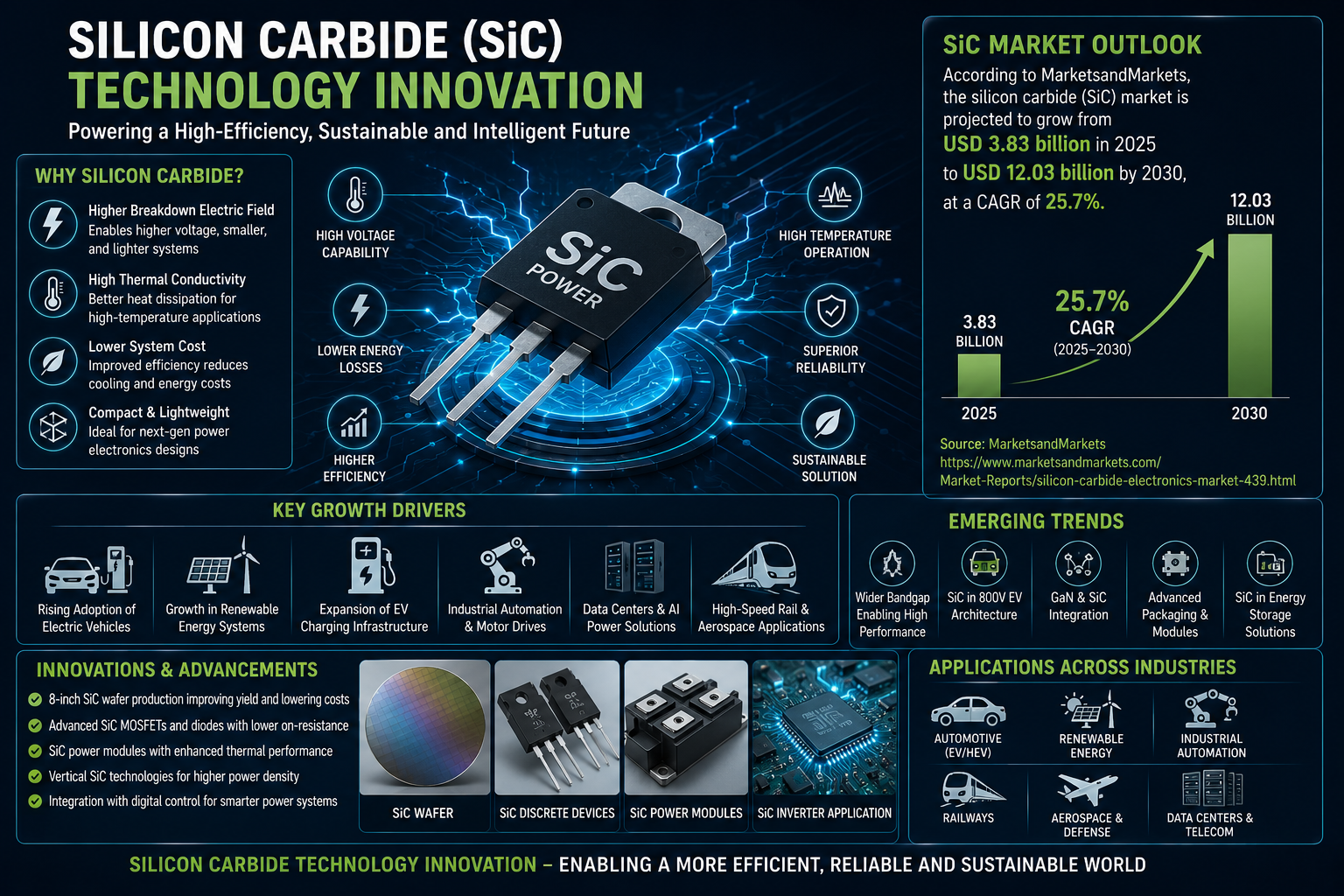
Silicon Carbide (SiC) is a wide bandgap semiconductor that delivers higher efficiency, superior thermal conductivity, faster switching speeds, and higher voltage operation than conventional silicon. It is transforming electric vehicles, renewable energy, industrial automation, aerospace, and power electronics.
History of Silicon Carbide
Silicon Carbide has been used in industrial applications for decades, but advances in semiconductor manufacturing have accelerated its adoption for high performance power devices and next generation electronics.
Benefits of Silicon Carbide
- Higher energy efficiency and lower power losses
- Faster switching performance
- Superior thermal conductivity
- Higher voltage and temperature capability
- Longer system lifespan and improved reliability
Current market size and growth trends of Silicon Carbide industry
According to MarketsandMarkets, the Silicon Carbide (SiC) market is projected to grow from USD 3.83 billion in 2025 to USD 12.03 billion by 2030, at a CAGR of 25.7%. Rapid adoption of EVs, renewable energy systems, and high efficiency power electronics is fueling market expansion.
Key growth factors include:
- Growing adoption of electric vehicles
- Expansion of renewable energy infrastructure
- Increasing demand for high efficiency power electronics
- Rapid deployment of fast charging systems
- Industrial automation and smart manufacturing investments
Key drivers and factors influencing the future of Silicon Carbide
Electrification, electric vehicles, fast charging infrastructure, renewable energy, industrial automation, and advanced power management are major growth drivers.
Emerging trends in Silicon Carbide technology
AI enabled power management, 800V EV architectures, advanced SiC MOSFETs, smart grids, and next generation industrial inverters are driving innovation.
Opportunities and challenges in the Silicon Carbide market
Significant opportunities exist in automotive, aerospace, industrial automation, renewable energy, and telecommunications. Challenges include high manufacturing costs, substrate availability, and complex fabrication processes.
Innovations and advancements in Silicon Carbide technology
Continuous improvements in wafer manufacturing, device reliability, packaging, and power module integration are improving performance and reducing total system costs.
Future applications and industries that will benefit from Silicon Carbide
Silicon Carbide will support electric mobility, solar and wind power, data centers, industrial drives, railway systems, aerospace, and defense applications.
Conclusion: The promising future of Silicon Carbide technology
Silicon Carbide technology will play a critical role in enabling energy efficient power electronics and accelerating the global transition toward electrification and sustainable technologies.
Learn more: https://www.marketsandmarkets.com/Market-Reports/silicon-carbide-electronics-market-439.html
80% of the Forbes Global 2000 B2B companies rely on MarketsandMarkets to identify growth opportunities in emerging technologies and use cases that will have a positive revenue impact.
- Food Packaging Market Size Set for Strong Growth Through 2030 Amid Rising Demand for Convenience Foods
- Mulch Films Market: Driving Sustainable Agriculture Through Innovation
- Agricultural Adjuvants Market Analysis, Trends, and Growth Outlook (2026–2031)
- Crop Protection Chemical Market Size, Share & Growth Forecast (2025–2030)
- Japan Enterprise Asset Management Market Growth: AI and Smart Infrastructure Drive Demand

