

Smart Lighting Systems Integrate Intelligent Switches, Relay Units, and Dimmers to Improve Energy Efficiency
Smart Lighting Systems are transforming how residential, commercial, and industrial buildings manage illumination and energy consumption. By combining intelligent switches, relay units, dimmers, sensors, and connected control platforms, these solutions enable users to adjust lighting according to occupancy, daylight availability, and operational requirements. Unlike conventional lighting arrangements, intelligent solutions provide greater flexibility and automation while reducing unnecessary electricity usage. As organizations focus on energy efficiency, sustainability, and lower operating costs, advanced lighting technologies are becoming an important component of modern building infrastructure. Their ability to integrate with building management systems further supports centralized control and efficient facility operations.
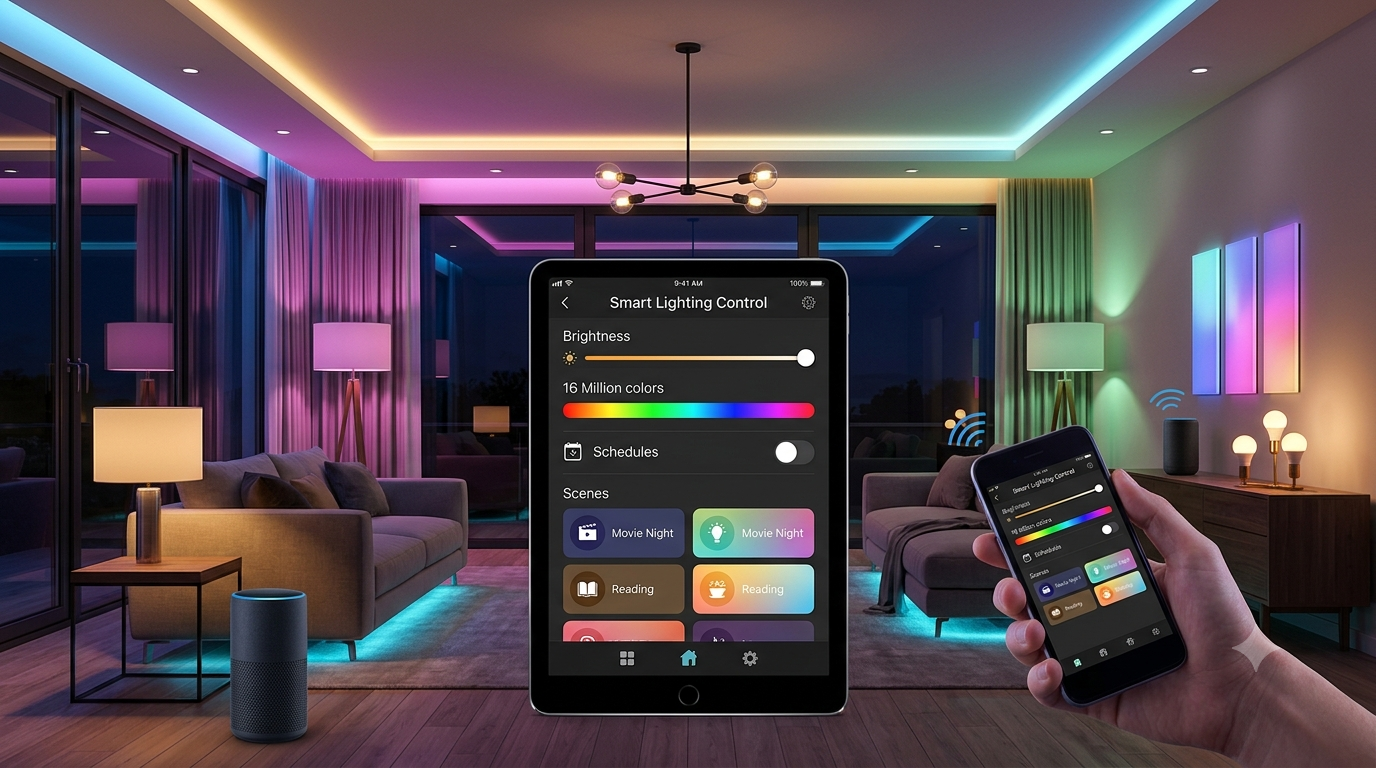
According to Marketsandmarkets, the global smart lighting market size is projected to grow from USD 11.00 billion in 2026 to USD 20.50 billion by 2032, growing at a CAGR of 10.9% from 2026 to 2032.
Download PDF Brochure @ https://www.marketsandmarkets.com/pdfdownloadNew.asp?id=985
The growing adoption of LED technology, wireless communication, the Internet of Things, and building automation is strengthening the role of Smart Lighting Systems across different applications. Offices can automatically adjust illumination according to employee activity, warehouses can illuminate occupied aisles, and residential users can control lights remotely through mobile applications. Intelligent switches, relay units, and dimmers provide the hardware foundation for these capabilities. When combined with suitable software and sensors, they help building operators establish lighting schedules, monitor usage, and optimize energy consumption without compromising visual comfort or safety.
Understanding Intelligent Lighting Control
Intelligent lighting control involves using connected devices and automated functions to manage when lights operate, how brightly they illuminate a space, and which lighting zones receive power. These capabilities allow Smart Lighting Systems to respond to actual requirements instead of relying entirely on manual switching. For example, a meeting room can automatically switch off its lights when unoccupied, while a daylight sensor can reduce artificial illumination near windows. Such functions help prevent energy waste caused by lights remaining switched on unnecessarily. They also improve convenience by reducing the need for repeated manual adjustments.
The effectiveness of an intelligent lighting arrangement depends on coordination between control hardware, communication networks, sensors, and lighting fixtures. Intelligent switches provide user commands, relay units manage electrical circuits, and dimmers regulate light output where compatible equipment is installed. A central controller or distributed control platform coordinates these components according to programmed settings. Depending on the application, communication can use wired protocols, wireless networks, or a combination of both. Proper system design ensures reliable operation, appropriate lighting levels, and compatibility with existing electrical infrastructure.
Role of Intelligent Switches in Energy Management
Intelligent switches allow users to operate lighting through physical controls, mobile applications, voice assistants, or automated schedules, depending on the device and system configuration. Unlike conventional switches, many smart models support remote access, programmable routines, and integration with occupancy sensors. These functions make it easier to turn off lights in unused areas and establish consistent operating schedules. For commercial buildings, centralized switching can simplify lighting management across multiple rooms and floors. Smart Lighting Systems can therefore help reduce avoidable electricity consumption while providing users with greater control over their surroundings.
Another important advantage of intelligent switches is their ability to support occupancy based automation. When connected to suitable motion or presence sensors, lighting can respond to people entering or leaving a room. In corridors, washrooms, storage areas, and meeting spaces, this approach can reduce operating hours when continuous illumination is unnecessary. Time schedules can also prevent lights from operating outside normal business hours. However, sensor placement, detection sensitivity, and time delay settings must be configured correctly to avoid lights switching off when spaces are still occupied.
Relay Units Enable Reliable Lighting Automation
Relay units are essential components in many automated lighting installations because they allow a control signal to switch an electrical circuit on or off. Depending on their design and electrical ratings, these devices can manage individual lighting circuits or groups of fixtures. They are particularly useful when existing lighting installations need centralized control without replacing every fixture. Smart Lighting Systems equipped with relay modules can support scheduled switching, remote operation, and coordinated lighting zones. This functionality is valuable in offices, educational institutions, hotels, warehouses, and other facilities with multiple circuits.
Modern relay solutions may include wireless connectivity, programmable operation, energy monitoring features, and integration with building automation platforms. Their suitability depends on load characteristics, voltage requirements, switching frequency, and the type of lighting equipment being controlled. LED drivers, for example, may produce inrush currents that require appropriately rated switching components. Selecting compatible relay units helps improve operational reliability and reduces the likelihood of premature component failure. Installation should follow applicable electrical standards, manufacturer instructions, and appropriate safety procedures.
Dimmers Improve Lighting Flexibility and Efficiency
Dimmers regulate the brightness of compatible lighting fixtures, allowing users to select illumination levels according to the task, time of day, or personal preference. Instead of operating lights continuously at full output, occupants can use lower settings when bright illumination is unnecessary. Smart Lighting Systems that incorporate dimming functions can support comfortable working environments, adaptable hospitality spaces, and energy conscious residential lighting. In offices, dimming can complement daylight harvesting by reducing artificial lighting when natural sunlight provides sufficient illumination. In homes, adjustable lighting can support different activities without requiring multiple independent lighting circuits.
The energy savings achieved through dimming depend on the light source, driver compatibility, dimming technology, and operating conditions. Not every LED fixture supports every dimmer, and incompatible combinations may cause flickering, buzzing, limited adjustment ranges, or unreliable operation. Common dimming approaches include phase control and digital control methods, with the appropriate choice depending on the installation. Effective commissioning is important because excessively low illumination can affect productivity, comfort, or safety. The goal is to deliver suitable lighting with less unnecessary power consumption rather than simply reducing brightness across every space.
How These Components Work Together
Intelligent switches, relay units, and dimmers perform different functions, but their combined operation creates a more responsive lighting environment. A user may activate a lighting scene through an intelligent switch, while a relay supplies power to the required circuit and a dimmer adjusts brightness. Sensors and automation software can modify these settings based on occupancy, daylight, or predetermined schedules. This coordinated approach allows Smart Lighting Systems to manage multiple lighting requirements through a unified control strategy. It also helps building managers standardize operations across different spaces while retaining the flexibility to customize individual zones.
The following functions illustrate how these components contribute to improved energy management:
Intelligent switches: Enable remote operation, scheduled switching, and user controlled lighting scenes.
- Relay units: Control electrical circuits and support automated operation of lighting zones.
- Dimmers: Adjust brightness to match visual requirements and available daylight.
- Occupancy sensors: Trigger lighting changes based on detected movement or presence.
- Daylight sensors: Help reduce artificial illumination when natural light is sufficient.
When these components are integrated correctly, building operators can establish lighting strategies that balance energy performance, usability, and occupant comfort. System effectiveness improves further when lighting zones are designed around actual room usage rather than arbitrary circuit boundaries. For example, perimeter areas with strong daylight exposure may benefit from independent dimming, while storage rooms may rely primarily on occupancy based switching. Regular performance reviews help identify poorly configured schedules, unnecessary operating hours, and opportunities for additional savings.
Key Benefits Across Commercial and Industrial Buildings
Commercial and industrial facilities often operate lighting for extended periods, making control improvements valuable for managing electricity expenses. Smart Lighting Systems can reduce unnecessary illumination in unoccupied spaces, support lower brightness settings where appropriate, and coordinate lighting schedules with building activities. In offices, these functions can improve the management of workstations, meeting rooms, corridors, and common areas. Retail environments can combine energy management with flexible display lighting, while factories can establish different lighting conditions for production, inspection, and storage activities. The resulting benefits depend on the facility's operating schedule, existing equipment, and quality of implementation.
Another advantage is improved operational visibility. Connected lighting platforms may provide information about device status, switching activity, energy consumption, and maintenance requirements, depending on the installed hardware. Facility managers can use this information to identify unusual operating patterns and prioritize corrective action. Integration with building management systems can also coordinate lighting with occupancy information and other building functions. However, advanced monitoring features are not available in every product, so organizations should assess technical specifications before choosing a solution.
Applications in Smart Homes and Smart Cities
Residential applications are expanding as connected devices become easier to install and operate. Homeowners can use intelligent switches to control lights remotely, program daily schedules, and create scenes for working, relaxing, or sleeping. Compatible dimmers provide additional control over brightness, while sensors can automate lighting in entrances, stairways, and utility areas. Smart Lighting Systems can also integrate with selected home automation platforms to support coordinated routines. These features improve convenience and can help reduce electricity waste when residents forget to switch off lights.
At the city level, intelligent lighting technologies can support the modernization of public buildings, campuses, parking facilities, and selected street lighting installations. Centralized management can help operators monitor equipment, schedule lighting operation, and identify maintenance needs. Outdoor installations require additional attention to weather resistance, electrical protection, communication reliability, and public safety requirements. Effective deployment also considers local traffic conditions, pedestrian activity, and environmental impacts. When supported by appropriate planning, intelligent lighting can contribute to more efficient urban infrastructure.
Challenges and Considerations for Implementation
Despite their benefits, intelligent lighting installations require careful planning to deliver reliable results. Initial investment may include control devices, compatible fixtures, sensors, communication infrastructure, installation, and commissioning. Retrofitting older buildings can introduce compatibility challenges, particularly when existing wiring, dimming equipment, or electrical panels do not support the intended configuration. Smart Lighting Systems should therefore be evaluated against the building's current condition, operational needs, and expected long term savings. A phased installation can help organizations test performance before expanding across an entire facility.
Cybersecurity, interoperability, and maintenance are also important considerations. Connected devices should use appropriate access controls, secure configuration practices, and supported firmware updates. Organizations should evaluate whether products can communicate with their existing building management systems and whether replacement components will remain available. Wireless installations need reliable network coverage, while wired systems require appropriate cabling and installation planning. Clear ownership of system administration and maintenance responsibilities helps preserve performance throughout the equipment's service life.
Future Trends in Intelligent Lighting Technology
The future of intelligent lighting will be shaped by greater connectivity, improved automation, and increasing integration with energy management platforms. Artificial intelligence can help analyze occupancy patterns and recommend lighting schedules, while connected sensors can support more responsive control strategies. Digital building platforms may combine lighting information with room utilization and energy performance data. These developments can help Smart Lighting Systems move beyond simple switching toward more adaptive building operations. Actual results will depend on data quality, control algorithms, equipment compatibility, and the specific requirements of each facility.
Interoperability and human centric lighting are also expected to influence product development. Human centric approaches seek to adjust lighting characteristics to support visual comfort and the intended use of a space, with careful consideration of brightness, colour temperature, and timing. Standardized communication technologies can make it easier to integrate devices from different manufacturers, although compatibility must still be verified for each installation. As organizations pursue sustainability objectives, intelligent lighting is likely to remain an important element of efficient building design and renovation.
Conclusion
Smart Lighting Systems combine intelligent switches, relay units, dimmers, and sensors to make lighting control more efficient, flexible, and responsive. Intelligent switches simplify operation, relay units enable circuit level automation, and dimmers provide control over illumination levels. When these components work together, buildings can reduce unnecessary lighting operation, improve energy management, and deliver more appropriate lighting conditions for different activities. Their value extends across homes, offices, industrial facilities, commercial properties, and smart city infrastructure.
Successful implementation requires more than installing connected devices. Organizations must select compatible equipment, establish suitable control strategies, configure sensors correctly, and maintain secure and reliable operation. Measuring energy consumption before and after deployment can help verify results and identify additional opportunities for improvement. With thoughtful planning and regular optimization, intelligent lighting can support both operational efficiency and long term sustainability objectives.
Frequently Asked Questions
1. What are Smart Lighting Systems?
Smart Lighting Systems use connected controls, intelligent switches, relay units, dimmers, and sensors to automate and manage lighting. They can adjust operating schedules, brightness, and lighting zones according to occupancy, daylight, and user preferences. Depending on the installed equipment, they may also support remote access and energy monitoring.
2. How do intelligent switches improve energy efficiency?
Intelligent switches enable scheduled operation, remote switching, and automation based on occupancy or other configured conditions. These functions help prevent lights from remaining on when spaces are not in use. Their effectiveness depends on appropriate scheduling, sensor integration, and user behaviour.
3. What is the function of a relay unit in lighting control?
A relay unit switches an electrical circuit in response to a control signal. In an automated installation, it can activate or deactivate lighting circuits according to schedules, sensor inputs, or remote commands. The relay must be correctly rated for the electrical load and switching conditions.
4. Can dimmers reduce electricity consumption?
Dimmers can reduce electricity consumption when compatible lighting fixtures operate at lower output levels. The amount saved depends on the fixture, driver, dimming technology, and duration of reduced operation. Proper compatibility is essential to avoid flickering and other performance issues.
5. Are Smart Lighting Systems suitable for commercial buildings?
Yes. Offices, hotels, retail stores, educational institutions, and industrial facilities can use intelligent lighting to manage operating schedules and lighting zones. Larger installations may also integrate lighting with building management platforms for centralized monitoring and control.
6. Can smart lighting be installed in existing buildings?
Yes, many existing buildings can adopt intelligent lighting through compatible switches, relay modules, dimmers, sensors, or connected fixtures. However, wiring, electrical ratings, network coverage, and existing lighting technology should be assessed before installation. Some projects may require electrical upgrades or fixture replacement.
7. Do smart dimmers work with every LED light?
No. LED fixtures and dimmers must be compatible with each other. Incompatible equipment may produce flickering, buzzing, restricted dimming ranges, or inconsistent operation. Manufacturers' compatibility guidance should be checked before purchasing or installing dimming devices.
8. What are the main challenges of intelligent lighting implementation?
Common challenges include upfront costs, equipment compatibility, installation complexity, network reliability, cybersecurity, and maintenance. Businesses should evaluate lifecycle costs, system integration requirements, and expected energy savings before selecting a solution.
9. How do occupancy sensors support intelligent lighting?
Occupancy sensors detect movement or presence and trigger programmed lighting actions. They can switch lights off in unused rooms or activate illumination when people enter an area. Correct placement and suitable time delay settings are necessary to prevent unwanted switching.
10. What is the future of Smart Lighting Systems?
Future developments include AI enabled control, advanced occupancy sensing, improved interoperability, human centric lighting, and integration with building energy management platforms. These technologies can make lighting operations more adaptive and efficient while supporting sustainability goals. Their adoption will depend on affordability, compatibility, reliability, and measurable operational benefits.
80% of the Forbes Global 2000 B2B companies rely on MarketsandMarkets to identify growth opportunities in emerging technologies and use cases that will have a positive revenue impact.
- Food Packaging Market Size Set for Strong Growth Through 2030 Amid Rising Demand for Convenience Foods
- Crop Protection Chemical Market Size, Share & Growth Forecast (2025–2030)
- Mulch Films Market: Driving Sustainable Agriculture Through Innovation
- Agricultural Adjuvants Market Analysis, Trends, and Growth Outlook (2026–2031)
- Japan Enterprise Asset Management Market Growth: AI and Smart Infrastructure Drive Demand

