
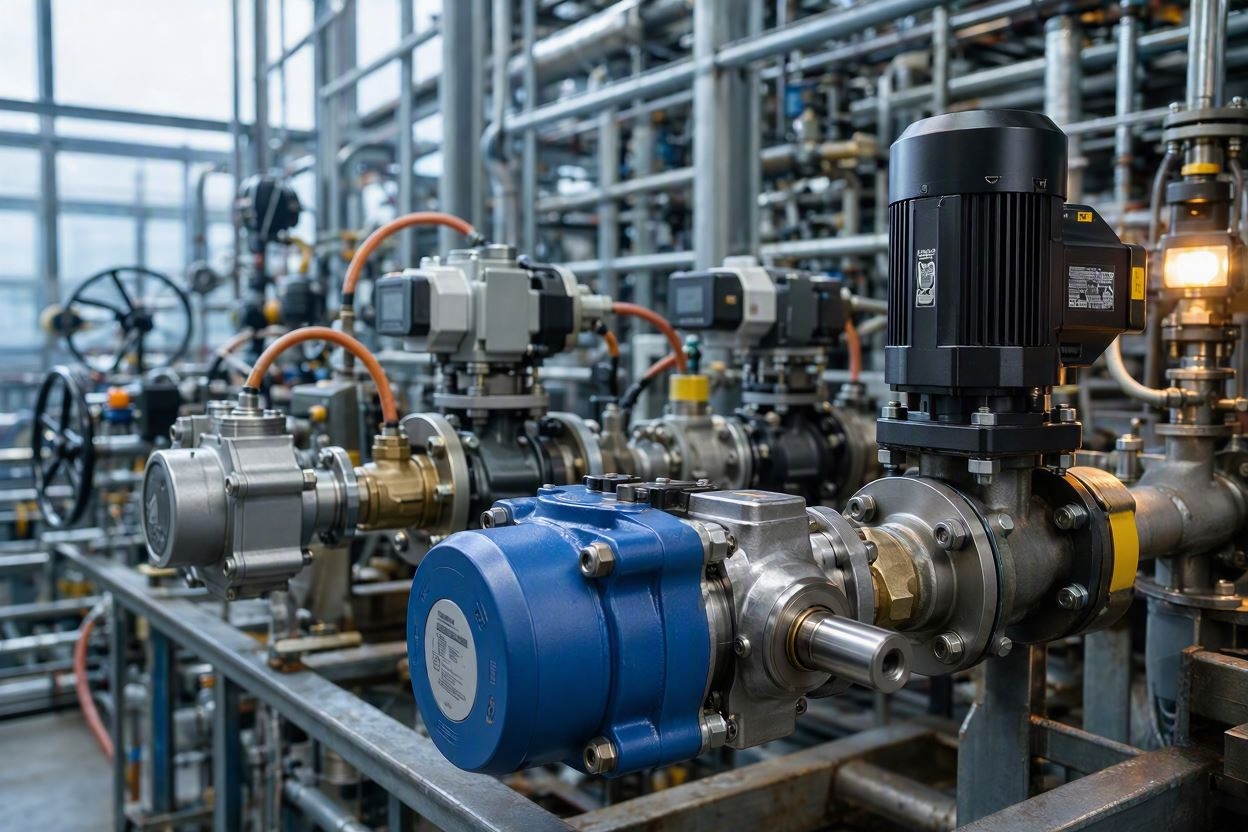
Valve Actuators Market Key Trends, Applications, Growth Drivers, and Opportunities
The valve actuators market is becoming increasingly important as industries adopt automated systems for controlling the movement of fluids, gases, and process materials. Valve actuators convert electrical energy, compressed air, hydraulic pressure, or stored mechanical energy into controlled valve movement. They enable valves to open, close, or regulate flow without requiring continuous manual intervention. Their use supports improved process control, operational safety, and remote monitoring across industrial facilities. Increasing automation across manufacturing, water treatment, energy, chemical processing, and building systems is supporting continued demand for reliable actuation technologies.
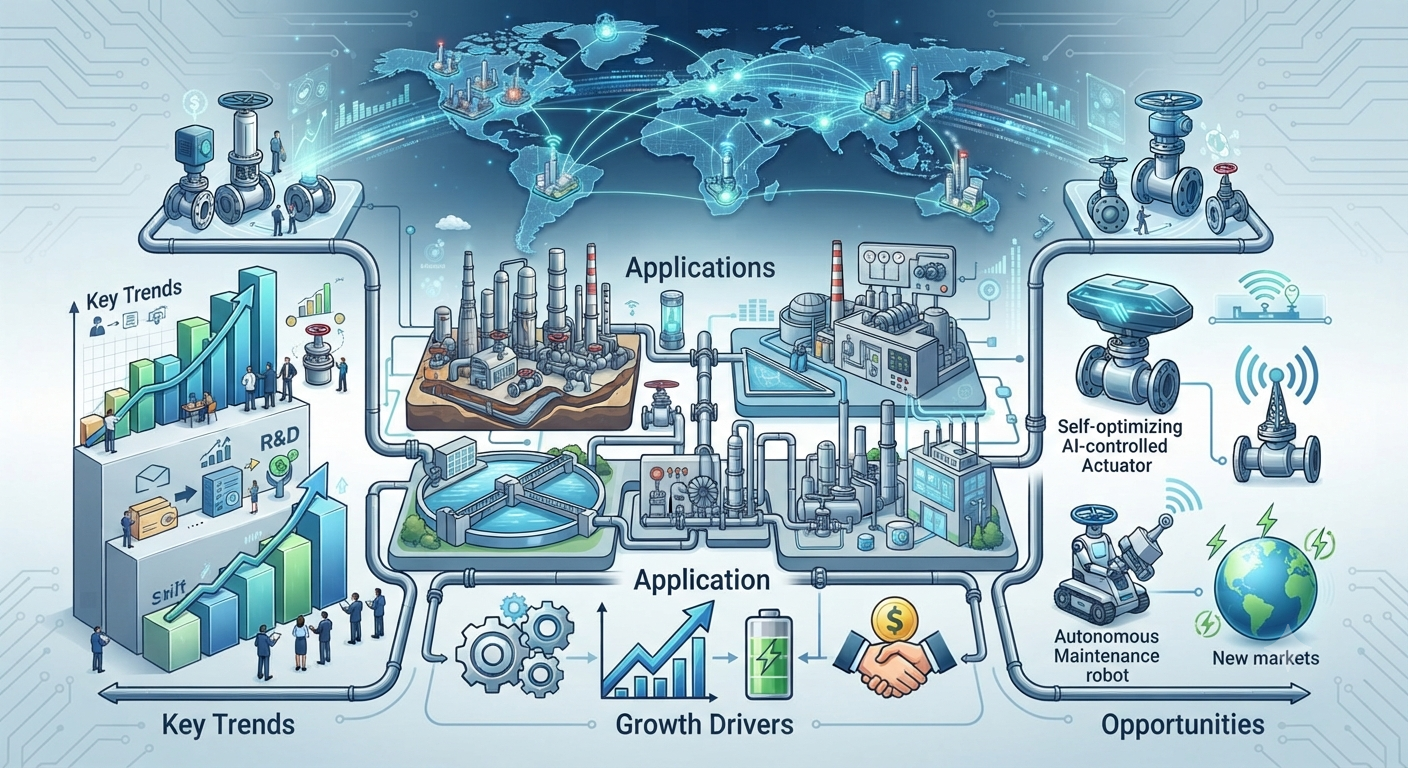
Modern industrial facilities depend on automated valves for controlling pressure, temperature, flow rate, and fluid direction. The actuator plays a central role because it determines how quickly and accurately a valve responds to a control signal. Actuators can be configured for simple open and close functions or for continuous modulation where precise positioning is required. Selection depends on valve design, operating torque, required speed, power availability, environmental conditions, and safety requirements. As industrial processes become more connected, actuator systems are also gaining greater importance in digital control and monitoring environments.
According to Marketsandmarkets, the global actuators market size was valued at USD 71.22 billion in 2025 and is projected to reach USD 100.41 billion by 2030, growing at a CAGR of 7.1% from 2025 to 2030.
Download PDF Brochure @ https://www.marketsandmarkets.com/pdfdownloadNew.asp?id=59465451
Understanding Valve Actuators and Their Role
A valve actuator is a mechanical device that moves a valve into a required position based on a physical input or control signal. Electric models generally use a motor and gear mechanism, while pneumatic models use compressed air to generate movement. Hydraulic systems use pressurized fluid to produce high force or torque for demanding applications. The movement can be rotary or linear depending on the valve configuration. This flexibility allows actuators to support different valve designs, including ball, butterfly, gate, globe, and other industrial valve arrangements.
The valve actuators market benefits from the growing need to reduce manual intervention in industrial operations. Automated valve systems can be controlled from centralized locations, allowing operators to manage equipment that may be located in hazardous, remote, or difficult to access areas. Actuators can also support emergency shutdown functions and process interlocks where rapid valve movement is necessary. Position feedback can provide information about whether a valve has reached its intended position. These capabilities make actuation an important component of modern process automation infrastructure.
Major Types of Valve Actuators
Valve actuators are available in several configurations, with electric, pneumatic, and hydraulic technologies representing major categories used in industrial applications. Each technology has different operating characteristics and is selected according to process requirements. Electric actuators are commonly associated with precise positioning and digital control integration. Pneumatic systems are valued for fast operation and suitability for frequent cycling. Hydraulic systems are generally selected when very high torque or thrust is required.
The main actuator categories can be understood through their operating characteristics:
- Electric actuators use motors and gear systems to produce controlled valve movement and are suitable for applications requiring accurate positioning and remote operation.
- Pneumatic actuators use compressed air and are widely used where fast response, repeated cycling, and fail safe operation are important.
- Hydraulic actuators use pressurized fluid to generate high force and are suitable for large valves and demanding operating conditions.
- Manual and spring based mechanisms can be used in applications where automated operation is unnecessary or where stored energy is required for emergency movement.
Electric Actuators Gain Attention Through Automation
Electric actuators are increasingly used where precise movement, remote operation, and integration with electronic control systems are required. These systems convert electrical energy into mechanical movement through a motor and gear arrangement. They can provide controlled positioning for both simple open and close operations and more precise modulation applications. Electrical systems can also provide position information and operational feedback to control platforms. Their ability to operate without compressed air infrastructure can make them suitable for facilities where electrical power is readily available.
Digitalization is influencing the design of electric actuation systems. Modern facilities increasingly connect actuators with programmable controllers, supervisory systems, and other automation equipment. This connectivity can allow operators to monitor valve position, operating status, torque conditions, and other parameters. Such information can support maintenance planning and help identify unusual operating conditions. As industrial facilities continue adopting connected equipment, intelligent electric actuation is expected to remain an important technology area within the valve actuators market.
Pneumatic Actuators Support Fast Industrial Operations
Pneumatic actuators use compressed air to generate linear or rotary movement. Their relatively simple operating principle makes them suitable for applications requiring frequent valve operation and rapid response. Pneumatic actuators can be designed as single acting or double acting systems depending on the required movement and safety configuration. Spring return arrangements can move the valve toward a predetermined position when the air supply is interrupted. These characteristics make pneumatic actuation useful in many process industries and automated production environments.
The valve actuators market continues to benefit from pneumatic technology because many industrial facilities already maintain compressed air infrastructure. Pneumatic actuators are frequently used for ball valves, butterfly valves, globe valves, and other automated valve configurations. Their ability to handle repeated operation can be valuable in production processes where valves cycle frequently. However, system performance depends on the availability of clean and adequately regulated compressed air. Maintenance of compressors, filters, dryers, tubing, and related equipment is therefore an important part of pneumatic actuation system management.
Hydraulic Actuators Deliver High Force
Hydraulic actuators are designed for applications requiring substantial torque or thrust. They use pressurized hydraulic fluid to move a piston or rotary mechanism connected to the valve. Because hydraulic fluid can generate significant force within a compact system, hydraulic actuators are suitable for large valves and demanding industrial applications. They are commonly considered where pneumatic or electric systems may not provide the required force efficiently. High pressure pipelines, large industrial equipment, marine systems, and heavy process applications can require hydraulic actuation.
Hydraulic technology also supports applications where reliable movement is required under severe operating conditions. However, hydraulic systems require careful management of fluid quality, seals, filters, temperature, and potential leakage. System design can also involve additional equipment such as pumps, reservoirs, and control components. These requirements can increase maintenance complexity compared with simpler actuation arrangements. The selection of hydraulic technology therefore depends strongly on force requirements, operating conditions, available infrastructure, and safety considerations.
Growing Automation Drives Valve Actuator Adoption
Industrial automation is one of the most important factors influencing the valve actuators market. Manufacturers are increasingly automating repetitive operations to improve consistency, reduce manual intervention, and strengthen process monitoring. Automated valves allow control systems to respond to changes in process conditions without requiring operators to manually adjust every valve. This is particularly useful in facilities containing hundreds or thousands of valves. Automated actuation can also support centralized operation across large industrial sites.
The increasing adoption of digital control platforms is further expanding actuator functionality. Programmable controllers and supervisory systems can receive signals from sensors and transmit commands to actuators. This creates a feedback loop in which process conditions can be monitored and valve positions adjusted accordingly. Intelligent actuator systems can provide additional information about movement, operating cycles, torque, and equipment condition. These capabilities support more connected approaches to industrial automation and maintenance.
Importance of Smart Valve Actuation
Smart valve actuation combines conventional mechanical movement with sensors, electronics, communication functions, and control software. These features can help operators understand how a valve is performing without relying exclusively on physical inspection. Position feedback is particularly important for applications where knowing the actual valve position is essential to safe process operation. Additional monitoring capabilities can identify abnormal torque, repeated cycling, or other operating conditions. This creates opportunities for more proactive maintenance strategies.
The valve actuators market is also being influenced by the broader movement toward Industrial Internet of Things technologies. Connected actuators can become part of larger industrial networks where equipment data is collected and analyzed. Integration with digital platforms can improve visibility across process equipment and support remote troubleshooting. Smart actuation can also contribute to improved asset management by providing information about equipment usage and operating behavior. These developments are encouraging manufacturers to focus on connectivity alongside mechanical performance.
Demand Across Water and Wastewater Treatment
Water and wastewater treatment facilities rely heavily on valves to manage water movement through filtration, pumping, treatment, and distribution processes. Automated valve systems can control flow between different treatment stages and reduce the need for continuous manual operation. Electric and pneumatic actuators can be used depending on valve size, operating conditions, and available infrastructure. Remote operation is especially useful in facilities where multiple treatment stages must be monitored from a centralized control room.
The valve actuators market can benefit from continued modernization of water infrastructure. Aging treatment facilities increasingly require upgrades to control systems, pumping equipment, and automated flow management. Actuators can support more accurate control while reducing dependence on manual valve operation. Integration with sensors and digital control platforms can also improve operational visibility. As water management becomes more focused on efficiency, reliability, and automation, valve actuation remains an important part of modern treatment infrastructure.
Applications in Oil and Gas Operations
Oil and gas facilities use valves throughout production, transportation, processing, storage, and distribution systems. These applications can require actuators capable of operating reliably under pressure, temperature, and environmental challenges. Pneumatic and hydraulic systems are often considered for applications requiring rapid response or substantial force. Electric actuators can also be used where precise control and electrical infrastructure are suitable. Actuator selection must account for process conditions, safety requirements, valve characteristics, and installation environment.
Safety is particularly important in energy related applications because valves may control combustible fluids and gases. Fail safe configurations can help move valves toward predetermined positions when power or control signals are lost. Remote operation can also reduce the need for personnel to approach difficult or hazardous locations. These requirements support ongoing demand for robust valve actuation systems. The valve actuators market therefore remains closely connected with developments in process safety and automation.
Chemical and Pharmaceutical Industry Applications
Chemical processing facilities require precise control of liquids, gases, and chemical materials throughout production processes. Automated valves can regulate flow between reactors, storage tanks, processing equipment, and distribution systems. Pneumatic actuators are commonly considered for fast operation, while electric systems can provide controlled positioning where precise modulation is required. Material compatibility, environmental protection, cleaning requirements, and process safety are important considerations when selecting actuation systems.
Pharmaceutical production creates additional requirements because equipment may need controlled operation during cleaning, sterilization, and production cycles. Actuators must operate consistently and integrate effectively with automated process systems. Accurate valve positioning can help maintain repeatable process conditions. The valve actuators market can therefore benefit from increased automation across specialized production environments where operational consistency is essential.
Food and Beverage Processing Creates Automation Demand
Food and beverage production uses automated valves throughout mixing, cleaning, processing, heating, cooling, and fluid transfer operations. Automated actuation can help control the movement of water, ingredients, cleaning solutions, and other process fluids. Pneumatic technology is often considered where rapid cycling is required, while electric actuation can be used where precise positioning and electronic control are important. Hygienic equipment design and ease of maintenance are important factors in these facilities.
Automated processing can also reduce unnecessary manual intervention during repetitive production cycles. Control systems can coordinate multiple valves according to programmed sequences, supporting consistent production procedures. Actuators equipped with feedback can provide information about valve position and system status. These capabilities contribute to the broader adoption of automated flow control technologies within food and beverage processing.
Building Automation and HVAC Applications
The use of automated valves is also expanding across heating, ventilation, and air conditioning systems. Buildings use valves to control chilled water, hot water, steam, and other fluids involved in temperature management. Electric actuators can regulate valve positions according to signals from building management systems. Automated control allows heating and cooling systems to respond to changing building conditions and operational requirements.
Energy efficiency is an important consideration for modern building systems. Automated valves can help regulate fluid flow according to demand rather than relying on fixed manual settings. Integration with sensors can allow building control systems to adjust valve positions based on temperature, occupancy, or other operating parameters. These applications create additional opportunities for the valve actuators market beyond traditional heavy industry.
Key Factors Influencing Actuator Selection
Selecting an actuator requires more than simply matching an actuator to a valve size. Engineers need to evaluate the torque or thrust required throughout the valve movement, operating speed, cycling frequency, control method, environmental conditions, and available power source. Fail safe requirements can also influence the choice between different actuator configurations. Mounting compatibility and feedback requirements should be considered during system design.
Important selection considerations include:
- Valve type, size, operating torque, and required movement should be evaluated before selecting the actuator.
- Available electrical power, compressed air, or hydraulic infrastructure can determine which technology is practical.
- Operating environment, temperature, moisture, hazardous conditions, and enclosure requirements can influence actuator specifications.
- Control requirements, movement speed, duty cycle, feedback, and fail safe position should be considered for reliable operation.
Trends Shaping the Valve Actuators Market
Several technology trends are influencing the development of valve actuation systems. One important trend is the integration of intelligent electronics into electric actuators. Another is the growing use of connected devices that can transmit operating information to centralized systems. Manufacturers and system designers are also focusing on compact designs, improved energy efficiency, easier commissioning, and enhanced diagnostic functions. These developments are making actuators more closely integrated with wider automation architectures.
Another significant trend is the increasing interest in electrification. Electric actuation can eliminate the need for compressed air infrastructure in applications where electrical power is readily available. At the same time, pneumatic and hydraulic technologies continue to serve applications where their specific operating advantages are required. Rather than replacing one technology completely, industrial users are increasingly selecting actuation methods according to application requirements. This technology specific approach is shaping the evolution of the valve actuators market.
Role of Preventive and Predictive Maintenance
Reliable actuator operation is essential because actuator failure can prevent a valve from reaching its required position. Preventive maintenance typically involves inspection of mechanical components, electrical connections, air systems, hydraulic components, seals, and feedback devices. Regular testing can identify wear or abnormal operating conditions before they become major problems. Maintenance requirements vary considerably according to actuator technology and operating environment.
Digital monitoring is creating new opportunities for predictive maintenance. Connected systems can collect information related to operating cycles, torque, position, temperature, and other parameters. Analyzing this information can help maintenance teams identify changes in equipment behavior. Such capabilities can reduce unexpected downtime and improve maintenance planning. As industrial facilities become more data driven, monitoring functions are expected to remain an important part of actuator development.
Challenges in Valve Actuator Adoption
Despite their benefits, actuator systems can present several challenges. Selecting an actuator that does not provide sufficient torque or thrust can result in unreliable valve operation. Oversizing can increase equipment costs and may create inefficient operating conditions. Pneumatic systems require dependable compressed air infrastructure, while hydraulic systems require appropriate fluid management and maintenance. Electric systems may require careful consideration of duty cycle, environmental protection, and hazardous location requirements.
Installation and integration can also influence system performance. The actuator, valve, mounting components, control equipment, and feedback system need to operate as a coordinated assembly. Incorrect installation can result in excessive mechanical stress, poor positioning, or premature equipment wear. Proper engineering and commissioning are therefore essential for achieving reliable operation.
Future Opportunities for Automated Valve Systems
The continued adoption of industrial automation creates opportunities for advanced valve actuation systems. Connected actuators can support remote monitoring, digital diagnostics, and centralized equipment management. Improvements in sensors and control electronics can further enhance actuator feedback and positioning capabilities. Electrification can create opportunities in facilities seeking to reduce dependence on compressed air infrastructure. At the same time, pneumatic and hydraulic technologies will continue to support applications requiring fast movement or high force.
Infrastructure modernization is another important opportunity. Water treatment, manufacturing, energy, chemical processing, buildings, and other industries are upgrading control systems to improve efficiency and reliability. These upgrades can create demand for new actuators as well as replacement units for existing installations. The valve actuators market is therefore positioned at the intersection of industrial automation, process control, digitalization, and infrastructure modernization.
Conclusion
The valve actuators market is closely connected with the increasing automation of fluid handling and process control systems. Electric, pneumatic, and hydraulic technologies each provide distinct capabilities for different operating conditions. Electric systems support precise and connected control, pneumatic systems provide rapid and repeatable movement, and hydraulic systems deliver high force for demanding applications. The choice of actuator depends on valve characteristics, process requirements, safety conditions, available utilities, and control architecture.
As industrial facilities become more automated and digitally connected, valve actuators are evolving from basic movement devices into important components of intelligent control systems. Remote monitoring, position feedback, digital diagnostics, and predictive maintenance are increasing the functional value of automated actuation. Demand from water treatment, energy, chemical processing, manufacturing, food production, pharmaceuticals, and building systems is supporting broad application opportunities. Continued technological development will keep valve actuation important for efficient, reliable, and safer industrial operations.
FAQs About the Valve Actuators Market
What is a valve actuator?
A valve actuator is a device that moves a valve into an open, closed, or intermediate position. It converts electrical energy, compressed air, hydraulic pressure, or mechanical energy into controlled movement. Actuators allow valves to operate automatically or remotely and can support both simple isolation and precise flow regulation applications.
What are the main types of valve actuators?
The major types include electric, pneumatic, and hydraulic actuators. Electric actuators use motors and gear mechanisms, pneumatic actuators use compressed air, and hydraulic actuators use pressurized fluid. Manual and spring based mechanisms are also used for specific applications and safety functions.
Why are electric actuators becoming important?
Electric actuators can provide accurate positioning, remote operation, and integration with electronic control systems. They can operate without compressed air infrastructure and can provide useful feedback about valve position and operating conditions. These characteristics make them suitable for increasingly connected industrial systems.
Where are pneumatic actuators commonly used?
Pneumatic actuators are commonly used in chemical processing, water treatment, manufacturing, energy facilities, and other industrial applications. They are particularly useful where fast response and frequent cycling are required. They can also support fail safe configurations through spring return arrangements.
What are hydraulic actuators used for?
Hydraulic actuators are generally used when high torque or thrust is required. They can operate large valves and demanding systems where substantial force is necessary. Applications can include large pipelines, heavy industrial equipment, marine systems, and other high force environments.
How does automation affect the valve actuators market?
Industrial automation increases the need for valves that can operate without continuous manual intervention. Actuators allow valves to respond to commands from control systems and provide feedback about operating conditions. Increasing automation across industrial facilities is therefore creating continued opportunities for advanced actuation systems.
What factors should be considered when selecting an actuator?
Important factors include valve type, valve size, operating torque or thrust, movement speed, cycling frequency, available power source, environmental conditions, control requirements, feedback requirements, and fail safe operation. Correct sizing and compatibility between the valve and actuator are essential for reliable performance.
What role does digitalization play in valve actuation?
Digitalization allows actuators to communicate operating information to control and monitoring systems. Sensors and electronic controls can provide information about position, torque, temperature, operating cycles, and other parameters. This information can support remote monitoring, diagnostics, and more proactive maintenance.
Which industries use valve actuators?
Valve actuators are used across water and wastewater treatment, energy, chemical processing, manufacturing, pharmaceuticals, food and beverage production, building systems, marine applications, and other process industries. Their use varies according to valve requirements, process conditions, safety needs, and available infrastructure.
What are the key trends in valve actuation?
Key trends include smart actuation, digital connectivity, remote monitoring, improved feedback, predictive maintenance, electrification, compact actuator designs, and greater integration with industrial automation systems. These developments are increasing the role of actuators within connected process control environments.
80% of the Forbes Global 2000 B2B companies rely on MarketsandMarkets to identify growth opportunities in emerging technologies and use cases that will have a positive revenue impact.
- Food Packaging Market Size Set for Strong Growth Through 2030 Amid Rising Demand for Convenience Foods
- Crop Protection Chemical Market Size, Share & Growth Forecast (2025–2030)
- Mulch Films Market: Driving Sustainable Agriculture Through Innovation
- Agricultural Adjuvants Market Analysis, Trends, and Growth Outlook (2026–2031)
- Japan Enterprise Asset Management Market Growth: AI and Smart Infrastructure Drive Demand


