

Rising Demand for Plant-Based Alternatives Boosts Egg Replacers Industry
According to a recent research report, “Egg Replacers Market by Ingredient (Dairy Protein, Starch, Algal Flour, Soy-Based Products), Source (Plant, Animal), Application (Bakery & Confectionery, Savories, Sauces, Dressings & Spreads), Form, and Region - Global Forecast to 2029” published by MarketsandMarkets, the global market for egg replacers is valued at USD 2.3 billion in 2024 and is projected to reach USD 3.3 billion by 2029, growing at a CAGR of 8.0% during the forecast period. This reflects the expanding egg replacers industry size driven by changing consumer preferences and rising demand for plant-based alternatives.
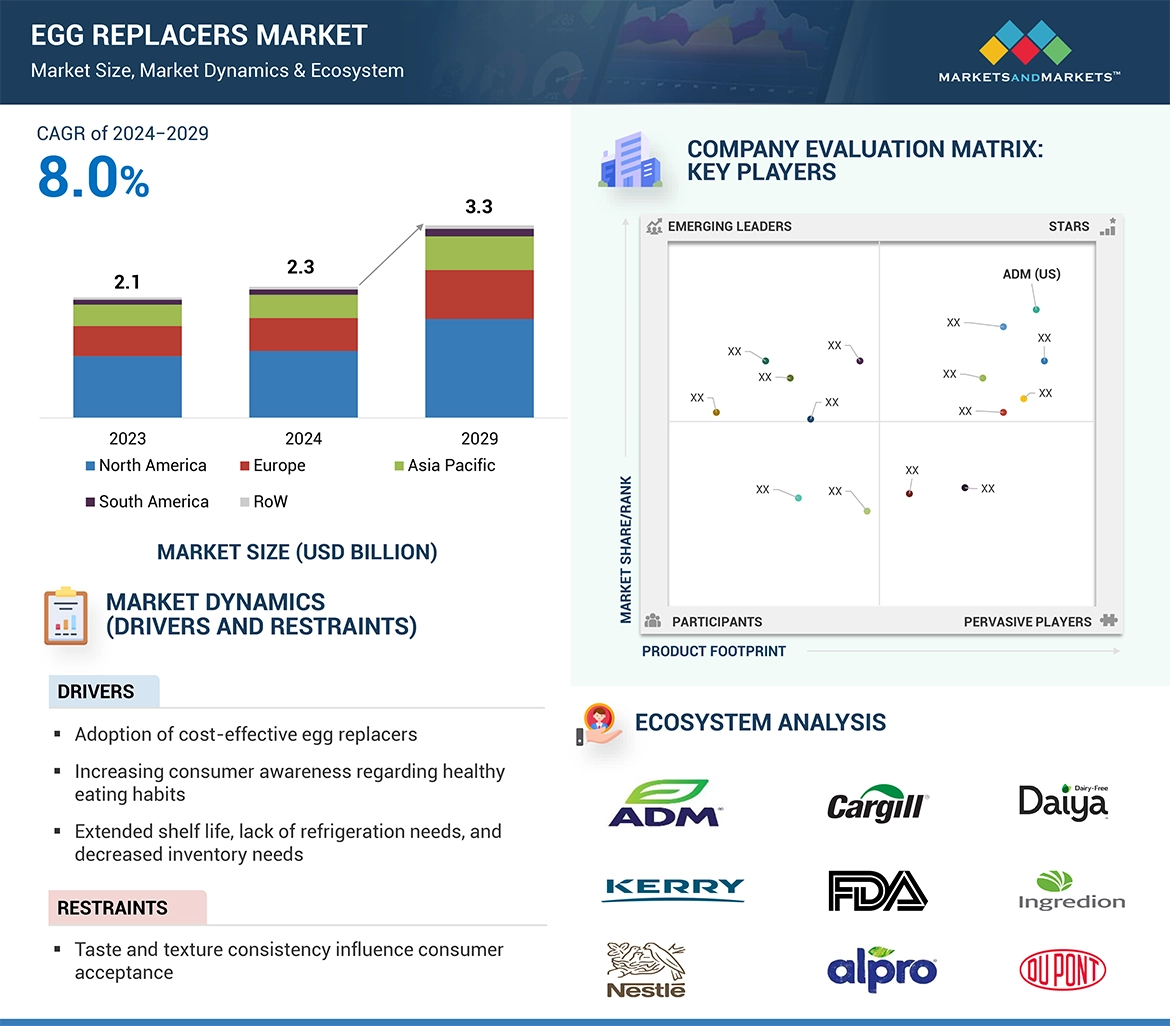
What’s Driving the Demand for Egg Replacers?
The growth of the egg replacers market is fueled by three major consumer and industry shifts:
-
Food Allergies and Allergen-Free Labels
Eggs are among the eight major allergens required on labels under the Food Allergen Labeling and Consumer Protection Act. With 0.5%–2.5% of children affected by egg allergies, allergen-free alternatives are increasingly important. -
Flexitarian and Sustainable Diets
Consumers are turning to plant-based diets, aligning with environmental sustainability and health awareness. This trend is a key driver in the egg replacers industry trends, as more households adopt flexitarian eating habits. -
Innovation in Food Technology
Modern egg replacers replicate critical egg functionalities like binding, emulsification, and leavening, enabling their use in bakery, sauces, dressings, and savory foods without compromising quality.
Market Insights by Segment
By Form: Dry Egg Replacers Lead
Dry egg substitutes dominate the market due to longer shelf life, easy storage, affordability, and convenience. Their versatility makes them the preferred choice for food manufacturers across various applications.
By Source: Plant-Based Replacers Gain Momentum
Plant-based egg replacers are expected to grow at the highest CAGR. They appeal to vegan, vegetarian, and allergen-conscious consumers, supporting clean-label preferences and improved sustainability.
Get Custom Data to Solve Your Business Challenges
By Ingredient: Starch Emerges as a Key Segment
Starches from corn, potato, and tapioca are widely used due to their affordability, neutral taste, and ability to replicate eggs’ functional properties. This enhances their relevance in the egg replacers industry share and supports manufacturers in producing cost-effective, high-quality products.
Regional Outlook
The Asia Pacific region is projected to see consistent growth. Rapid urbanization, a rising middle-class population, and increased consumption of convenience foods boost the adoption of egg replacers. Supportive regulatory frameworks and sustainability initiatives further encourage manufacturers to expand in this region.
Key Players Shaping the Market
Leading egg replacers players include:
- Cargill, Incorporated (US)
- ADM (US)
- Kerry Group plc (Ireland)
- Ingredion (US)
- Tate & Lyle (UK)
- Puratos (Belgium)
- Corbion (Netherlands)
- Arla Foods Ingredients Group (Denmark)
- Glanbia plc (Ireland)
- Dupont (US)
- MGP Ingredients (US)
- Danone (France)
- Fiberstar, Inc. (US)
- J&K Ingredients (US)
- AAK Foods (Sweden)
The egg replacers market is becoming a mainstream food solution, moving beyond niche dietary needs. With increasing awareness of allergies, sustainability, and healthy eating, the demand for high-quality egg alternatives will continue to grow, presenting both opportunities and challenges for food manufacturers.
Frequently Asked Questions
Q1: What are egg replacers?
Egg replacers are plant- or animal-based substitutes designed to mimic the functional properties of eggs in baking, cooking, and other food applications.
Q2: What is driving the growth of the egg replacers market?
Key drivers include rising egg allergies, increasing adoption of plant-based diets, sustainability awareness, and innovations in food technology that replicate egg functionality.
Q3: Which form of egg replacer is most popular?
Dry egg replacers dominate the market due to their long shelf life, affordability, and ease of use.
Q4: Which ingredients are commonly used in egg replacers?
Common ingredients include starches (corn, potato, tapioca), dairy proteins, algal flour, and soy-based products. Starches are particularly popular due to their versatility and cost-effectiveness.
Q5: Which region is expected to witness the highest growth?
The Asia Pacific region is expected to grow steadily due to urbanization, rising disposable incomes, and increased consumption of convenience foods.
Q6: Who are the major egg replacers players?
Major egg replacers players include Cargill, ADM, Kerry Group, Ingredion, Tate & Lyle, Puratos, Corbion, Arla Foods, Glanbia, Dupont, MGP Ingredients, Danone, Fiberstar, J&K Ingredients, and AAK Foods.
80% of the Forbes Global 2000 B2B companies rely on MarketsandMarkets to identify growth opportunities in emerging technologies and use cases that will have a positive revenue impact.
- Food Packaging Market Size Set for Strong Growth Through 2030 Amid Rising Demand for Convenience Foods
- Crop Protection Chemical Market Size, Share & Growth Forecast (2025–2030)
- Mulch Films Market: Driving Sustainable Agriculture Through Innovation
- Agricultural Adjuvants Market Analysis, Trends, and Growth Outlook (2026–2031)
- Japan Enterprise Asset Management Market Growth: AI and Smart Infrastructure Drive Demand

