
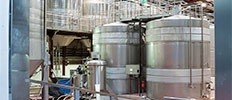
Fermenters Market: Brewing Growth Across Food, Beverage, and Healthcare
The global fermenters market is witnessing strong momentum, driven by rising consumer demand for fermented beverages like beer, wine, and kombucha, as well as their growing use in food, healthcare, and cosmetic products. With advanced fermenting technologies and greater awareness of food preservation, this market is positioned for dynamic growth in the coming years.
Rising Consumption of Fermented Beverages
Fermented beverages are at the heart of this expansion. In developed economies, the craft beer boom has become a major growth driver. For instance, the US craft beer industry alone grew 5% by volume in 2017, making up nearly 13% of the national beer market. The US also exported more than 200 million barrels of beer, with production supported by over 5,600 breweries.
Europe has shown similar strength, with Germany, the UK, Poland, Spain, and the Netherlands emerging as leaders in beer production. Meanwhile, in the Asia Pacific, countries like China, India, and Vietnam are fueling rapid increases in beer production. Overall, fermenters market size continues to expand as global beer output reached 189 million kiloliters in 2015, with Asia Pacific holding nearly 34% of that share.
The expanding global beer culture, combined with rising popularity of alternatives like kombucha and kefir, is significantly increasing demand for fermenter systems.
Fermentation as a Tool for Food Preservation
Fermentation is not just about flavor—it’s about longevity and nutrition. Today, it’s one of the most preferred methods of food preservation. Fermented drinks like dairy kefir, kombucha, mead, and kvass are preserved through natural processes where microorganisms produce lactic and acetic acid. These bio-preservatives prevent spoilage while maintaining nutritional value, fueling interest in both traditional and innovative products.
Market by Application: Beverages Lead the Way
Within the fermenters market, fermenters market share is dominated by the beverages segment. The growing demand for alcoholic and non-alcoholic fermented drinks continues to drive investment in fermenter systems globally. With beer, wine, and kombucha production facilities expanding in both established and emerging markets, fermenters have become indispensable equipment for large-scale beverage manufacturing.
Automated Fermenters: The Future of Efficiency
Automation is shaping the next chapter of the fermenters market. The automatic segment is expected to capture the largest share, thanks to its ability to optimize production and meet market demand efficiently. Automated fermenters are especially relevant in the food, beverage, and pharmaceutical industries, where scaling up production without compromising quality is critical.
In fast-growing economies like India and China, automatic fermenters are being increasingly adopted for products such as kombucha, kefir, and herbal teas. This trend is expected to accelerate as consumer demand rises for convenient and healthy fermented beverages.
Request Personalized Data Insights for Your Business Goals
Asia Pacific: The Growth Hotspot
The Asia Pacific region is projected to record the highest growth in the fermenters market. Factors such as rapid urbanization, a growing middle-class population, higher disposable incomes, and rising awareness of health benefits from fermented products are driving this surge. Countries like China, India, and Japan are leading the way in adopting fermenters for both food and beverage production.
Key Industry Players
The fermenters market is highly competitive, with leading fermenters companies innovating in design, automation, and scalability. Some of the major players shaping the industry include:
- Eppendorf (Germany)
- Sartorius (Germany)
- Thermo Fisher Scientific (US)
- Pierre Guerin SS (France)
- CerCell ApS (Denmark)
- Electrolab Biotech (UK)
- Applikon Biotechnology (Netherlands)
- GEA Group (Germany)
- General Electric (US)
- Bioengineering AG (Switzerland)
- Zeta Holding (Austria)
- bbi-biotech (Germany)
With strong demand across beverages, food preservation, and healthcare applications, the fermenters market is set for sustained growth. Automation, regional expansion in Asia Pacific, and rising consumer demand for healthier, naturally preserved products will continue to fuel its trajectory.
The fermenters industry is not just about production equipment—it’s about enabling the next generation of food and beverage innovation worldwide.
FAQs About the Fermenters Market
1. What is driving the growth of the global fermenters market?
The main growth drivers include increasing demand for fermented beverages such as beer, wine, and kombucha, advancements in fermenter technology, and rising applications in food preservation, healthcare, and cosmetics.
2. Which region is expected to dominate fermenters market growth?
Asia Pacific is projected to record the highest growth due to urbanization, rising disposable incomes, and strong demand for healthy, naturally fermented products in countries like China, India, and Japan.
3. What is the current fermenters market size?
The fermenters market size is expanding rapidly, supported by the growth of craft beer, kombucha, and functional beverages globally. Rising investments in production facilities are further driving demand.
4. Which segment holds the largest fermenters market share?
The beverages segment accounts for the largest fermenters market share, fueled by increasing consumption of beer, wine, kombucha, and dairy-based drinks worldwide.
5. Who are the leading fermenters companies?
Prominent fermenters companies include Eppendorf, Sartorius, Thermo Fisher Scientific, Pierre Guerin SS, GEA Group, and Bioengineering AG, among others.
80% of the Forbes Global 2000 B2B companies rely on MarketsandMarkets to identify growth opportunities in emerging technologies and use cases that will have a positive revenue impact.
- Food Packaging Market Size Set for Strong Growth Through 2030 Amid Rising Demand for Convenience Foods
- Crop Protection Chemical Market Size, Share & Growth Forecast (2025–2030)
- Mulch Films Market: Driving Sustainable Agriculture Through Innovation
- Agricultural Adjuvants Market Analysis, Trends, and Growth Outlook (2026–2031)
- Japan Enterprise Asset Management Market Growth: AI and Smart Infrastructure Drive Demand

