
Global Probiotics Market: From Digestive Support to Preventive Nutrition Powerhouse
The global probiotics market is entering a phase of sustained and structurally strong growth. The market is estimated to be valued at USD 76.59 billion in 2025 and is projected to reach USD 114.95 billion by 2030, growing at a CAGR of 8.5% during the forecast period. This Probiotics Market Outlook reflects a fundamental shift in consumer behavior toward long-term wellness and preventive nutrition.
Consumers are increasingly moving away from excessive self-medicated antibiotic use and toward condition-based nutritional solutions to manage gastrointestinal disorders, lifestyle-related health issues, and overall well-being. Probiotics are now positioned not only as supplements but as everyday health enablers embedded across foods, beverages, and clinical nutrition.
Evolution of Probiotics: From Awareness to Regulation and Lifestyle Adoption
Since the late 1980s, probiotics have evolved from limited scientific validation toward well-defined strain identification, regulatory frameworks, and professional endorsement. What began as a niche health concept has matured into a mainstream nutritional category supported by clinical research, improved formulation technologies, and clearer consumption guidelines.
In regions such as South Asia and the Pacific, including China, Japan, and India, locally developed and indigenous probiotic products have gained mass acceptance. In many cases, these products have become lifestyle icons, demonstrating how probiotics can integrate into traditional diets while addressing modern health challenges—one of the defining Probiotics Market Trends shaping global consumption.
Key Market Takeaways
- Asia Pacific accounted for 45.9% of the global probiotics market share in 2024.
- The yeast segment is expected to register the highest CAGR of 9.7% during the forecast period.
- Dietary supplements are projected to be the fastest-growing product segment.
- The human end-use segment accounted for 93.2% of the market share in 2024.
- Online distribution channels are expected to grow at the fastest pace.
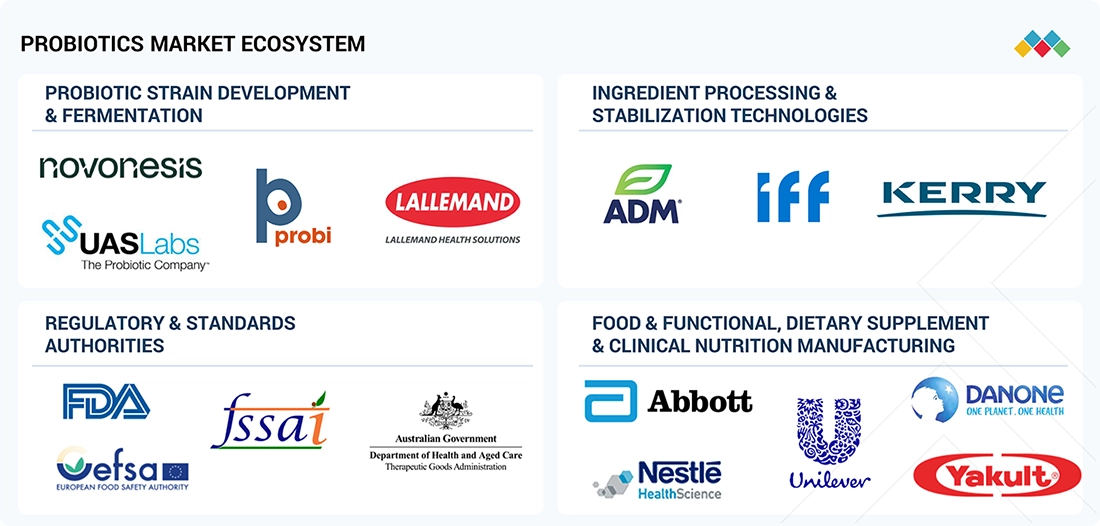
Leading players in the market include Novonesis A/S, International Flavors & Fragrances, Kerry Group plc, Archer Daniels Midland Company, Danone S.A., Nestlé S.A., Yakult Honsha Co., Ltd., and BioGaia AB.
Emerging and specialized players such as Probi AB, Winclove Probiotics, UAS Laboratories LLC, AB-Biotics, and Deerland Probiotics & Enzymes are accelerating innovation and competition.
Request Personalized Data Insights for Your Business Goals
Technology as a Growth Catalyst
Growth in the probiotics market is strongly supported by advances in encapsulation and stabilization technologies. Less processed food and nutrition industries are increasingly adopting microencapsulation and nanoencapsulation to improve ingredient performance, shelf life, and bioavailability.
Nanoencapsulation protects sensitive bioactives such as probiotics, vitamins, minerals, omega-3 fatty acids, carotenoids, and polyphenols from heat, humidity, oxygen, and processing stress. Controlled release, taste masking, and enhanced bioavailability enable probiotics to be incorporated across functional foods, fortified beverages, dietary supplements, infant nutrition, and sports nutrition products without compromising sensory quality.
Trends and Disruptions Shaping the Market
The probiotics market is shifting toward strain-specific, clinically validated formulations. Manufacturers are moving away from generic blends and focusing on targeted solutions for digestive health, immunity, women’s health, pediatrics, and metabolic support.
There is also a strong shift toward non-dairy and shelf-stable formats, driven by lactose intolerance, plant-based diets, and the need for ambient storage. Advances in fermentation, stabilization, and encapsulation technologies are enabling wider application across supplements, beverages, and fortified foods.
Regulatory tightening around health claims is reshaping competitive dynamics. Companies without strain ownership, clinical evidence, or formulation capabilities face margin pressure and reduced shelf presence. At the same time, digital health platforms, microbiome testing, and personalized nutrition are influencing product development and consumer expectations, accelerating consolidation across the probiotics value chain.
Key Market Driver: Digestive Health and Preventive Nutrition
Rising diagnosis of gastrointestinal disorders, increased antibiotic usage impacting gut microbiota, and broader acceptance of preventive nutrition are driving sustained demand. Probiotics are increasingly positioned as daily-consumption products through foods, beverages, and supplements, encouraging repeat purchasing behavior.
Healthcare professionals are also recommending probiotics as adjuncts to antibiotic therapy and pediatric nutrition, strengthening demand across pharmacy and clinical channels.
Probiotics Market by Product Type
Food and beverages represent the largest share of the probiotics market, supported by high consumption frequency and integration into everyday diets. Probiotic dairy products, fermented milk drinks, yogurts, and non-dairy beverages enable routine intake and are perceived as natural and preventive.
Dietary supplements remain a fast-growing subsegment, particularly capsules, powders, and sachets, driven by targeted health positioning, dosage convenience, and personalized nutrition trends.
Probiotics Market by Distribution Channel
Hypermarkets and supermarkets account for the largest share of probiotic distribution due to their role as primary retail destinations for food and daily health products. High footfall, cold-chain infrastructure, and impulse purchasing support strong volume sales.
Pharmacies and drugstores play a critical role for supplements and pediatric formulations, where professional recommendation adds credibility. Online channels are growing rapidly, supported by subscription models, detailed product information, and direct-to-consumer strategies. Despite this growth, mass retail remains dominant for volume, while pharmacies and e-commerce drive value growth.
Asia Pacific: The Core Growth Engine
Asia Pacific is both the largest and fastest-growing probiotics market globally. Japan remains a foundational market, led by Yakult Honsha Co., Ltd., which continues to expand localized production and regional distribution.
China has seen increased investments in specialized nutrition and fermented dairy, while India has emerged as a high-growth market supported by product localization, urbanization, and expanding modern retail. Rising health awareness, favorable regulations, and strong domestic fermentation capabilities continue to reinforce Asia Pacific’s leadership position.
This Probiotics Market Report highlights how the sector is transitioning from a niche digestive health category into a cornerstone of preventive nutrition. Scientific validation, advanced formulation technologies, and diversified delivery formats are redefining consumer expectations and competitive advantage.
As personalized nutrition, digital health, and functional food innovation continue to converge, probiotics are expected to remain one of the most dynamic and strategically important segments within the global nutrition and wellness industry.
Frequently Asked Questions (FAQs)
1. What are probiotics and why are they important?
Probiotics are live microorganisms that, when consumed in adequate amounts, provide health benefits—primarily by supporting gut health, digestion, immune function, and overall metabolic balance.
2. What factors are driving growth in the global probiotics market?
Key drivers include rising prevalence of digestive disorders, increased antibiotic usage affecting gut microbiota, growing awareness of preventive nutrition, and wider availability of probiotics through foods, beverages, and supplements.
3. Which product segment holds the largest share in the probiotics market?
Food and beverages represent the largest share, as probiotics integrated into everyday diets—such as yogurts, fermented milk drinks, and non-dairy beverages—enable routine consumption and higher adoption across age groups.
4. Why are dietary supplements growing rapidly in the probiotics market?
Dietary supplements offer targeted health benefits, dosage precision, convenience, and compatibility with personalized nutrition trends, making them attractive to health-conscious consumers.
5. Which ingredient type dominates the probiotics market?
Bacteria-based probiotics dominate due to strong scientific backing, long-standing use in fermented foods, and widespread consumer trust. Yeast-based probiotics are also gaining traction due to their stability and specific health benefits.
80% of the Forbes Global 2000 B2B companies rely on MarketsandMarkets to identify growth opportunities in emerging technologies and use cases that will have a positive revenue impact.
- Food Packaging Market Size Set for Strong Growth Through 2030 Amid Rising Demand for Convenience Foods
- Crop Protection Chemical Market Size, Share & Growth Forecast (2025–2030)
- Mulch Films Market: Driving Sustainable Agriculture Through Innovation
- Agricultural Adjuvants Market Analysis, Trends, and Growth Outlook (2026–2031)
- Japan Enterprise Asset Management Market Growth: AI and Smart Infrastructure Drive Demand

