

Tartaric Acid: Unlocking Growth Across Food, Pharma, and Cosmetics
Tartaric acid, a versatile organic acid, has been steadily gaining attention across multiple industries due to its wide-ranging applications and functional benefits. From food and beverages to pharmaceuticals and cosmetics, this compound plays a crucial role in enhancing product quality, stability, and taste.
Asia Pacific: A Hotspot for Growth
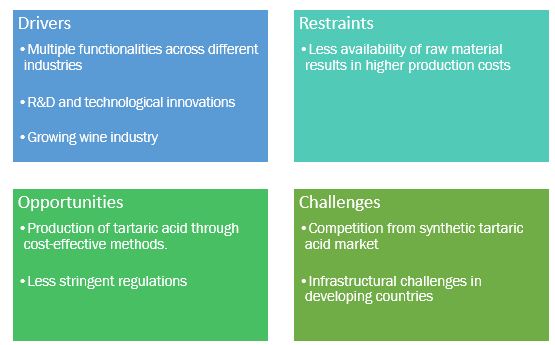
The Asia Pacific region is emerging as a key tartaric acid market, driven by economic powerhouses like China and Japan. Competitive production costs, rising disposable incomes, and growing demand for processed and packaged foods are contributing to this growth. In addition, regulatory frameworks in the region are relatively flexible, allowing for smoother domestic marketing and trade of tartaric acid. This combination of factors is creating a fertile environment for market expansion.
Why Tartaric Acid Matters
In the food and beverage sector, tartaric acid is a key ingredient. Its ability to act as an acidulant and preservative makes it essential in a variety of processed foods and ready-to-drink beverages. Beyond this, tartaric acid is central to winemaking, influencing the color, balance, and flavor profile of wines. Its presence in grapes directly affects the final product, ensuring consistency and quality in the finished wine.
Customized Data for Your Business: Request Yours Now
In pharmaceuticals and personal care products, tartaric acid is valued for its stabilizing properties. It supports the formulation of active ingredients and ensures product longevity, making it a preferred choice for manufacturers seeking reliable performance.
Leading Players and Strategies
The tartaric acid landscape features several established players with diverse product portfolios and development strategies. Companies from Europe, North America, Asia, and Australia are innovating to meet the increasing demand across industries. Their focus spans from improving production efficiency to exploring new applications in emerging sectors.
Tartaric acid is more than just an ingredient—it’s a critical component that enhances product quality, supports industry growth, and aligns with the rising preference for natural, functional ingredients.
Major Players
Caviro Group (Italy), ATP Group (US), Merck (Germany), Omkar Specialty Chemicals (India), Changmao Biochemical Engineering (China), Tarac Technologies (Australia), PAHI (Spain), Distillerie Mazzari (Italy), Distillerie Bonollo (Italy), Derivados Vinicos (Argentina), Industrias Vinicas (US).
Natural Tartaric Acid: The Fastest-Growing Segment
The demand for naturally sourced tartaric acid is accelerating, particularly in food and beverage applications. Its importance in wine production cannot be overstated—it maintains chemical stability, controls acidity, and enhances the taste of the final product. With increasing consumer preference for natural ingredients, manufacturers are focusing more on natural tartaric acid to meet evolving market expectations.
Frequently Asked Questions
Q1: What is tartaric acid, and where is it found?
A: Tartaric acid is a naturally occurring organic acid commonly found in grapes, bananas, and tamarinds. It is widely used in food, beverages, pharmaceuticals, and cosmetics for its acidulant and stabilizing properties.
Q2: What are the main applications of tartaric acid?
A: The key applications include:
- Food & Beverages: Used as a preservative, acidulant, and flavor enhancer, especially in processed foods and wines.
- Pharmaceuticals: Helps stabilize active ingredients and improve formulation performance.
- Cosmetics & Personal Care: Acts as a pH adjuster and stabilizer in creams, lotions, and other formulations.
Q3: Why is natural tartaric acid in high demand?
A: Natural tartaric acid is preferred for its purity and suitability for clean-label products. It is particularly important in the wine industry for controlling acidity, maintaining color, and enhancing taste.
Q4: Which regions are seeing the fastest growth in tartaric acid demand?
A: The Asia Pacific region is currently experiencing the fastest growth, driven by countries like China and Japan, due to rising demand for processed foods, competitive production costs, and increasing disposable incomes.
Q5: How does tartaric acid influence wine production?
A: Tartaric acid plays a vital role in wine by controlling acidity, influencing the balance and flavor, and maintaining chemical stability throughout the fermentation and aging process.
Q6: Who are the leading companies in the tartaric acid industry?
A: Major players include companies from Italy, the US, Germany, India, China, Australia, Spain, and Argentina, all of which focus on innovation, production efficiency, and expanding applications across industries.
Q7: What future trends are shaping the tartaric acid market?
A: Trends include increased adoption of natural tartaric acid, expansion in the Asia Pacific region, and growing demand from the food, beverage, and pharmaceutical sectors.
80% of the Forbes Global 2000 B2B companies rely on MarketsandMarkets to identify growth opportunities in emerging technologies and use cases that will have a positive revenue impact.
- Food Packaging Market Size Set for Strong Growth Through 2030 Amid Rising Demand for Convenience Foods
- Crop Protection Chemical Market Size, Share & Growth Forecast (2025–2030)
- Mulch Films Market: Driving Sustainable Agriculture Through Innovation
- Agricultural Adjuvants Market Analysis, Trends, and Growth Outlook (2026–2031)
- Japan Enterprise Asset Management Market Growth: AI and Smart Infrastructure Drive Demand

